
Choosing the right foundation for your meal prep is a critical decision that directly impacts both your knife's longevity and your family's health. While plastic cutting boards are a kitchen staple due to their lightweight versatility and knife-friendly "give," they can eventually develop deep grooves that harbor stubborn bacteria. On the other hand, glass cutting boards offer a non-porous, sleek surface that wins the hygiene battle by resisting odors and stains, yet they are notoriously unforgiving on premium steel, often dulling sharp edges after just a few uses. This comparison explores the essential trade-offs between these two popular surfaces, helping you strike the perfect balance between maintaining a razor-sharp blade and ensuring a sanitized cooking environment.
| Feature | Plastic Cutting Board | Glass Cutting Board |
|---|---|---|
| Knife Edge Safety | High; soft surface absorbs impact. | Poor; hard surface dulls/chips blades. |
| Hygiene Factor | Porous; knife scars can trap bacteria. | Non-porous; easiest to fully sanitize. |
| Slip Resistance | High; naturally grips most countertops. | Low; slick surface can be hazardous. |
| Durability | Prone to warping and deep staining. | Heat-resistant but shatters if dropped. |
| Maintenance | Dishwasher safe; low maintenance. | Dishwasher safe; requires careful handling. |
| Best Used For | Heavy-duty chopping and raw meats. | Pastry rolling or serving platters. |
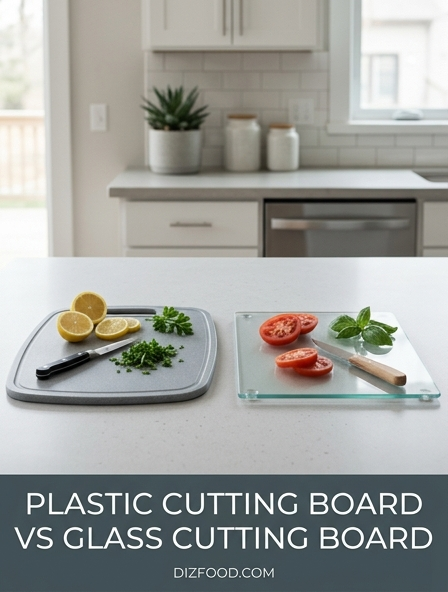
Plastic vs Glass Cutting Boards Comparison
The choice between plastic and glass cutting boards often comes down to a balance between practical utility and kitchen maintenance. Plastic boards, typically made from high-density polyethylene (HDPE), are the workhorses of most professional and home kitchens. They offer a yielding surface that is forgiving on tools while remaining relatively inexpensive to replace. Glass boards, conversely, are crafted from tempered glass, providing a hard, non-porous surface that is often marketed for its hygienic properties and modern appearance. While both materials serve the primary purpose of protecting countertops during food preparation, they interact with kitchen tools and food safety protocols in fundamentally different ways.
| Feature | Plastic Cutting Board | Glass Cutting Board |
|---|---|---|
| Material | High-Density Polyethylene | Tempered Glass |
| Surface Hardness | Soft / Yielding | Extremely Hard / Rigid |
| Common Use | Daily Chopping and Slicing | Pastry Prep and Serving |
| Weight | Lightweight | Heavy |
Understanding the fundamental differences requires looking at how these materials react to the sharp edge of a knife. Plastic allows the blade to bite slightly into the surface, preventing the knife from sliding unexpectedly. Glass acts as an impenetrable barrier, causing the blade to bounce or slide across the top. This primary distinction influences everything from user safety to the long-term cost of maintaining a sharp cutlery set. While plastic boards are prone to staining and deep scoring over time, glass boards remain visually pristine but may present challenges regarding noise and tactile feedback during heavy prep work.
Impact on Knife Blade Longevity
The single most significant disadvantage of glass cutting boards is their devastating effect on knife edges. From a metallurgical perspective, tempered glass is significantly harder than the stainless steel or carbon steel used in kitchen knives. When a sharp blade strikes a glass surface, the edge does not sink in; instead, it is crushed or rolled against the unyielding material. Even after a single prep session, a finely honed chef's knife can lose its "bite," requiring frequent sharpening or honing which removes metal and shortens the overall lifespan of the tool. Professionals almost universally avoid glass for this reason, as the maintenance of expensive cutlery becomes unsustainable.
- Edge Rolling: The microscopic tip of the blade folds over upon contact with glass.
- Chipping: High-carbon steel blades, which are brittle, may actually chip when hitting glass.
- Dulling Frequency: Knives used on glass require sharpening up to ten times more often than those used on plastic.
- Mechanical Stress: The shock of the impact travels up the blade, potentially loosening the handle over time.
Plastic cutting boards are "knifefriendly" because the material is softer than the steel. When the knife comes down, the plastic gives way, allowing the edge to remain sharp for much longer. While this results in scratches on the board itself, these marks are a sign that the board is absorbing the energy that would otherwise damage your knife. For those who invest in high-quality Japanese or German steel, the use of a plastic board is a necessary protective measure to ensure the investment lasts for decades rather than months.
Sanitation and Bacteria Prevention
Sanitation is a primary concern in any kitchen, and both plastic and glass offer unique advantages and risks. Glass is inherently non-porous, meaning it does not absorb liquids, fats, or odors. Because it does not scratch easily, there are no deep grooves where bacteria can hide and multiply. This makes glass an excellent surface for handling raw proteins, as a simple wash with soap and water can effectively sanitize the surface. However, the rigidity of glass can lead to "micro-splashing," where liquids from raw meat are forced outward upon impact, potentially contaminating the surrounding countertop area.
- Non-Porous Nature: Glass prevents the absorption of blood, juices, and strong odors like garlic.
- Scoring and Grooves: Plastic boards develop deep cuts over time, which are notoriously difficult to clean.
- Material Antimicrobials: Some plastic boards are infused with agents that inhibit bacterial growth.
- Surface Biofilms: Bacteria can form biofilms inside plastic scratches if not sanitized with high heat.
Plastic boards are often criticized for their tendency to develop deep scores from knife blades. These grooves can harbor bacteria like Salmonella or E. coli if the board is only lightly hand-washed. However, the ability of plastic to be safely sanitized in a high-temperature dishwasher mitigates much of this risk. Research has shown that while new plastic is easy to clean, older, heavily scarred plastic boards require much more rigorous disinfection than glass. To maintain safety, plastic boards should be color-coded for specific food groups and replaced once the surface becomes excessively rough or difficult to scrub clean.
Durability and Breakage Resistance
When discussing durability, one must distinguish between surface wear and structural integrity. Plastic cutting boards are virtually indestructible in terms of breakage. They can be dropped from counter height, stepped on, or even subjected to heavy impacts without shattering. This makes them ideal for high-traffic kitchens or households with children. However, plastic is susceptible to warping when exposed to extreme heat or being placed unevenly in a dishwasher. Over several years, a plastic board may become "bowed," making it unstable and dangerous to use on a flat countertop.
Glass cutting boards offer superior resistance to surface wear; they will not scratch, stain, or warp regardless of age or usage frequency. However, they suffer from a catastrophic failure mode: shattering. Tempered glass is designed to break into small, blunt pieces rather than sharp shards, but a dropped glass board still results in a dangerous mess and the immediate loss of the item. Furthermore, glass can chip at the edges if struck by heavy pots or pans, creating small glass fragments that could potentially end up in food. While a glass board can technically last a lifetime if handled with extreme care, its fragility in a fast-paced environment is a significant liability compared to the ruggedness of synthetic polymers.
Surface Texture and Grip Safety
Safety during the cutting process is largely determined by how well the board grips the counter and how well the food grips the board. Plastic boards often feature a textured "pebbled" surface designed to provide traction for both the knife and the ingredients. This texture prevents slippery items, like raw onions or tomatoes, from sliding away during a precise cut. Additionally, many modern plastic boards come equipped with silicone borders or rubber feet that lock the board onto the countertop, preventing the dangerous "sliding board" effect that causes many kitchen injuries.
- Traction: Plastic's slight "give" allows the food to sit more securely.
- Slip Factor: Glass is exceptionally smooth; moisture on the surface creates a hydroplaning effect for food.
- Noise: The "clink" of a knife on glass is often described as ear-piercing or unpleasant.
- Stability: Glass boards almost always require rubber feet, as the material itself has zero friction against stone or laminate.
Glass boards are notoriously slippery. When moisture-such as vegetable juice or water-gets on a glass surface, it creates a lubricated film that offers no resistance. This increases the likelihood of the knife slipping off the food and striking the user's hand. Furthermore, the lack of tactile feedback on glass makes it difficult to judge the depth and force of a cut. For tasks requiring precision or speed, the textured, high-friction surface of a plastic board is significantly safer and more ergonomic for the average cook.
Cleaning and Dishwasher Compatibility
One of the strongest selling points for both plastic and glass is their compatibility with modern cleaning appliances. Unlike wood or bamboo, which can crack and split in a dishwasher, both plastic and glass are generally dishwasher safe. For plastic boards, the high-heat drying cycle is a critical component of hygiene, as it reaches temperatures sufficient to kill bacteria lodged in knife scores. However, users must be careful to place plastic boards on the top rack or vertically to prevent the heating element from melting or warping the material.
Glass boards are the ultimate winners in terms of ease of cleaning. They can withstand the highest temperatures of any residential or commercial dishwasher without any risk of warping or degradation. Because the surface is completely smooth, dried-on food or stubborn starches are easily removed without the need for pre-scrubbing. Glass also resists the chemical staining common with plastic; a glass board used to chop beets or turmeric will remain perfectly clear, whereas a plastic board may be permanently stained after a single use. For those who prioritize a "low-maintenance" kitchen where items can be thrown into the dishwasher without a second thought, glass offers a distinct advantage in aesthetic longevity and effortless sterilization.
Heat Resistance and Versatility
The versatility of a kitchen tool is often measured by how many roles it can play. Glass cutting boards excel as multi-purpose surfaces because of their extreme heat resistance. A tempered glass board can function as a large trivet, allowing you to place hot pots and pans directly from the stove onto the board without fear of damage. This makes glass boards particularly useful in small kitchens where counter space is limited. They can transition from a prep surface to a cooling rack or even a decorative serving platter for appetizers and cheeses, provided the user isn't concerned about the noise of cutlery against the surface.
Plastic boards are strictly limited to cool or room-temperature tasks. Placing a hot pan on a plastic board will result in immediate melting, permanent scarring, and the potential release of chemical fumes. Plastic is also prone to absorbing heat from the dishwasher, which can lead to structural deformation over time. While plastic is superior for the actual act of cutting, its utility ends there. It cannot be used for baking prep involving high heat, nor is it particularly attractive for serving. If your goal is to own a "prep station" that can handle hot, cold, and decorative tasks, glass provides a level of thermal stability that plastic simply cannot match.
Aesthetics and Kitchen Style
Kitchen design often dictates the materials homeowners choose for their accessories. Glass cutting boards are frequently chosen for their sleek, modern, and unobtrusive appearance. Clear glass boards allow the beauty of a high-end granite or marble countertop to show through, making the workspace feel less cluttered. Many glass boards also feature printed designs, from marble patterns to vintage herb illustrations, allowing them to serve as permanent decorative elements on the counter when not in use. They maintain their "new" look for years, as they do not develop the fuzzy, greyed-out appearance of worn plastic.
Plastic boards are generally more utilitarian and less focused on aesthetics. While they are available in a variety of colors-which is helpful for preventing cross-contamination-they tend to look like industrial tools rather than home decor. Over time, plastic boards inevitably show their age; they become stained, scratched, and may lose their vibrant color. While high-end boutique plastic boards exist with modern silhouettes, they are still fundamentally functional items meant to be stored in a drawer rather than displayed. For a minimalist or "show-kitchen" aesthetic, glass is often the preferred choice, whereas plastic is the choice for those who view the kitchen primarily as a high-volume workshop.
Environmental Impact and Sustainability
In the modern era, the environmental footprint of kitchenware is a significant consideration for consumers. Plastic cutting boards are petroleum-based products. While they are durable, they eventually wear out and must be replaced. A major environmental concern with plastic boards is the creation of microplastics; every time a knife scores the surface, microscopic plastic shards are removed, which can end up in the food or the water system. Furthermore, many types of HDPE used in boards are technically recyclable, but many municipal recycling programs do not accept heavily used, food-contaminated plastics, leading most to end up in landfills.
- Resource Origin: Plastic is derived from fossil fuels; glass is made from abundant natural sand.
- Microplastics: Cutting on plastic releases particles; cutting on glass does not.
- Longevity: A well-cared-for glass board can last decades, reducing the turnover rate.
- End-of-Life: Glass is infinitely recyclable, though tempered glass specifically can be difficult for some facilities to process.
Glass is generally considered the more sustainable option over the long term. It is made from abundant natural resources and does not shed chemical particles during use. Because glass does not wear down from knife contact, one glass board can potentially replace five or ten plastic boards over a lifetime. However, the energy required to manufacture and transport glass is higher due to its weight and the high melting points required in production. When weighing the options, consumers must decide between the chemical stability and longevity of glass versus the lower production energy but higher waste potential of plastic.
Final Verdict for Your Kitchen
The debate between plastic and glass cutting boards concludes with a clear distinction based on the user's priorities. If the health of your knives and the safety of your chopping technique are the most important factors, plastic is the undisputed winner. It provides the necessary grip and surface "give" that professional-level food preparation requires. However, if your primary concern is absolute sanitation, odor resistance, and the ability to use the board as a heat-resistant trivet, glass may have a place in your kitchen-though perhaps not as your primary cutting surface.
| Use Case | Recommended Material |
|---|---|
| Daily Meat and Veggie Prep | Plastic |
| Handling Raw Poultry | Glass (for sanitation) or Plastic (if dishwasher used) |
| Protecting Expensive Knives | Plastic |
| Multi-purpose Trivet/Serving | Glass |
Most culinary experts suggest a hybrid approach. Use plastic boards for the majority of your slicing, dicing, and heavy knife work to protect your blades and ensure safety. Keep a glass board on hand for specific tasks such as rolling out pastry dough (as glass stays cool), serving appetizers, or acting as a protective barrier for the counter when using hot pots. Ultimately, the "best" board is the one that fits your workflow, but for the sake of your cutlery, plastic should remain the workhorse of the home kitchen while glass serves as a versatile secondary tool.

Comments