
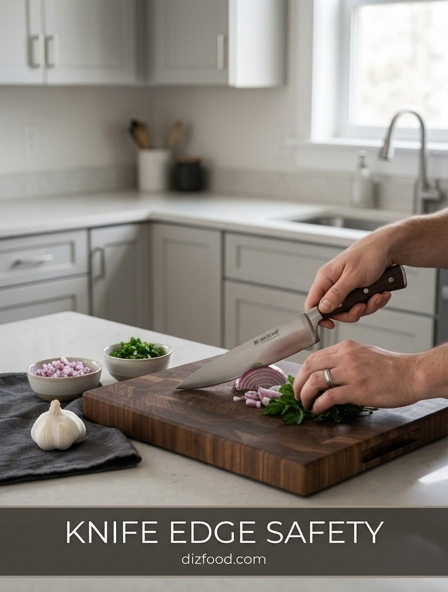
Visual Inspection for Micro Chipping
Micro chipping occurs when tiny fragments of the blade's steel break away, leaving a jagged and irregular edge. While these chips are often too small to see at a glance, they significantly compromise the knife's cutting efficiency and safety. A chipped blade requires more force to penetrate food, which increases the likelihood of the knife slipping during use. Furthermore, these microscopic steel fragments can potentially migrate into the ingredients being prepared, posing a subtle health risk.
To perform a thorough visual inspection, hold the knife under a bright, direct light source and slowly tilt the blade to catch reflections along the edge. A perfectly maintained edge will appear as a consistent, thin line, whereas micro chips will manifest as small, dark spots or glints where the light is interrupted. Utilizing a jeweler's loupe or a magnifying glass can help identify early signs of damage before they escalate into larger fractures.
- Inspect the blade after dicing hard ingredients like squash or nuts.
- Look for "glinting" points where the edge has folded or chipped.
- Check the heel and tip specifically, as these areas sustain the most impact.
Testing Sharpness with the Paper Glide
The paper glide test is a fundamental safety procedure used to determine if a blade is sharp enough for kitchen tasks without relying on dangerous finger-touch methods. A dull knife is inherently more dangerous than a sharp one because it requires excessive downward pressure, which can lead to a loss of control. By observing how a blade interacts with a simple sheet of paper, a cook can gauge the uniformity of the edge from the bolster to the tip.
- Hold a standard sheet of printer paper vertically by one corner.
- Place the heel of the knife at the top edge of the paper at a slight angle.
- Draw the blade downward and toward you in a smooth, slicing motion.
- Listen for a clean, silent "hiss" rather than a loud "rip" or tearing sound.
- Observe any snags, which indicate specific areas of the blade that are dull or damaged.
If the knife catches or requires a sawing motion to initiate the cut, it is no longer safe for precision work. Consistent performance across the entire length of the blade ensures predictable behavior during high-speed dicing and slicing.
Impact of Dicing Surfaces on Edge Longevity
The surface upon which a knife strikes is the primary factor in determining how long an edge remains sharp. Hard materials like glass, granite, or ceramic are strictly detrimental to knife safety; they are much harder than the steel itself, causing the edge to collapse or chip instantly upon contact. Choosing the correct cutting board material acts as a shock absorber, preserving the microscopic alignment of the blade's apex.
| Surface Material | Impact on Edge | Safety Rating |
|---|---|---|
| End-Grain Wood | Gentle; fibers open to receive the edge. | Excellent |
| High-Density Plastic | Reasonable give; easy to sanitize. | Good |
| Glass or Marble | Causes immediate rolling and chipping. | Dangerous |
| Stainless Steel | Reflects force back into the blade. | Poor |
To maximize edge longevity, professionals prefer end-grain wood or soft rubber compounds. These materials allow the knife to bite slightly into the surface without meeting stiff resistance, preventing the edge from dulling prematurely through repetitive impact fatigue.
Identifying Burr Formation and Blade Roll
As a knife is used, the extremely thin metal at the very edge can begin to bend or "roll" to one side. This creates what is known as a burr-a microscopic wire edge that has deviated from the center. A rolled edge may feel sharp to the touch but will perform poorly because the cutting apex is no longer making direct contact with the food. Instead, the side of the edge rubs against the ingredient, causing the blade to wander or slide unpredictably off the surface of the food.
To identify a roll without touching the sharpest point, one can gently run a fingernail down the side of the blade toward the edge. If the nail catches on a small ridge of metal protruding to one side, a burr has formed. This structural deviation is often the result of lateral pressure or improper honing techniques. Correcting this promptly is essential for maintaining a predictable cutting path, which is the cornerstone of kitchen safety and precision dicing.
- Feel for unevenness on both sides of the blade.
- Watch for a "wandering" blade during vertical cuts.
- Ensure the edge is perfectly centered through regular maintenance.
The Tomato Skin Resilience Assessment
The skin of a ripe tomato provides one of the most effective real-world tests for knife sharpness. Because the skin is glossy and tough while the interior is soft, a dull knife will frequently fail to "bite" into the surface. Instead of piercing the skin, the blade may slide across the convex surface of the vegetable toward the user's fingers. A safe, sharp knife should be able to penetrate the skin using only the weight of the blade itself, without any additional downward force.
- Place a ripe tomato on a stable cutting board.
- Position the knife edge against the top of the tomato.
- Draw the blade backward slowly without pressing down.
- Evaluate if the blade immediately breaks the skin or if it squashes the fruit.
If the tomato deforms or the knife slides without cutting, the edge is considered "rounded." A rounded edge is a high-risk factor in the kitchen, as it encourages the cook to apply excessive pressure, which is the leading cause of accidental lacerations during prep work.
Comparing Hardness Levels in Premium Steel
The hardness of knife steel is measured on the Rockwell C scale (HRC). This rating dictates how long a knife will stay sharp and how it will eventually fail. Premium steels with higher HRC ratings offer superior edge retention but come with increased brittleness. Conversely, softer steels are more durable and resistant to chipping but require more frequent honing to stay functional. Understanding where a specific blade falls on this scale is vital for safe handling and appropriate maintenance scheduling.
| Steel Type | HRC Range | Edge Characteristics |
|---|---|---|
| Western/German | 54-58 | Tough, prone to rolling, easy to hone. |
| Japanese Premium | 60-64 | Extremely sharp, prone to chipping, holds edge longer. |
| Powdered Steel | 63+ | Maximized retention, very brittle, requires expert care. |
Users should match their technique to the steel hardness. For example, using a high-hardness Japanese blade to chop through bone or frozen foods will likely result in catastrophic edge failure. Matching the task to the HRC rating ensures both the longevity of the tool and the safety of the operator.
Proper Dicing Alignment for Edge Integrity
Safety in the kitchen is as much about technique as it is about the tool. Proper dicing alignment involves keeping the blade perfectly perpendicular to the cutting board. When a knife is tilted even slightly to the side during a heavy cut, it subjects the thin edge to lateral (side-to-side) stress. Most kitchen knives are designed to withstand vertical compression, not lateral torque. Deviating from a vertical alignment can cause the edge to twist and snap, leading to dangerous metal shards or an uncontrolled blade path.
To maintain integrity, users should focus on a fluid "locomotive" motion-moving the knife forward and down simultaneously. Avoiding the "chopping" motion where the blade slammed flat against the board helps prevent premature dulling. Additionally, users should never use the sharp edge of the knife to scrape ingredients across a board; this common habit is one of the fastest ways to roll a fine edge and ruin its alignment.
- Keep the wrist locked to ensure a 90-degree angle with the board.
- Use the spine of the knife, not the edge, for moving food.
- Apply even pressure throughout the entire slicing motion.
Recognizing Signs of Structural Fatigue
Structural fatigue in a knife extends beyond the edge to the handle, tang, and bolster. A knife that feels "loose" or makes a clicking sound when pressure is applied is a significant safety hazard. Fatigue often occurs at the junction where the blade meets the handle, especially in knives that are not "full tang" (where the metal extends the full length of the handle). If the internal structure is compromised, the blade could snap off during use, leading to severe injury.
Regularly check for gaps between the handle scales and the steel, as these gaps can collect moisture and bacteria, leading to hidden corrosion. Furthermore, if a blade has been sharpened many times over several years, it may become "thick" behind the edge. This change in geometry means the knife no longer moves through food easily, requiring more force and decreasing the overall safety of the tool. Recognizing when a knife has reached the end of its functional life is a key component of kitchen safety.
- Inspect rivets for tightness and signs of rust.
- Check for cracks in wooden handles that could harbor pathogens.
- Monitor the blade profile for significant thinning or warping.
The Role of Honing in Safety Maintenance
Honing is often confused with sharpening, yet they serve two distinct purposes in edge safety. Sharpening removes metal to create a new edge, while honing simply realigns the existing edge that has rolled out of place. A honing rod (or "steel") should be used frequently-often before every major prep session-to ensure the apex of the blade is centered. This maintenance step keeps the knife "biting" into food predictably, preventing the slips associated with a rolled edge.
- Hold the honing rod vertically with the tip planted on a non-slip surface.
- Maintain a consistent angle (usually 15-20 degrees) between the blade and the rod.
- Lightly stroke the blade from heel to tip, alternating sides.
- Use minimal pressure; honing is about alignment, not grinding.
- Wipe the blade afterward to remove any microscopic metal dust.
By regularly honing, a cook extends the time between professional sharpenings and ensures the knife remains a precision instrument rather than a blunt force tool. Consistent honing is the most effective way to maintain a high safety standard during daily kitchen operations.
Storing High End Blades to Prevent Contact Damage
Proper storage is the final pillar of knife edge safety. When knives are stored loosely in a drawer, the edges frequently collide with other utensils or the drawer walls. These impacts cause nicks, chips, and dulling before the knife even touches an ingredient. Protecting the edge during its idle time ensures that it remains in the same condition it was in after its last cleaning and honing. Moreover, reaching into a drawer filled with exposed blades is a primary cause of kitchen puncture wounds.
Several effective storage solutions exist to maintain edge integrity and user safety:
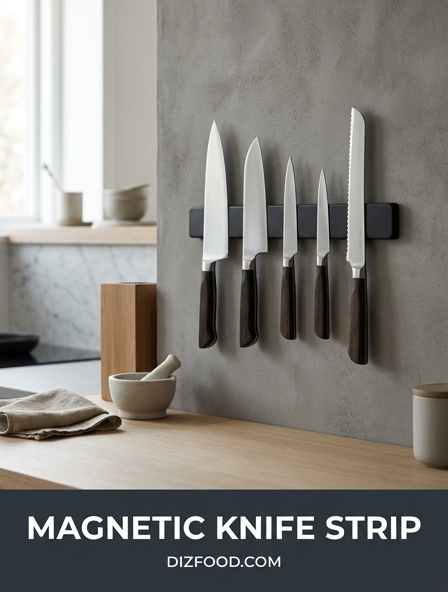
- Magnetic Strips: These hold the blade by the flat side, keeping the edge suspended in the air.
- Slotted Knife Blocks: Ensure the knife is inserted with the spine facing down to prevent the edge from resting on the wood.
- Blade Guards (Sayas): Individual plastic or wooden sheaths that protect the knife when stored in a drawer.
- Knife Rolls: Padded fabric carriers designed for safe transport and compact storage.
Choosing a dedicated storage method prevents accidental contact and ensures that the refined edge of a premium blade remains sharp and ready for safe use.


Comments