
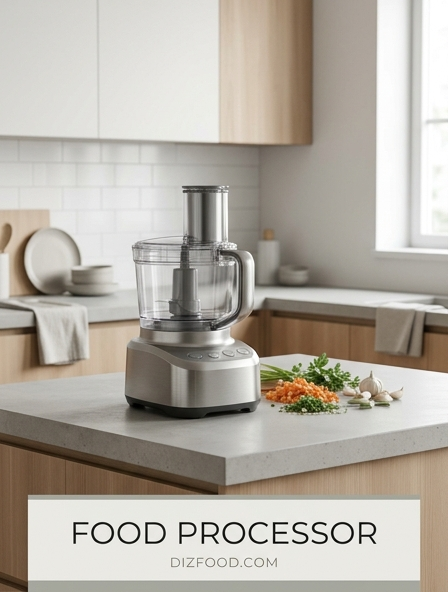
Food Processor vs Electric Vegetable Dicer
Choosing between a full-sized food processor and a dedicated electric vegetable dicer depends largely on the complexity of your culinary tasks. A food processor is a multi-functional powerhouse designed to handle everything from kneading dough and emulsifying sauces to shredding cheese and slicing produce. It offers a broad spectrum of utility that makes it indispensable for diverse recipes. Conversely, an electric vegetable dicer is a specialized tool engineered specifically for creating uniform cubes with high precision. While the food processor provides versatility, the dicer excels in speed and consistency for bulk vegetable prep.
- Versatility: Food processors handle liquids, doughs, and solids, whereas dicers focus on firm produce.
- Precision: Dedicated dicers often produce more uniform geometric shapes than multi-purpose slicing discs.
- Storage: Dicers are typically more compact, while processors require more cabinet space for various attachments.
- Complexity: Food processors have more parts to assemble, whereas dicers are often simpler to operate for a single task.
Ultimately, a food processor is the better investment for those who want a single appliance to replace multiple manual tools. However, if your primary kitchen bottleneck is chopping onions and potatoes for soups or stews, the dedicated dicer may offer a more streamlined experience.
Key Features of Precision Dicing Blades
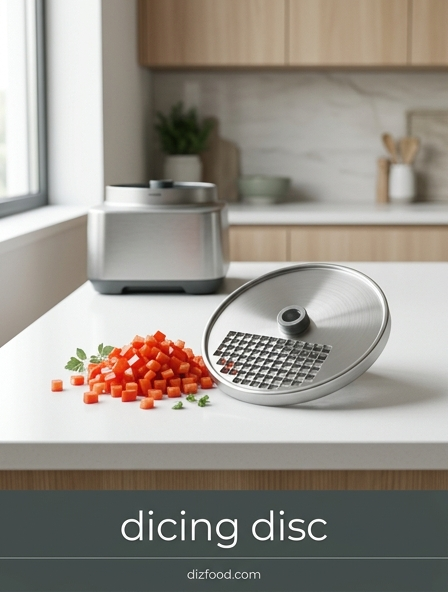
Precision dicing blades are the hallmark of advanced food preparation technology. Unlike standard chopping blades that rely on centrifugal force to break down food, a dicing kit utilizes a two-step mechanism. First, a horizontal slicing disc cuts the ingredient into a specific thickness. Immediately following this, the slice is pushed through a vertical dicing grid. This sequence ensures that every piece of food is a perfect cube rather than an irregular fragment. High-quality kits are usually constructed from heavy-duty stainless steel to maintain sharpness over hundreds of uses.
| Feature | Benefit |
|---|---|
| Grid Spacing | Determines the size of the dice (e.g., 8mm vs 12mm). |
| Blade Coating | Non-stick surfaces prevent wet vegetables like tomatoes from sticking. |
| Cleaning Tool | Specialized combs remove debris trapped within the dicing grid. |
| Material Grade | High-carbon stainless steel offers superior edge retention. |
When selecting a dicing attachment, it is essential to check the compatibility with the motor's torque. A precision blade is only as effective as the motor driving the produce through the grid. Dull blades or flimsy grids can lead to "mashing" rather than dicing, particularly with softer vegetables.
Comparing Motor Power for Uniform Cuts
The motor is the heart of any electric food prep appliance, and its power is measured in wattage and torque. For uniform cuts, consistency in speed is more critical than raw power alone. Induction motors are preferred in high-end food processors because they maintain a steady RPM regardless of the resistance provided by the food. This means that whether you are dicing a soft cucumber or a dense sweet potato, the blade rotates at the same speed, resulting in identical cuts. Cheaper universal motors may slow down under load, causing the food to tear or become unevenly sliced.
Most home-grade processors range from 400 to 1,200 watts. A motor at the lower end of this spectrum may struggle with large batches or hard root vegetables, potentially overheating. Higher wattage generally translates to a longer lifespan and the ability to handle heavy tasks like dicing blocks of hard cheese or kneading thick bread dough. If the motor lacks sufficient torque, the dicing grid can become clogged, leading to uneven pressure and poor-quality results. Therefore, choosing a model with a robust induction motor is vital for anyone prioritizing professional-grade precision in their home kitchen.
Bowl Capacity for Home Kitchen Prep
Selecting the right bowl capacity is essential for ensuring workflow efficiency during meal preparation. If a bowl is too small, you will find yourself frequently stopping to empty it, which disrupts the rhythm of cooking. Conversely, an oversized bowl can be cumbersome for small tasks like mincing a few cloves of garlic. Most manufacturers offer a range of sizes to cater to different household needs and meal complexities.
- Mini (3-5 Cups): Ideal for chopping nuts, making small batches of pesto, or preparing baby food.
- Standard (7-11 Cups): The "sweet spot" for average families, suitable for dicing a few onions or shredding a block of cheese.
- Large (12-16 Cups): Necessary for batch cooking, large families, or dicing bulk quantities of vegetables for canning.
- Nested Bowls: High-end models often include smaller bowls that fit inside the large one, providing maximum versatility.
When considering capacity, it is also important to look at the "liquid fill line." Many bowls cannot be filled to the brim when processing liquids or wet dicing, so a 14-cup bowl might only handle 8 or 10 cups of liquid. Always choose a capacity slightly higher than your largest typical recipe to avoid overflows and motor strain.
Best Attachments for Cubing and Slicing
The utility of a food processor is significantly expanded by its array of specialized attachments. While the standard S-blade is great for general chopping, specialized discs are required for precise cubing and slicing. The evolution of these accessories has moved toward "adjustable" technology, allowing users to customize their prep without owning dozens of separate parts. The following attachments are considered essential for any serious home cook:
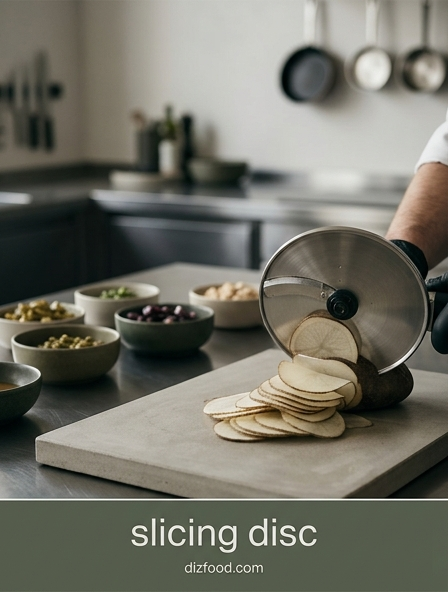
- Adjustable Slicing Disc: Features a dial to change the thickness from paper-thin to thick wedges.
- Dicing Kit: A combination of a slicing blade and a cube-cutting grid for uniform squares.
- Reversible Shredding Disc: Offers fine and coarse shredding options on a single plate.
- Julienne Disc: Creates long, thin matchstick strips perfect for salads and garnishes.
- Dough Blade: A plastic blade designed to stretch and turn dough without cutting the gluten strands.
When purchasing these attachments, ensure they are made from high-quality materials. Stainless steel discs are resistant to rust and maintain their edge much longer than plastic-reinforced alternatives. Additionally, look for storage cases that keep these sharp components organized and safe when not in use.
Durability and Material Quality Standards
The durability of a food processor is determined by both its internal components and its external housing. In the premium market, die-cast metal bases are preferred over plastic because they provide the necessary weight to prevent the machine from "walking" across the counter during high-speed tasks. Internally, look for metal drive systems rather than plastic gears. Metal-to-metal connections between the motor and the blade assembly are far less likely to strip or fail under the high torque required for dicing and kneading.
The material of the work bowl is equally important. BPA-free, heavy-duty polycarbonate or Tritan plastic is the industry standard for durability. These materials are shatter-resistant and can withstand the thermal shock of going from a dishwasher to a refrigerator. Furthermore, the thickness of the bowl walls dictates how well it will resist cracking over years of use. High-quality standards also include the use of professional-grade stainless steel for the blades, ensuring they remain corrosion-resistant even when exposed to acidic foods like lemons or tomatoes. Investing in a machine built with these materials ensures a lifespan of decades rather than just a few years.
Ease of Cleaning and Dishwasher Compatibility
One of the primary deterrents to using a food processor is the perceived difficulty of cleaning. Modern designs have addressed this by minimizing "food traps"-small crevices where particles can become lodged. Seamless touchpads are easier to wipe down than physical buttons, and many bowls now feature smooth interiors without internal ridges. To ensure long-term hygiene, users should look for the following cleaning features:
- Top-Rack Dishwasher Safety: Most modern bowls and lids are designed to withstand dishwasher temperatures without warping.
- Removable Gaskets: Silicon seals should be easy to remove to prevent mold growth in hidden areas.
- Specialized Brushes: Dicing kits often require a custom tool to push food remnants through the grid.
- Polished Blades: Mirror-polished stainless steel resists food sticking and is easier to rinse clean.
While dishwasher compatibility is a major convenience, hand-washing the blades is often recommended to preserve their sharpness over time. Harsh dishwasher detergents and the high-heat drying cycle can dull the fine edge of a dicing blade prematurely. A quick rinse immediately after use is the best way to prevent food from drying and becoming difficult to remove.
Safety Mechanisms for Electric Food Prep
High-speed blades and powerful motors necessitate rigorous safety mechanisms. The most fundamental safety feature in any food processor is the interlocking system. This prevents the motor from engaging unless the bowl is properly seated on the base and the lid is securely locked in place. Advanced models also feature a "pusher interlock" which ensures the blades stop rotating if the large feed tube pusher is removed, preventing the user from reaching into the spinning blades.
In addition to mechanical locks, electronic safety features play a vital role. Overload protection sensors detect when the motor is struggling with a load that is too heavy or if the blades are jammed; the system will automatically cut power to prevent the motor from burning out. Stability is also a safety factor; non-slip suction feet or heavy-duty bases prevent the unit from tipping over during high-vibration tasks like kneading dough. Finally, many processors now include blade storage cases and safety covers to protect users' hands when reaching into cabinets. These combined features make electric food prep significantly safer than manual knife work for many home cooks.
Noise Levels and Kitchen Counter Footprint
Noise levels are often an overlooked aspect of kitchen appliances. Standard universal motors can be quite loud, producing a high-pitched whine that can be disruptive in open-concept homes. Induction motors, while heavier, operate at a much lower decibel level and produce a deeper, less intrusive hum. If you frequently prep food while others are resting or watching television, the extra investment in a quieter motor is often justified.
The footprint of the device is another critical consideration. Kitchen counter space is often at a premium. While a larger base usually indicates a more powerful and stable motor, it also takes up more real estate. Some manufacturers solve this by designing "vertical" units that have a small base but are taller, though these may not fit under standard kitchen cabinets. When evaluating a model, consider the dimensions of both the base and the storage for attachments. Some models offer integrated storage drawers within the base, while others require separate cases. Choosing a machine that balances power with a manageable footprint ensures that the appliance stays on the counter and gets used, rather than being tucked away and forgotten.
Investment Value for Frequent Meal Prepping
Determining the investment value of a food processor involves calculating the time saved against the initial cost. For those who engage in weekly meal prepping, a high-quality processor with a dicing attachment can reduce prep time by up to 75%. The ability to process five pounds of potatoes or onions in under a minute is a transformative efficiency gain. Furthermore, the consistency of the cuts ensures that food cooks evenly, improving the overall quality of the meals.
| Factor | Long-Term Value |
|---|---|
| Time Savings | Reduces hours of manual chopping to mere minutes per week. |
| Food Waste | Precision cuts allow for better utilization of entire vegetables. |
| Longevity | Premium models last 10-20 years, lowering the cost per use. |
| Versatility | Replaces the need for separate blenders, graters, and mixers. |
While the upfront cost of a professional-grade food processor can be significant, the durability of high-end brands often makes them more economical than replacing a cheap unit every few years. For any kitchen focused on whole foods and home-cooked meals, the food processor is a cornerstone investment that pays for itself through labor reduction and culinary versatility.

Comments