
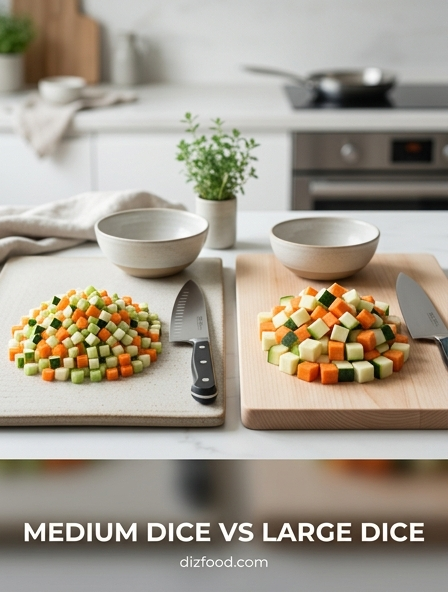
Choosing between a medium dice and a large dice is more than just a culinary preference; it is a strategic decision that dictates the texture, cook time, and flavor profile of your final dish. A medium dice (1/2-inch cubes) is the quintessential "all-purpose" cut, striking a perfect balance between surface area for caramelization and a quick, even cook time in sautés or hashes. In contrast, a large dice (3/4-inch cubes) is built for endurance, designed to maintain structural integrity during long-duration cooking methods like braising or slow-roasting. By mastering these specific dimensions, you ensure that every ingredient reaches peak tenderness simultaneously, preventing the mushy or undercooked bites that result from inconsistent knife work.
| Feature | Medium Dice (1/2") | Large Dice (3/4") |
|---|---|---|
| Dimensions | 12mm x 12mm x 12mm | 20mm x 20mm x 20mm |
| Best Use Case | Soups, stews, and hashes | Braising, stocks, and roasting |
| Cook Time | Moderate (10-20 mins) | Long (45-90+ mins) |
| Flavor Release | High; quick seasoning absorption | Subtle; preserves natural sweetness |
| Texture | Soft, uniform bite | Rustic, chunky, and hearty |
| Prep Intensity | Higher precision required | Fast, efficient processing |
Understanding Medium Versus Large Dice Dimensions
In the culinary arts, precision is the foundation of consistency and quality. When distinguishing between a medium dice and a large dice, the primary difference lies in the specific measurements of the resulting cubes. A medium dice, known in French as "macedoine," typically measures 1/2 inch by 1/2 inch by 1/2 inch (approximately 1.25 cm). This size is often considered the standard for many classic European dishes, providing a balance between visible presence and manageable eating size. Because the dimensions are relatively small, they require a higher degree of accuracy during the prep phase to ensure every piece is identical.
Conversely, a large dice, or "carré," measures 3/4 inch by 3/4 inch by 3/4 inch (approximately 2 cm). While the numerical difference of a quarter-inch may seem negligible, the volumetric difference is substantial. A large dice results in a piece of food that is significantly bulkier and more substantial on the fork. Understanding these dimensions is crucial because they dictate how the ingredients will interact with heat and other components in the pan. Professional chefs use these standard measurements to communicate effectively in a busy kitchen environment.
| Dice Type | Dimensions (Inches) | Common French Term |
|---|---|---|
| Medium Dice | 1/2" x 1/2" x 1/2" | Macedoine |
| Large Dice | 3/4" x 3/4" x 3/4" | Carré |
The Impact of Dice Size on Cooking Times
The size of a vegetable or protein cut is directly proportional to the time it takes for heat to penetrate to the center of the ingredient. A medium dice, having less mass than a large dice, cooks relatively quickly. This makes it ideal for dishes with shorter cooking windows, such as quick sautés or high-heat stir-frys. When using a medium dice, the goal is often to soften the vegetable while maintaining a slight bite, or "al dente" texture, before the exterior begins to degrade or turn mushy. Because of the smaller size, the window between perfectly cooked and overcooked is much narrower.
Large dice cuts are designed for endurance. Because they are 3/4-inch thick, they can withstand prolonged exposure to heat without disintegrating. This is particularly important when working with fibrous root vegetables like carrots, parsnips, or potatoes. If these were cut into a medium dice for a three-hour braise, they would likely dissolve into the liquid, losing their structural integrity. By choosing a larger cut, the chef ensures that the ingredient remains recognizable and intact throughout long simmering processes. The thermal mass of a large cube allows for a slow, even gelatinization of starches and sugars.
- Medium Dice: 5 to 10 minutes for sautéing.
- Large Dice: 20 to 45 minutes for boiling or roasting.
- Medium Dice: Softens quickly in soups.
- Large Dice: Retains shape in slow cookers and braises.
Visual Aesthetics of Large and Medium Cuts
Visual presentation is an essential component of the dining experience, and the choice between a medium and large dice can drastically alter the "vibe" of a dish. A medium dice offers a refined, polished look that suggests professional rigor. It is often used in upscale dining to create a sense of delicate complexity. When a plate features perfectly uniform 1/2-inch cubes, it signals to the guest that the chef has invested significant time and skill into the preparation. This cut is particularly effective in colorful medleys where the goal is to show off a variety of ingredients in every spoonful without any single item dominating the visual field.
A large dice, on the other hand, creates a rustic and hearty aesthetic. It evokes a sense of home-style cooking, comfort, and abundance. Large cubes are visually striking because of their sheer scale, making them the stars of the plate rather than supporting players. This cut is frequently used in traditional stews, pot roasts, and chunky salsas where the ingredient's natural beauty and color are meant to be showcased in a bold way. The larger surface area of the cube faces allows for more visible caramelization or charring, which can add a rugged, appetizing appeal to roasted vegetables or meats. Choosing the right size depends on whether the chef wants the dish to feel elegant and precise or robust and traditional.
Best Recipes for Hearty Large Dice
The large dice is the workhorse of heavy, slow-cooked meals. Its primary function is to provide a substantial "bite" that can stand up to thick sauces and long exposure to liquid. In a traditional beef stew, a large dice of potatoes and carrots is essential; any smaller and the vegetables would lose their identity amidst the heavy gravy and tender meat. Similarly, when preparing a pot roast, the vegetables are often cut into 3/4-inch cubes to ensure they finish cooking at the same time as the primary protein. This size is also excellent for roasting, as the exterior can become deeply browned and crispy while the interior remains creamy and soft.
Beyond stews, the large dice is a favorite for chunky condiments and specific salads. A classic Greek salad often utilizes large cubes of cucumber and feta to emphasize freshness and structural contrast. In the realm of vegetarian main courses, large-diced squash or eggplant provides a meaty texture that satisfies the palate. Because these ingredients are large, they carry enough weight to be the focal point of the fork. When selecting recipes for this cut, look for those that involve high moisture, long cook times, or a desire for a "chunky" finish.
- Beef Bourguignon: Essential for maintaining vegetable shape during the braise.
- Roasted Root Vegetable Medleys: Ideal for achieving a crispy exterior and fluffy interior.
- Chunky Gazpacho: Provides a tactile eating experience in a cold soup.
- Fruit Salads: Large cubes of melon and pineapple prevent the fruit from macerating too quickly.
When to Use a Precise Medium Dice
Medium dice is the gold standard for recipes where balance and uniformity are paramount. It is the most versatile cut in the kitchen, bridging the gap between the finesse of a small dice and the ruggedness of a large dice. One of the most common applications for a medium dice is the classic mirepoix-the combination of onions, carrots, and celery. When cut to 1/2-inch specifications, these aromatics release their flavors at a consistent rate, providing a solid flavor base for sauces and gravies without becoming invisible or overly dominant.
In addition to flavor bases, the medium dice is the preferred choice for side dishes like hash browns or sautéed vegetable medleys. The 1/2-inch dimension allows the vegetables to cook through to the center in a pan while the edges achieve a golden-brown finish. It is also the ideal size for pasta salads or grain bowls, as the cubes are small enough to be picked up along with grains like quinoa or farro, but large enough to provide a distinct textural pop. To achieve a successful medium dice, follow these steps:
- Square off the vegetable to create a rectangular block.
- Slice the block into 1/2-inch thick planks.
- Stack the planks and cut them into 1/2-inch wide sticks (batonnet).
- Turn the sticks and cut them crosswise into 1/2-inch cubes.
Surface Area and Flavor Profile Comparison
The relationship between dice size and flavor is governed by the principles of surface area and volume. When an ingredient is cut into smaller pieces, such as a medium dice, the total surface area exposed to the cooking medium increases relative to its volume. This means there is more space for the Maillard reaction to occur, leading to more browning, caramelization, and overall savory flavor on the exterior. Additionally, smaller pieces absorb seasonings, oils, and marinades more deeply and quickly than larger pieces. If the goal of a dish is to have every bite packed with salt, spice, and sear, the medium dice is the superior choice.
Large dice cubes have a lower surface-area-to-volume ratio. This protects the "inner" flavor of the ingredient. When you bite into a large-diced beet or potato, you experience the concentrated, natural taste of the vegetable's interior, which hasn't been fully permeated by the cooking liquid or exterior spices. This creates a flavor contrast between the seasoned outside and the pure inside. In professional cooking, this distinction is used to control how much "sauce" a vegetable carries versus how much of its own identity it retains. The following table illustrates the conceptual differences in flavor delivery.
| Feature | Medium Dice | Large Dice |
|---|---|---|
| Browning Potential | High (More edges) | Moderate (Fewer edges) |
| Seasoning Absorption | Fast and deep | Surface-level primarily |
| Core Flavor Retention | Lower | Very High |
Knife Skill Techniques for Uniform Cubes
Mastering the medium and large dice requires disciplined knife work and an understanding of geometric breakdown. The process begins with "squaring off" the ingredient. Because most vegetables are round or irregular, you must first trim the rounded edges to create a stable, rectangular block. While this may feel wasteful, the scraps can be saved for stocks. Once you have a rectangular prism, you can proceed with confidence, knowing each subsequent cut will result in a perfect square. For a medium dice, the focus is on extreme consistency, as small errors are highly visible. For a large dice, the challenge is maintaining a steady hand through thicker, tougher vegetables.
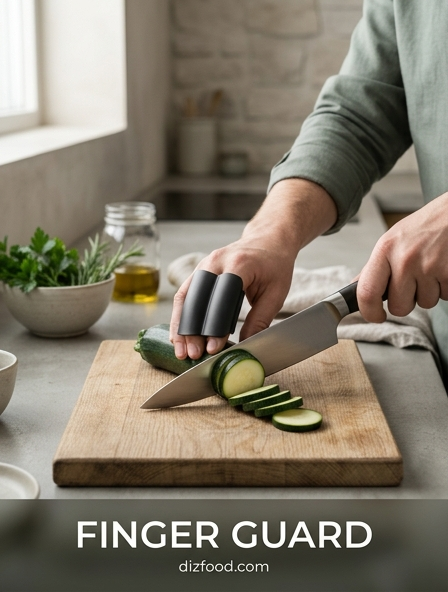
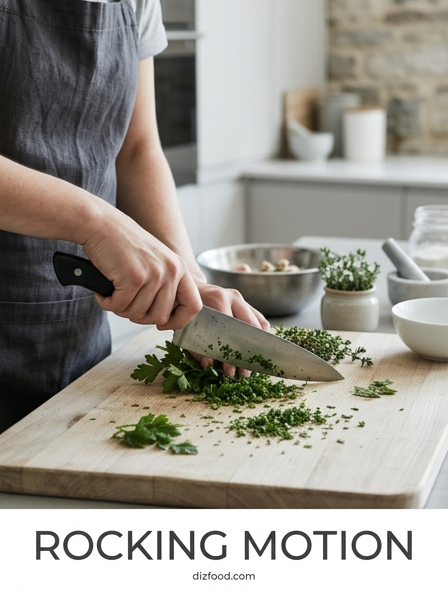
To ensure safety and precision, the "claw grip" is essential. By tucking your fingertips and using your knuckles as a guide for the blade, you can make repetitive cuts with high speed and accuracy. Use a sharp chef's knife and a "rocking" or "locomotive" motion rather than pressing straight down. This prevents the vegetable from bruising and ensures clean, sharp edges on your cubes. Following a systematic approach will significantly improve the quality of your prep work.
- Stabilize the ingredient by cutting a thin slice off one side to create a flat base.
- Cut the ingredient into even planks (1/2" for medium, 3/4" for large).
- Stack the planks and cut into uniform sticks or "batons."
- Gather the sticks and cut perpendicular to the previous cuts to form cubes.
- Check the first few cubes against a ruler or a reference piece to ensure accuracy.
Mouthfeel and Texture Differences in Vegetables
Mouthfeel refers to the physical sensations in the mouth caused by food, and dice size plays a pivotal role in this experience. A medium dice is generally perceived as more "elegant" because it fits easily onto a spoon or fork alongside other components. When chewing a medium-diced vegetable, the teeth encounter less resistance, and the pieces break down quickly, allowing the flavors to meld with the sauce almost immediately. This makes medium dice excellent for creamy soups or delicate ragouts where the texture should be consistent and non-obtrusive. It provides a subtle chew that doesn't distract from the overall harmony of the dish.
A large dice offers a much more "toothy" and substantial mouthfeel. Because the pieces are 3/4-inch thick, they require more effort to masticate, which slows down the eating process and allows the diner to focus on the individual texture of the ingredient. For example, a large-diced carrot in a stew provides a distinct "snap" followed by a soft, yielding center. This textural contrast is highly satisfying in rustic, hearty meals. If the dice is too large, it can become cumbersome and difficult to eat politely, whereas if a medium dice is used in a chunky dish, it might feel underwhelming. The chef must decide whether they want the texture to be a background element or a primary feature of the culinary experience.
Choosing Dice Sizes for Soups and Stewing
The choice of dice in liquid-based cooking is a strategic decision based on the intended duration of the cook and the desired thickness of the final product. Soups that are meant to be consumed in 30 minutes or less almost always benefit from a medium dice. The smaller size ensures that the vegetables are tender by the time the broth has developed its flavor. Furthermore, in a clear soup like a minestrone, the uniformity of a medium dice allows for a beautiful, organized appearance in the bowl where every spoonful contains a perfect mix of ingredients.
Stews and braises, which often cook for over an hour, require a large dice to prevent the vegetables from turning into a puree. Starchy vegetables like potatoes release more thickeners into the stew as they cook; a large dice allows them to release enough starch to body the sauce while still remaining as distinct pieces. When stewing, it is also helpful to consider the "spoon factor"-a large dice should still fit comfortably within the bowl of a standard soup spoon. If the pieces are too large, the diner may have to break them apart with their spoon, which can lead to a messy presentation.
- Quick Vegetable Soup: Use medium dice for fast, even cooking.
- Chowders: Use medium dice to match the size of corn kernels or clams.
- Lamb or Beef Stew: Use large dice to withstand long simmering times.
- Curries: Use large dice for vegetables like cauliflower or potatoes to maintain "bite" against heavy spices.
Consistency Secrets for Professional Plating
Professional plating relies on the illusion of perfection, and nothing shatters that illusion faster than unevenly sized vegetables. When one cube is 1/2 inch and the neighbor is 3/4 inch, they will cook at different rates, resulting in some pieces being mushy and others being raw. To achieve professional results, consistency is more important than the actual size chosen. If you commit to a medium dice, every single piece must be a 1/2-inch cube. Chefs often use "templates" or even actual rulers in training to calibrate their eyes to these specific dimensions until it becomes second nature.
Another secret to professional plating is the treatment of "scraps." When dicing for a high-end plate, the irregular ends of the vegetables are never included. Only the perfect cubes from the center of the vegetable make it to the final dish. This ensures that the geometric patterns on the plate are striking and clean. For home cooks, this level of waste is unnecessary, but for professional plating, it is the standard. Finally, always dice your ingredients separately even if they are going into the same pot; this allows you to control the exact volume and ensure that the ratio of medium to large dice (if mixing) is intentional and aesthetically pleasing.
- Always use a sharp knife to prevent "smashing" the edges of the cubes.
- Maintain a dedicated workspace to keep your "perfect" cubes separate from trim.
- Consistency in size leads to consistency in color during the browning phase.
- Group similar-sized ingredients together to ensure they finish cooking simultaneously.

Comments