
The Anatomy of a Professional Edge
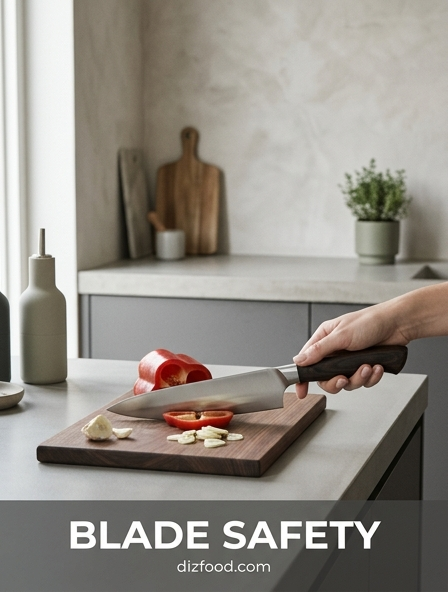
Understanding the physical construction of a kitchen knife is the first step toward maintaining a safe working environment. A professional blade is more than just a piece of sharpened metal; it is a precision instrument consisting of several critical components. The "spine" provides the weight and stability required for heavy-duty tasks, while the "bolster" acts as a physical barrier between the hand and the sharp edge, preventing accidental slips during high-pressure cutting.
- The Tip: Used for delicate work and fine piercing tasks.
- The Heel: The widest part of the blade, ideal for cutting through tough materials.
- The Tang: The part of the blade that extends into the handle, ensuring structural integrity.
- The Edge: The sharpened side of the blade, which requires a specific bevel angle.
A safe edge is one that is properly ground according to its intended use. For instance, a Western-style chef's knife typically features a double-bevel edge at roughly 20 degrees, providing a balance between durability and precision. Japanese blades may feature a more acute angle of 15 degrees, requiring a more refined technique to prevent chipping and ensure user safety.
Mastering Safe Dicing Techniques
Consistency in cutting technique is essential to prevent lacerations in a fast-paced kitchen. The most critical habit to develop is the "claw grip," which involves tucking the fingertips inward and using the knuckles as a guide for the side of the blade. This ensures that the sharp edge never comes into direct contact with the fleshy parts of the fingers. By keeping the knife in constant contact with the knuckles, the chef maintains a physical reference point for the blade's location at all times.
- Secure the item on a stable cutting board using the non-dominant hand.
- Position the blade against the middle knuckles of the guiding hand.
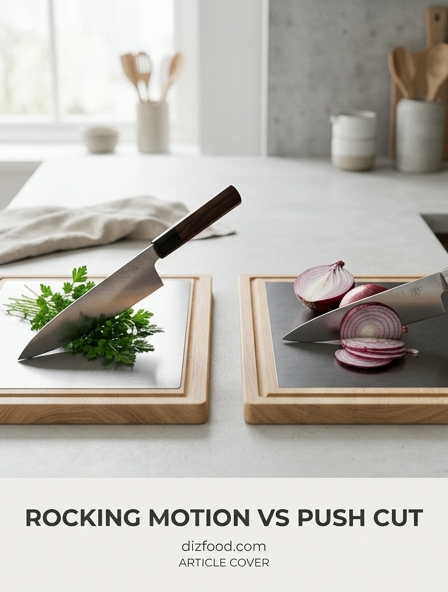
- Apply a rhythmic rocking motion, keeping the tip of the knife on the board.
- Move the guiding hand backward incrementally as the dicing progresses.
Furthermore, maintaining a "fulcrum point" is vital for stability. Instead of lifting the entire knife off the board, the tip should remain anchored during dicing tasks. This reduces the risk of the blade slipping or bouncing, which often occurs when excessive force is applied to hard vegetables. A controlled, fluid motion is always safer than a fast, erratic one.
Selecting the Ideal Cutting Board
The relationship between the blade and the cutting surface determines how quickly an edge dulls and how likely the knife is to slip. A surface that is too hard, such as glass, marble, or ceramic, will cause the microscopic edge of the knife to roll or chip almost instantly. Conversely, surfaces that are too soft can harbor bacteria or allow the blade to "bite" too deeply, resulting in unpredictable movements. The ideal board provides enough "give" to preserve the edge while remaining easy to sanitize.
| Material | Blade Impact | Safety Rating |
|---|---|---|
| End-Grain Wood | Gentle/Self-healing | Excellent |
| High-Density Plastic | Moderate/Durable | Good |
| Bamboo | Abrasive/Hard | Fair |
| Glass/Stone | Destructive | Poor |
Stability is the final safety consideration for any cutting board. A board that slides during use is a significant hazard. If a board lacks rubber feet, placing a damp paper towel or a specialized silicone mat underneath can provide the necessary friction to lock the surface in place, ensuring the user has total control over every cut.
Proper Handwashing for High Carbon Steel
High carbon steel knives are prized for their exceptional sharpness and edge retention, but they require specific care to remain safe and functional. Unlike stainless steel, high carbon alloys are highly susceptible to oxidation and corrosion. If left wet or dirty, these blades can develop rust spots or "pitting," which can compromise the structural integrity of the metal. A weakened blade is a dangerous blade, as it is more prone to snapping under pressure or developing jagged edges that hinder smooth cutting.
To clean these knives properly, they should be hand-washed immediately after use with mild soap and warm water. A soft sponge is preferred over abrasive pads to avoid scratching the finish. It is imperative to never leave a high carbon knife soaking in a sink, as prolonged submersion accelerates oxidation and obscures the blade from view, creating a hazard for anyone reaching into the water. After washing, the blade must be dried thoroughly with a clean towel. Some chefs apply a food-grade mineral oil to the blade to create a protective barrier against moisture, ensuring the steel remains pristine and the edge stays sharp for the next task.
Advanced Storage Solutions for Blade Protection
Loose storage is one of the primary causes of both blade damage and accidental injury. When knives are stored in a drawer without protection, they can collide with other utensils, causing nicks in the edge that lead to unpredictable cutting performance. Furthermore, reaching into a cluttered drawer filled with exposed blades is a frequent source of deep lacerations. Advanced storage solutions aim to isolate each blade, protecting both the tool and the user.
- Magnetic Strips: Wall-mounted bars that hold knives securely by the flat of the blade.
- Slotted Blocks: Traditional wooden or plastic blocks that keep edges shielded.
- In-Drawer Organizers: Horizontal slots designed to keep knives separate and stationary.
- Blade Guards: Individual plastic or felt-lined sleeves for knives kept in bags or kits.
Magnetic strips are often preferred in professional settings because they keep the blades visible and accessible while ensuring the edge does not touch any hard surfaces. However, care must be taken when removing a knife from a magnet; it should be rolled off the spine rather than pulled straight away to prevent the tip from snapping or the blade from twisting unexpectedly.
Regular Honing for Edge Retention
Honing is often confused with sharpening, but they serve two distinct functions in blade maintenance. While sharpening removes metal to create a new edge, honing realigns the microscopic "teeth" of the blade that become bent or folded during normal use. A knife that feels dull is often just out of alignment. Using a honing rod regularly ensures that the blade remains straight and bites into the food efficiently, reducing the amount of force the user must apply.
- Hold the honing rod vertically with the tip anchored on a non-slip surface.
- Place the heel of the blade against the top of the rod at a 15 to 20-degree angle.
- Pull the knife downward and toward you in a smooth, sweeping arc.
- Repeat the process on the opposite side of the rod to ensure a centered edge.
Frequent honing-ideally before every significant prep session-keeps the knife performing at its peak. This practice prevents the user from overcompensating with excessive pressure, which is a leading cause of the knife slipping off the food and toward the hand. A well-honed knife requires minimal effort to glide through produce, significantly enhancing overall kitchen safety.
Avoiding Common Sharpening Mistakes
Improper sharpening can ruin a high-quality knife and create a tool that is dangerous to handle. One of the most frequent errors is using the wrong angle on a whetstone. If the angle is too steep, the edge will be thick and inefficient; if it is too shallow, the edge will be fragile and prone to rolling. Maintaining a consistent angle throughout the entire stroke is the hallmark of safe sharpening. Inconsistency creates a "wavy" edge that can catch on food or skip during a cut.
Another common mistake is neglecting to lubricate the sharpening stone. Whether using water or oil, lubrication carries away the "swarf"-the tiny metal shavings-and prevents the stone's pores from clogging. Without proper lubrication, heat can build up, potentially damaging the temper of the steel and making the blade brittle. Finally, failing to "de-burr" the knife after sharpening leaves a microscopic wire edge. This burr can break off into food or cause the knife to feel deceptively sharp but perform inconsistently. Always finish by stropping the blade on a fine stone or leather to ensure a clean, stable, and predictable cutting edge.
The Role of Blade Guards and Sheaths
For chefs who travel or home cooks with limited storage, blade guards and sheaths are indispensable safety tools. A guard acts as a secondary skin for the knife, ensuring that even if a blade is dropped or mishandled while in transit, the sharp edge remains inaccessible. Professional-grade guards are often lined with felt or soft plastic to prevent the interior from scratching the blade's surface, while the exterior is made of rigid materials like Kydex or heavy-duty polypropylene to resist punctures.
Using a guard is especially important when transporting knives in a knife roll. Without individual sheaths, blades can rub against one another or even cut through the fabric of the roll itself. A sheath also protects the user when they are searching through a bag; it provides a clear physical and visual indicator of the blade's orientation. When selecting a guard, it is vital to ensure a snug fit. A guard that is too loose can slide off prematurely, while one that is too tight may require excessive force to remove, potentially leading to a slip. A properly fitted sheath should snap into place, providing a secure lock that only releases when intentional pressure is applied.
Identifying Signs of Structural Damage
A knife that is structurally compromised is a significant liability in the kitchen. Regular inspections should be conducted to identify wear and tear that could lead to failure during use. The most common sign of damage is a "chipped" edge, where small fragments of the metal have broken away. These chips create snag points that can cause the knife to jerk or stop mid-cut. Additionally, users should look for "rolling," where the very fine edge of the blade has folded over to one side, which is often visible as a bright line when viewed under direct light.
- Cracked Handles: Can harbor bacteria and indicate the handle may break.
- Loose Bolster: Suggests the tang is no longer securely fastened.
- Bent Tips: Often caused by prying, these can cause the knife to track off-center.
- Pitting: Deep corrosion that eats into the steel, weakening the blade.
If the handle feels "wobbly" or if there is a gap between the scales and the tang, the knife should be removed from service immediately. Such gaps allow moisture to seep into the handle, leading to internal rot or rust, which eventually causes the blade to separate from the handle during use-an extremely dangerous scenario.
Routine Professional Maintenance Protocols
While daily honing and careful washing are essential, professional knives require periodic deep maintenance to keep them in peak condition. Over time, repeated sharpening can thicken the area behind the edge, making the knife feel "wedgy" even if it is sharp. Professional "thinning" involves removing metal from the primary grind of the blade to restore its original geometry. This ensures the knife passes through food with minimal resistance, reducing the physical strain on the chef's wrist and shoulder.
| Service | Frequency | Benefit |
|---|---|---|
| Thinning | Every 12-24 Months | Restores cutting geometry |
| Full Sharpening | Every 3-6 Months | Resets the primary bevel |
| Handle Re-oiling | Monthly | Prevents wood cracking |
| Chip Removal | As Needed | Ensures smooth cutting |
Engaging a professional bladesmith ensures that the temper of the steel is never compromised by high-heat mechanical grinders. A professional will also inspect the alignment of the blade and the integrity of the rivets. By following a structured maintenance schedule, the lifespan of a quality blade is extended indefinitely, and the risk of accidents caused by tool failure is virtually eliminated.

Comments