
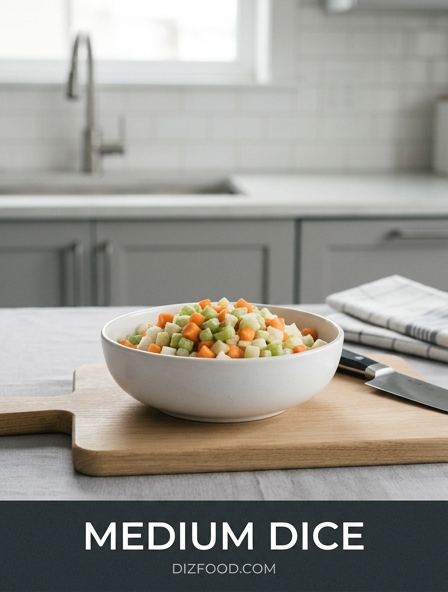
Understanding the Medium Dice Standard Dimensions
The medium dice is a foundational culinary knife cut that serves as a bridge between the delicate small dice and the chunky large dice. In professional kitchens, precision is paramount to ensure that every piece of food cooks at the same rate. The standard measurement for a medium dice is a cube measuring exactly 1/2 inch by 1/2 inch by 1/2 inch, or approximately 13 millimeters on all sides. This size is often preferred for hearty stews, roasted root vegetables, and sautéed medleys where the ingredient needs to maintain its structural integrity while absorbing flavors from the surrounding liquid or fats.
To visualize the progression of classic French knife cuts, consider the following dimensions used in professional training:
| Cut Name | Dimensions (Inches) | Dimensions (Metric) |
|---|---|---|
| Brunoise | 1/8 x 1/8 x 1/8 | 3mm x 3mm x 3mm |
| Small Dice | 1/4 x 1/4 x 1/4 | 6mm x 6mm x 6mm |
| Medium Dice | 1/2 x 1/2 x 1/2 | 13mm x 13mm x 13mm |
| Large Dice | 3/4 x 3/4 x 3/4 | 20mm x 20mm x 20mm |
Achieving this exact cubic shape requires "squaring off" the vegetable first, which results in some trim. While this might seem wasteful, it ensures a professional aesthetic and predictable cooking times.
Essential Tools for Precise Vegetable Dicing
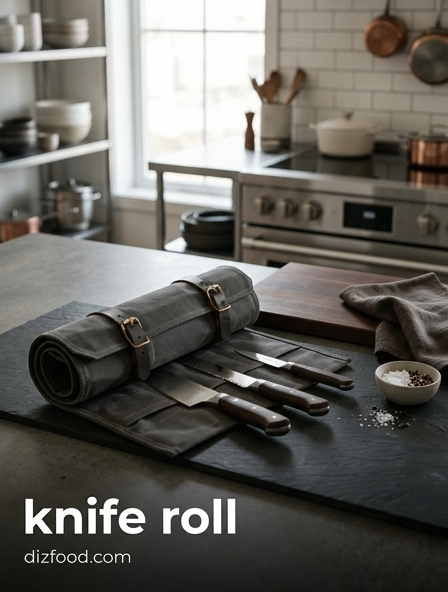
To master the medium dice, a cook must rely on a specific set of high-quality tools that facilitate accuracy and safety. A dull knife is the primary enemy of precision; it requires more force to penetrate the skin of a vegetable, increasing the likelihood of the blade slipping. Professional chefs recommend a well-balanced 8-inch chef's knife for this task, as the blade length provides enough leverage to cut through dense produce like squash or potatoes with a single, fluid motion.
Beyond the blade, the environment plays a critical role in the quality of the dice. A stable cutting surface prevents the board from sliding during heavy chopping. To ensure your kitchen setup is optimized for precision work, consider the following essential items:
- Sharpening Stone: To maintain a razor-sharp edge for clean, straight cuts.
- Honing Rod: Used frequently between tasks to keep the knife's edge aligned.
- Large Cutting Board: Preferably wood or high-density plastic to protect the blade.
- Bench Scraper: To efficiently move diced pieces without dulling the knife edge.
- Ruler or Guide: Often used by beginners to verify the 1/2-inch dimensions.
By investing in these tools and keeping them in top condition, you eliminate the physical barriers to achieving a perfect medium dice, allowing you to focus entirely on your technique.
The Relationship Between Cut Size and Flavor
In culinary science, the way an ingredient is cut significantly impacts the final flavor profile of a dish. This is primarily due to the relationship between surface area and volume. A medium dice provides a substantial surface area for Maillard reaction-the browning process that creates complex, savory flavors-while retaining a center that remains moist and tender. When vegetables are diced to 1/2-inch cubes, they offer a specific balance that smaller cuts cannot provide: they are large enough to stand up to long cooking times without dissolving into a puree, yet small enough to release their natural juices into a sauce.
Furthermore, the size of the cut dictates how much aromatics are released. For instance, dicing an onion into medium cubes provides a milder, more textural presence in a soup compared to a fine mince, which would release more sulfur compounds and melt away. This size is ideal for dishes where you want the diner to identify the individual components, allowing the natural sweetness of a carrot or the earthiness of a potato to shine through. Consistent sizing ensures that no single piece becomes over-caramelized and bitter while others remain raw, resulting in a harmonious and well-rounded flavor experience in every spoonful.
Preparing Your Workspace for Knife Work
Efficiency in the kitchen starts with a disciplined workspace, often referred to by the French term "mise en place." Before the first cut is made for a medium dice, the cook must organize the environment to minimize movement and maximize safety. A cluttered station leads to mistakes and uneven cuts. Start by securing your cutting board; if it does not have rubber feet, place a damp paper towel or a thin silicone mat underneath to prevent it from shifting during use.
Organization of materials should follow a logical flow, typically moving from the raw ingredient to the finished product. To maintain a clean and professional station, follow these organizational steps:
- Prep Zone: Place unwashed and unpeeled vegetables to one side of the board.
- Scrap Bowl: Keep a dedicated bowl for peels and trimmings to keep the board clear.
- Product Container: Have a clean bowl ready to receive the finished medium-diced pieces.
- Knife Placement: When not in use, the knife should always be placed at the top of the board with the blade facing away from the cook.
By maintaining a clear central area for the actual cutting, you ensure that you have enough room to square off vegetables and line up batonnets without interference. This systematic approach reduces stress and allows for greater focus on the 1/2-inch precision required.
A Step by Step Guide to the Medium Dice
Achieving a perfect medium dice is a mechanical process that transforms an irregular vegetable into uniform 1/2-inch cubes. The process begins with stabilizing the ingredient so it does not roll on the board, which is both a safety hazard and a barrier to precision. For round vegetables like potatoes or carrots, this involves slicing a thin sliver off one side to create a flat base. Once the vegetable is stable, you must "square it off" by cutting the remaining sides to create a rectangular block, or "pomme de terre."
Follow these steps to complete the transformation:
- Slicing Planks: Cut the squared-off vegetable lengthwise into uniform planks that are exactly 1/2 inch thick.
- Creating Batonnets: Stack the planks and cut them lengthwise again into 1/2-inch wide sticks, known as batonnets.
- The Final Dice: Line up the batonnets horizontally. Using a steady rocking motion or a straight downward push, cut across the sticks at 1/2-inch intervals.
Throughout the process, it is vital to maintain a consistent grip and ensure the knife stays perpendicular to the board. Any deviation in the angle will result in trapezoids rather than cubes, which compromises the uniformity of the final dish.
Why Uniformity Ensures Even Cooking Results
The primary reason culinary schools emphasize the medium dice is not just for aesthetics, but for the physics of heat transfer. When food is placed in a pan or a pot, heat travels from the outside toward the center of each piece. If a batch of potatoes contains some 1/2-inch cubes and other 1/4-inch pieces, the smaller pieces will be overcooked and mushy by the time the larger ones reach the desired tenderness. This discrepancy leads to a poor dining experience where some bites are unpleasantly crunchy and others lack texture.
Uniformity in dicing is particularly critical in high-heat applications like roasting or sautéing. In these methods, the exterior of the vegetable can burn quickly if the pieces are too small, while the interior remains raw if they are too large. By adhering to the medium dice standard, you ensure that the ratio of surface area to volume is identical across all pieces. This allows the cook to predict exactly when the entire batch will be finished. Whether you are simmering a mirepoix or roasting a tray of squash, consistent dimensions guarantee that every morsel reaches the peak of its flavor and texture simultaneously, reflecting a high level of technical skill.
Improving Mouthfeel with Consistent Dicing Techniques
Mouthfeel is a critical component of food enjoyment, referring to the physical sensations produced by food in the mouth. A medium dice provides a "substantial" bite that is highly satisfying in rustic and comfort dishes. When every piece of a vegetable is exactly 1/2 inch, the tongue perceives a sense of order and balance. This consistency prevents the "distraction" of an uneven texture, where a diner might unexpectedly bite into a hard, undercooked center or a disintegrating, overcooked fragment.
Beyond the individual piece, dicing affects how ingredients interact on the palate. Consider these benefits of consistent mouthfeel:
- Bite Integration: Multiple ingredients of the same size fit onto a single spoon, allowing the diner to taste the entire flavor profile at once.
- Chew Factor: Medium-diced vegetables provide enough resistance to require chewing, which slows down the eating process and enhances flavor perception.
- Sauce Adherence: The flat, uniform surfaces of a cube allow sauces and glazes to coat each piece evenly.
By mastering the medium dice, you move beyond mere food preparation and begin to engineer the sensory experience of the meal. The resulting "clean" texture is a hallmark of professional-grade cooking that elevates a simple vegetable medley into a refined culinary presentation.
Selecting the Right Produce for Dicing Practice
Not all vegetables are created equal when it comes to practicing knife skills. For beginners, it is best to choose produce that is firm, relatively inexpensive, and holds its shape well. Soft or fibrous vegetables can be frustrating to work with and may bruise if the knife is not perfectly sharp. Potatoes are widely considered the gold standard for dicing practice because their starchy, dense flesh provides enough resistance to help you feel the blade moving through the product without being overly difficult to cut.
When selecting produce for your next practice session, consider the following characteristics:
| Vegetable Type | Difficulty | Reason for Selection |
|---|---|---|
| Russet Potato | Easy | Rigid structure; easy to square off into blocks. |
| Carrot (Large) | Medium | Dense and long; good for practicing long batonnets. |
| Yellow Onion | Medium | Natural layers help guide dicing, though requires more control. |
| Butternut Squash | Hard | Very dense; requires significant force and control. |
Starting with potatoes allows you to focus on the 1/2-inch measurements and the "claw grip" without worrying about the vegetable slipping or collapsing. As your confidence grows, moving to tougher or more irregular vegetables like parsnips or celery root will further refine your precision and blade control.
Safety First Essential Knife Handling Tips
Precision dicing requires close contact between the knife and the hands, making safety the most important part of the process. The most common injury in the kitchen occurs when a vegetable rolls or when the "guiding hand" is positioned incorrectly. To prevent accidents, always utilize the "claw grip." This technique involves curling your fingertips inward toward your palm and using your knuckles as a guide for the side of the knife blade. This ensures that the sharp edge is never in a position to cut the tips of your fingers.
Safety also extends to how you handle the knife itself. Consider these fundamental rules for a safe workspace:
- Keep it Sharp: A sharp knife is safer than a dull one because it won't slip off the smooth skin of vegetables.
- Walk with Caution: If moving through a kitchen with a knife, hold it pointed down at your side and announce "knife" to those around you.
- The "No-Catch" Rule: If a knife falls, step back and let it hit the floor; never attempt to catch a falling blade.
- Focus on the Task: Never look away from your hands while dicing, even if someone is speaking to you.
By establishing these habits early, you create a safe environment where you can focus on the technical aspects of the medium dice without the fear of injury. Discipline in safety leads to confidence in technique.
From Prep to Plate Culinary Uses for Medium Dice
The medium dice is one of the most versatile cuts in the kitchen, finding its way into a vast array of global cuisines. Because of its 1/2-inch dimensions, it is the standard choice for "mirepoix" (the aromatic base of onions, carrots, and celery) in hearty soups like minestrone or beef stew. In these applications, the vegetables need to cook for 30 to 60 minutes; a smaller cut would disintegrate, while a medium dice maintains its shape and provides a pleasing texture in every spoonful.
Beyond soups, the medium dice is essential for several popular cooking preparations:
- Roasting: Root vegetables like sweet potatoes and beets caramelize beautifully at this size without drying out.
- Home Fries: Potatoes cut into 1/2-inch cubes ensure a crispy exterior and a fluffy, mashed-potato-like interior.
- Chunky Salsas: Provides a rustic, handmade appearance to pico de gallo or fruit salsas.
- Corned Beef Hash: The uniform cubes allow the meat and vegetables to sear evenly in a hot skillet.
Whether you are preparing a refined French ragout or a simple weekend breakfast, the medium dice offers a professional touch that balances aesthetic appeal with practical cooking requirements. Mastering this cut is a major milestone for any home cook or aspiring chef looking to elevate their culinary repertoire.

Comments