
Choosing between a Microplane and a traditional box grater is a classic kitchen dilemma that often determines the texture and flavor profile of your final dish. While the iconic box grater is a versatile workhorse capable of shredding large blocks of cheddar, slicing potatoes, and handling heavy-duty vegetable prep, the sleek Microplane rasp specializes in precision, delivering cloud-like piles of hard cheese and effortless citrus zest. Whether you are aiming for high-volume efficiency or the aromatic finesse of freshly grated nutmeg and ginger, understanding the distinct strengths of these culinary staples will help you streamline your food prep and master every grating task with professional-grade results.
| Feature | Microplane (Rasp) | Box Grater |
|---|---|---|
| Best For | Zesting, hard cheeses, garlic, ginger | Soft/semi-hard cheeses, veggies, slicing |
| Blade Variety | Single fine-tooth etched surface | 4-sided (Coarse, fine, shred, slice) |
| Texture Result | Light, fluffy, ultra-fine shavings | Thick shreds, ribbons, or granules |
| Ease of Storage | Slim profile; fits in cutlery drawers | Bulky; requires cabinet or deep shelf |
| Cleaning | Quick rinse; narrow blade path | Varies; food traps in corners/interior |
| Control | High precision; handheld ergonomics | Stable base; better for high volume |
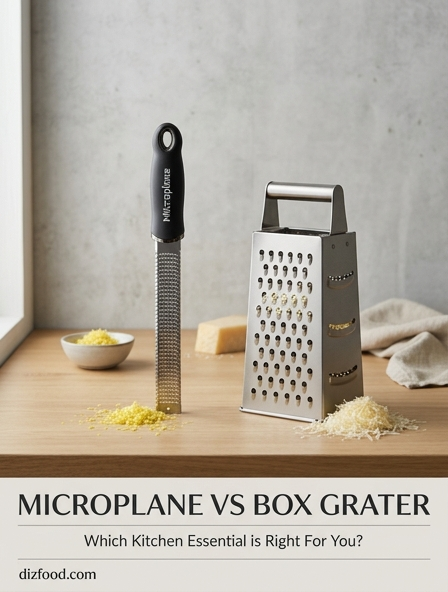
Microplane vs Box Grater Key Differences Explained
Understanding the fundamental differences between a Microplane and a traditional box grater begins with their construction and intended philosophy. The Microplane is a long, slender, handheld tool that utilizes photo-etched teeth. This chemical process creates ultra-sharp edges that act like tiny knives, shaving food rather than tearing it. In contrast, a box grater is a multi-sided, freestanding appliance with stamped metal holes. These holes are generally thicker and less sharp, designed to push food through to create specific shapes and volumes.
| Feature | Microplane | Box Grater |
|---|---|---|
| Blade Type | Photo-etched (Razor sharp) | Stamped metal (Dull/Punch) |
| Primary Action | Shaving and zesting | Shredding and slicing |
| Portability | High (Handheld) | Low (Freestanding) |
| Output Texture | Fine, light, fluffy | Varying widths, substantial |
The box grater is the workhorse for high-volume preparation, offering stability and a reservoir to catch food. The Microplane is a precision instrument, designed for garnishing or extracting intense flavor from small aromatics. While a box grater provides versatility through its four to six different sides, the Microplane offers a level of finesse that a stamped metal tool simply cannot replicate, particularly when dealing with delicate ingredients like citrus skin or hard aged cheeses.
Best Uses for a Microplane in Your Kitchen
The Microplane has revolutionized how professional chefs and home cooks approach aromatics and garnishes. Because of its razor-sharp teeth, it is the superior choice for ingredients that require a delicate touch to release oils without including bitter elements. Its long, narrow profile makes it ideal for grating directly over a finished dish or into a mixing bowl during the final stages of cooking. It excels at creating a "snow-like" texture that melts instantly upon contact with heat.
- Citrus Zesting: Perfect for removing the colorful outer layer of lemons, limes, and oranges without hitting the bitter white pith.
- Hard Cheeses: Ideal for Parmesan, Pecorino, or Manchego, creating a light, voluminous pile that incorporates easily into sauces.
- Aromatics: Quickly turns cloves of garlic or knobs of fresh ginger into a fine paste.
- Hard Spices: The go-to tool for freshly grating whole nutmeg, cinnamon sticks, or star anise.
- Chocolate and Nuts: Used for dusting desserts with fine chocolate shavings or hazelnut powder for an elegant finish.
Beyond these common uses, the Microplane is also excellent for removing burnt edges from cookies or toast. Because it removes such a thin layer of material at a time, it allows for extreme control that a box grater or a knife cannot provide. If your recipe calls for a "hint" of a strong flavor, the Microplane is the tool that ensures that flavor is evenly distributed throughout the entire dish.
When to Choose a Traditional Box Grater
While the Microplane wins on precision, the traditional box grater is the undisputed champion of volume and variety. When a recipe requires a large quantity of a specific ingredient-such as two cups of shredded cheese for a casserole or three grated potatoes for hash browns-the box grater is the only efficient choice. Its upright design allows you to use your body weight to push dense vegetables or large blocks of cheese through the blades, which is much less fatiguing than using a handheld zester.
- Soft and Semi-Hard Cheeses: Essential for shredding Cheddar, Monterey Jack, or Mozzarella for tacos, pizzas, and grilled cheese.
- Root Vegetables: The coarse side is perfect for grating carrots for cake, beets for salad, or potatoes for latkes.
- Cold Butter: Many bakers use the coarse side of a box grater to shred frozen butter into flour for perfectly flaky pie crusts or biscuits.
- Cabbage and Large Produce: The slicing side can be used for quick coleslaw or thin cucumber slices when a mandoline is not available.
- Breadcrumbs: A box grater can quickly turn stale bread or toast into coarse breadcrumbs for breading meats.
The internal cavity of the box grater serves as a convenient measuring cup and storage area as you work. This makes it much cleaner for big prep jobs, as the food is contained within the footprint of the tool rather than scattering across the cutting board. For any task where the primary goal is bulk preparation rather than delicate garnishing, the box grater remains the superior kitchen investment.
Comparing Blade Sharpness and Grating Precision
The technical difference between these two tools lies in the manufacturing of the blades. Microplane uses a chemical etching process that creates edges that are microscopically thin and sharp. When you run a piece of food across a Microplane, it is actually sliced into thousands of tiny ribbons. This precision preserves the cell structure of the food, which is why Microplaned garlic is often more potent-the sharp blades cut through the cells cleanly, releasing the essential oils more effectively without bruising the ingredient.
Box graters, conversely, are typically made by stamping or punching holes into a sheet of stainless steel. This creates a raised "tooth" that is relatively thick and blunt. Instead of slicing, a box grater often "tears" or "crushes" the food as it passes through. While this is perfectly acceptable for a block of cheddar or a potato, it is disastrous for citrus zest. A box grater will often tear the zest and press the bitter juices into the pith, whereas a Microplane cleanly lifts the zest away. This difference in sharpness also affects the effort required; a sharper blade requires less pressure, reducing the risk of the food slipping and causing an injury.
Precision also extends to the final texture. Because the Microplane teeth are uniform and tiny, the output is incredibly consistent. Box graters, due to their stamped nature, often produce irregular shreds. This is a benefit when you want a rustic texture in a carrot cake, but a disadvantage when you need a smooth emulsion in a lemon vinaigrette or a delicate dusting of chocolate over a latte.
Zesting vs Shredding Performance Comparison
The terms "zesting" and "shredding" are often used interchangeably, but in the culinary world, they represent very different textures and outcomes. Zesting refers to the removal of the very top layer of citrus peel, while shredding involves turning a solid mass into long, thin strips. The Microplane is the gold standard for zesting, while the box grater is the workhorse for shredding. The performance gap between the two becomes most evident when you attempt to use one tool for the other's specialty.
| Task | Microplane Performance | Box Grater Performance |
|---|---|---|
| Citrus Zesting | Excellent; light, aromatic, no pith. | Poor; clunky, often includes bitter pith. |
| Cheese Shredding | Good for hard cheese; poor for soft. | Excellent; creates perfect melting strips. | Too slow for large quantities. | Very efficient for salads and slaw. |
| Hard Spices | Superior; creates a fine powder. | Difficult; spices often fall through. |
When shredding a soft cheese like Mozzarella, a Microplane will often become clogged, turning the cheese into a gummy paste because the teeth are too fine. Conversely, attempting to zest a lime on the fine side of a box grater usually results in the zest getting stuck in the holes, leaving you with more wasted fruit than usable ingredient. Choosing the right tool depends entirely on whether the recipe calls for the ingredient to disappear into the dish (zesting/Microplane) or to provide a distinct textural element (shredding/box grater).
Cleaning and Maintenance Tips for Graters
Cleaning a grater can be a frustrating and potentially dangerous task if not handled correctly. Because of the sharp, multi-directional teeth, sponges are often shredded, and fingers are at risk of being cut. For both tools, the golden rule of maintenance is to rinse them immediately after use. Once cheese or citrus oils dry inside the small crevices, they become significantly harder to remove without aggressive scrubbing that can dull the blades.
- The Directional Wipe: Always wash and dry the grater in the direction of the blades, never against them, to avoid cutting your cloth or sponge.
- The Toothbrush Method: For stubborn bits of ginger or garlic stuck in a Microplane, use a stiff-bristled kitchen brush or an old toothbrush to flick the particles out.
- Lemon for Deodorizing: If your grater smells like garlic, rub a cut lemon over the surface before washing to neutralize the odor.
- Dishwasher Caution: While many graters are labeled dishwasher safe, the high heat and harsh detergents can eventually dull the chemically etched teeth of a Microplane. Hand washing is always recommended for longevity.
- Dry Thoroughly: Stainless steel can still rust if water sits in the crevices of a box grater's seams. Air dry them upside down to ensure moisture escapes the interior.
Proper storage is also part of maintenance. Microplanes often come with a plastic protective cover; using it prevents the teeth from rubbing against other metal utensils in a drawer, which maintains sharpness. For box graters, ensuring they are stored in a dry cabinet where they won't be crushed by heavier pots is essential for keeping the frame aligned and stable.
Storage and Kitchen Space Saving Considerations
Kitchen real estate is often at a premium, and the choice between these two tools may come down to your available storage space. The Microplane is the ultimate space-saver. Its slim, wand-like profile allows it to fit easily into a utensil crock, a shallow cutlery drawer, or even hung on a magnetic knife strip. For those living in small apartments or "tiny homes," the Microplane offers professional functionality without occupying more than a few square inches of space.
The box grater, by comparison, is a bulky object. It requires significant vertical clearance in a cabinet or a deep drawer. Its hollow center is essentially wasted space unless you find a creative way to use it, such as nesting smaller items inside. However, many modern box graters are designed to be "collapsible." These models feature hinges that allow the grater to fold flat, bridging the gap between the versatility of the box design and the storage convenience of the Microplane. If you have a large kitchen with plenty of deep drawers, the box grater's footprint is a non-issue, but for minimalist cooks, it can be a nuisance.
Another factor is accessibility. A Microplane is light and can be grabbed with one hand for a quick task like adding a dusting of nutmeg to a morning coffee. A box grater usually requires two hands to retrieve and set up on a stable surface. When considering which to buy, think about your most frequent cooking habits; if you find yourself needing a quick zest or a small amount of cheese daily, the easily accessible Microplane is more convenient. If you only grate once a week for Sunday meal prep, the box grater can live in the back of the pantry until needed.
Safety and Ease of Use for Home Cooks
Safety is a paramount concern when dealing with tools designed to shave and shred. Both the Microplane and the box grater present unique risks. The Microplane is incredibly sharp; a slight lapse in concentration can result in a painful "manicure" or a cut to the fingertip. Because it is handheld, there is also a risk of the tool slipping if you are grating a particularly hard ingredient. However, many Microplanes now feature ergonomic, non-slip rubber handles and rubber feet at the tip to provide stability against a cutting board.
- Use a Guard: Many manufacturers sell "cut-resistant" gloves or plastic finger guards. These are highly recommended for beginners using a Microplane.
- Stability First: When using a box grater, always ensure it is placed on a non-slip surface. Some models have rubberized bases, but placing a damp paper towel underneath a metal-bottomed grater works just as well.
- The Flat Palm Technique: As the ingredient gets smaller, stop using your fingertips to hold it. Switch to using your flat palm to press the food against the grater to keep your fingers away from the blades.
- Don't Rush: Most injuries happen when trying to grate the last half-inch of an ingredient. It is better to discard the small "nub" or chop it with a knife than to risk your knuckles.
In terms of ease of use, the box grater is generally more stable for people with limited grip strength because it rests on the counter. The Microplane requires a firm grip and sustained tension in the arm to hold it steady over a bowl. For cooks with arthritis or other hand mobility issues, a box grater with a large, chunky top handle is often the more comfortable and safer option for long prep sessions.
Versatility of Multi Sided Box Graters
The primary argument for owning a box grater is its "all-in-one" nature. While a Microplane does one thing perfectly, a high-quality box grater does four to six things quite well. Most standard box graters include a coarse shredding side, a fine shredding side, a slicing blade, and a "star" surface for pulverizing hard items like chocolate or ginger. This versatility makes it an essential tool for those who want to minimize the number of gadgets in their kitchen.
The coarse side is the most used, perfect for semi-hard cheeses and hearty vegetables. The fine side (which mimics a lower-quality Microplane) works for small amounts of zest or hard cheese. The slicing blade, though rarely as sharp as a dedicated mandoline, is excellent for making quick slices of potatoes or cucumbers. Some advanced models even include a "shaving" side that creates wider, thinner ribbons of cheese, which are perfect for garnishing Caesar salads.
- Coarse Hole: Best for Cheddar, Gouda, potatoes, and zucchini.
- Fine Hole: Best for cold Parmesan, citrus zest (in a pinch), and garlic.
- Slicing Slot: Best for raw vegetables like radishes or carrots.
- Star Punch: Best for cinnamon, nutmeg, or making very fine vegetable pulps.
Because all these functions are contained within a single frame, the box grater represents excellent value for money. For a home cook who is just starting out, a box grater provides a wide range of culinary possibilities that would otherwise require multiple specialized tools. It is the Swiss Army knife of the grating world, offering a breadth of utility that the specialized Microplane cannot match.
The Final Verdict Which Grater is Better
When it comes to the final verdict, the question isn't necessarily which grater is "better," but which one fits the way you cook. If you are a gourmet cook who frequently uses fresh citrus, works with whole spices, and finishes every pasta dish with a cloud of Pecorino, the Microplane is an indispensable tool. Its precision and the quality of the "shave" it produces are unmatched by any other manual tool. It elevates the texture and flavor of dishes in a way that a box grater simply cannot.
On the other hand, if you are a practical, high-volume cook who prepares family meals, bakes often, or loves making salads and slaws, the box grater is your best friend. Its stability and capacity for handling large volumes of cheese and vegetables make it a kitchen workhorse that saves significant time during prep. The box grater offers a level of utility and versatility that makes it the more logical first purchase for a new kitchen.
Ultimately, most well-equipped kitchens should have both. They are not redundant tools; they are complementary. Use the box grater for the heavy lifting-the mountains of cheddar for macaroni and cheese or the pile of carrots for a cake. Reserve the Microplane for the finishing touches-the dusting of nutmeg over a béchamel or the fine lemon zest that brightens a piece of seared fish. By owning both, you ensure that you have the right tool for every task, from the most rugged meal prep to the most delicate culinary garnishing.


Comments