
Science of Precision Cutting
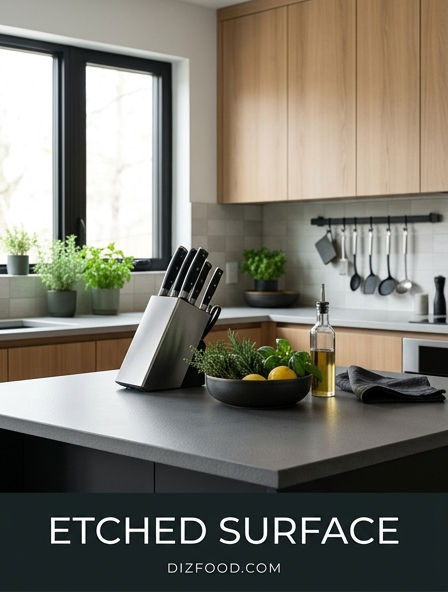
The mechanics of a kitchen knife revolve around the concentration of force over a microscopic surface area. An etched surface on a blade reduces the friction coefficient, allowing for a smoother transition through dense materials. Precision cutting is not merely about the sharpness of the apex but the distribution of pressure along the primary bevel. When a blade encounters an ingredient, the initial fracture is governed by the sharpness, while the subsequent transit is dictated by the blade's surface texture. A properly etched surface helps dissipate the lateral pressure that often causes ingredients to stick or tear.
- Force distribution across the microscopic edge apex.
- Reduction of lateral friction via surface texturing.
- Controlled depth of incision for delicate preparations.
- Enhanced stability during high-speed chopping.
This synergy ensures that the kinetic energy applied by the chef is translated directly into separation rather than deformation. By mastering the science of the edge, a cook can achieve results that are visually stunning and structurally sound.
Preserving Cellular Structure in Vegetables
Slicing vegetables requires a delicate balance to avoid crushing the internal cell walls. When a dull or poorly textured blade passes through a plant, it causes massive cellular collapse, releasing vacuoles containing enzymes. This leads to the rapid degradation of flavor and the leaching of essential vitamins and minerals. An etched surface or a finely honed edge creates a surgical separation, leaving individual cells largely intact. This preservation is vital for maintaining the turgidity of the vegetable, resulting in a crisp, fresh texture that defines high-quality culinary preparations.
Vegetables like bell peppers or tomatoes demonstrate the immediate impact of this precision. A clean cut prevents the "bruising" effect, ensuring that the moisture remains trapped within the cellular matrix until the point of consumption. This technique is particularly important in raw preparations, such as salads or carpaccio, where the natural structural integrity of the ingredient is the primary focus. By respecting the cellular boundary, the chef ensures a superior end product.
Blade Geometry and Clean Fiber Separation
The geometry of a blade, including its taper and the angle of the etched surface, determines how effectively it separates fibers. Meat and fibrous vegetables consist of complex networks of proteins and cellulose. A blade with a narrow inclusive angle and a polished or textured finish minimizes the tearing of these fibers. By aligning the blade geometry with the specific grain of the ingredient, a cook can achieve a separation that looks "shaved" rather than "torn." This precision eliminates the ragged edges that often result in uneven seasoning absorption.
| Angle (Degrees) | Primary Use Case | Resulting Texture |
|---|---|---|
| 15 Degrees | Fine Fish & Poultry | Silky, smooth surface |
| 20 Degrees | General Vegetable Prep | Crisp, clean edges |
| 25 Degrees | Heavy Cleaving | Robust, sturdy cuts |
Understanding these angles allows for the optimization of the etched surface for specific culinary tasks, ensuring that the fiber separation is as clean as possible for every ingredient type.
Impact of Sharpness on Ingredient Moisture
Moisture retention is the hallmark of a correctly prepared dish. The sharpness of a blade, specifically how the etched surface tapers to the edge, plays a critical role in preventing juice loss. When a blade is dull, it acts as a wedge that compresses the ingredient, squeezing out internal liquids before the cut is even completed. This is particularly noticeable with proteins, where the loss of myoglobin results in a dry, unappealing texture. A sharp, refined edge shears through the fibers instantly, bypassing the compression phase.
As a result, the capillary action that usually draws moisture out of the meat is not triggered. The juices remain suspended within the structure, ensuring that the final cooked product retains its succulent properties. This is why a professional-grade edge is not just a matter of convenience, but a necessity for maintaining the hydration levels of premium ingredients. Every cut made with a dull tool is a direct loss of flavor and quality that cannot be recovered through cooking.
Advanced Alloys for Effortless Slicing
Modern kitchen tools utilize advanced alloys to achieve superior slicing capabilities. These materials allow for a harder etched surface that can be ground to a much finer edge than traditional soft steels. The molecular density of these metals prevents the edge from rolling or chipping when encountering resistant textures, maintaining a consistent performance level throughout a professional shift. These alloys facilitate a phenomenon known as "effortless slicing," where the weight of the knife itself is nearly enough to pass through an ingredient.
- High carbide concentration for superior edge retention.
- Corrosion resistance in acidic culinary environments.
- Structural integrity at extremely thin geometries.
- Increased hardness scales for surgical precision.
By using alloys like VG-10 or high-carbon stainless steel, manufacturers can create blades that hold their etched patterns and sharp apexes longer. This durability ensures that the user experiences minimal resistance, reducing fatigue during repetitive tasks and allowing for more consistent culinary execution across large batches of food.
Reducing Oxidation Through Refined Edges
Oxidation is a chemical reaction that occurs when the internal tissues of fruits and vegetables are exposed to oxygen. A rough, torn cut surface-often caused by a dull blade or a high-friction surface-increases the total surface area exposed to the air. This accelerates the browning of apples, avocados, and potatoes. Refining the blade edge and utilizing an etched surface to reduce "sticking" creates a smoother cross-section with less trauma to the plant's skin and flesh.
This smooth surface has a smaller total area compared to a jagged, torn surface, which significantly slows down the enzymatic browning process. By minimizing the trauma to the ingredient, the chef preserves the aesthetic and nutritional integrity of the produce for a longer duration. This ensures that salads and garnishes remain vibrant from the prep table to the guest's plate. Proper maintenance of the blade's etched surface is therefore a key factor in food preservation and visual presentation in professional kitchens.
Achieving Uniformity for Even Cooking
Uniformity in cutting is not just about aesthetics; it is a fundamental requirement for even heat distribution. If pieces of an ingredient vary in size, the smaller pieces will overcook while the larger ones remain raw. An etched blade surface aids in this uniformity by providing consistent feedback to the user and reducing the drag that causes slices to taper. The predictability of the blade's movement ensures that every cut is a replica of the last.
Whether performing a brunoise, julienne, or batonnet, the reduced friction of a textured surface allows for more precise control over the thickness of each slice. This consistency allows for a synchronized chemical transformation during the cooking process, such as caramelization or protein denaturation. In a professional setting, this uniformity is the difference between a balanced dish and one where textures clash. The etched surface acts as a facilitator for this precision, allowing the chef to maintain a rhythm that produces perfectly identical pieces every time.
The Physics of Non-Stick Blade Coatings
The struggle with ingredients sticking to the side of a knife is a common frustration. To solve this, manufacturers often employ etched surfaces or "Granton" edges-a series of hollowed-out divots. These features function by creating air pockets between the blade and the ingredient. By reducing the surface area in contact with the slice, the etched texture prevents the "suction" effect commonly seen with starchy vegetables like potatoes.
- Atmospheric pressure: Air pockets break the vacuum seal between steel and food.
- Surface tension: Texturing disrupts the liquid bond of moist ingredients.
- Friction reduction: Less surface contact equals less drag during the stroke.
This allows for a continuous, rhythmic cutting motion, significantly increasing efficiency and safety during high-volume prep work. When the ingredient falls away from the blade naturally, the chef does not have to stop to clear the knife, leading to a safer and more streamlined workflow in the kitchen.
Enhancing Mouthfeel with Micro-Serration
Mouthfeel is an essential component of the dining experience, and it begins with how a tool interacts with food. Micro-serrations or specific etched patterns on a blade can influence the texture of the final cut. While a smooth edge is ideal for a clean shear, a slight micro-texture can create a surface that holds sauces better. In certain culinary traditions, blades are designed to leave a slightly textured surface on proteins to enhance the way the food interacts with the palate.
This delicate roughness increases the surface area for flavor absorption without compromising the structural integrity of the protein. The result is a more complex sensory perception where the smoothness of the interior contrasts with the textured exterior of the slice. This technique elevates the overall palatability of the dish, proving that the finish of the blade's edge has a direct impact on the diner's perception of quality and flavor intensity. Precision etching thus becomes a tool for sensory design.
The Connection Between Blade Hardness and Texture
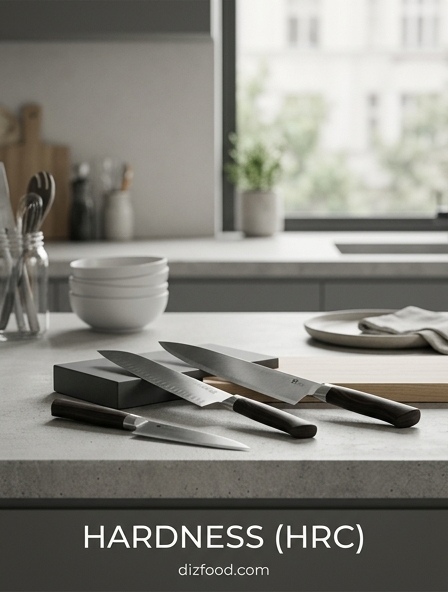
The hardness of a knife, usually measured on the Rockwell scale (HRC), directly correlates with its ability to maintain an etched surface and a refined edge. Harder steels can support more acute angles, which translates to a more precise interaction with the food's texture. A harder blade ensures that the micro-geometry of the edge does not deform under pressure, allowing the chef to navigate through complex textures with surgical accuracy.
| Hardness (HRC) | Edge Retention | Impact on Food |
|---|---|---|
| 54-56 | Low | Higher risk of crushing delicate fibers |
| 58-59 | Moderate | Standard clean cuts for daily use |
| 60-63 | High | Preserves delicate micro-textures perfectly |
This stability is essential when working with ingredients that have varied densities, such as crusty bread with a soft interior or fish with tough skin. A blade that maintains its hardness ensures that the transition between different textures is seamless and effortless.

Comments