
Mastering the Essential Tools for Precision Grating
The Microplane has transitioned from a woodworking shop to a mandatory fixture in the modern kitchen, revolutionizing how chefs approach ingredient preparation. Unlike traditional stamped metal graters that tear and shred, Microplane tools utilize a unique photo-etching process to create razor-sharp edges. These edges act like tiny knives, shearing ingredients with surgical precision. This distinction is vital for maintaining the structural integrity of the food, ensuring that moisture and oils remain within the shavings rather than being crushed onto the surface of the tool. Mastery of these tools begins with understanding the specific utility of various blade styles.
- Fine Grater: Ideal for zest, hard spices, and creating pastes from aromatics.
- Ribbon Blade: Produces medium-sized curls, perfect for chocolate or soft cheeses.
- Extra Coarse: Designed for substantial textures, often used for potatoes or apples.
Professional results require a firm grip and a consistent angle of attack. By allowing the weight of the ingredient to dictate the pressure, the chef avoids clogging the teeth, ensuring a continuous flow of perfectly processed material. This precision not only affects the aesthetic of the dish but also significantly impacts the flavor profile by maximizing the release of essential oils and aromatic compounds.
The Art of Zesting Citrus for Maximum Aroma
Zesting is a fundamental culinary skill that extracts the concentrated oils stored in the flavedo, the colorful outer layer of citrus fruit. The Microplane is the gold standard for this task because it can shave the zest so finely that it instantly dissolves into batters, dressings, or sauces. The primary challenge in zesting is avoiding the albedo, or the white pith, which introduces an undesirable bitterness. To achieve maximum aroma, one must use a light touch and rotate the fruit frequently.
- Hold the citrus fruit in your non-dominant hand and the Microplane in your dominant hand.
- Place the blade over the fruit, grating from the top down to observe exactly how much skin is being removed.
- Rotate the fruit after one or two short strokes to ensure you only capture the vibrant, oil-rich surface.
- Tap the frame of the tool against your wrist to release any trapped zest.
The resulting citrus "snow" provides a punch of acidity and fragrance that cannot be replicated by juice alone. Using a Microplane ensures that the delicate zest remains light and fluffy, preventing it from clumping or becoming a soggy mass during the preparation process.
Achieving Perfect Textures with Hard Cheeses
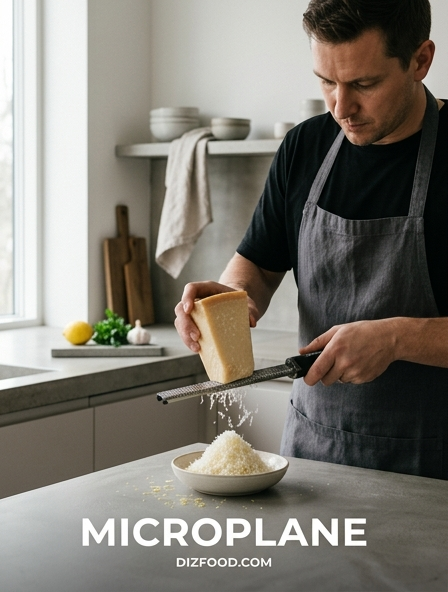
Hard cheeses like Parmigiano-Reggiano, Pecorino Romano, and aged Manchego require a specific approach to release their full savory potential. Conventional box graters often produce dense, heavy shards that can overwhelm a delicate pasta or salad. In contrast, a fine-blade Microplane creates a voluminous, cloud-like texture that melts almost instantly upon contact with heat. This increased volume means you can use less cheese by weight while achieving a more significant visual and flavor impact.
| Cheese Type | Recommended Blade | Resulting Texture |
|---|---|---|
| Parmigiano-Reggiano | Fine / Zester | Light, fluffy snow |
| Pecorino Romano | Fine | Fine powder for emulsification |
| Aged Manchego | Ribbon | Elegant, thin curls |
When grating hard cheese, it is best to use cold ingredients directly from the refrigerator. The firm structure of chilled cheese allows the razor-sharp teeth to bite effectively, resulting in clean cuts rather than smearing. This technique is essential for finishing dishes where the cheese must serve as both a seasoning and an aesthetic garnish.
Advanced Techniques for Grating Fresh Aromatics
Fresh aromatics such as ginger, garlic, and horseradish can be difficult to process into a smooth consistency without a mortar and pestle. However, a Microplane offers an efficient alternative for creating fine pastes that integrate seamlessly into marinades and emulsions. The key to success with fibrous ingredients like ginger is to grate them while they are frozen. This firms up the fibers, allowing the blades to cut through them cleanly without leaving behind a stringy mess.
- Garlic: Grating garlic creates a more intense flavor than mincing because more cells are ruptured.
- Ginger: Use the tool to produce a pulp that releases its juice immediately into the dish.
- Horseradish: Grating fresh root provides a sharp, pungent heat that is lost in bottled versions.
When working with these ingredients, always grate in a singular direction rather than a back-and-forth motion to prevent the fibers from snagging. This technique ensures that the aromatic paste remains uniform, providing a consistent flavor distribution throughout the recipe. The resulting paste is often so fine that it disappears into sauces, providing flavor without the texture of raw chunks.
Unlocking Flavor with Hand Grated Whole Spices
Pre-ground spices begin to lose their potency the moment they are processed, as the volatile oils evaporate over time. Using a Microplane to grate whole spices like nutmeg, cinnamon, and star anise just seconds before serving unlocks a depth of flavor that is otherwise unattainable. The fine teeth of the tool are perfectly spaced to handle the hard, dense structure of these spices, turning them into a fragrant dust that enhances both sweet and savory applications.
- Select high-quality whole spices from a reputable purveyor.
- Hold the spice firmly between your thumb and forefinger.
- Draw the spice across the fine Microplane blade using short, controlled motions.
- Apply the fresh shavings directly over the dish to capture the fleeting aromatic compounds.
For spices like nutmeg, which are often used in creamy sauces or atop cocktails, the Microplane provides a level of control that allows for subtle layering of flavor. This method not only improves the taste but also provides a professional touch to the final presentation. The sheer freshness of hand-grated spices can transform a standard recipe into a gourmet experience.
The Role of Surface Area in Flavor Extraction
The science of flavor perception is heavily influenced by surface area. When an ingredient is shaved into microscopic pieces using a Microplane, its surface-area-to-volume ratio increases exponentially. This allows for faster dissolution of solids into liquids and a more rapid release of aromatic molecules into the air. In a culinary context, this means that the flavor of a Microplaned ingredient is perceived more intensely and immediately by the palate than the same ingredient cut into larger chunks.
- Rapid Emulsification: Fine particles integrate faster into fats and acids.
- Instant Infusion: Aromatics release their essence into soups and stocks almost instantly.
- Texture Modification: Micro-shaved garnishes add flavor without altering the intended mouthfeel of the base dish.
This principle is particularly useful when working with expensive ingredients like truffles or high-quality chocolate. By maximizing the surface area, a chef can achieve a robust flavor profile using a smaller quantity of the ingredient. Understanding the physics of grating allows for more precise seasoning and better cost management in a professional kitchen environment, ensuring every gram of ingredient is utilized to its full potential.
Safety Protocols for Handling Ultra Sharp Blades
Because Microplane tools are engineered with photo-etched technology, they are significantly sharper than standard kitchen graters. This sharpness requires strict adherence to safety protocols to prevent injury. The most common accidents occur when users become complacent during repetitive tasks or when they attempt to grate small remnants of food without proper protection. A professional approach to safety ensures longevity for both the chef and the equipment.
- Always keep your fingers at a safe distance from the blade, stopping before the ingredient becomes too small to hold securely.
- Use a cut-resistant glove if you are processing a large volume of ingredients or working with very small items.
- Always grate in a direction away from your body when possible, or maintain a stable, non-slip grip on the tool's handle.
- Store the tool in its protective sleeve to prevent the blades from dulling and to protect your hands when reaching into drawers.
Furthermore, never attempt to clear trapped food from the blades with your fingers while the tool is in use. Use a kitchen brush or the back of a knife to safely dislodge any stubborn particles. Respecting the cutting power of the Microplane is the first step toward professional proficiency.
Maintenance and Care for Professional Zesting Tools
To maintain the razor-sharp edge of a Microplane, proper cleaning and storage are essential. While many models are labeled as dishwasher safe, the high heat and abrasive detergents found in commercial and home dishwashers can eventually dull the fine teeth. Hand washing is the preferred method for extending the life of the tool. It is crucial to clean the grater immediately after use to prevent food particles, especially sugars and acids, from drying and hardening inside the small perforations.
- Rinse Immediately: Run warm water over the blade from the back side to push out debris.
- Use a Brush: A soft-bristled brush is more effective than a sponge, which can be shredded by the sharp teeth.
- Air Dry: Ensure the tool is completely dry before placing it back in its protective cover to prevent oxidation.
- Avoid Metal-on-Metal: Do not use metal scrapers to clean the teeth, as this can bend or dull the etched edges.
Regular inspection of the blade for any signs of wear or damage ensures consistent performance. A well-maintained Microplane should last for years, providing the same effortless cutting experience as the day it was unboxed. Proper care is an investment in the tool's precision and the quality of your culinary output.
Elevating Plate Presentation with Micro Grated Garnishes
The visual appeal of a dish is significantly enhanced by the addition of delicate, micro-grated garnishes. These fine shavings add a layer of complexity and sophistication that elevates the overall dining experience. Whether it is a dusting of dark chocolate over a dessert or a fine shower of cured egg yolk over a savory appetizer, the Microplane allows for a level of detail that traditional knives cannot achieve. These garnishes serve as a functional element, providing a final hit of flavor and aroma right as the plate reaches the diner.
| Garnish Ingredient | Application | Visual Effect |
|---|---|---|
| Cured Egg Yolk | Pasta / Asparagus | Bright yellow, fine powder |
| Dark Chocolate | Cappuccino / Tarts | Elegant, dark mahogany dust |
| Macadamia Nuts | Salads / Fish | White, creamy flakes |
When garnishing, height and distribution are key. Grating from a distance of several inches above the plate allows the shavings to fall naturally, creating a light, even coating rather than a concentrated pile. This technique ensures that the garnish complements the dish without obscuring the primary components, resulting in a balanced and professional presentation.
Integrating Fine Grating into Modern Culinary Workflows
Efficiency in a professional kitchen relies on the seamless integration of tools into the daily workflow. The Microplane has become an indispensable asset during both the mise en place and service phases. In prep, it speeds up the production of aromatic bases and spice blends. During service, it is often used as a finishing tool, allowing chefs to add fresh, vibrant flavors to a dish at the very last second. This duality makes it a versatile instrument that supports both speed and quality control.
- Mise en Place: Quickly prep garlic and ginger pastes for large-batch sauces.
- Table-side Service: Grate fresh truffles or hard cheeses in front of the guest for an interactive experience.
- Consistency: Ensure every plate receives the exact same texture and volume of garnish.
Modern workflows emphasize the importance of minimizing waste and maximizing flavor. By using a Microplane, chefs can extract more utility from their ingredients, ensuring that every zest of citrus or shaving of spice contributes to the final masterpiece. As culinary trends move toward lighter, fresher, and more aromatic dishes, the role of fine grating will only continue to expand within the professional kitchen.


Comments