
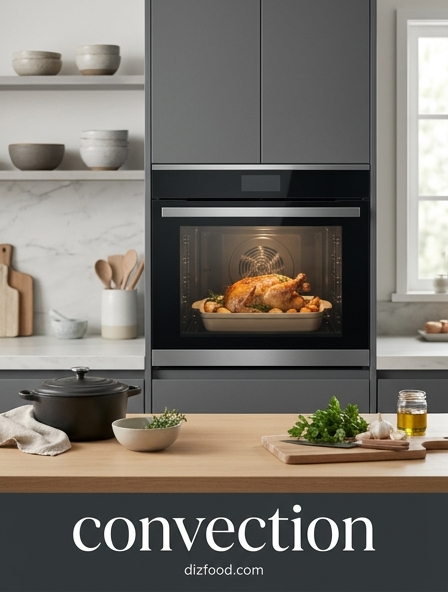
Understanding Convection Fan and Airflow Mechanics
The fundamental difference between a standard oven and a convection model lies in the integration of an internal fan system designed to circulate hot air. In a conventional oven, heat rises from the bottom or radiates from the top, often leading to stagnant air pockets and inconsistent temperature zones. Convection technology addresses this by using a fan-and in "True Convection" models, a third heating element-to force air throughout the cavity. This movement strips away the "cold air envelope" that naturally surrounds food, allowing for a more efficient transfer of thermal energy.
- Active Airflow: Constant movement eliminates hot and cold spots.
- Boundary Layer Reduction: The fan breaks the insulating layer of moisture and cool air around the dish.
- Thermal Efficiency: Forced air cooks food more uniformly by surrounding it with consistent heat.
Because the air is in constant motion, every corner of the oven maintains the same temperature. This mechanical advantage ensures that whether a tray is on the top or bottom rack, it receives the same caloric intensity. Understanding this mechanical process is the first step toward mastering the speed and precision that convection cooking offers to the modern home chef.
Standard Temperature Conversion Guidelines for Baking
When transitioning a traditional recipe to a convection setting, the most critical adjustment is the temperature. Because convection ovens are significantly more efficient at delivering heat, using the temperature specified in a standard recipe often results in overcooking or burning the exterior before the interior is done. The industry standard for this adjustment is the "25-degree rule," which suggests lowering the oven temperature by 25 degrees Fahrenheit (approximately 15 degrees Celsius).
| Conventional Temp | Convection Temp |
|---|---|
| 325°F (165°C) | 300°F (150°C) |
| 350°F (175°C) | 325°F (165°C) |
| 375°F (190°C) | 350°F (175°C) |
| 400°F (200°C) | 375°F (190°C) |
This reduction accounts for the increased rate of heat transfer caused by the moving air. By lowering the baseline temperature, you allow the internal structure of the food to cook at a pace that matches the accelerated browning of the surface. Failure to make this adjustment typically leads to a dry crumb in cakes or an overly dark crust on breads and roasted meats.
Calculating Reduced Cooking Times for Convection Ovens
In addition to lowering the temperature, convection cooking generally reduces the total time required for a dish to reach its target internal temperature. On average, food cooks about 25% faster in a convection environment compared to a conventional one. This acceleration occurs because the moving air continuously replaces the heat absorbed by the food, maintaining a high thermal gradient that speeds up the chemical reactions involved in cooking.
- The 25% Rule: Multiply the original cooking time by 0.75 to estimate the new duration.
- Early Monitoring: Always begin checking for doneness when 70% of the original time has elapsed.
- Variable Factors: Dense items like large roasts may see a greater time reduction than thin cookies.
It is important to note that the time reduction is a variable estimate. Factors such as the volume of food in the oven and the specific fan speed can influence the outcome. To ensure consistency, use the calculated time as a guide rather than a strict rule, and rely on visual cues or a kitchen thermometer to determine the final point of perfection.
Selecting the Right Bakeware for Maximum Circulation
The efficiency of a convection oven is entirely dependent on the ability of air to flow around the food. Consequently, the type of bakeware used can either enhance or hinder the convection process. High-sided pans, such as deep roasting dishes or tall cake tins, create "wind shadows" that block the fan's airflow, effectively turning the interior of the pan into a conventional cooking zone. To maximize the benefits of convection, low-profile bakeware is preferred.
- Baking Sheets: Use rimless or low-rimmed cookie sheets to allow air to sweep across the surface.
- Roasting Racks: Place meats on a V-rack inside a shallow pan to allow air to circulate underneath.
- Perforated Pans: Ideal for breads and pizzas, these allow hot air to hit the bottom of the dough directly.
- Material Choice: Light-colored aluminum is often better than dark non-stick to prevent bottom burning.
By choosing pans with low sides, you ensure that the moving air can reach every surface of the food simultaneously. This leads to the even crisping and uniform browning that characterizes professional-grade convection results.
Optimizing Rack Positioning for Even Heat Distribution
While convection ovens are praised for their even heat, rack positioning remains a vital factor in achieving the best results, especially when cooking multiple items at once. Unlike conventional ovens where the middle rack is the only "safe" zone, convection allows for multi-rack baking. However, there must be sufficient space between the racks and the oven walls to permit the air to move freely. Crowding the oven can choke the airflow and create uneven patches.
- Air Gap: Maintain at least two inches of space between the pans and the oven walls.
- Staggering: If using multiple racks, stagger the pans so they are not directly stacked on top of one another.
- Centrality: For single items, the center rack is still ideal to ensure equal exposure to the top and bottom air paths.
Optimizing your rack setup turns your oven into a high-capacity tool. This is particularly useful during holiday baking or meal prep, as you can bake three sheets of cookies simultaneously without the need to rotate them halfway through, provided the air has enough room to navigate between the layers.
The Role of Convection in Superior Browning and Texture
One of the most celebrated advantages of convection is its ability to produce superior browning and texture, a result of the Maillard reaction being enhanced by moving air. In a conventional oven, moisture evaporating from the food can create a humid micro-climate around the dish, which slows down the crisping process. The convection fan constantly whisks this moisture away, creating a dry environment that allows sugars to caramelize and proteins to brown more efficiently.
This process is particularly beneficial for roasting meats and poultry. The rapid evaporation of surface moisture leads to a crackling, golden-brown skin while the interior remains juicy due to the shortened cooking time. For baked goods like biscuits or puff pastry, the immediate and even heat causes the fats to melt and the steam to expand rapidly, resulting in better lift and flakier layers. When texture is the priority-specifically crispiness, crunch, or a deep golden hue-convection is the superior choice for the kitchen.
When to Use Convection versus Conventional Settings
Despite its efficiency, convection is not a universal solution for every culinary task. There are specific scenarios where the forced air can be detrimental. For instance, delicate items that start as a liquid or thin batter can be "blown" by the fan, leading to lopsided cakes or rippled surfaces. Understanding when to toggle the fan on or off is key to kitchen success.
| Best for Convection | Best for Conventional |
|---|---|
| Roast Meats and Poultry | Custards and Flans |
| Cookies and Biscuits | Cakes and Cupcakes |
| Dehydrating Fruits/Meats | Quick Breads (Muffins) |
| Toasted Nuts and Seeds | Soufflés |
As a general rule, use convection when you want a browned, crispy exterior or when you are cooking on multiple racks. Use the conventional setting for delicate desserts that require a gentle, still-air environment to rise evenly without being disturbed by the mechanical force of the fan.
Converting Traditional Recipes for Convection Success
Converting a cherished family recipe for a convection oven requires a systematic approach to ensure the integrity of the dish remains intact. Since most recipes found in cookbooks are designed for conventional radiant heat, a direct 1:1 application will likely fail. The goal is to replicate the intended result by adjusting the environmental variables of the oven.
- Lower the Heat: Apply the 25-degree reduction immediately.
- Shorten the Timer: Set your kitchen timer for 25% less than the suggested time.
- Check Appearance: Look for visual cues like "golden brown" or "springy to the touch" earlier than usual.
- Document Changes: Note the successful time and temperature on the recipe card for future use.
Success in conversion often comes down to the first trial. If a cake bakes perfectly in 45 minutes at 350°F conventionally, try 325°F for 33 minutes in convection. Small adjustments and careful observation will eventually allow you to convert any recipe with confidence and precision.
Pro Tips for Baking Delicate Pastries with Fans
Baking delicate pastries in a convection oven requires a nuanced touch, as the powerful airflow can sometimes be too aggressive for light structures. For items like choux pastry, puff pastry, or croissants, the convection fan is a double-edged sword; it provides the high heat needed for steam expansion but can also tilt the pastries. Pro bakers often use specific techniques to mitigate these risks while still leveraging the even heat.
- Initial Blast: Some chefs start at a high convection temperature for the first 10 minutes to get the "lift," then switch to conventional or lower the fan speed.
- Low Fan Speed: If your oven allows, use a "low convection" setting to reduce the physical force of the air.
- Secure the Paper: Use a small dab of batter or a magnet to secure parchment paper, as the fan can blow the paper over the food.
By controlling the intensity of the airflow, you can achieve the incredible "shatter-crisp" layers that are the hallmark of professional pastry work without sacrificing the delicate height of the bake.
Common Mistakes to Avoid for Consistent Results
Even experienced cooks can fall into traps when using convection technology. The most common error is failing to adjust the temperature, which almost inevitably leads to burnt exteriors and raw centers. Another frequent mistake is overcrowding the oven cavity. Because convection relies on air movement, packing every rack with pans creates a barrier that defeats the purpose of the fan, leading to uneven cooking that is often worse than in a conventional oven.
- Covering Food: Using foil covers prevents the moving air from reaching the food, negating the convection effect.
- Ignoring the Fan: Assuming all convection ovens are the same; some fans are much stronger than others.
- Using High-Sided Pans: This traps steam and prevents the desired crisping.
Finally, avoid opening the oven door frequently. Every time the door opens, the air circulation is disrupted, and the oven must work harder to re-establish the uniform temperature. Trust the technology, follow the conversion rules, and use the oven light to check progress whenever possible.

Comments