
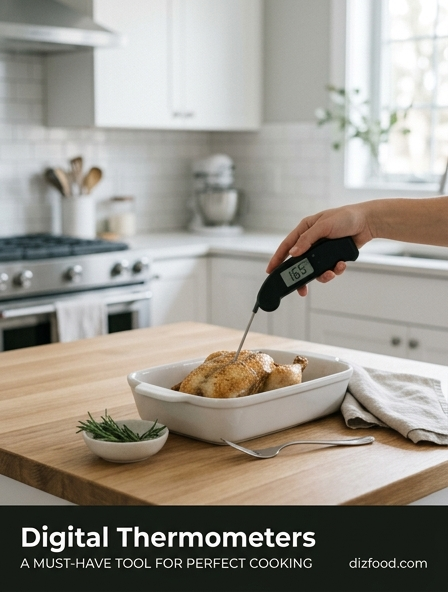
Achieving culinary perfection requires more than just a great recipe; it demands absolute precision. Digital thermometers have become an indispensable tool for home cooks and professional chefs alike because they offer lightning-fast, accurate readings that ensure your food is both delicious and safe to eat. By providing the exact internal temperature of your proteins, these devices help you eliminate guesswork, preventing the risk of undercooked poultry or dry, overdone steaks. Beyond just flavor, they are critical for food safety, ensuring every dish reaches the necessary thermal marks to eliminate harmful pathogens effectively. If you are still using traditional tools, it is worth exploring the key differences between digital vs analog meat thermometers to see which fits your cooking style best.
The Science of Precision Temperature Control
Digital thermometers utilize advanced sensor technology, primarily thermistors or thermocouples, to provide nearly instantaneous readings of thermal energy. Unlike traditional bimetallic strip thermometers that rely on the physical expansion of metal, digital versions translate electrical resistance changes into precise temperature data. This precision is vital because even a five-degree fluctuation can alter the molecular structure of proteins and starches. In the kitchen, heat is the energy that drives chemical reactions; controlling that energy with surgical accuracy allows a cook to dictate the exact outcome of a dish.
The speed of these devices is another scientific advantage. Thermocouple probes feature fine-wire sensors that require very little heat capacity to register a change, meaning they do not "rob" heat from the food during the measurement process. This ensures that the reading is an honest reflection of the internal state of the ingredient. By understanding the kinetic energy at play within a roast or a delicate sugar syrup, chefs can achieve a level of repeatability that was previously impossible in a home environment.
Eliminating Foodborne Pathogens with Accuracy
Safety is the primary driver for using digital thermometers in any culinary environment. Pathogens such as Salmonella, E. coli, and Listeria are highly sensitive to heat, but they require specific thermal thresholds maintained for set durations to be neutralized. Relying on "best guesses" or cooking times listed in recipes can be dangerous, as oven calibration and initial food temperatures vary wildly. A digital thermometer provides the only definitive proof that the center of a protein has reached the "kill zone" for harmful bacteria.
- Poultry must reach an internal temperature of 165°F (74°C) to ensure total pathogen elimination.
- Ground meats require 160°F (71°C) because the grinding process distributes surface bacteria throughout the meat.
- Fresh pork and beef should reach at least 145°F (63°C) followed by a mandatory rest period.
Precision prevents the "danger zone" (40°F to 140°F) from persisting too long. By using a digital probe, cooks ensure that food spends the minimum amount of time necessary in these risky temperature ranges, effectively protecting diners from foodborne illnesses without the need to overcook the meal into an unpalatable state.
Mastering Perfect Doneness for Every Meat
The transition from raw to perfectly cooked meat is a narrow window. For instance, the difference between a medium-rare steak and a medium steak is often less than ten degrees. Digital thermometers take the guesswork out of this transition, allowing the cook to pull the meat from the heat at the exact moment required. This is particularly important when considering carryover cooking, where the internal temperature continues to rise after the meat is removed from the stove or oven. A digital tool allows for the calculation of this rise, ensuring the final rested temperature hits the bullseye.
Beyond beef, different cuts require different approaches. A tough brisket needs to reach nearly 203°F (95°C) to break down collagen and become tender, whereas a delicate salmon fillet is best at 125°F (52°C) for a moist, flaky texture. Without a digital probe, achieving these specific targets is a matter of luck. By documenting the temperatures that yield your preferred results, you create a personal database of success that can be replicated every single time you cook, regardless of the size or weight of the cut.
Why Visual Cues Fail in Modern Cooking
For generations, cooks relied on visual signals like "clear juices" or the color of the meat to determine doneness. Modern food science has proven these methods to be largely unreliable and often misleading. For example, the myoglobin in poultry can remain pink even after reaching a safe internal temperature, leading many to overcook the bird until it is dry and fibrous. Conversely, ground beef can turn brown before it has reached the 160°F threshold required to kill E. coli, creating a false sense of security that puts health at risk.
Environmental factors also play a role in why visual cues fail. The lighting in a kitchen can change how the surface of a roast looks, and the presence of nitrates in certain seasonings or smoke in a grill can cause a "smoke ring" that mimics the appearance of undercooked meat. Digital thermometers cut through these optical illusions by providing an objective, numerical value. This shift from subjective observation to objective measurement is the hallmark of a sophisticated cook, ensuring that the final product is judged by its internal reality rather than its external appearance.
Instant Read vs Leave In Probe Benefits
Choosing the right digital thermometer depends on the specific cooking task at hand. Instant-read thermometers are designed for quick spot-checks. They are essential for thin cuts of meat, checking multiple areas of a large turkey, or monitoring the temperature of liquids like oil or melted chocolate. Their main advantage is speed and portability. In contrast, leave-in probe thermometers are designed to stay inside the food throughout the duration of the cooking process, usually connected to an external base via a heat-resistant wire or a wireless signal.
| Feature | Instant-Read Thermometer | Leave-In Probe |
|---|---|---|
| Best Use | Steaks, burgers, frying oil | Roasts, whole birds, smoking meat |
| Response Time | 1-3 seconds | Continuous monitoring |
| Alerts | No | Yes (temperature alarms) |
Using a leave-in probe prevents the "oven peeking" phenomenon, where heat escapes every time the door is opened to check progress. This maintains a stable cooking environment and provides a graph of the cooking curve. Meanwhile, the instant-read tool remains the champion of the grill and the stovetop, where quick decisions are necessary to prevent burning.
Achieving Consistency in Professional Baking
Baking is often described as a science, and nowhere is this more apparent than in temperature management. Digital thermometers are indispensable for bread bakers who must monitor the temperature of the water used to bloom yeast. If the water is too cold, the yeast remains dormant; if it is too hot, the yeast cells die. Furthermore, the internal temperature of a finished loaf is the only true indicator of its structure. A crust can look perfectly golden while the center remains gummy and underbaked. Most artisanal breads are considered finished when they reach an internal temperature of 190°F to 210°F.
In the world of pastry and confectionery, the stakes are even higher. Creating caramel, tempering chocolate, or whipping a meringue based on hot sugar syrup requires precision within a single degree. The difference between "soft ball" and "hard crack" stages in candy making is a matter of precise thermal control. Digital thermometers allow pastry chefs to move through these stages with confidence, ensuring that chocolates have a professional snap and that custards set perfectly without curdling. Consistency in these delicate processes transforms an amateur baker into a professional-level artisan.
Reducing Food Waste by Preventing Overcooking
Overcooking is one of the leading causes of food waste in the domestic kitchen. When a piece of meat becomes dry, tough, or flavorless due to excessive heat, it is often discarded or left as unappealing leftovers that eventually find their way to the trash. Digital thermometers act as an insurance policy for expensive ingredients. By pulling a prime rib or a rack of lamb at the precise moment it reaches the target temperature, the cook preserves the moisture, texture, and flavor that the producer intended. This maximizes the value of every dollar spent at the butcher counter.
Furthermore, precision cooking extends the shelf life and reheating quality of food. Meats that are cooked to the correct doneness retain more of their internal juices, which keeps them more palatable when reheated the next day. When food is consistently delicious and correctly textured, it is far more likely to be consumed in its entirety. In a world where food costs are rising, the humble digital thermometer is an essential tool for sustainable kitchen management, ensuring that every meal is a success and nothing is wasted due to human error.
Essential Internal Temperature Safety Standards
Adhering to internal temperature standards is the most effective way to prevent food poisoning. While personal preference plays a role in how one likes their steak, certain biological realities cannot be ignored. Regulatory bodies like the USDA have established specific guidelines based on extensive laboratory testing to determine the exact temperatures required to make various foods safe for human consumption. A digital thermometer is the only way to verify these standards are met.
- 165°F (74°C): All poultry, including ground chicken and turkey, and reheated leftovers.
- 160°F (71°C): Ground meats such as beef, pork, and veal.
- 145°F (63°C): Whole cuts of beef, pork, lamb, and veal, followed by a 3-minute rest.
- 145°F (63°C): Fin fish or until the flesh is opaque and separates easily.
Applying these standards ensures that even the most inexperienced cook can serve a meal with total confidence. It removes the anxiety of serving undercooked food to vulnerable populations, such as children or the elderly, and provides a clear "finish line" for every cooking task.
Calibrating Your Digital Tools for Success
A digital thermometer is only as useful as its accuracy. Over time, sensors can drift due to physical shocks, extreme temperature exposure, or battery depletion. Calibration is the process of verifying and adjusting the device to ensure its readings remain true. Most professional-grade digital thermometers offer a calibration mode, but even basic models should be tested regularly. There are two primary methods for checking accuracy: the ice bath test and the boiling water test. The ice bath is generally preferred because it is safer and less affected by atmospheric pressure changes.
To perform an ice bath test, fill a glass with crushed ice and a small amount of water. Stir the mixture and let it sit for a few minutes to reach a stable 32°F (0°C). Insert the probe, ensuring it does not touch the sides or bottom of the glass. If the thermometer reads 32°F, it is accurate. If it is off by more than a degree, use the "cal" button to reset it or manually account for the offset during cooking. Regular calibration ensures that your precision tools remain a reliable asset in your culinary toolkit.
Transforming Home Cooking with Smart Technology
The latest generation of digital thermometers has moved beyond simple displays to incorporate smart technology, including Bluetooth and Wi-Fi connectivity. These "smart" probes sync with smartphone applications, providing real-time graphs, estimated finish times, and custom alerts. This technology has revolutionized long-duration cooking methods like smoking briskets or roasting holiday turkeys. Instead of being tethered to the kitchen, the cook can monitor the progress of the meal from another room or even while running errands, receiving a notification the moment the food reaches the target temperature.
These apps often include integrated USDA safety guides and expert tips, making the cooking process educational. Some advanced systems even allow for multi-probe monitoring, which is perfect for complex meals where different proteins are being cooked simultaneously. By integrating data-driven insights into the home kitchen, smart thermometers empower cooks to attempt challenging recipes with a high degree of confidence. This fusion of culinary tradition and modern technology ensures that the "perfect meal" is no longer an accident, but a predictable and repeatable outcome of using the right tools.


Comments