
When it comes to selecting the perfect kitchen blade, the rivalry between German and Japanese steel represents a fundamental choice between rugged durability and surgical precision. German steel is the quintessential culinary workhorse, forged to be "softer" and more flexible, making it nearly indestructible during heavy-duty tasks like deboning or chopping through dense root vegetables. On the other hand, Japanese steel is a masterpiece of high-carbon engineering, offering a significantly harder edge that stays laser-sharp for much longer, though it requires a more delicate touch to avoid chipping. Whether you are looking for a reliable daily driver that can handle a beating or a high-performance instrument for paper-thin slicing, understanding the metallurgical trade-offs between these two powerhouses is essential for any serious home cook or professional chef.
| Feature | German Steel | Japanese Steel |
|---|---|---|
| Hardness (HRC) | 56-58 (Softer/Tougher) | 60-64+ (Harder/Brittle) |
| Edge Angle | 20-22 degrees (Thicker) | 12-15 degrees (Thinner) |
| Edge Retention | Moderate; requires frequent honing | Exceptional; stays sharp longer |
| Maintenance | Easy to sharpen; rust-resistant | Technique-heavy; prone to oxidation |
| Blade Weight | Heavier; full-tang balance | Lightweight; blade-forward feel |
| Best For | Heavy chopping & versatile prep | Precision slicing & delicate cuts |
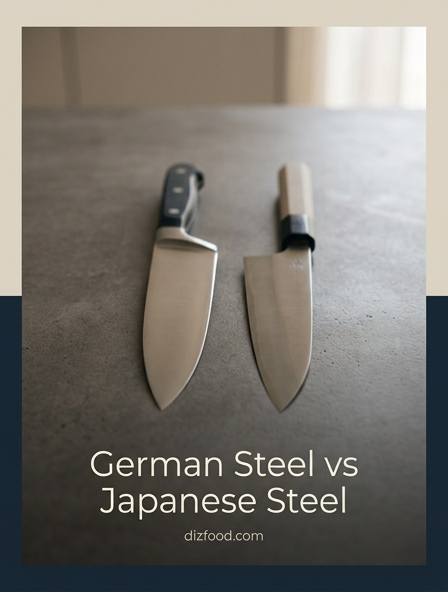
German Steel vs Japanese Steel Composition
The fundamental distinction between German and Japanese cutlery begins at the molecular level, specifically within the chemical composition of the alloys used. German steel, typically categorized by the industry standard X50CrMoV15, is a high-quality stainless steel alloy designed for versatility. It contains approximately 0.5% carbon, which provides a balance between hardness and flexibility. To enhance its resistance to the corrosive environment of a kitchen, German steel is infused with high levels of chromium, often reaching 15%, alongside molybdenum and vanadium to increase toughness and wear resistance.
In contrast, Japanese steel alloys, such as VG-10, SG2, or the traditional "Paper" steels (Aogami and Shirogami), focus on extreme purity and high carbon content. These steels often boast carbon levels between 1.0% and 1.5%. While this higher carbon content allows the steel to be hardened significantly more than its German counterparts, it often comes at the expense of chromium. Many traditional Japanese knives are "reactive," meaning they lack the high chromium levels of German stainless steel and will develop a patina or rust if not meticulously dried after use.
- German Steel: Higher Chromium (14-15%), Lower Carbon (0.5%), added Molybdenum for ductility.
- Japanese Steel: Lower Chromium (often 0-13%), Higher Carbon (1.0%+), added Cobalt or Tungsten for edge density.
Rockwell Hardness and Durability Comparison
The Rockwell Scale (HRC) is the primary measurement for determining the hardness of a blade. German knives are generally forged to a hardness of 56 to 58 HRC. This specific range is chosen to prioritize "toughness" over "hardness." Because the steel is slightly softer, it is more ductile, meaning the edge is more likely to roll or fold rather than chip when it strikes a hard object like a bone or a frozen vegetable. This makes German steel the "workhorse" of the kitchen, capable of withstanding significant abuse without catastrophic failure.
Japanese knives occupy a much higher range on the scale, usually between 60 and 64 HRC, with some boutique steels reaching 66 HRC. This extreme hardness allows the steel to support a much thinner and sharper edge. However, the trade-off for this hardness is brittleness. While a Japanese blade will cut through soft proteins with unparalleled ease, it is susceptible to micro-chipping or even snapping if used to twist, pry, or strike hard surfaces.
| Feature | German Steel | Japanese Steel |
|---|---|---|
| Rockwell Hardness | 56-58 HRC | 60-64+ HRC |
| Material Property | Ductile and Tough | Hard and Brittle |
| Failure Mode | Edge Rolling | Chipping |
Edge Retention and Precision Performance
Performance in the kitchen is often measured by how long a knife stays sharp and how precisely it can move through food. Because Japanese steel is significantly harder, it exhibits superior edge retention. A high-quality Japanese chef's knife can maintain its "factory edge" for months of regular home use before requiring a full sharpening session on stones. This allows for paper-thin slices of sashimi or translucent vegetables, as the steel can be ground to a much finer point without collapsing under the pressure of the cut.
German steel, being softer, loses its surgical sharpness more quickly. However, it is designed for a different type of performance. While it may not offer the "laser-like" feel of a Japanese blade, it provides a reliable, toothy edge that excels at hacking through fibrous vegetables or breaking down poultry. The performance of a German blade is characterized by reliability and consistency; it may require more frequent maintenance, but it remains functional under high-stress environments where a Japanese blade might be sidelined due to a chip in the edge.
Maintenance and Corrosion Resistance Differences
Maintenance requirements vary drastically between these two traditions, largely due to the chromium content mentioned previously. German knives are essentially "low-maintenance" tools. Their high chromium content creates a passive oxide layer that protects the steel from acids in citrus, onions, and tomatoes. While they should still be hand-washed, they are far more forgiving if left in a damp sink for a short period or if not dried immediately after use.
Japanese knives, particularly those made from high-carbon white or blue steel, require a disciplined maintenance routine. These blades are highly reactive and can begin to rust within minutes of exposure to moisture or acidic foods. For many enthusiasts, this reactivity is a feature rather than a bug, as the blade develops a unique patina over time that tells a story of its use. To maintain a Japanese blade, one must adhere to a strict "wipe-and-dry" protocol during the cooking process and occasionally apply food-grade mineral oil (tsubaki oil) for long-term storage.
- German Maintenance: Regular honing, occasional stone sharpening, hand wash with soap and water.
- Japanese Maintenance: Constant drying during use, no honing rods, whetstone sharpening only, oiling for carbon variants.
Blade Geometry and Bevel Angles
The physical shape and angle of the cutting edge define the interaction between the metal and the ingredient. German knives are typically sharpened to a 15 to 20-degree angle per side. This creates a wide, "V-shaped" edge that provides a sturdy shoulder to support the blade through heavy impact. Furthermore, German knives usually feature a full bolster-the thick junction between the handle and the blade-which provides balance and protects the hand, but can make sharpening the full length of the heel more difficult.
Japanese knives utilize a much more acute angle, often between 8 and 12 degrees per side. This incredibly steep angle is only possible because of the hardness of the steel. Many traditional Japanese knives are also single-beveled (Kataba), meaning they are ground flat on one side and angled on the other, allowing for unmatched precision and the ability to pull the food away from the blade during slicing. The absence of a thick bolster in Japanese designs allows the user to utilize the entire length of the blade, though it requires a more refined "pinch grip" technique to ensure safety and control.
Forging Techniques and Cultural Heritage
The manufacturing philosophies of Germany and Japan reflect their respective cultural histories. German knife-making is centered in Solingen, the "City of Blades." The German approach evolved through the Industrial Revolution, focusing on precision engineering, drop-forging, and consistency. These knives are designed to be uniform and indestructible, representing the European culinary tradition of heavy prep work and robustness. They typically feature a full tang-where the steel runs the entire length of the handle-secured by three rivets, symbolizing stability and permanence.
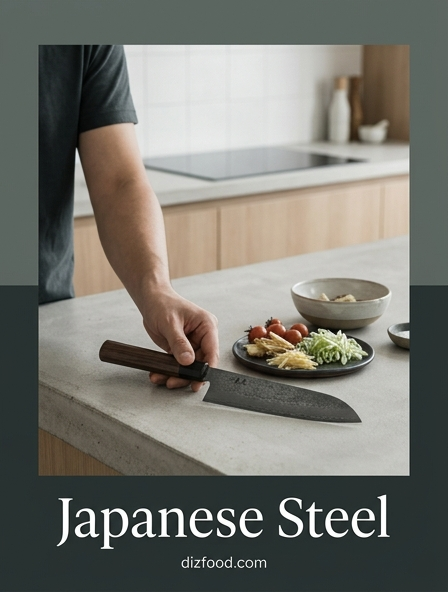
Japanese knife-making is an extension of the ancient samurai sword-smithing traditions of Seki and Sakai. The process often involves "cladding," where a hard carbon steel core (Hagane) is sandwiched between layers of softer stainless steel or iron (Jigane). This "San Mai" technique allows the blade to have the sharpness of hard steel with the support of a more flexible outer jacket. The aesthetics are also a priority, with many blades featuring "Damascus" patterns or "Kurouchi" (blacksmith) finishes. The handles are often lightweight wood (Wa-handles) in D-shape or octagonal profiles, moving the balance point forward toward the tip of the blade.
Sharpening Requirements for Each Steel Type
Because the steels behave differently, the tools used to keep them sharp must also differ. German steel is highly responsive to a honing rod (honing steel). Since the edge of a German knife tends to roll rather than chip, a few passes on a rod will realign the microscopic teeth of the blade, restoring its "bite" without removing metal. This can be done daily. Eventually, when the edge becomes too rounded, it can be sharpened using electric sharpeners or coarse whetstones.
Japanese knives should never be touched by a traditional ribbed honing steel. The hardness of the Japanese edge makes it susceptible to fracturing if struck against the hard, uneven surface of a rod. Instead, Japanese blades require whetstones for all levels of maintenance. Owners typically use a progression of grits, starting with 1000 grit for sharpening and moving to 6000 or 8000 grit for polishing. This process is more time-consuming and requires more skill, but it results in an edge that is significantly sharper than what can be achieved with German steel.
- German Tools: Honing rods, pull-through sharpeners, or medium-grit whetstones.
- Japanese Tools: High-grit Japanese water stones (Whetstones), leather strops.
The Best Culinary Applications for Each
Choosing between German and Japanese steel often depends on the specific task at hand. German knives are the undisputed kings of "heavy" kitchen work. Their weight and durability make them ideal for tasks that require force, such as splitting a butternut squash, deboning a chicken, or chopping through thick-skinned root vegetables. The curved "belly" of a German chef's knife is also specifically designed for the "rocking motion" technique common in Western kitchens, where the tip stays on the board while the heel moves up and down.
Japanese knives excel in "precision" tasks where the goal is to preserve the integrity of the ingredient's cellular structure. This is critical in sushi and sashimi preparation, where a clean cut improves the texture and flavor of the fish. They are also superior for fine julienne, chiffonade of herbs, and slicing soft proteins. Because they are lighter, they cause less hand fatigue during long sessions of delicate prep. However, they should be kept far away from bones, pits, or frozen items to avoid damaging the delicate edge.
Carbon Steel vs Stainless Steel Properties
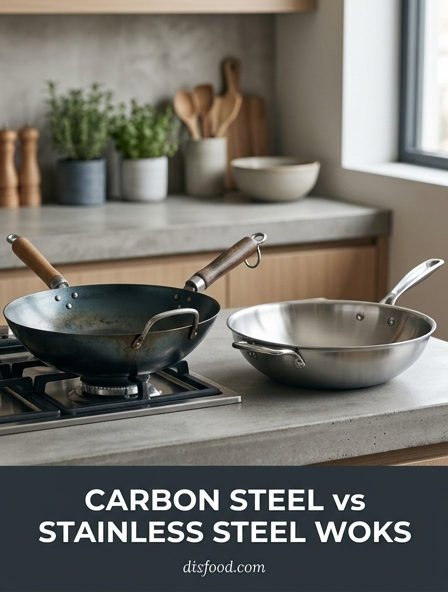
While the German vs. Japanese debate often centers on geography, the real scientific divide is between carbon steel and stainless steel. Stainless steel contains at least 12% chromium, which prevents rust. Most German knives and many modern Japanese knives (like those using VG-10) fall into this category. They offer convenience and longevity in humid or busy environments. They are the best choice for beginners or those who do not want to worry about their tools "dying" if not cared for perfectly.
High-carbon steel (non-stainless) is the darling of professional chefs and knife purists. By removing the chromium, the steel becomes much easier to sharpen and can achieve an edge that feels "stickier" or more aggressive in the cut. However, carbon steel is temperamental. It reacts with oxygen and water instantly. If you cut an onion with a carbon steel knife and let it sit, the onion will turn gray and the knife will turn black. Understanding these properties is essential for anyone moving beyond standard consumer-grade cutlery into the realm of high-performance tools.
Selecting the Right Steel for Your Kitchen
The "better" steel is entirely subjective and depends on your personal cooking style, maintenance habits, and ergonomic preferences. If you are a high-volume cook who wants a tool that can be thrown into a sink, used for every task from mincing garlic to hacking through a chicken, and only sharpened twice a year, German steel is the logical choice. Its durability and "tough" nature make it a forgiving companion for the home cook who views a knife as a utility tool rather than a piece of art.
Conversely, if you view cooking as a meditative or highly technical craft, the Japanese blade offers a rewarding experience. The lightness and extreme sharpness allow for a level of precision that German steel simply cannot match. However, you must be willing to invest in whetstones and commit to a disciplined cleaning routine. For many, the ideal solution is a hybrid kitchen: a heavy-duty German chef's knife for the "dirty" work and a nimble Japanese Santoku or Petty knife for delicate vegetable and protein prep.
- Choose German if: You prefer a rocking cut, work with bones, or want low maintenance.
- Choose Japanese if: You prefer a push-cut, value extreme sharpness, and enjoy the ritual of maintenance.

Comments