
Choosing between induction and radiant electric cooktops often comes down to one game-changing factor: how effectively heat reaches your food. While radiant electric stoves rely on traditional thermal elements to heat the glass surface and then the pot, induction technology uses electromagnetic fields to generate heat directly within the cookware itself. This distinction makes induction the undisputed champion of maximum cooking efficiency, offering nearly instant temperature adjustments and significantly less wasted energy. If you are looking to shave minutes off your meal prep while enjoying a cooler, safer kitchen environment, understanding the data behind these two technologies is the best way to future-proof your culinary space.
| Feature | Induction Cooking | Radiant Electric |
|---|---|---|
| Heating Method | Magnetic fields (heats pan directly) | Electric coils (heats glass surface) |
| Energy Efficiency | ~90% (minimal heat loss) | ~70% (significant ambient loss) |
| Boil Time (6qt) | Approx. 3-4 minutes | Approx. 8-10 minutes |
| Surface Safety | Stays cool; prevents burnt spills | Remains dangerously hot after use |
| Cookware Req. | Ferrous metal (Cast iron/Steel) | Any flat-bottomed cookware |
| Average Cost | Higher initial investment ($1k+) | Budget-friendly ($500-$800) |
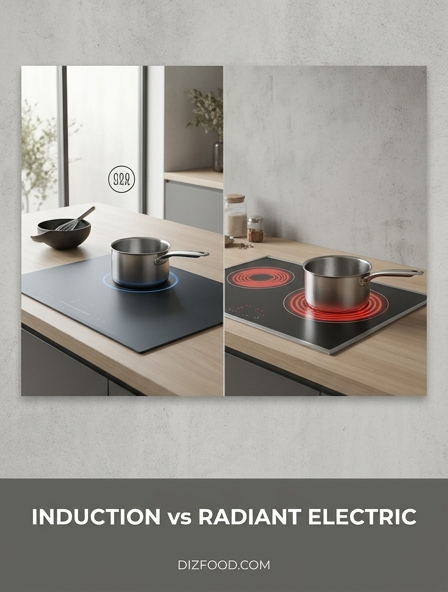
Induction vs Radiant Cooktop Technology Explained
Understanding the fundamental differences between induction and radiant electric cooktops begins with the method of heat transfer. Radiant electric cooktops utilize metal heating elements, typically made of nichrome ribbons, situated beneath a sheet of tempered ceramic glass. When the unit is turned on, electricity flows through these coils, causing them to glow red and emit infrared radiation. This heat must first pass through the glass surface before it eventually warms the cookware through conduction. This multi-step process results in a significant amount of ambient heat escaping into the kitchen environment.
In contrast, induction technology completely bypasses the heating of the cooktop surface. Beneath the glass sits a copper coil that carries an alternating electric current, which generates a rapidly oscillating magnetic field. When a compatible magnetic pan is placed on the surface, the magnetic field induces an electric current directly within the metal of the pan itself. This phenomenon, known as Joule heating, turns the cookware into the heat source. Because the glass does not need to get hot to cook the food, the process is far more direct and fundamentally different from traditional thermal conduction.
- Radiant Mechanism: Electrical resistance generates thermal energy in coils.
- Induction Mechanism: Electromagnetic fields excite molecules in the cookware.
- Visual Indicators: Radiant elements glow red; induction elements remain dark.
- Energy Path: Radiant moves from coil to glass to pan; induction moves directly to the pan.
Heating Speed and Performance Comparison
Performance is perhaps the most noticeable difference when switching between these two technologies. Induction is widely recognized for its incredible speed, often outperforming even high-end professional gas ranges. Because the energy is created within the pan, there is no "warm-up" period for an element or the glass. This leads to boiling times that are often half that of radiant electric models. In a standard kitchen test, induction can typically bring a large pot of water to a rolling boil in under four minutes, whereas a radiant cooktop may take nine to twelve minutes to achieve the same result.
Radiant cooktops suffer from thermal inertia. The heating elements take time to reach the desired temperature, and the ceramic glass acts as a reservoir for heat, slowing down the response time when you adjust the settings. If a pot begins to boil over on a radiant stove, turning the dial down does not provide immediate relief because the glass remains scorching hot. Induction, however, responds instantly to adjustments. The moment the power level is reduced, the magnetic field weakens, and the heat generation in the pan drops immediately, providing a level of control that mimics gas cooking with the cleanliness of electric surfaces.
| Performance Metric | Induction Cooktop | Radiant Electric |
|---|---|---|
| Boil Time (6 Quarts) | ~3-4 Minutes | ~9-12 Minutes |
| Temperature Response | Instantaneous | Delayed (Thermal Lag) |
| Heat Distribution | Extremely Even | Prone to Hot Spots |
Energy Efficiency and Monthly Operating Costs
Energy efficiency is a primary driver for homeowners choosing induction over radiant electric. Induction cooktops are approximately 85% to 90% efficient, meaning that nearly all the energy consumed is converted into heat within the food-bearing vessel. Because the surface surrounding the pan stays cool, very little energy is lost to the air. This efficiency not only reduces the amount of electricity used during a specific cooking session but also keeps the kitchen cooler, potentially reducing the load on your air conditioning system during summer months.
Radiant electric cooktops, by comparison, are roughly 65% to 70% efficient. A substantial portion of the energy is wasted heating the glass surface and the air between the element and the pot. This lost energy translates directly into higher utility bills over time. While the monthly savings on a per-meal basis might seem marginal, the cumulative effect over the ten-to-fifteen-year lifespan of the appliance can be significant. Furthermore, many modern induction units feature power-management systems that allow for high-output cooking without wasting standby power, making them the superior choice for the environmentally conscious consumer looking to minimize their carbon footprint.
- Induction surfaces minimize wasted ambient heat.
- Radiant energy is lost through glass-to-air conduction.
- Higher efficiency leads to shorter cooking cycles and lower kilowatt-hour usage.
- Reduced kitchen heat lowers secondary cooling costs for the home.
Safety Benefits of Induction vs Radiant Heat
Safety is a critical factor in kitchen design, particularly for households with young children or elderly family members. Induction cooktops are inherently safer because the glass surface never reaches the high temperatures seen on radiant models. Since the heat is generated in the pan, the glass only becomes warm through "back-heat" from the cookware itself. This means that if a burner is accidentally turned on without a pan present, it will not get hot. Most induction ranges also include sensors that automatically shut off the unit if no magnetic material is detected, virtually eliminating the risk of a fire caused by a burner left on.
Radiant cooktops pose a much higher burn risk. The glass stays dangerously hot for a significant period after the cooking is finished, often requiring "Hot Surface" indicator lights to warn users. These surfaces can easily ignite dish towels, plastic utensils, or food debris left near the element. With induction, you can often place a paper towel between the pan and the cooktop to catch splatters without any risk of combustion. This "cool-to-the-touch" characteristic makes induction the preferred choice for those prioritizing a low-risk environment, as it prevents the most common types of accidental contact burns in the kitchen.
Required Cookware for Magnetic vs Electric Ranges
The most significant hurdle for many transitioning to induction is the requirement for specific cookware. Because induction relies on electromagnetism, the pans must be made of a ferrous metal. This means that cast iron, enameled iron, and many types of stainless steel are perfectly compatible. However, materials like solid copper, glass, and aluminum will not work unless they have a specialized magnetic base bonded to the bottom. A simple way to test your current collection is the "magnet test": if a kitchen magnet sticks firmly to the bottom of the pan, it will work on an induction surface.
Radiant electric cooktops are far more forgiving in this regard. They transfer heat via infrared radiation and conduction, which works with any flat-bottomed vessel regardless of its magnetic properties. You can use glass pots, ceramic cookware, and traditional aluminum pans without issue. However, for both types of cooktops, the flatness of the bottom is crucial. A warped pan will not heat evenly on a radiant surface because it lacks consistent contact with the glass. On induction, a warped pan can cause a noisy vibration or inconsistent magnetic coupling, though the contact is slightly less critical than it is for the thermal transfer of a radiant stove.
- Compatible with Induction: Cast Iron, Carbon Steel, Magnetic Stainless Steel.
- Incompatible with Induction: Aluminum, Copper, Glass, Ceramic.
- Radiant Flexibility: Works with all materials as long as the base is flat.
- Maintenance Tip: Use heavy-gauge bottoms to prevent warping on either surface.
Precision Temperature Control and Simmering
For home chefs who demand precision, induction is the clear winner. The ability to control the magnetic field allows for incremental changes in temperature that are almost impossible to achieve on a radiant electric stove. Induction units can maintain a very low, steady heat, making them ideal for delicate tasks such as melting chocolate, tempering eggs, or keeping a sauce at a bare simmer for hours without scorching. Because there is no residual heat in a burner element, the temperature of the food drops the millisecond the setting is lowered.
Radiant cooktops struggle with low-heat precision. The heating elements usually cycle on and off to maintain a temperature, which creates "pulses" of high heat followed by periods of cooling. This can lead to hot spots and accidental burning, especially when cooking thick soups or delicate creams. Achieving a true simmer on a radiant stove often requires the cook to constantly monitor the pot and manually adjust the dial. While high-end radiant models have improved their pulsing algorithms, they still cannot match the steady, direct energy flow provided by induction technology, which offers a level of control previously only available with gas flames.
Surface Cleaning and Daily Maintenance Differences
The ease of cleaning is a major selling point for induction cooktops. Because the glass surface does not get hot enough to bake food onto it, spills do not carbonize or burn. If a pot of pasta water boils over or tomato sauce splatters, it can simply be wiped away with a damp cloth even while the unit is still on. There is no need for heavy-duty scrapers or specialized abrasive cleaners in most cases. This keeps the cooktop looking brand new for much longer and reduces the time spent on post-meal cleanup.
Radiant cooktops are notoriously difficult to keep clean. Because the glass itself becomes extremely hot, any food that touches the surface is instantly seared onto the ceramic. Over time, these burnt-on spills create a crust that requires specialized glass cleaning creams and razor blades to remove. If sugary liquids are spilled on a hot radiant surface, they can even cause "pitting," which permanently damages the glass. Maintaining a radiant cooktop requires a proactive approach and a significant amount of elbow grease, whereas an induction surface is largely "wipe and go."
- Induction: Spills stay liquid and do not burn onto the glass.
- Radiant: High heat fuses food particles to the ceramic surface.
- Induction: Can be cleaned immediately after removing the pan.
- Radiant: Must wait for the "Hot Surface" light to turn off before cleaning.
Initial Purchase Price vs Long Term Value
Budget is often the deciding factor when choosing between these two appliances. Radiant electric cooktops are the most affordable option on the market, with entry-level models available at a fraction of the cost of induction units. They are a mature technology with standardized manufacturing processes, making them accessible for budget-conscious renovations or rental properties. For many users, the lower upfront cost is a compelling reason to stick with traditional radiant technology, especially if they do not cook frequently or have a collection of non-magnetic cookware they are unwilling to replace.
Induction cooktops carry a premium price tag, though the gap has narrowed significantly in recent years. While the initial investment is higher, the long-term value is found in energy savings, time efficiency, and durability. Because the electronics in induction units are sensitive, they often feature better build quality than low-end radiant models. Additionally, the reduced wear and tear on the glass surface (due to less scraping and burning) helps maintain the home's resale value. When considering the total cost of ownership-including electricity bills, cleaning supplies, and the value of your time-induction often proves to be the more economical choice over a decade of use.
Kitchen Installation and Electrical Requirements
Both induction and radiant cooktops require a dedicated 240-volt electrical circuit, but their specific amperage requirements can vary. Most radiant cooktops operate efficiently on a 30-amp or 40-amp breaker. However, high-performance induction cooktops, especially those with "power boost" features on multiple zones simultaneously, may require a 40-amp or even a 50-amp circuit. If you are upgrading from an older radiant unit to induction, it is vital to have an electrician verify that your existing wiring and breaker can handle the potential load to avoid frequent tripping.
Physical installation also involves considering ventilation and clearance. Induction units contain sophisticated electronic components that generate heat internally, requiring cooling fans located beneath the glass. This means they often need more "breathing room" in the cabinet below compared to radiant models. Some induction units may require a specific amount of clearance from an oven installed underneath it to ensure proper airflow. Conversely, radiant cooktops generate more external heat, requiring careful insulation of surrounding cabinetry. Always consult the manufacturer's installation manual to ensure your kitchen layout supports the specific thermal and electrical needs of your chosen technology.
| Requirement | Radiant Electric | Induction |
|---|---|---|
| Voltage | 240V | 240V |
| Amperage | 30 - 40 Amps | 40 - 50 Amps |
| Cooling Needs | Passive (Air gap) | Active (Internal Fans) |
| Cabinet Depth | Standard | May require extra clearance |
Choosing the Best Cooktop for Your Home
Selecting the right cooktop ultimately depends on your cooking habits, safety priorities, and budget. If you are a culinary enthusiast who values precision, speed, and a modern aesthetic, induction is almost certainly the better investment. The ability to boil water in minutes and simmer delicate sauces with gas-like control transforms the cooking experience. Furthermore, if you have young children, the safety profile of a cool-to-the-touch surface is an invaluable benefit that provides peace of mind during hectic meal preparation.
On the other hand, if you are working with a strict budget or have a beloved collection of copper and aluminum cookware, a radiant electric cooktop remains a reliable and functional choice. It is a straightforward technology that is easy to repair and does not require a steep learning curve or new pots and pans. While it may be slower and harder to clean, it gets the job done for millions of households every day. Before making your final decision, consider how often you cook and how much you value the ease of maintenance. For most modern kitchen remodels, the trend is moving decisively toward induction as the new gold standard for home cooking.

Comments