
Ever wondered how professional chefs turn inexpensive, fibrous cuts of meat into succulent delights that fall apart at the touch of a fork? The secret lies in the art of low-and-slow cooking, where steady heat and moisture work together to break down tough connective tissues like collagen into rich, silky gelatin. By immersing your ingredients in a flavorful liquid and maintaining a gentle simmer, you unlock deep flavors and a buttery texture that high-heat methods simply can't achieve. It's a culinary transformation that rewards patience with incredible depth and tenderness. To master these techniques in your own kitchen, it is essential to understand the subtle differences between braising vs stewing.
Understanding Connective Tissue and Collagen
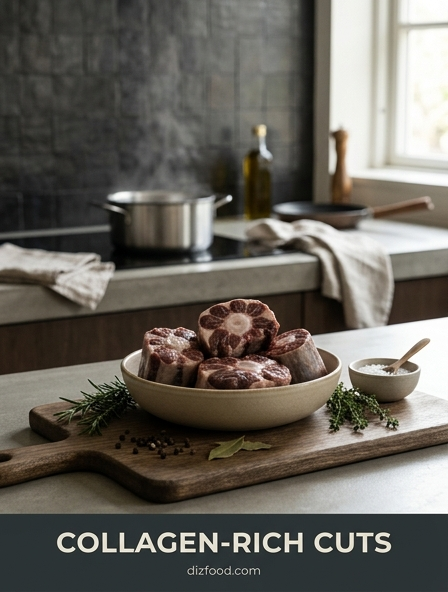
Collagen is a robust structural protein found abundantly in the connective tissues of tougher meat cuts, such as beef brisket, pork shoulder, and lamb shanks. Unlike the tender proteins found in loin cuts, collagen is composed of three polypeptide chains wound together in a tight triple helix. This structure provides immense strength to the muscles that do the most work on the animal. In the kitchen, the goal is to transform this tough, gristly substance into silky, rich gelatin. This conversion is not instantaneous; it requires specific thermal conditions to break the molecular bonds.
When collagen-rich cuts are cooked properly, the resulting gelatin provides a luxurious mouthfeel and carries flavors across the palate more effectively than lean muscle. Understanding which cuts contain the most connective tissue is the first step in selecting the right cooking method. The primary types of connective tissue include:
- Collagen: The most common protein, which breaks down into gelatin with heat and moisture.
- Elastin: Often called "silverskin," this protein is yellowish and does not break down during cooking, requiring manual removal.
- Reticulin: A structural fiber that supports the internal organs and muscle fibers, similar to collagen but present in smaller amounts.
Mastering the Low and Slow Braise
Braising is the quintessential technique for conquering collagen-rich cuts. It involves searing the meat at high heat to develop deep flavors via the Maillard reaction, followed by long-term immersion in a flavorful liquid at a low, steady temperature. The liquid acts as a heat conductor, ensuring that the internal temperature of the meat remains consistent. As the meat simmers, the tight collagen fibers begin to relax and eventually denature. Because this process happens slowly, the muscle fibers do not tighten and expel all their moisture before the collagen has a chance to turn into gelatin.
To achieve the best results, the cooking liquid should never reach a rolling boil, as excessive heat will cause the muscle fibers to toughen and become stringy. A gentle simmer between 180°F and 200°F is the "sweet spot" where the conversion of connective tissue occurs most efficiently. Over several hours, the meat transforms from a rubbery, inedible block into a succulent, fork-tender masterpiece that holds its shape but melts away upon the first bite. This method is ideal for short ribs, chuck roast, and oxtails.
The Power of Acidic and Enzymatic Marinades
Marinades serve two primary purposes: flavor enhancement and structural modification. While acids like vinegar, citrus juice, and wine work by denaturing surface proteins and loosening the outer layers of the meat, they can actually toughen the meat if left for too long. Enzymatic marinades, on the other hand, utilize naturally occurring proteases to break down the peptide bonds in collagen and muscle fibers. These enzymes act like microscopic "scissors," physically cutting through the tough connective tissue to create a more tender texture before the heat even touches the pan.
| Source | Active Enzyme | Best Use Case |
|---|---|---|
| Papaya | Papain | Tough beef cuts like flank or skirt steak. |
| Pineapple | Bromelain | Thick pork chops or tougher poultry pieces. |
| Ginger | Zingibain | Stir-fry strips and thin beef slices. |
| Kiwi | Actinidin | Delicate meats requiring a subtle touch. |
When using these powerful ingredients, timing is critical. Over-marinating can lead to a mushy, unappealing surface texture. For most collagen-heavy cuts, a period of two to four hours is sufficient for enzymes to penetrate effectively without ruining the integrity of the meat.
Essential Mechanical Tenderizing Tools and Techniques
Mechanical tenderizing is a physical approach to breaking down the structural integrity of tough meat fibers and collagen. By manually severing the long strands of connective tissue, you reduce the distance the teeth must travel to bite through the meat, giving the illusion of a more tender cut. This is particularly useful for cuts intended for quick-cooking methods, such as chicken fried steak or grilled flank steak. There are several tools available to the home cook to achieve these results effectively without destroying the meat's appearance.
- Meat Mallets: Use the spiked side to break up tough fibers and the flat side to even out thickness for uniform cooking.
- Needle Tenderizers: These devices use a series of sharp blades to create thousands of micro-perforations, severing connective tissue internally without flattening the meat.
- Rolling Tenderizers: These resemble pizza cutters with spikes and are excellent for long, flat cuts of beef.
Beyond tool usage, "scoring" the meat with a knife-cutting shallow cross-hatches into the surface-is another mechanical method. This allows heat to penetrate faster and prevents the meat from curling as the collagen shrinks during the initial stages of cooking.
Brining Secrets for Succulent Results
Brining is the process of submerging meat in a salt-water solution to increase its moisture-holding capacity. While often associated with lean meats like turkey or pork loin, brining is highly effective for collagen-rich cuts destined for the smoker or slow cooker. Through the process of osmosis and diffusion, salt enters the muscle cells, causing the protein filaments to swell and unwind. This creates more space within the meat's structure for water to be trapped and held, even as temperatures rise during the cooking process.
A standard brine usually consists of a 5% to 6% salt concentration. Many chefs also add sugar to the brine to promote better browning and a touch of sweetness. For tougher cuts, a "dry brine"-rubbing the meat generously with salt and letting it sit in the refrigerator for 24 hours-is often preferred. This allows the salt to penetrate deeply and rearrange the proteins without adding excess water that might dilute the meat's natural flavors. The result is a piece of meat that remains juicy and seasoned from the inside out, providing a perfect foundation for the slow breakdown of connective tissues.
Precision Cooking with Sous Vide Technology
Sous vide has revolutionized the way we handle collagen-rich cuts by providing unmatched control over time and temperature. In traditional cooking, the window between "perfectly tender" and "dried out" can be narrow. Sous vide eliminates this risk by holding the meat at a precise temperature-often around 135°F to 145°F for 24 to 72 hours. This extended duration allows for a low-temperature conversion of collagen into gelatin, which is impossible using traditional high-heat methods. The result is meat with the texture of a premium steak but the deep, soulful flavor of a pot roast.
- Uniformity: The meat is cooked evenly from edge to edge with no overcooked gray bands.
- Retention: Since the meat is sealed in a vacuum bag, no moisture or aromatics can escape.
- Enzymatic Activity: Certain enzymes naturally present in meat remain active longer at lower temperatures, further aiding tenderization.
This technology is particularly effective for "tough" steaks like chuck eye or top round. By cooking them at a medium-rare temperature for an extended period, you transform the collagen without ever reaching the point where the muscle fibers contract and squeeze out their juices.
Traditional Velveting for Restaurant Style Texture
Velveting is a classic Chinese culinary technique used to protect small pieces of meat-usually for stir-fries-from the intense heat of a wok. This process ensures that even inherently tough or lean cuts remain silky and tender. The technique involves coating the meat in a mixture of cornstarch, egg whites, and often rice wine or oil. This coating acts as a physical barrier, insulating the meat against the high-velocity heat and preventing the proteins from seizing up and becoming tough.
- Marination: Toss sliced meat with cornstarch, egg white, and seasonings; let sit for 30 minutes.
- The Pass: Briefly blanch the meat in hot oil or simmering water until it is about 75% cooked.
- The Stir-Fry: Remove the meat, then add it back to the wok with vegetables and sauce for a final, quick sear.
The cornstarch forms a "velvet" layer that feels smooth on the tongue and helps the sauce cling to the meat. While it doesn't break down collagen in the way braising does, it prevents the existing proteins from dehydrating, which is essential when dealing with collagen-heavy cuts that have been thinly sliced for quick cooking.
Accelerating Tenderness with Pressure Cooking
Pressure cooking is the ultimate time-saver for the modern kitchen, reducing the hours required for collagen breakdown into a matter of minutes. By increasing the atmospheric pressure inside the pot, the boiling point of water rises significantly, usually reaching around 240°F to 250°F. This high-intensity thermal energy forces moisture into the meat and accelerates the chemical reaction that converts tough connective tissue into gelatin. What would normally take six hours in a slow cooker can be achieved in about 45 to 60 minutes in a pressure cooker.
However, this speed comes with a trade-off. Because the temperatures are so high, muscle fibers can become quite dry if the meat is overcooked by even a few minutes. To combat this, it is essential to use plenty of liquid and to allow for a natural pressure release. A rapid release of pressure can cause the juices inside the meat to boil violently and escape, leaving the meat "shready" and dry. When handled correctly, the pressure cooker is a powerful tool for making quick stews, stocks, and fall-off-the-bone ribs on a weeknight schedule.
Why Slicing Against the Grain Matters
Even the most perfectly cooked piece of meat can feel tough if it is sliced incorrectly. "The grain" refers to the direction in which the long muscle fibers run. These fibers are bundled together like a pack of straws. If you slice parallel to these fibers, the person eating the meat must use their teeth to grind through the long, tough strands. However, by slicing perpendicular to the fibers-across the grain-you effectively shorten them into tiny segments. This mechanical reduction makes the meat significantly easier to chew and enhances the perception of tenderness.
For cuts with very prominent grains, such as flank steak, skirt steak, or brisket, this step is non-negotiable. Before slicing, take a moment to identify the direction of the fibers while the meat is raw or during the resting phase. When you begin to carve, keep your knife at a slight bias to increase the surface area of the slice, which further improves the mouthfeel. This simple geometric adjustment can make a "tough" cut feel twice as tender as it actually is, ensuring that all your hard work during the cooking process is not wasted at the table.
Resting Time for Optimal Moisture Retention
Resting meat is the final, crucial step in the cooking process, especially for collagen-rich cuts that have been subjected to high heat. During cooking, the muscle fibers contract and push moisture toward the center of the meat. If you slice into the meat immediately after removing it from the heat, these pressurized juices will spill out onto the cutting board, leaving the meat dry and lackluster. Resting allows the fibers to relax and reabsorb that moisture, redistributing it evenly throughout the cut.
| Cut Size | Recommended Resting Time | Technique |
|---|---|---|
| Individual Steaks | 5-10 Minutes | Tent loosely with foil. |
| Medium Roasts | 15-20 Minutes | Rest on a warm platter. |
| Large Briskets | 1-2 Hours | Wrap in towels and place in a cooler. |
As the meat rests, the internal temperature also stabilizes, and the gelatin formed from collagen begins to set slightly, providing a more cohesive texture. For large, collagen-heavy cuts like smoked brisket, an extended rest is the secret to achieving that "jiggle" and ensuring every slice is as succulent as possible.





Comments