
Ever wondered why restaurant vegetables always look so vibrant and have that satisfying snap? The secret lies in mastering the subtle yet crucial difference between blanching and parboiling. While both techniques involve a quick dip in boiling water, they serve different culinary purposes: blanching is a rapid "scald and shock" method primarily used to halt enzyme activity and preserve color, texture, and nutrients, whereas parboiling is a "partial cook" designed to give denser vegetables a head start before roasting, sautéing, or grilling. By understanding these foundational prep steps, you can eliminate the frustration of unevenly cooked produce and ensure every veggie-from delicate asparagus to hearty potatoes-reaches the plate with professional-grade perfection.
| Feature | Blanching | Parboiling |
|---|---|---|
| Primary Goal | Preserve color, flavor, and nutrients. | Softening for a faster final cook. |
| Cooking Time | Quick (30 seconds to 2 minutes). | Longer (5 to 15 minutes). |
| Ice Bath | Essential to "shock" and stop cooking. | Optional; usually drained and air-dried. |
| Internal Texture | Crisp-tender and nearly raw inside. | Softened but not fully mushy. |
| Best For | Leafy greens, peas, and freezing prep. | Root vegetables, potatoes, and grains. |
| Result | Vibrant color and enzyme deactivation. | Reduced roasting or grilling time. |
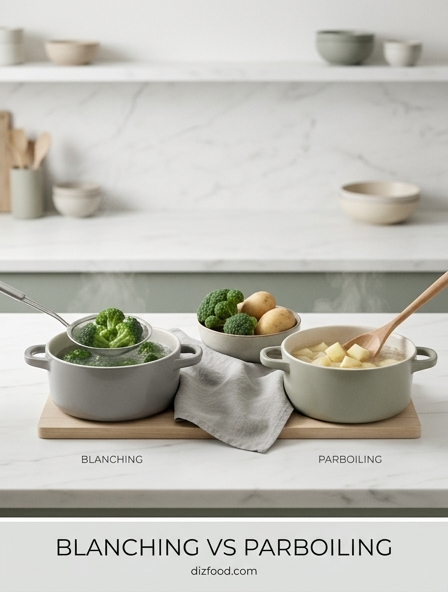
Blanching vs Parboiling Key Differences Explained
While both blanching and parboiling involve submerging food in boiling water, they serve distinct culinary purposes and produce different structural outcomes. The fundamental difference lies in the duration of the heating process and the subsequent step taken to stop the cooking. Blanching is a rapid immersion followed by immediate cooling, whereas parboiling is a longer process intended to partially cook the food through to its core before it is finished using another cooking method.
To better understand these techniques, consider the following comparison of their primary characteristics:
| Feature | Blanching | Parboiling |
|---|---|---|
| Time in Water | Seconds to 2 minutes | 5 to 15 minutes |
| Primary Goal | Deactivate enzymes and preserve color | Reduce final cook time and soften texture |
| Cooling Step | Mandatory ice bath (shocking) | Optional air cooling or rinsing |
| Internal State | Raw or nearly raw | Partially cooked (al dente) |
Blanching is essentially a surface-level treatment. It is frequently used for delicate greens and vegetables that will be served in salads or frozen for long-term storage. Parboiling, conversely, is a foundational step for denser items like root vegetables, rice, or meats that require significant heat penetration. By parboiling, a chef ensures that the interior of a thick potato wedge or a grain of rice is softened, preventing a scenario where the exterior burns during roasting or frying while the inside remains hard and inedible.
How Blanching Preserves Texture and Vibrant Colors
The visual appeal of vegetables is often tied to the intensity of their natural pigments, particularly chlorophyll in green vegetables like broccoli, asparagus, and snap peas. When these vegetables are subjected to the brief, intense heat of blanching, the gases trapped within the plant cells are released. This allows the underlying pigments to become more visible, resulting in a "shattering" brightness that is much more vivid than the raw state. Without blanching, long-term cooking or freezing can cause these colors to dull into an unappetizing brown or grey.
Texture is the second major beneficiary of the blanching process. By utilizing an ice bath immediately after the boiling water, the chef "shocks" the vegetable, halting the residual heat from softening the cell walls further. This ensures a crisp-tender mouthfeel that is essential for crudités or stir-fries. The process generally follows these specific priorities:
- Color Fixation: Setting the natural dyes within the vegetable skins.
- Cellular Integrity: Strengthening the pectin structure to maintain a "snap."
- Surface Sanitization: Removing surface dirt and microorganisms without wilting the item.
- Skin Loosening: Facilitating the easy removal of skins from tomatoes or peaches.
The ice bath is non-negotiable in this context. If the vegetables are allowed to air dry or sit in a pile while hot, the carryover cooking will turn the vibrant green into a dull olive and the crisp texture into mush. For professional kitchens, this technique is the secret to producing salads and side dishes that look as fresh as they taste, even hours after preparation.
The Benefits of Parboiling for Faster Meal Prep
Parboiling is a strategic time-management tool used by home cooks and professional chefs alike to streamline the cooking process for dense ingredients. By pre-cooking items to a state of partial readiness, you can significantly reduce the final active cooking time during high-heat applications like roasting, grilling, or deep-frying. This is particularly useful for meal prepping large batches of food that need to be finished quickly on a weeknight. For example, parboiling potatoes ensures that when they hit the roasting pan, they develop a crispy golden exterior in twenty minutes rather than forty-five.
Beyond speed, parboiling offers several functional advantages in the kitchen:
- Uniformity: Ensures that large pieces of meat or thick vegetables cook evenly from center to edge.
- Starch Removal: Helps wash away excess surface starch from potatoes or rice, preventing gumminess.
- Toxin Reduction: Can help leach out certain bitter compounds or anti-nutrients found in specific legumes and greens.
- Flavor Infusion: Provides an opportunity to season the food from the inside out by using salted water or broth.
When you parboil, you are essentially front-loading the most time-consuming part of the cooking process-moist heat penetration. Once the "heavy lifting" of softening the cellulose or muscle fibers is done, the second stage of cooking can focus entirely on flavor development, such as the Maillard reaction (browning) or the absorption of sauces. This method is the secret behind "restaurant-style" home fries and perfectly fluffy, separate grains of parboiled rice.
Temperature and Timing Variations for Each Method
Precision in temperature and timing is what separates a successful blanch or parboil from a kitchen failure. While both methods generally start with water at a rolling boil (212°F or 100°C), the "dwell time" varies wildly depending on the density, size, and sugar content of the ingredient. Overstaying by even thirty seconds can turn a blanched pea into a mushy one, while under-parboiling a potato can lead to a raw, crunchy center even after frying.
The following table outlines common timing standards for various food groups to help guide your preparation:
| Ingredient | Blanching Time | Parboiling Time |
|---|---|---|
| Leafy Greens (Spinach, Kale) | 30 to 60 seconds | Not Recommended |
| Small Vegetables (Peas, Corn) | 1.5 to 2 minutes | 3 to 5 minutes |
| Root Vegetables (Carrots, Potatoes) | 2 to 3 minutes | 7 to 12 minutes |
| Grains (Rice, Barley) | Not Recommended | 8 to 15 minutes |
| Firm Fruits (Peaches, Tomatoes) | 30 to 45 seconds | Not Recommended |
It is important to remember that these times start only once the water returns to a boil after the food has been added. For blanching, a high ratio of water to food is necessary to ensure the temperature does not drop too low. For parboiling, the water temperature may be slightly reduced to a simmer (around 190°F to 200°F) after the initial plunge to ensure a more controlled, gentle heat penetration for delicate items like fish or certain types of rice.
When to Choose Blanching for Freezing Vegetables
If you intend to preserve your harvest or bulk-purchased vegetables in the freezer, blanching is an essential, non-negotiable step. Most vegetables contain enzymes that continue to function even at sub-zero temperatures. These enzymes are responsible for the gradual loss of flavor, the toughening of textures, and the fading of colors. Freezing raw vegetables without blanching often results in a product that tastes like hay and has a rubbery consistency once thawed and cooked.
The process of blanching for the freezer follows a very specific sequence to ensure the highest quality results:
- Preparation: Wash and cut the vegetables into uniform pieces to ensure even heat exposure.
- Boiling: Use at least one gallon of water per pound of vegetables to maintain the boil.
- Timing: Follow specific charts for each vegetable type; under-blanching can actually stimulate enzyme activity, while over-blanching cooks the food.
- Chilling: Plunge the vegetables into an ice-water bath for the exact same amount of time they were boiled.
- Drying: Thoroughly dry the vegetables before bagging to prevent the formation of large ice crystals (freezer burn).
By briefly exposing the vegetables to boiling water, you effectively "denature" the enzymes, essentially turning them off. This chemical stabilization allows the food to retain its nutritional profile and aesthetic qualities for eight to twelve months. This is particularly vital for low-acid vegetables like green beans, carrots, and corn, which are most susceptible to enzymatic degradation during cold storage.
Mastering the Art of Parboiling Grains and Roots
Parboiling is a sophisticated technique when applied to grains and root vegetables, often serving as the "secret step" in complex recipes like biryani, paella, or crispy roasted potatoes. For grains, parboiling (sometimes called "pre-steaming") helps to gelatinize the starch inside the husk. This results in grains that stay separate and firm rather than clumping together. In the case of parboiled rice, the process actually forces nutrients from the bran into the endosperm, making it more nutritionally dense than standard white rice.
When dealing with root vegetables, parboiling is used to manage the sugar and starch levels on the surface. Here are the key factors to consider for different items:
- Potatoes: Parboiling in salted, slightly alkaline water (adding a pinch of baking soda) creates a starchy slurry on the surface that crisps up beautifully in the oven.
- Carrots and Parsnips: A short parboil removes the "raw" edge and allows glazes (like honey or maple) to adhere better during the roasting phase.
- Rice: Parboil until the grain is soft on the outside but still has a firm "needle" in the center; this prevents the rice from turning to mush in a slow-cooked casserole.
- Hard Squash: Parboiling cubes of butternut or acorn squash ensures they finish cooking at the same time as faster-cooking ingredients in a medley.
The goal is to reach a state of "al dente," where the food is edible but lacks the final desired texture. This allows for a final stage of cooking-usually dry heat-to provide the flavor and crunch that moist heat cannot achieve. Mastering this balance requires frequent testing; you should be able to pierce the item with a fork with some resistance.
Nutritional Impact of Blanching vs Parboiling Compared
Both blanching and parboiling involve water, which inevitably leads to some level of nutrient leaching. Water-soluble vitamins, such as Vitamin C and the B-complex group, are particularly susceptible to being dissolved into the cooking liquid. However, the impact varies significantly between the two methods due to the exposure time and the intended end use of the food. Interestingly, while some nutrients are lost, others may become more bioavailable through these processes.
Consider the following nutritional trade-offs observed during these techniques:
| Nutrient Category | Effect of Blanching | Effect of Parboiling |
|---|---|---|
| Vitamin C | Minimal loss (due to short time) | Moderate to high loss |
| Antioxidants | Often increased bioavailability | Variable; some lost in water |
| Minerals | Largely retained | Slightly leached into water |
| Fiber | Remains intact | Slightly softened |
Blanching is generally superior for nutrient retention because the short duration of heat exposure is just enough to stop enzymatic degradation without breaking down the cell structure entirely. Parboiling, because it lasts longer, results in higher losses of water-soluble vitamins. However, parboiling rice is a notable exception; the high-pressure steam used in industrial parboiling actually drives vitamins from the outer hull into the grain, making it more nutritious than polished white rice. To minimize nutrient loss at home, it is often recommended to use the leftover parboiling water for soups or sauces when possible.
The Science Behind Deactivating Enzymes Through Blanching
At the molecular level, vegetables are teeming with biological catalysts known as enzymes. Even after a vegetable is harvested, these enzymes-primarily peroxidase, catalase, and lipoxygenase-remain active. Their job in nature is to eventually break the plant matter down, which in the kitchen manifests as spoilage, off-odors, and tough textures. Blanching acts as a thermal "kill switch" for these biological processes by denaturing the protein structures of the enzymes.
The scientific necessity of this process involves several key biochemical transitions:
- Denaturation: The heat causes the complex folded shapes of enzyme proteins to uncoil, rendering them biologically inactive.
- Gas Displacement: Heat expands and forces out air trapped between plant cells, which changes the refractive index of the vegetable and makes it appear more translucent and colorful.
- Softening of Pectin: A brief heat exposure modifies the pectin in cell walls, making them more pliable for packing into jars or bags without breaking.
- Microbial Load Reduction: The high temperature significantly reduces the population of yeasts, molds, and bacteria on the surface of the food.
If blanching is skipped before freezing, lipoxygenase will continue to break down fats and pigments, leading to a "hay-like" flavor. Peroxidase is the most heat-stable of these enzymes; therefore, it is often used in industrial settings as a marker-if peroxidase is deactivated, it is certain that all other spoilage-causing enzymes have been neutralized as well. This scientific safeguard is what allows modern frozen food to remain shelf-stable for months.
Step by Step Process for Perfect Parboiled Results
Achieving a perfect parboil requires more than just boiling water; it requires careful monitoring and preparation to ensure the food is ready for its second stage of cooking. Unlike blanching, which is a "set it and forget it" process once the timer goes off, parboiling requires you to judge the internal doneness of the food. If you over-parboil, the food will fall apart during the final roast or fry. If you under-parboil, it will remain raw in the middle.
Follow these steps to master the parboiling process for vegetables or grains:
- Standardize Cuts: Ensure all pieces are the same size. If you have large and small potato chunks, the small ones will turn to mush while the large ones remain hard.
- Season the Water: Use a generous amount of salt. Since parboiling is a longer process, the salt has time to penetrate the center of the food, seasoning it deeply.
- Boil and Submerge: Bring the water to a boil, then drop in the ingredients. Lower the heat slightly to a steady simmer to prevent the exterior from cooking too aggressively.
- The Fork Test: Periodically test the food with a fork or knife. It should be able to enter the food with some resistance, but the food should not "shatter" or flake away.
- Drain and Steam Dry: Drain the food in a colander. Allow it to sit for a few minutes so the surface moisture evaporates; this is crucial if you plan to roast or fry the items next.
By allowing the food to "steam dry" after draining, you ensure that the surface is ready to achieve a crisp texture. This is especially important for potatoes and carrots that are headed for the oven, as excess water will lead to steaming rather than browning.
Choosing the Right Technique for Your Specific Recipe
Selecting between blanching and parboiling depends entirely on your final culinary objective. You must ask yourself: "Am I trying to preserve the current state of this food, or am I trying to move it further along the cooking path?" Blanching is a preservative and preparatory technique, while parboiling is a foundational cooking technique. Choosing the wrong one can lead to textures that clash with the rest of your dish.
Use the following guidelines to decide which method fits your recipe:
- Choose Blanching if: You are making a cold salad (like Nicoise), preparing vegetables for a crudité platter, peeling tomatoes for sauce, or getting vegetables ready for the freezer.
- Choose Parboiling if: You are making roasted potatoes, preparing a stir-fry with thick-cut carrots, cooking a "dirty rice" dish, or prepping ribs for the grill.
- Consider the "Finished" State: If the food will only spend 2-3 minutes in a hot pan later, it needs parboiling. If it is being served cold or frozen, it needs blanching.
- Density Check: Leafy greens almost never require parboiling because they cook instantly; conversely, dense tubers almost always benefit from parboiling.
In some advanced recipes, you might even see these terms used interchangeably in error. Always look at the context of the recipe's next steps. If the recipe asks you to boil a potato for 10 minutes before roasting, it is parboiling, regardless of the terminology used. Understanding these nuances allows you to manipulate texture and flavor with professional precision, ensuring every component of your meal is cooked perfectly throughout.

Comments