
Whether you're a culinary traditionalist or a time-pressed home cook, choosing between a mortar and pestle and an electric spice grinder can define the soul of your dishes. While electric grinders offer unmatched speed and a consistent powder-like texture, they rely on high-speed blades that generate friction and heat, which can prematurely dissipate the delicate volatile oils of your spices. In contrast, the ancient technique of the mortar and pestle uses heavy crushing force to physically burst cell walls, effectively "bruising" the ingredients to release a deeper, more complex aroma and flavor profile that motorized blades simply cannot replicate. Understanding this balance between mechanical efficiency and artisanal flavor extraction is the key to elevating your kitchen game and ensuring your spices reach their full aromatic potential.
| Feature | Mortar and Pestle | Electric Spice Grinder |
|---|---|---|
| Mechanism | Manual crushing & shearing | High-speed blade chopping |
| Flavor Profile | Maximum oil release; intense aroma | Standardized; oils can be muted |
| Heat Production | Zero (preserves volatile oils) | High (can scorch delicate spices) |
| Texture Control | Variable (coarse to fine) | Uniform (mostly fine powder) |
| Versatility | Handles wet pastes & dry seeds | Strictly dry ingredients only |
| Best For | Small batches & artisanal sauces | Bulk grinding & time-saving |
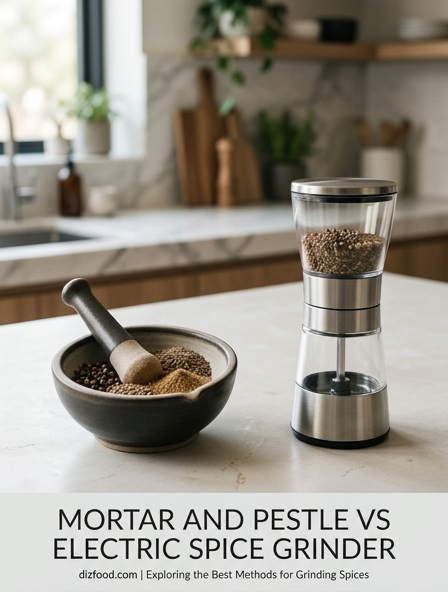
Mortar and Pestle vs Electric Spice Grinder Comparison
The debate between the ancient mortar and pestle and the modern electric spice grinder represents the intersection of culinary tradition and technological convenience. While both tools serve the primary purpose of breaking down whole spices into usable forms, they achieve this goal through vastly different mechanical processes. The choice between them often dictates the sensory profile of a dish, as well as the efficiency of the cooking process itself. Professionals and enthusiasts alike weigh these options based on the specific requirements of their recipes and the volume of ingredients they handle on a daily basis.
Understanding the fundamental differences requires looking at how each tool interacts with the structural integrity of spices. The electric grinder is a marvel of speed, utilizing high-speed blades to slice through seeds and husks. In contrast, the mortar and pestle relies on human effort and gravity to pulverize materials. This manual approach is often viewed as a more intimate way of cooking, allowing the chef to connect with the ingredients through touch and scent. However, for those preparing large quantities of spice blends, the manual method can be physically taxing and time-consuming.
| Feature | Mortar and Pestle | Electric Spice Grinder |
|---|---|---|
| Primary Action | Crushing and Grinding | Slicing and Chopping |
| Energy Source | Manual Labor | Electricity |
| Texture Result | Varied/Rustic | Uniform/Fine |
| Best For | Pastes and Small Batches | Dry Powders and Large Batches |
The Science of Crushing vs Cutting Spices
The mechanical difference between crushing and cutting is not merely a matter of technique; it is a matter of cellular biology. When an electric grinder's blades rotate at thousands of revolutions per minute, they act like miniature machetes, shearing through spice seeds. This cutting action creates clean edges on a microscopic level but often leaves many of the internal oil glands intact. Because the blades move so fast, they frequently miss the smaller pockets of flavor trapped deep within the fibrous structure of the spice, resulting in a powder that may look fine but lacks depth.
In contrast, the mortar and pestle utilizes the science of compression and friction. As the pestle is pressed and rotated against the mortar's wall, it creates a crushing force that ruptures the cellular walls of the spices. This holistic destruction of the plant cells ensures that every drop of volatile oil is squeezed out. The friction also generates a mild, controlled warmth that begins the process of flavor development even before the spice hits the pan. The resulting texture is often a mix of fine powder and bruised fragments, which provides a complex mouthfeel and staggered flavor release during the cooking process.
- Shearing: High-speed blades slice through materials, minimizing contact time.
- Compression: Downward pressure collapses internal structures of seeds and husks.
- Attrition: Rubbing action between two rough surfaces wears down particles into a paste or powder.
- Impact: Sudden force used to crack open hard shells like peppercorns or cardamom pods.
Maximum Flavor Release and Essential Oils
The soul of any spice lies in its essential oils, which contain the aromatic compounds responsible for taste and smell. The method used to process spices directly impacts how these oils are released and preserved. When using a mortar and pestle, the crushing action acts like a press, forcing the oils out of the cellular matrix and onto the surface of the spice. This creates a "wet" look even in dry spices, as the internal moisture and oils are thoroughly integrated. The aroma is immediate and intense, filling the kitchen as the oils aerosolize under the pressure of the manual grind.
Electric grinders, while efficient, often struggle to achieve this level of oil extraction. Because the blades cut rather than crush, much of the oil remains trapped within the individual fragments of the spice. Furthermore, the rapid movement of the blades creates a significant amount of air circulation within the grinding chamber. This airflow can lead to the rapid oxidation of the sensitive aromatic compounds. By the time the spice is transferred to the pot, some of the more delicate top notes of the flavor profile may have already dissipated into the air, leading to a flatter, less vibrant seasoning compared to the freshly bruised output of a stone or ceramic mortar.
Speed Efficiency and Convenience Factors
When time is the primary constraint in a busy kitchen, the electric spice grinder is the undisputed champion. It can transform a tablespoon of hard peppercorns or cinnamon sticks into a fine powder in less than ten seconds. This speed is invaluable for home cooks preparing weeknight meals or professional chefs who need to prepare large volumes of dry rubs. The convenience of simply pressing a button cannot be overstated, especially for those with limited hand strength or those suffering from conditions like arthritis, where the repetitive motion of a pestle would be painful.
However, convenience comes with trade-offs. An electric grinder requires a power source and takes up counter or cabinet space near an outlet. It also involves more setup and breakdown time if the goal is to grind just a small pinch of a single spice. The mortar and pestle, while slower, is always ready for use and requires no electricity. It is often faster for very small tasks, such as crushing a single clove of garlic or a few cumin seeds, because the cleanup of a heavy stone bowl is often more straightforward than disassembling the plastic and metal components of a motorized unit.
- Batch Processing: Electric grinders handle large volumes without physical fatigue.
- Setup Time: Mortar and pestle are "grab-and-go" tools requiring zero assembly.
- Portability: Manual tools can be used anywhere, including outdoors or in kitchens with few outlets.
- Physical Effort: Manual grinding provides a workout, whereas electric grinding is effortless.
Precision Control Over Spice Texture
Achieving the perfect texture is a hallmark of skilled cooking, and the level of control varies significantly between these two tools. An electric grinder offers a high degree of uniformity, but it can be difficult to hit the exact sweet spot between "cracked" and "pulverized." Because the blades spin so fast, a fraction of a second can be the difference between a coarse grind and a fine dust. Most users must rely on "pulsing" the machine and shaking it to ensure all particles hit the blades, which is a somewhat imprecise way to manage texture.
The mortar and pestle offers unparalleled tactile feedback. As you grind, you can feel the resistance of the spices changing through the pestle. This allows the cook to stop exactly when the desired consistency is reached. Whether the recipe calls for a coarse, rustic texture for a steak rub or a smooth, silk-like consistency for a delicate sauce, the manual method provides total authority over the result. This precision is particularly important for recipes where the visual appearance of the spice fragments contributes to the presentation of the dish.
- Assess the resistance of the whole spice under the pestle.
- Apply heavy downward pressure to crack the outer shells.
- Transition to a circular grinding motion to refine the particle size.
- Periodically inspect the texture visually and by touch.
- Stop immediately once the specific "grit" or "powder" state is achieved.
Versatility for Dry Powders and Wet Pastes
Versatility is perhaps the greatest strength of the mortar and pestle. Unlike most electric spice grinders, which are strictly designed for dry ingredients, a mortar and pestle can handle liquids, oils, and aromatics with ease. It is the essential tool for creating authentic Thai curry pastes, Italian pesto, or Mexican guacamole. The ability to combine dry spices with wet ingredients like garlic, ginger, chilies, and olive oil in a single vessel allows for the creation of emulsions and integrated flavor bases that a blade-based grinder simply cannot replicate.
Electric spice grinders are generally specialized tools. Using them for wet ingredients can be disastrous, often leading to a gummy mess that is difficult to remove from the blade assembly and can even damage the motor if moisture leaks into the housing. While there are "wet/dry" food processors, they often lack the small-scale precision required for spices. Therefore, the electric grinder is largely relegated to the role of a "powder maker," whereas the mortar and pestle functions as a multi-purpose preparation station for a wide variety of global cuisines that rely on moist aromatics and pastes.
- Dry Grinding: Both tools excel, though electric is faster for fine powders.
- Wet Grinding: Only the mortar and pestle can effectively create pastes.
- Emulsifying: Manual grinding allows for the slow integration of oils.
- Crushing Aromatics: Smashing garlic or ginger is only possible in a mortar.
Impact of Heat on Spice Potency
A hidden enemy of spice quality is heat, which can be generated in surprisingly large amounts by electric grinders. The friction created by blades spinning at high speeds, combined with the heat produced by the electric motor itself, can warm the spice chamber significantly during operation. This rise in temperature is detrimental to the volatile compounds in spices. Many essential oils have low boiling points, meaning they begin to evaporate or break down at relatively low temperatures. If a grinder runs for too long, the "fresh" spice may actually come out smelling slightly cooked or scorched.
The mortar and pestle is a "cold" process. While manual friction does generate a negligible amount of warmth, it is rarely enough to cause the evaporation of essential oils. In fact, the slight warmth generated by the heavy stone or ceramic material actually helps to "bloom" the spices gently without reaching the destructive temperatures of a motorized blade. This ensures that the chemical integrity of the spice remains intact, preserving the bright, sharp notes that are often lost in high-heat processing. For delicate herbs and spices like dried mint or cardamom, this temperature control is vital for maintaining potency.
Cleaning Maintenance and Durability
Cleaning an electric spice grinder can be a tedious chore. Because the blades are usually fixed and the motor cannot be submerged in water, users often have to resort to grinding white rice or breadcrumbs to "wipe" the internal chamber. Small particles of spice often get trapped in the crevice between the blade and the floor of the container, leading to flavor cross-contamination over time. Furthermore, the plastic lids and components can become cloudy or stained by the pigments in spices like turmeric, and the electronic components are prone to failure after a few years of heavy use.
In contrast, a mortar and pestle is virtually indestructible and remarkably easy to maintain. Depending on the material-be it granite, marble, stainless steel, or ceramic-most can be rinsed with warm water and scrubbed with a stiff brush. Solid stone versions are famous for their longevity, often being passed down through generations. There are no moving parts to break and no motors to burn out. While some porous stones may retain a bit of flavor from previous uses, a simple seasoning process or a wash with mild soap (if the material allows) keeps them in top condition for decades of daily service.
- Granite/Stone: Rinse with water; avoid soap to prevent residue in pores.
- Ceramic: Usually dishwasher safe and completely non-porous.
- Stainless Steel: Easy to sanitize and resistant to all odors.
- Electric Units: Require dry cleaning methods; sensitive to moisture.
Cost and Longevity of Kitchen Tools
The financial aspect of these tools is a study in "initial cost vs. total cost of ownership." Electric spice grinders are generally affordable, with entry-level models available at very low price points. However, these inexpensive units are often built with planned obsolescence in mind. The plastic components may crack, the blades may dull, or the motor may seize after a few years of use. Over a lifetime of cooking, a chef might go through several electric grinders, making the cumulative cost higher than it initially appears.
A high-quality mortar and pestle requires a more significant upfront investment, especially for large, heavy granite models. However, this is a one-time purchase. Because there are no mechanical failures possible, the tool does not degrade over time. In many cases, a stone mortar actually improves with age as the interior surface becomes perfectly seasoned and slightly smoother from use. When viewed through the lens of durability, the mortar and pestle is the more economical and sustainable choice for the long-term kitchen, offering a level of reliability that no electronic device can match.
| Factor | Electric Grinder | Mortar and Pestle |
|---|---|---|
| Average Price | $20 - $60 | $30 - $100 |
| Life Expectancy | 3 to 8 Years | Lifetime / Generations |
| Repairability | Low (Disposable) | Not Needed |
| Value over Time | Decreases | Increases/Stable |
Final Verdict for Home Chefs and Professionals
The final decision between a mortar and pestle and an electric spice grinder depends entirely on the culinary goals of the user. For the home chef who values the ritual of cooking and the highest possible flavor extraction, the mortar and pestle is an essential investment. Its ability to create pastes and its superior oil-releasing capabilities make it the superior choice for high-end gourmet results. It is the tool of choice for anyone specializing in ethnic cuisines that require the pounding of fresh aromatics, where a machine simply cannot replicate the desired texture and depth.
On the other hand, the electric spice grinder is a necessary tool for efficiency and volume. For bakers who need fine cinnamon powder or professional kitchens that prepare large quantities of dry rubs for smoking meats, the manual method is simply impractical. Many modern kitchens find that the best approach is to own both. The electric grinder serves the needs of speed and bulk processing, while the mortar and pestle is reserved for those moments when flavor, texture, and tradition are the top priorities. Ultimately, neither tool is obsolete; they are complementary pieces of equipment that cater to different phases of the culinary experience.

Comments