
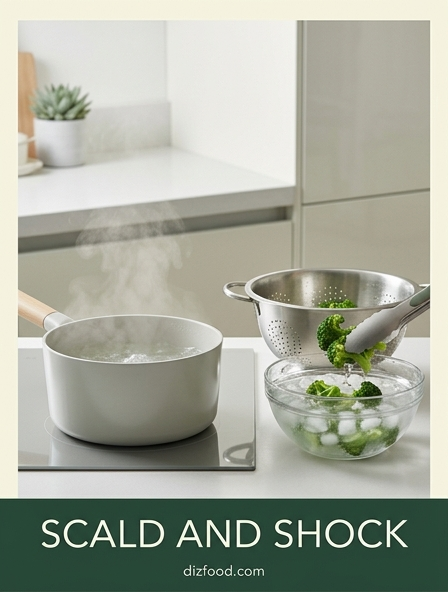
Ever wonder how top chefs keep their vegetables looking incredibly bright and tasting perfectly crisp? The secret lies in mastering the "scald and shock" method, a fundamental culinary technique that locks in nutrients and stops the cooking process in its tracks. By briefly submerging your fresh produce in boiling water and immediately plunging it into an ice-cold bath, you preserve that stunning garden-fresh color and snappy texture. Whether you're prepping for a vibrant stir-fry or freezing a summer harvest, this simple step elevates your home cooking to professional standards. To refine your skills even further, it is essential to understand the key differences between blanching vs parboiling.
The Science Behind Scald and Shock
The culinary process of scalding and shocking, scientifically known as blanching, relies on rapid thermal transfer to alter the biological state of fresh produce. When vegetables are submerged in boiling water, the intense heat immediately begins to denature enzymes such as catalase and peroxidase. These enzymes are naturally responsible for the eventual decay, browning, and loss of flavor in harvested plants. By applying high heat for a strictly limited duration, the cook effectively "turns off" these chemical reactions without fully softening the plant's cellular structure.
The "shock" phase is equally critical from a thermodynamic perspective. Once the produce is removed from the heat, internal residual energy continues to cook the fibers, a phenomenon known as carryover cooking. Rapid immersion in an ice-water bath creates a steep temperature gradient, pulling heat away from the core of the vegetable instantly. This sudden cessation of thermal energy preserves the pectin within cell walls, ensuring the vegetable retains a crisp, al dente bite rather than collapsing into a mushy consistency through over-processing.
Essential Equipment for Perfect Blanching
Achieving consistent results in scalding and shocking requires a specific set of tools designed to handle high-volume water and rapid transitions. The primary vessel should be a large stockpot, ideally constructed from heavy-gauge stainless steel or copper-core aluminum to ensure rapid heat recovery once the cold produce is added. A secondary basin, such as a wide stainless steel mixing bowl, is necessary for the ice bath to ensure there is enough surface area for rapid cooling.
- Large Stockpot: Recommended minimum of 6 to 8 quarts for home use.
- Spider Skimmer or Slotted Spoon: Essential for transferring delicate items quickly without carrying excess boiling water.
- Blanching Basket: An optional wire insert that allows for the immediate removal of all produce at once.
- Colander: Necessary for the final drainage and drying phase after the ice bath.
- Digital Timer: Precision is vital, as seconds can determine the difference between vibrant and overcooked.
Using a spider skimmer is often preferred over a traditional colander for the transfer stage because it allows the boiling water to remain in the pot, maintaining its temperature for subsequent batches of produce.
Optimal Water Temperature for Scalding
The success of the scalding phase depends entirely on maintaining a true rolling boil, which occurs at 212°F (100°C) at sea level. If the water temperature is too low, the vegetables will essentially simmer or poach, leading to a loss of structural integrity and a dulling of color. The key challenge for most home cooks is the temperature drop that occurs the moment the cold produce enters the pot. To mitigate this, a ratio of at least one gallon of water per pound of vegetables is standard practice.
When the water is at a vigorous boil, the bubbles should not stop when stirred. This high energy ensures that the heat penetrates the outer skin of the vegetable almost instantly. For high-altitude cooking, where water boils at a lower temperature, the scalding time must be slightly increased to compensate for the reduced thermal intensity. Monitoring the water volume is also essential; if the water takes more than one minute to return to a boil after adding the vegetables, the pot is overcrowded, which will result in uneven enzyme deactivation and poor texture.
Mastering the Instant Ice Bath Shock
The "shock" is the defensive maneuver that protects the integrity of the scalded food. An effective ice bath is not merely cold water; it must be a saturated slush of ice and water. To prepare the bath correctly, fill a large bowl with approximately 50% ice cubes and 50% cold water. This ratio ensures that the water remains at a near-freezing temperature even as it absorbs the heat from the hot vegetables. Without sufficient ice, the water temperature will rise quickly, failing to stop the cooking process effectively.
As soon as the timer expires for the scalding phase, produce must be moved to the ice bath within seconds. Submerge the items completely and agitate them gently to ensure the cold water reaches every surface. A common rule of thumb is to leave the vegetables in the ice bath for the same amount of time they spent in the boiling water. Once the produce feels cold to the center, remove it immediately. Leaving vegetables in water for too long after they have cooled can lead to waterlogging, which dilutes flavor and ruins the final texture of the dish.
Preserving Vibrant Color and Nutrients
One of the most visually rewarding aspects of the scald and shock method is the intensification of color, particularly in green vegetables. This occurs because the brief application of heat causes the microscopic pockets of gas between plant cells to expand and escape. This allows the natural pigments, such as chlorophyll, to show through the translucent cell walls more clearly. However, if the scalding lasts too long, the chlorophyll molecule loses its magnesium atom and turns a dull, unappetizing olive-drab color.
Nutritionally, blanching is a double-edged sword. While some water-soluble vitamins, such as Vitamin C and B-complex vitamins, can leach into the boiling water, the process is generally superior to long-term boiling or steaming. By deactivating the enzymes that cause nutrient degradation over time, blanching actually helps retain high levels of antioxidants and vitamins during storage. To maximize nutrient retention, it is vital to use the shortest scalding time possible for the specific vegetable and to move directly to the cooling stage to lock in the chemical profile of the fresh plant.
Perfect Timing for Every Vegetable Type
Timing is the most variable element of the blanching process, dictated primarily by the density and surface area of the produce. Delicate greens require only a few seconds of heat, while dense root vegetables may need several minutes to ensure the heat reaches the core. Precise timing ensures that the exterior does not become mushy while the interior remains raw and enzymatically active. Consistency in the size of the cuts is also mandatory for uniform results across a single batch.
| Vegetable Type | Scalding Time | Preparation Style |
|---|---|---|
| Baby Spinach | 30-60 Seconds | Whole leaves |
| Asparagus | 2-4 Minutes | Spears (size dependent) |
| Green Beans | 3 Minutes | Trimmed whole |
| Broccoli Florets | 3 Minutes | Uniform 1-inch pieces |
| Carrots (Sliced) | 2 Minutes | 1/4 inch rounds |
Always start the timer the moment the water returns to a boil. If you are unsure of the progress, a "taste test" at the minimum time mark can confirm if the raw flavor is gone while the crunch remains.
Stopping Enzyme Activity for Freshness
The primary culinary goal of scalding is the inactivation of enzymes that lead to food spoilage. Even when produce is kept in a freezer, these enzymes remain active, albeit at a slower rate, causing the food to develop off-flavors, toughened textures, and unappealing odors over several months. Peroxidase and catalase are the most heat-resistant enzymes found in vegetables; therefore, if the blanching process is sufficient to destroy them, it is assumed all other harmful enzymes have also been neutralized.
Under-blanching is actually more detrimental than not blanching at all. If the heat is only sufficient to stimulate the enzymes but not destroy them, the rate of spoilage can actually accelerate. Conversely, over-blanching results in a cooked product that loses its "fresh" characteristics. The balance achieved through the shock method ensures that the internal chemistry of the vegetable is stabilized. This stabilization is what allows frozen peas to retain their sweetness and corn to keep its snap, effectively "freezing" the biological clock of the produce at its peak ripeness.
Advanced Techniques for Crisp Textures
Professional chefs often utilize specific additives and physical techniques to enhance the results of the scald and shock method. One common technique is the use of highly salted water, often described as "tasting like the sea." Salt serves two purposes: it seasons the vegetable deeply and helps to speed up the breakdown of hemicellulose in the cell walls, allowing for a faster blanch that preserves color. Some also use a tiny pinch of baking soda to keep greens exceptionally bright, though this must be done with extreme caution as it can easily turn vegetables mushy.
Another advanced approach involves the "dry shock." Instead of using an ice water bath, which can occasionally dilute the flavor of high-sugar vegetables like corn or peas, chefs may spread the scalded items in a single layer on a chilled metal baking sheet placed over ice. This stops the cooking through conduction and evaporation without the vegetable ever touching water again. Furthermore, ensuring the produce is perfectly dried after the shock-using a salad spinner or lint-free towels-is essential if the vegetables are destined for a high-heat sauté or deep-fry later.
Preparing Produce for the Freezer
Scalding and shocking are the mandatory precursors to successful home freezing. Once the vegetables have been shocked and thoroughly cooled, the most critical step is removing surface moisture. Any water remaining on the produce will turn into ice crystals, which can puncture cell walls and lead to freezer burn or a limp texture upon thawing. Using a salad spinner is the most efficient way to remove water from leafy or small items, while larger vegetables should be patted dry with clean towels.
- Blanch and shock the produce according to the specific timing requirements.
- Drain thoroughly in a colander for several minutes.
- Pat dry to remove all visible surface moisture.
- Flash freeze by spreading items in a single layer on a tray for 1-2 hours.
- Transfer to airtight freezer bags, removing as much air as possible.
The "flash freeze" step prevents the vegetables from clumping together into a solid mass, allowing you to pour out exactly what you need for future recipes. Properly blanched and frozen vegetables can maintain their quality for 8 to 12 months.
Common Mistakes in the Blanching Process
The most frequent error in the blanching process is overcrowding the boiling pot. When too many cold vegetables are added at once, the water temperature plummets and stays below boiling for too long. This results in the vegetables being steamed or soaked in warm water, which ruins the texture and fails to deactivate enzymes quickly. To avoid this, work in small batches, allowing the water to return to a full rolling boil before starting the next round. Another mistake is using a bowl for the ice bath that is too small, which results in the water warming up before the vegetables have fully cooled.
Inaccurate timing is another pitfall. Guessing the duration rather than using a digital timer often leads to under-blanching (leaving enzymes active) or over-blanching (resulting in mushy food). Finally, many fail to dry the produce sufficiently after the ice bath. If the vegetables are going into a freezer or a hot pan, excess water is the enemy of quality. By strictly adhering to the temperature, timing, and drying stages, you can avoid these common failures and achieve professional-grade results every time.

Comments