
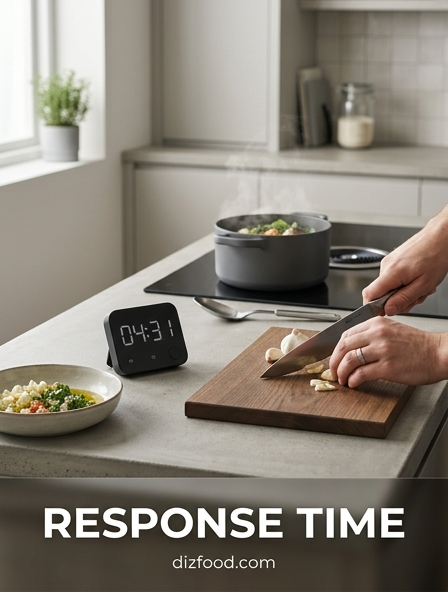
The Importance of Instant Temperature Readings
In the high-stakes environment of a professional or home kitchen, the response time of a thermometer can mean the difference between a culinary masterpiece and a safety hazard. Traditional analog thermometers often require up to thirty seconds to stabilize, a duration that allows heat to continue penetrating the food, leading to inaccurate readings. Modern instant-read digital thermometers have revolutionized this process by providing results in under three seconds. This rapid response allows chefs to make split-second decisions, ensuring that proteins are pulled from the heat at the exact peak of perfection.
- Thermocouple sensors provide the fastest response times, often under two seconds.
- Thermistor sensors are slightly slower but offer high accuracy for thick cuts.
- Delayed readings lead to carryover cooking, which can ruin delicate textures.
Beyond texture, speed is a vital component of food safety. When checking multiple points on a large roast or a whole bird, a fast-responding probe minimizes the time the oven door remains open, preventing significant ambient temperature drops that can lengthen cooking times and dry out the meat.
Avoiding the Bacterial Danger Zone
Food safety is fundamentally a race against time and temperature. The "Danger Zone" refers to the temperature range where bacteria, such as Salmonella and E. coli, multiply most rapidly. Minimizing the time food spends within this range is the primary goal of any safety-conscious cook. Response time is critical when monitoring cooling batches of soup or warming buffet items, as slow detection of a temperature drop can lead to microbial proliferation. Professional kitchens rely on rapid-response sensors to ensure that food transitions through these zones as quickly as possible.
| Zone Type | Temperature Range | Safety Action |
|---|---|---|
| Safe Cold | Below 40°F (4°C) | Maintain refrigeration |
| Danger Zone | 40°F - 140°F | Limit time to < 2 hours |
| Safe Hot | Above 140°F (60°C) | Maintain active heating |
When reheating food, the response time of the heat source and the monitoring equipment must be synchronized. Reaching an internal temperature of 165°F quickly ensures that any pathogens are neutralized before they can produce heat-stable toxins.
Precision Timing for Perfect Doneness
Culinary perfection is often measured in seconds. For items like a medium-rare steak or a soft-boiled egg, the window of ideal doneness is incredibly narrow. Precision timing involves understanding the lag between the heat source and the food's internal thermal energy. High-quality kitchen timers and integrated smart-appliances help bridge this gap by offering millisecond accuracy. However, the chef's response time to these alerts is equally important. A delay of just thirty seconds in removing a piece of fish from a hot pan can result in a protein that is dry and fibrous rather than succulent.
Advanced ovens now feature integrated probes that communicate directly with the heating elements. When the target temperature is reached, the system responds by immediately shutting down or transitioning to a "hold" mode. This technological integration reduces the margin for human error, though manual verification remains a staple for professional consistency. Understanding that heat continues to travel toward the center of the food even after it is removed from the flame-a phenomenon known as carryover cooking-requires the cook to respond proactively rather than reactively.
Impact of Sensor Speed on Searing
Searing is a technique that relies on the Maillard reaction, which occurs at high temperatures. To achieve a perfect crust without overcooking the interior, the pan's surface temperature must be precisely managed. Fast-acting infrared thermometers allow cooks to monitor pan heat in real-time, ensuring the surface is hot enough to sear instantly upon contact. If the sensor response is too slow, the cook might add the protein too early, leading to steaming rather than searing, or too late, causing the fats to reach their smoke point and turn bitter.
- Infrared sensors provide non-contact, instantaneous surface temperature data.
- High-speed feedback allows for immediate adjustment of gas or induction levels.
- Consistent monitoring prevents the pan temperature from dropping when cold food is added.
The speed at which a cook responds to these thermal cues dictates the quality of the crust. In high-volume kitchens, the ability to rapidly assess and adjust heat across multiple pans simultaneously is a skill that separates master sauciers from novices. Rapid sensor feedback is the backbone of this efficiency.
Rapid Cooling Strategies for Food Safety
The process of cooling hot food for storage is a critical phase where response time is frequently overlooked. Leaving a large pot of stock to cool at room temperature is a recipe for disaster, as the core will remain in the danger zone for hours. Rapid cooling strategies are designed to accelerate heat transfer, moving the food from boiling to refrigerated temperatures in a fraction of the standard time. This requires immediate action once the cooking process is complete to stop the growth of thermophilic bacteria.
- Transfer food to shallow containers to increase the surface-area-to-volume ratio.
- Utilize ice baths with frequent stirring to distribute cold energy evenly.
- Use stainless steel paddles filled with frozen gel to cool liquids from the inside out.
- Deploy blast chillers for commercial-grade rapid temperature reduction.
By shortening the cooling duration, the kitchen preserves the structural integrity of the food. Rapid cooling prevents the formation of large ice crystals during freezing and ensures that the texture remains consistent when the food is eventually reheated for service.
How Reaction Time Prevents Overcooking
Reaction time in the kitchen refers to the interval between identifying that a food item has reached its peak and the physical act of removing it from the heat. This is especially vital when working with high-conductivity cookware like copper or carbon steel, which retain and transfer heat with extreme efficiency. A chef must account for the "thermal momentum" of the dish. If a thermometer registers 130°F for a steak, the reaction time to move that steak to a resting rack must be nearly instantaneous to avoid exceeding the 135°F target for medium-rare.
Training for improved reaction time involves organizing the workspace so that there are no physical obstacles to immediate action. Having a landing zone ready for hot pans and resting trays prepped for proteins ensures that no time is wasted. This proactive approach mitigates the risks associated with carryover cooking. In pastry work, reacting to the color of caramel or the consistency of a reduction requires visual acuity and immediate physical response, as the difference between a golden syrup and a burnt mess is often less than five seconds of heat exposure.
Digital Accuracy versus Manual Guesswork
Traditional methods of checking doneness, such as the "finger poke" test for steaks or the "eyeing" of bread crusts, are subjective and prone to significant error. These manual methods rely on a cook's accumulated experience, which can be inconsistent under stress or when using unfamiliar ingredients. Digital tools provide an objective response that eliminates guesswork, ensuring repeatability and safety. The speed of digital feedback allows for frequent checks without the cumulative heat loss associated with prolonged manual inspections.
| Method | Response Metric | Reliability |
|---|---|---|
| Manual Touch | Subjective Resistance | Low/Inconsistent |
| Visual Cues | Color/Steam Output | Moderate |
| Digital Probe | Numerical Data | High/Precise |
While a seasoned chef develops an intuition for timing, the digital interface provides a fail-safe. In a busy kitchen where a cook may be managing ten tasks at once, the rapid, audible, and visual alerts from digital sensors act as an external brain, maintaining quality control when human attention is divided.
Mise en Place and Processing Speed
Mise en place, or "everything in its place," is the ultimate strategy for optimizing kitchen response time. When ingredients are pre-measured, chopped, and organized, the cook can respond to the requirements of a recipe without delay. In the middle of a high-heat sauté, there is no time to peel garlic or dice onions; the pan demands the next ingredient immediately. Processing speed-how quickly a cook can prepare these items-is the foundation upon which a fast-paced service is built.
- Pre-slicing aromatics ensures they are ready for the exact moment the oil shimmers.
- Grouping ingredients by addition time prevents the scorching of early-stage components.
- Sharp knives increase processing speed and reduce the physical effort of prep work.
A well-organized station allows the chef to maintain a flow state, where every action is a direct and efficient response to the cooking process. This synchronization of preparation and execution ensures that the kitchen remains productive and that no single component of a dish is neglected or over-processed due to poor timing.
Optimizing Workflow for Thermal Control
The physical layout of a kitchen significantly influences the response time for thermal control. If the refrigerator is located too far from the prep station, or if the cooling racks are across the room from the range, the delay in moving food can compromise both safety and quality. Optimizing workflow involves creating a logical path from "cold" to "hot" and back to "cold." This minimizes the transit time of ingredients, ensuring they spend as little time as possible in uncontrolled environments.
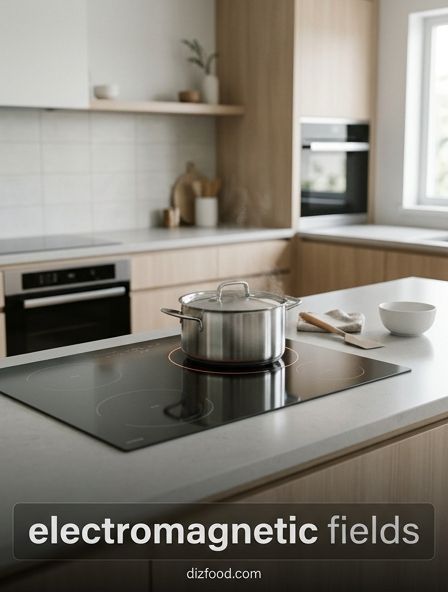
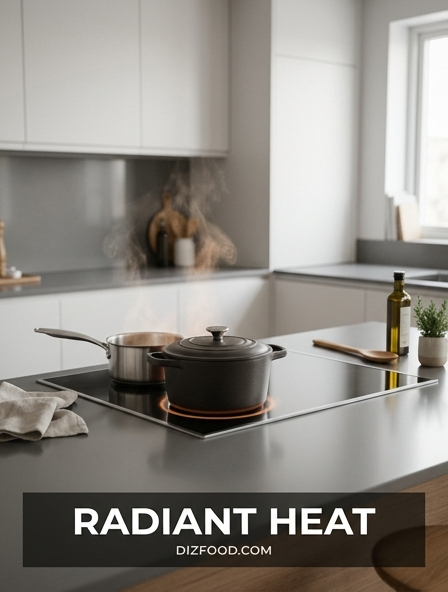
Effective thermal control also requires understanding the response time of your equipment. Induction cooktops, for example, respond almost instantly to adjustments in power levels, whereas electric coil burners have a significant lag time in both heating and cooling. A cook must adapt their workflow to these mechanical realities, perhaps moving a pan off a slow-cooling burner entirely rather than simply turning the dial down. By aligning human movement with equipment capabilities, a kitchen operates as a high-speed system where heat is managed with surgical precision, reducing waste and improving the final plate's consistency.
Seconds Matter for Delicate Proteins
Delicate proteins such as scallops, shrimp, and thin fish fillets have very little thermal mass, meaning they cook-and overcook-incredibly quickly. For these ingredients, the response time must be calculated in seconds rather than minutes. A scallop may only require ninety seconds of searing per side to reach its ideal state. A delay in flipping or removing the protein can result in a rubbery texture and a loss of natural sweetness. Managing these items requires constant vigilance and an immediate physical response to the visual and olfactory cues of the pan.
- Monitor for the "opaque" transition in shrimp and fish.
- Listen for the sizzle to change pitch, indicating moisture loss.
- Use high-heat, fast-response oils to achieve a crust before the center overcooks.
- Rest delicate proteins on a cold surface to stop the cooking process instantly.
The margin for error with these foods is razor-thin. Success depends on the cook's ability to remain present and ready to act the moment the protein reaches its peak. In these instances, the kitchen is a theater of seconds, where the speed of the chef's response is the most critical ingredient.


Comments