
When you're staring down stubborn grease and stained grout lines during a kitchen deep clean, the right tool determines whether you'll be scrubbing for minutes or hours. While a detail toothbrush is a classic DIY hack for navigating tight corners around faucets and appliance buttons, it often lacks the structural integrity needed for heavy-duty descaling. On the other hand, a dedicated grout brush is engineered with stiff, V-cut nylon bristles designed specifically to penetrate porous grout lines and lift embedded grime without fraying. Choosing between them depends on your target: use the surgical precision of a toothbrush for delicate crevices and the aggressive, ergonomic power of a grout brush to restore your tile backsplashes and floor joints to their original glory.
| Feature | Dedicated Grout Brush | Detail Toothbrush |
|---|---|---|
| Bristle Density | High; stiff industrial nylon | Low to Medium; soft/medium flex |
| Scrubbing Power | Aggressive; removes set-in stains | Gentle; removes surface dust/debris |
| Ergonomics | Large, non-slip pressure handles | Thin, straight handles; high hand fatigue |
| Head Shape | V-shape or angled for narrow lines | Flat or multi-level; wide surface area |
| Surface Safety | Tough on tile; can scratch soft plastic | Safe for chrome, glass, and gaskets |
| Best Application | Tile grout, floor joints, oven tracks | Faucet aerators, knobs, sink overflows |
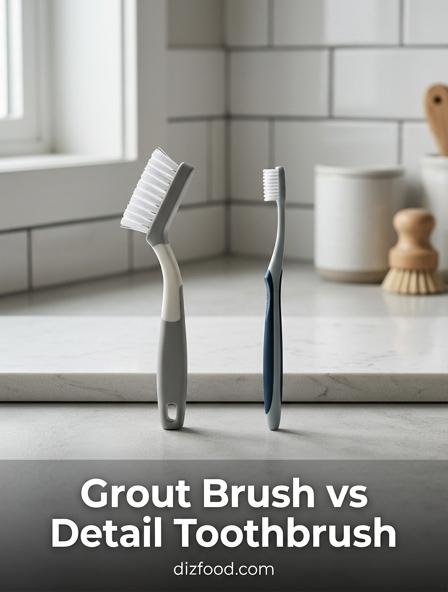
Grout Brush vs Detail Toothbrush: Choosing the Best Cleaning Tool
In the heart of the home, the kitchen serves as a hub for culinary creativity, but it also acts as a primary magnet for stubborn grease, food particles, and mineral deposits. Maintaining the pristine appearance of tile backsplashes, stone countertops, and intricate appliance crevices requires more than a simple sponge. The debate between using a specialized grout brush versus a detail toothbrush often arises when homeowners tackle deep-cleaning tasks. While both tools aim to remove grime from narrow spaces, their effectiveness varies significantly based on the specific kitchen surface being addressed.
The kitchen presents unique challenges, such as sticky oil buildup near the stove and hard water stains around the faucet. A grout brush is typically engineered for the heavy-duty task of scouring porous cement lines between tiles, whereas a detail toothbrush is often repurposed from personal hygiene or sold as a miniature scrubbing tool for delicate work. Choosing the right implement is not merely a matter of convenience; it is about maximizing cleaning efficiency while ensuring the longevity of your kitchen's finishes. Understanding the strengths of each tool allows for a more strategic approach to sanitation, ensuring that every corner, from the refrigerator gasket to the sink overflow, remains spotless and hygienic.
- Grout Brushes: Best for expansive tile areas and heavy carbon or grease buildup.
- Detail Toothbrushes: Ideal for precision cleaning around buttons, knobs, and decorative trim.
- Hybrid Approach: Using both tools ensures that neither broad surfaces nor tiny cracks are neglected during a seasonal deep clean.
The Key Differences Between Specialized Grout Brushes and Detail Toothbrushes
While they may look similar at a glance, the engineering behind a specialized grout brush and a detail toothbrush is fundamentally different. A grout brush is a commercial-grade tool designed with high-density, stiff synthetic bristles. These bristles are often angled or trimmed to a point to penetrate deep into the recessed valleys between tiles. In contrast, a detail toothbrush-even those marketed for cleaning-tends to have softer, more flexible bristles designed to sweep away loose debris rather than grind away set-in stains. The head size also differs; grout brushes usually feature a longer, narrower head to cover more linear distance with each stroke.
| Feature | Specialized Grout Brush | Detail Toothbrush |
|---|---|---|
| Bristle Stiffness | Very High / Rigid | Soft to Medium |
| Head Shape | V-Trim or Long Narrow Rectangle | Small Oval or Round |
| Handle Length | Long with ergonomic grips | Short and slender |
| Primary Use | Scrubbing porous grout and seams | Intricate crevices and electronics |
The structural integrity of the bristles plays a vital role in how much pressure can be applied. When you lean into a grout brush, the bristles remain upright, channeling the force directly into the cleaning surface. A toothbrush, however, will often see its bristles splay or "mushroom" under heavy pressure, which drastically reduces its scrubbing power. This mechanical difference means the grout brush is the workhorse for restoration, while the toothbrush serves as a precision instrument for light maintenance.
Cleaning Efficiency: Why Bristle Stiffness Matters for Tile and Grout
Efficiency in the kitchen is often measured by how quickly one can remove organic matter and stains without damaging the underlying material. Bristle stiffness is the primary factor in this equation. Kitchen grout is notoriously difficult to clean because it is a porous mixture of sand and cement that easily absorbs liquids and oils. To lift these embedded contaminants, a brush must have enough "flick" or tension to agitate the cleaning solution deep within the pores. Grout brushes utilize thick-gauge nylon or polyester bristles that provide the necessary resistance to dislodge dried-on food or mold spores that have taken root in the backsplash.
A detail toothbrush, designed for the delicate surfaces of teeth and gums, lacks this necessary rigidity. When faced with the gritty texture of kitchen grout, the soft bristles of a toothbrush simply glide over the top of the debris rather than digging in. This leads to a common frustration: the user must scrub for twice as long to achieve half the results. Furthermore, the stiffness of a grout brush allows it to hold more cleaning paste or foam against the vertical surface of a backsplash, preventing the chemicals from dripping away before they can work. By matching the stiffness of the tool to the toughness of the task, you minimize physical exertion and save time during the cleaning process. This makes the grout brush the superior choice for any area where friction and agitation are the primary means of dirt removal.
Ergonomic Design: Comparing Handle Comfort for Long Scrubbing Sessions
Ergonomics are frequently overlooked until halfway through a cleaning session when hand fatigue begins to set in. Grout brushes are specifically designed for the manual labor of scrubbing, often featuring handles with over-molded rubber grips, finger indentations, or D-shaped loops. These designs allow the user to apply downward or forward pressure using the strength of their entire arm and shoulder rather than just the small muscles in the hand and wrist. This is particularly important in the kitchen, where reaching over countertops or scrubbing high up on a backsplash can put the body in awkward positions.
The detail toothbrush, conversely, is built for light, nimble movements. Its thin, straight handle provides very little leverage. Attempting to perform heavy scrubbing with a toothbrush requires a tight "pinch grip," which can quickly lead to cramping and joint strain. While the small size of a toothbrush is beneficial for maneuvering around a faucet base, it is a liability when cleaning the length of a kitchen floor or a large wall area. Professional cleaners often prefer grout brushes because the handle is angled away from the bristles, which protects the user's knuckles from scraping against the rough tile surface. When evaluating these tools, consider the duration of the task; for any job lasting longer than five minutes, the ergonomic advantages of a dedicated grout brush will significantly improve the experience and the final outcome.
When to Use a Detail Toothbrush for Intricate Cleaning Tasks
Despite the power of the grout brush, the detail toothbrush holds a permanent place in the kitchen cleaning kit due to its superior maneuverability in tight spots. There are numerous areas in a modern kitchen where a large grout brush is simply too bulky to be effective. For example, the interface between a kitchen sink and the countertop often features a narrow bead of silicone that accumulates slime. A detail toothbrush can navigate these tight curves with a level of precision that a wider brush cannot match. Its smaller footprint makes it the ideal tool for intricate cleaning tasks that require a "surgical" touch.
Consider the following kitchen items where a detail toothbrush excels:
- Appliance Buttons: Cleaning the grime around the buttons of a microwave, oven, or dishwasher.
- Faucet Aerators: Removing calcium deposits from the mesh screens and decorative grooves of the tap.
- Refrigerator Gaskets: Gently sweeping crumbs and spills out of the flexible folds of the door seal without tearing the rubber.
- Small Appliances: Reaching into the nooks of a stand mixer, coffee grinder, or toaster crumb tray.
- Decorative Trim: Cleaning carved details on wooden cabinet doors or ornate hardware.
In these scenarios, the softness of the toothbrush is actually an advantage. It allows the bristles to contour around irregular shapes and enter tiny holes where a stiff grout brush would simply skip over the surface. The toothbrush acts as a fine-tuning tool that completes the cleaning process after the heavy-duty work is done.
The Advantages of Using a V-Trim Grout Brush for Deep Lines
One of the most significant innovations in specialized cleaning tools is the V-trim or "crevice-cut" bristle design found on high-quality grout brushes. In this configuration, the outer bristles are longer than the inner bristles, creating a pointed or V-shaped profile. This is not an aesthetic choice; it is a functional design that ensures the brush stays centered within the grout line. When you push a V-trim brush along a seam, the bristles naturally funnel into the depression, ensuring that the sides and the bottom of the grout line are cleaned simultaneously.
A detail toothbrush has a flat or slightly multi-level trim that is designed for a flat surface. When used on grout, a flat-head brush tends to slide out of the groove and skate across the face of the tile. This is not only inefficient but can also lead to uneven cleaning. The V-trim grout brush provides several specific benefits:
- Directional Stability: The brush tracks perfectly along the line, reducing the effort needed to keep it in place.
- Maximum Contact: Because the bristles are shaped to match the contours of the grout, more surface area is agitated with every stroke.
- Corner Penetration: The pointed tip of the V-trim allows the user to jab into 90-degree corners where two walls meet, areas where a rounded toothbrush head often fails to reach.
For kitchen backsplashes with deep, recessed lines, the V-trim design is arguably the most important feature to look for in a cleaning tool.
Surface Protection: Avoiding Scratches with the Right Bristle Type
In the kitchen, "clean" should never come at the cost of "damaged." Many modern kitchen surfaces are sensitive to abrasion. Stainless steel, polished marble, and high-gloss laminates can be easily scratched by overly aggressive scrubbing tools. This is where the choice between a grout brush and a detail toothbrush requires careful consideration of the material being cleaned. Most grout brushes use stiff nylon, which is safe for ceramic and porcelain, but can be too abrasive for softer materials like plastic appliance housings or specialized metal finishes.
A detail toothbrush is generally safer for "soft" surfaces. The gentle flex of the bristles ensures that you can remove surface dirt without etching the finish. However, even with a toothbrush, one must be cautious of the material. If you are cleaning a polished stone like travertine or marble, even a stiff grout brush can leave microscopic scratches that dull the shine over time. When working on these surfaces, it is best to use a soft-bristled detail brush or a specialized "soft" grout brush. Always test a small, inconspicuous area before proceeding with the full cleaning. Remember that the goal is to lift the dirt, not to sand down the surface. By understanding the Mohs hardness of your kitchen materials-where stone is harder than plastic but softer than some synthetic bristles-you can choose the tool that offers the perfect balance between cleaning power and surface protection.
Durability and Longevity: Grout Brush vs Disposable Toothbrushes
The economic value of a cleaning tool is measured by its lifespan. Detail toothbrushes, particularly those repurposed from personal use, are not designed for the rigors of household chemical exposure or the friction of scrubbing stone. Within a single intensive cleaning session, the bristles of a standard toothbrush will often splay, lose their shape, and become ineffective. Because the plastic used in toothbrushes is often intended to be somewhat flexible, it can also degrade or become brittle when exposed to harsh kitchen degreasers or bleach-based cleaners.
Grout brushes are industrial by design. They are constructed from chemically resistant plastics and use high-grade filaments that are heat-set into the block. This allows them to withstand hundreds of cleaning cycles without losing their structural integrity. While a grout brush has a higher upfront cost than a disposable toothbrush, it typically lasts ten to twenty times longer. In a kitchen environment where cleaning is a frequent necessity, the grout brush is the more sustainable and cost-effective choice. Furthermore, because grout brushes maintain their shape, they provide consistent performance. You won't find yourself working harder because the tool has "worn out" halfway through the job. Investing in a professional-grade grout brush ensures that you always have a reliable tool ready for the next spill or deep-clean day, reducing waste and ensuring a better result every time.
Reaching Tight Corners: Which Tool Offers Better Maneuverability
Kitchens are full of architectural "dead zones"-the 90-degree angle where the backsplash meets the cabinet, the space behind the kitchen faucet, and the corners of the pantry floor. In these specific areas, maneuverability is the deciding factor. The grout brush often features an angled head, which is designed to allow the user's hand to remain clear of the surface while the bristles reach deep into the corner. This "offset" design is a hallmark of professional cleaning tools, providing a clear line of sight to the area being cleaned.
However, the detail toothbrush has a distinct advantage in ultra-tight clearances, such as the gap between a built-in oven and the surrounding cabinetry. Because a toothbrush is so narrow, it can slide into spaces less than half an inch wide. If you are trying to clean the hinges of a kitchen cabinet or the track of a sliding glass door leading to a patio, the slim profile of the toothbrush is indispensable. To get the best of both worlds, many homeowners look for "detail grout brushes," which combine the stiff bristles of a grout brush with the small, narrow head of a toothbrush. This hybrid tool is often the "secret weapon" for corner cleaning. Ultimately, the maneuverability of a tool is only as good as its ability to apply pressure once it reaches the target. If the corner is filled with hard mineral scale, the maneuverability of the toothbrush won't matter if the bristles are too soft to scrape the scale away.
Final Verdict: Selecting the Right Scrubber for Your Kitchen and Bath
When the cleaning is done and the surfaces are dry, the results usually speak for themselves. For the vast majority of kitchen tasks involving tile, stone, and heavy grease, the specialized grout brush is the clear winner. Its combination of bristle stiffness, ergonomic handle design, and V-trim shaping makes it an unbeatable tool for maintaining the integrity and cleanliness of grout lines. It turns a grueling chore into a manageable task, providing the mechanical advantage needed to restore surfaces to their original condition. It is a dedicated tool for a dedicated job, and every well-maintained kitchen should have one in its arsenal.
However, the detail toothbrush should not be discarded. It remains the best option for delicate surfaces, intricate appliance interfaces, and the smallest crevices where a larger brush cannot fit. The most effective cleaning kit is one that includes both. Use the grout brush for the heavy lifting-the backsplashes, the floor seams, and the area around the stove-and keep the detail toothbrush for the finishing touches around the sink and on electronic displays. By understanding the specific strengths and limitations of each, you can ensure your kitchen remains a hygienic and beautiful space. Selecting the right tool isn't just about the brush; it's about the professional-level finish that only the correct equipment can provide.

Comments