
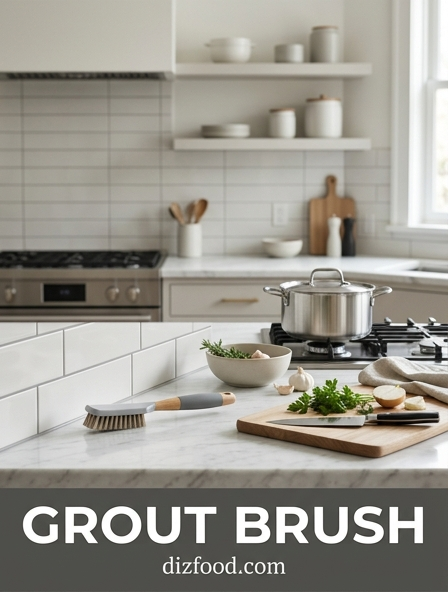
The Science of Specialized Grout Bristles
The effectiveness of a grout brush lies in the specific engineering of its bristles. Unlike general-purpose scrubbers, grout brushes utilize high-density synthetic polymers, typically nylon or polyester, which possess high tensile strength and memory. This ensures that the bristles do not splay or flatten when subjected to the intense pressure required to dislodge particulates from porous cementitious surfaces. The geometry of the bristle head is often "V-shaped" or tapered to focus mechanical energy directly into the narrow channel of the tile joint.
- Chemical Resistance: Bristles are designed to withstand acidic or alkaline kitchen cleaners without degrading.
- Abrasive Quality: The filament thickness is calibrated to be stiff enough for agitation but soft enough to avoid scratching glazed ceramic.
- Hydrophobic Properties: Specialized materials prevent the brush from becoming waterlogged, maintaining stiffness during wet cleaning.
Furthermore, the arrangement of these bristles allows for a "chiseling" effect. As the user moves the brush, the tips penetrate the microscopic pits of the grout, lifting out trapped iron oxides and organic matter that liquid cleaners alone cannot reach. This mechanical advantage is the foundation of kitchen hygiene.
Revitalizing Kitchen Backsplashes with Targeted Scrubbing
Kitchen backsplashes are frequently bombarded by aerosolized fats and acidic food splatters. Over time, these substances penetrate the grout, leading to a dull and shadowed appearance. A targeted scrubbing approach using a specialized grout brush can restore the original aesthetic of the tilework without the need for harsh resurfacing. Because backsplashes are often at eye level, precision is paramount to avoid damaging delicate glass or decorative tile inserts.
- Apply a pH-neutral cleaner to the vertical joints and allow it to dwell for five minutes.
- Use a narrow grout brush to scrub in short, vertical strokes, following the line of the tile.
- Wipe away the emulsified grime with a microfiber cloth to prevent re-deposition.
- Inspect the intersections where horizontal and vertical lines meet, as grease tends to pool in these corners.
By focusing the mechanical action strictly on the grout lines, homeowners can prevent the "clouding" effect that occurs when dirty water is spread across the entire tile face. This methodical cleaning ensures the backsplash remains a vibrant focal point of the kitchen environment.
Deep Cleaning Floor Joints for Lasting Results
Kitchen floors endure the highest volume of foot traffic and debris accumulation in the home. The grout joints act as recessed channels that collect dust, spilled liquids, and cleaning residue. To achieve lasting results, deep cleaning must go beyond superficial mopping, which often pushes dirty water into the joints. A dedicated grout brush provides the necessary agitation to break the bond between the grout's porous surface and the embedded contaminants.
| Cleaning Method | Effectiveness on Grout | Long-term Impact |
|---|---|---|
| Standard Mopping | Low | Promotes "graying" of grout lines. |
| Steam Cleaning | Medium | Can soften old grout if overused. |
| Grout Brush Scrubbing | High | Physically removes deep-seated soil. |
When cleaning floor joints, it is essential to work in small sections. Applying a concentrated oxygen-based bleach solution followed by firm, linear scrubbing ensures that the high-traffic "paths" in front of the stove and sink are restored. This process not only improves the kitchen's appearance but also extends the life of the grout by removing abrasive grit that causes erosion.
Removing Built Up Grease from Porous Grout
Grease is one of the most challenging substances to remove from a kitchen environment because of its viscous nature and ability to bond with porous materials. Grout, which is essentially a mixture of sand and cement, acts like a sponge for cooking oils. Once grease occupies the pores of the grout, it attracts dust and turns black. A specialized grout brush is required to provide the localized friction necessary to emulsify these oils when combined with a degreasing agent.
- Emulsification: The brush bristles break the grease into smaller droplets.
- Suspension: Mechanical agitation lifts the grease out of the pores and into the cleaning solution.
- Extraction: The narrow profile of the brush ensures the grease is forced out rather than pushed deeper.
For particularly stubborn buildup near the range hood or stovetop, a grout brush with a built-in scraper can be utilized. This allows the user to remove the thickest layers of solidified grease before the bristles begin the deep-cleaning phase. Regular maintenance with a brush prevents grease from polymerizing and becoming a permanent stain.
Ergonomic Benefits of Dedicated Grout Tools
Cleaning grout is a repetitive and physically demanding task that can lead to strain in the wrists, hands, and shoulders if performed with improper tools. Dedicated grout brushes are designed with ergonomics in mind, featuring handles that promote a neutral wrist position and distribute pressure evenly across the palm. These tools often include "soft-touch" rubber grips to prevent slipping, even when the user's hands are wet or covered in soapy residue.
- Offset Handles: Many brushes feature handles angled away from the bristles to protect knuckles from scraping against the tile.
- Contoured Grips: Designed to fit the natural curvature of the hand, reducing the force required to maintain a firm hold.
- Extended Reach: Long-handled grout brushes allow for floor cleaning without the need for constant kneeling.
By utilizing a tool specifically balanced for the task, the user can apply more downward force with less effort. This efficiency not only speeds up the cleaning process but also minimizes the risk of repetitive motion injuries, making deep kitchen maintenance more accessible for everyone.
Why Standard Brushes Fail on Tile Joints
Many homeowners attempt to clean their kitchen grout using old toothbrushes or flat utility brushes, often with disappointing results. The primary reason for this failure is the lack of "bristle reach." Standard brushes are designed for flat surfaces; when used on recessed grout, only a small fraction of the bristles make contact with the target area. This leads to uneven cleaning and unnecessary wear on the tile edges rather than the grout itself.
| Feature | Standard Brush | Specialized Grout Brush |
|---|---|---|
| Bristle Shape | Flat/Level | V-Trim or Narrow Row |
| Filament Stiffness | Medium/Soft | Extra Stiff/Extra Dense |
| Surface Contact | Wide/Diffused | Concentrated/Linear |
Standard brushes also tend to "splay" or fan out under pressure. Once the bristles bend, the cleaning action is performed by the sides of the filaments rather than the tips. Since the tips are the part of the brush that provides the abrasive power, a splayed brush loses its ability to dig into the grout's texture, leaving dirt behind in the deeper recesses.
Restoring Grout Color in High Traffic Areas
The visual impact of a kitchen is often compromised by "pathway discoloration," where grout lines in high-traffic areas become significantly darker than those under cabinets or in corners. Restoring this color requires a systematic approach that combines chemical lifting and mechanical scrubbing. A grout brush is the most effective tool for this restoration because it can reach the original, un-weathered layers of the grout matrix.
- Thoroughly vacuum the area to remove loose grit that could scratch the tiles.
- Apply a heavy-duty grout whitener or oxygenated cleaner to the discolored lines.
- Use a stiff-bristled grout brush to scrub in a back-and-forth motion, focusing on the darkest spots.
- Rinse with clean water and dry immediately to assess the color match.
If the grout remains stained after a deep scrub, the brush can also be used to apply a grout colorant or sealer. The brush ensures that the pigment is worked into the pores of the grout, providing a uniform finish that makes the entire kitchen floor look newly installed.
The Role of Bristle Stiffness in Dirt Extraction
Bristle stiffness is a critical factor in the physics of dirt extraction from grout. If a bristle is too flexible, it will simply glide over the surface of the grime. If it is too rigid, it may brittle and snap or cause micro-scratches on the surrounding tile glaze. The ideal grout brush features "resilient stiffness," where the bristle has enough flex to snap back into place, creating a flicking motion that ejects debris from the grout line.
- Agitation: The stiff tips break the surface tension of dried spills and caked-on mud.
- Penetration: High-stiffness bristles can reach into the "valley" of the grout joint.
- Durability: Stiffer filaments are typically thicker and more resistant to the friction-generated heat of scrubbing.
In a kitchen setting, where organic proteins and starches can create a literal "glue" for dirt, this stiffness is non-negotiable. The mechanical energy transferred from the user's arm through the stiff bristles provides the shear force needed to separate contaminants from the cement binder of the grout.
Preventing Mildew Buildup in Kitchen Tile Gaps
While often associated with bathrooms, mildew can also thrive in kitchen tile gaps, particularly near sinks, dishwashers, and poorly ventilated cooking areas. Organic food particles trapped in grout provide the nutrients, while humidity provides the environment. Regular use of a grout brush is a proactive hygiene measure that disrupts the colonial growth of mold and mildew before it can become a health hazard.
- Identify areas of moisture accumulation, such as the perimeter of the kitchen sink.
- Use a grout brush with an antimicrobial bristle coating if available.
- Scrub joints weekly with a mixture of vinegar and water to lower the pH and inhibit growth.
- Ensure the brush itself is cleaned and dried between uses to prevent cross-contamination.
By physically removing the biofilm that supports fungal growth, the grout brush ensures that the kitchen remains a sanitary space for food preparation. This preventative maintenance is far more effective than trying to bleach out deep-seated mold that has already compromised the grout's integrity.
Achieving Professional Results with Manual Grout Brushes
Many people believe that professional-grade results require expensive machinery or steam extractors. However, for most residential kitchens, a high-quality manual grout brush can yield identical results when used with the correct technique. The primary advantage of a manual brush is control; the user can apply varying levels of pressure and target specific stains that a machine might overlook. This precision is especially useful around delicate cabinetry and kitchen islands.
- Detailing: Manual brushes allow for cleaning in tight 90-degree corners and under toe-kicks.
- Safety: There is no risk of water damage to subfloors from high-pressure steam.
- Cost-Efficiency: A professional-grade manual brush is a fraction of the cost of a rental machine.
To achieve professional standards, one should focus on "dwell time" for cleaners followed by vigorous, focused scrubbing. By working in small, manageable grids and ensuring that dirty liquid is extracted immediately after scrubbing, the manual approach leaves grout lines looking crisp, clean, and uniform. This method proves that the right tool, combined with diligent effort, is the secret to a pristine kitchen.

Comments