
Mastering the Heat: Pressure vs. Atmospheric Boiling
If you're looking to revolutionize your kitchen efficiency, understanding the science behind your heat source is the first step. Traditional atmospheric boiling is limited by physics-once water reaches 212°F (100°C) at sea level, the temperature plateaus, and any extra energy simply escapes as steam. In contrast, pressure boiling creates a sealed environment that raises the boiling point to approximately 250°F (121°C), forcing heat into the core of your ingredients significantly faster. This superior method doesn't just slash your time at the stove by up to 70%; it locks in volatile aromas and accelerates the Maillard reaction, resulting in deeper flavors, tender textures, and better nutrient retention that standard open-pot boiling simply cannot match.
| Feature | Atmospheric Boiling | Pressure Boiling |
|---|---|---|
| Peak Temperature | 212°F (100°C) at sea level | ~250°F (121°C) at 15 PSI |
| Cooking Speed | Standard (Baseline) | 3x to 10x faster than standard |
| Flavor Profile | Aromas escape with steam | Infused; flavors stay trapped in food |
| Nutrient Density | High leaching into water | High retention; less water/time used |
| Energy Usage | High (Continuous evaporation) | Low (75% less energy consumed) |
| Best Application | Blanching, pasta, delicate eggs | Tough meats, beans, stocks, grains |
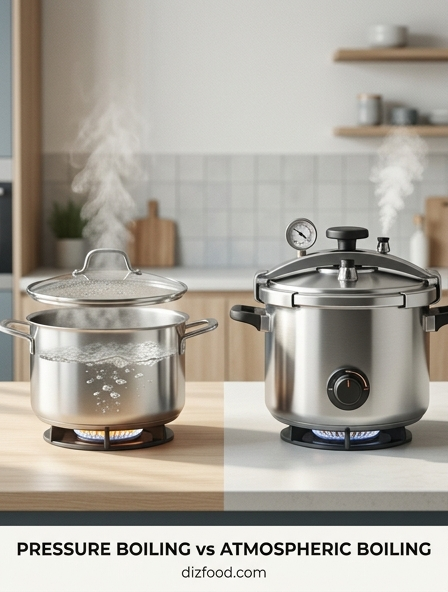
Understanding Pressure Versus Atmospheric Boiling
In the culinary world, boiling is the most fundamental technique for transferring heat through a liquid medium. Atmospheric boiling occurs in an open vessel or a loosely covered pot, where the surface of the liquid is exposed to the weight of the surrounding air. At sea level, this pressure is approximately 14.7 pounds per square inch (psi), which limits the maximum temperature of the water to 212°F (100°C). Any additional heat applied to the pot does not raise the temperature of the water; instead, it simply increases the rate of evaporation, turning liquid into steam. This creates a thermal ceiling that dictates how quickly food can cook.
Pressure boiling, conversely, takes place within a hermetically sealed environment. As the liquid inside a pressure cooker is heated, the resulting steam is trapped, significantly increasing the internal pressure. This physical change forces the boiling point of the water to rise well above the standard 212°F. Most modern pressure cookers operate at 15 psi above atmospheric pressure, allowing water to reach temperatures near 250°F (121°C). This distinction is the primary driver behind the differences in cooking speed, texture, and energy consumption between the two methods.
- Atmospheric Boiling: Limited to 212°F at sea level; temperature remains constant regardless of heat intensity.
- Pressure Boiling: Can reach up to 250°F; temperature is controlled by the internal pressure of the vessel.
- Evaporation: High in atmospheric boiling; negligible in pressure boiling until the seal is broken.
The Physics of Temperature and Vapor Pressure
To understand why boiling points shift, one must examine the relationship between vapor pressure and atmospheric pressure. A liquid boils when its vapor pressure-the pressure exerted by molecules escaping the liquid phase-equals the external pressure pushing down on it. In an open kitchen pot, the external pressure is the atmosphere. Because the atmosphere is relatively light, water molecules can escape into the air once they reach 212°F. However, when we seal the pot, we create an artificial atmosphere that grows heavier as more steam is generated.
As the steam molecules bounce against the walls of the sealed cooker, they increase the total pressure on the surface of the liquid. This higher pressure acts like a "lid" at the molecular level, requiring the water molecules to gain significantly more kinetic energy (heat) before they can break free into a gaseous state. Consequently, the water stays in a liquid state at temperatures that would normally cause it to vaporize instantly. The following table illustrates the relationship between pressure and the boiling point of water:
| Pressure (PSI Above Atmospheric) | Boiling Point (°F) | Boiling Point (°C) |
|---|---|---|
| 0 psi (Open Pot) | 212°F | 100°C |
| 5 psi | 228°F | 109°C |
| 10 psi | 240°F | 115°C |
| 15 psi | 250°F | 121°C |
Why Pressure Boiling Cooks Food Faster
The speed of cooking is not merely a function of time, but a result of the rate of heat transfer and the acceleration of chemical reactions. According to the Arrhenius equation in chemistry, the rate of a chemical reaction roughly doubles for every 10°C (18°F) increase in temperature. Because pressure boiling allows water to reach 250°F-roughly 38°F hotter than standard boiling-the chemical processes involved in cooking, such as the breakdown of starch and the softening of cellulose, occur much more rapidly.
Furthermore, the high-pressure environment enhances the penetration of moisture into the food fibers. In atmospheric boiling, heat moves from the exterior to the interior of the food primarily through conduction. In a pressure cooker, the high-energy steam is forced into the pores of the food, delivering thermal energy more efficiently than liquid water alone. This dual action of increased temperature and enhanced penetration reduces cooking times by 70% to 90% for most ingredients. For example, a batch of dried beans that requires two hours of simmering in an open pot can be rendered perfectly tender in approximately 20 to 30 minutes under pressure.
Comparing Boiling Points at Different Altitudes
Atmospheric pressure is not a global constant; it decreases as altitude increases. In high-altitude regions like Denver or the Andes, the air is "thinner," meaning there is less weight pressing down on the surface of a boiling pot. This results in a lower boiling point, which can significantly hinder the cooking process. If water boils at 202°F instead of 212°F, it lacks the thermal energy required to break down tough fibers or denature proteins effectively within standard timeframes. This is why high-altitude bakers often have to adjust recipes or increase cooking durations.
Pressure cooking provides a definitive solution to this geographical challenge. Because a pressure cooker creates its own internal environment, it is independent of the external atmospheric pressure. Whether you are at sea level or on a mountain peak, a pressure cooker set to 15 psi will reach the same internal temperature. This makes it an essential tool for consistent results in varying climates. Below is a list of how boiling points drop as altitude increases:
- Sea Level (0 ft): 212°F (100°C)
- 2,000 feet: 208°F (98°C)
- 5,000 feet: 203°F (95°C)
- 7,500 feet: 198°F (92°C)
- 10,000 feet: 194°F (90°C)
Texture and Flavor Impact of Boiling Methods
The method of boiling chosen significantly alters the sensory profile of the finished dish. Atmospheric boiling is generally a gentle process, especially when maintained at a simmer. This is ideal for delicate foods like fish or certain vegetables where maintaining structural integrity is paramount. However, because it is an open system, volatile aromatic compounds-the molecules responsible for smell and flavor-escape into the kitchen along with the steam. This explains why a kitchen smells wonderful when soup is simmering, but it also means those flavors are leaving the pot.
Pressure boiling, by contrast, traps these aromatic compounds inside the vessel. The high-heat environment also promotes the Maillard reaction to a limited degree, even in a moist environment, which can lead to deeper, more complex flavors in meats and stews that standard boiling cannot achieve. Structurally, pressure cooking is unmatched for tenderizing tough cuts of meat. The high heat rapidly converts collagen into gelatin, turning fibrous connective tissue into a succulent, melt-in-the-mouth texture. However, the intensity of pressure can be detrimental to delicate ingredients, potentially turning soft vegetables into mush if the timing is not precisely managed.
Nutritional Benefits of High Pressure Cooking
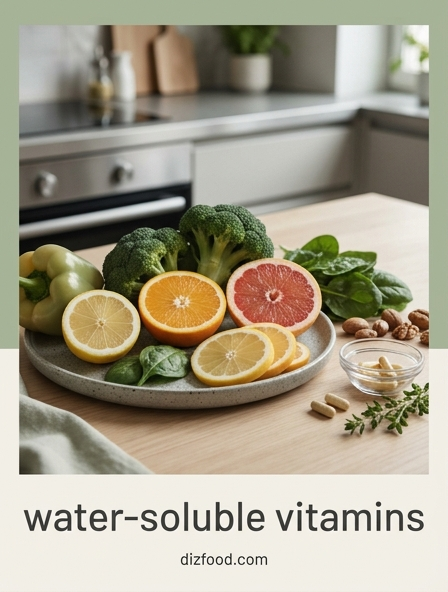
A common misconception is that the high heat of pressure cooking destroys more nutrients than traditional methods. In reality, the opposite is often true. The two biggest enemies of vitamins during cooking are prolonged exposure to heat and leaching into large volumes of water. Because pressure cooking is significantly faster than atmospheric boiling, the total duration of heat exposure is minimized. Water-soluble vitamins, such as Vitamin C and the B-vitamin complex, are better preserved because less water is required in a sealed system where evaporation is non-existent.
Moreover, the high-pressure environment is particularly effective at neutralizing certain "anti-nutrients" found in legumes and grains, such as lectins and phytic acid. These compounds can interfere with mineral absorption and digestion. The intense heat of a pressure cooker breaks these down more thoroughly than a standard simmer. By retaining more micronutrients and improving the digestibility of macronutrients, pressure boiling often results in a more nutritionally dense meal. The following list highlights the nutritional advantages:
- Reduced Leaching: Minimal water use prevents the loss of water-soluble minerals.
- Short Heat Duration: Limits the thermal degradation of heat-sensitive antioxidants.
- Lectin Reduction: Higher temperatures effectively denature tough plant proteins.
- Oxygen Exclusion: The sealed environment prevents oxidation of fats and vitamins during the cooking process.
Equipment Requirements for Pressure Versus Open Pot
The equipment used for atmospheric boiling is diverse and accessible. Almost any vessel made of stainless steel, aluminum, cast iron, or copper can serve as an open pot. These vessels do not require airtight seals or reinforced walls because they do not have to withstand internal pressure. The primary requirement is even heat distribution across the base to prevent "hot spots" that could scorch the food. Covers are optional and are typically used only to retain a small amount of heat or to prevent excessive evaporation.
Pressure cookers, however, are sophisticated pieces of engineering. They must be constructed from heavy-gauge metals to prevent the vessel from deforming under stress. Essential components include a locking lid, a silicone or rubber gasket to ensure an airtight seal, and a pressure regulator (either a weighted valve or a spring-loaded dial). Modern electric pressure cookers also include sensors to monitor temperature and pressure automatically. The materials must be non-reactive, as the high-heat environment can accelerate the leaching of metallic flavors from low-quality materials. Maintenance of these components, particularly the gasket, is crucial for the equipment to function safely and effectively.
Energy Efficiency and Reduced Cooking Times
From an energy perspective, pressure boiling is significantly more efficient than atmospheric boiling. When cooking in an open pot, a constant supply of energy is required to compensate for the heat lost through steam and radiation. Because the pot is open, heat is continuously escaping into the surrounding air. In a pressure cooker, once the desired pressure is reached, the heat can be turned down to a minimum. The sealed environment retains the thermal energy so effectively that very little additional input is needed to maintain the temperature.
This efficiency translates directly to lower utility costs and a cooler kitchen environment. In commercial settings or households that prepare long-cooking staples like grains, beans, and stocks, the energy savings can be substantial over time. The table below compares the estimated cooking times for common foods across the two methods:
| Food Item | Atmospheric Boiling Time | Pressure Boiling Time |
|---|---|---|
| Brown Rice | 45 Minutes | 15 Minutes |
| Chickpeas (Soaked) | 60-90 Minutes | 10-15 Minutes |
| Beef Pot Roast | 3-4 Hours | 45-60 Minutes |
| Whole Beets | 45-60 Minutes | 12 Minutes |
Safety Protocols for Managing High Pressure
While modern pressure cookers are designed with multiple redundant safety features, they still require specific handling protocols to prevent accidents. The most significant risk involves the rapid expansion of steam if a vessel is opened while still under pressure. To manage this, manufacturers include locking pins that prevent the lid from turning until the internal pressure has returned to atmospheric levels. Users must also be diligent about cleaning the steam release valves, as a blockage from food particles can lead to an unsafe buildup of pressure.
There are three primary methods for releasing pressure, each suited to different types of food. Understanding these is essential for both safety and culinary quality:
- Natural Release: The heat is turned off and the pressure drops slowly as the vessel cools. This is safest for foamy foods like beans or grains.
- Quick Release: The user manually opens the pressure valve to let steam escape rapidly. This stops the cooking immediately, preventing overcooking of vegetables.
- Cold Water Release: Used only with stovetop models, where cold water is run over the lid to condense the steam inside instantly.
Regular inspection of the gasket for cracks and ensuring the pot is never filled beyond the "max fill" line are also critical safety steps.
Optimal Use Cases for Each Boiling Technique
Neither boiling method is universally superior; rather, the choice depends on the specific ingredients and desired outcome. Atmospheric boiling is the preferred choice for tasks requiring constant monitoring, skimming, or incremental additions. For instance, making a clear consommé requires the cook to skim off impurities as they rise to the surface, a task impossible in a sealed pressure cooker. Similarly, pasta and delicate green vegetables are best suited for open pots where they can be tested for doneness and removed the moment they reach the ideal texture.
Pressure boiling excels when the goal is transformation through heat and time. It is the gold standard for extracting gelatin from bones to make rich stocks, tenderizing lean or tough meats, and hydrating stubborn legumes. It is also an invaluable tool for "one-pot" meals where flavors need to be fused together quickly. When deciding which method to use, consider the "toughness" of the ingredient. If the food requires more than 30 minutes of simmering to become edible, it is likely a candidate for the pressure cooker. If it takes less than 10 minutes, the control and visibility of atmospheric boiling will yield better results.

Comments