
The Science of Heat and Pressure
At the fundamental level of culinary science, heat is the transfer of kinetic energy to the molecules within food. In a standard kitchen environment, this energy transfer is limited by the surrounding atmospheric pressure, which dictates the maximum temperature water can reach before turning into steam. When food is subjected to heat, its internal molecules vibrate with increasing intensity, eventually leading to the structural changes we recognize as cooking. However, the introduction of pressure alters this thermodynamic equilibrium significantly.
By confining steam within a sealed vessel, the internal pressure rises, forcing energy into the food more efficiently than open-air cooking. This environment creates a unique synergy where thermal energy and physical force work in tandem to break down tough fibers and accelerate chemical transformations. The relationship between these two forces is governed by several physical laws:
- Gay-Lussac's Law: The pressure of a gas is directly proportional to its temperature.
- Thermal Conductivity: Enhanced density of steam improves heat transfer rates.
- Molecular Activation: High-pressure environments lower the energy barrier for specific browning reactions.
This heightened energetic state allows the kitchen to become a laboratory where time is compressed, and the textures of ingredients are modified in ways that traditional boiling cannot achieve.
Defining the Maillard Reaction
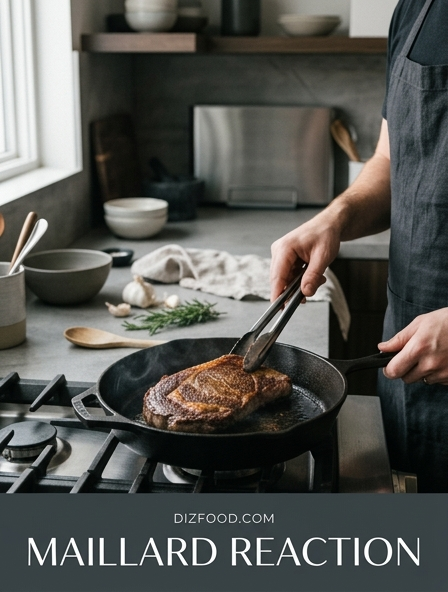
The Maillard reaction is a complex series of chemical interactions between amino acids and reducing sugars that typically occurs during the heating of food. Named after the French chemist Louis-Camille Maillard, who first described it in 1912, this non-enzymatic browning process is responsible for the deep, savory flavors and rich colors found in seared steaks, toasted bread, and roasted coffee. Unlike simple caramelization, which involves only the pyrolysis of sugars, the Maillard reaction requires the presence of nitrogen-containing amino groups to initiate its sequence.
The process begins when the carbonyl group of a sugar reacts with the nucleophilic amino group of an amino acid, forming a glycosylamine. This molecule then undergoes a series of rearrangements, known as Amadori rearrangements, to produce various intermediate compounds. These intermediates eventually polymerize into melanoidins, the dark pigments that provide visual browning, while simultaneously releasing hundreds of volatile aroma compounds. Because this reaction is highly sensitive to temperature and moisture, it is the primary focus of chefs looking to maximize the "umami" profile of their dishes through controlled thermal application.
How Pressure Boosts Boiling Points
In a conventional pot, water boils at 212°F (100°C) at sea level. No matter how high the burner is turned, the liquid water cannot exceed this temperature because any additional energy is used to convert water into steam, which escapes into the atmosphere. This temperature ceiling presents a challenge for the Maillard reaction, which generally requires temperatures above 285°F (140°C) to proceed at a meaningful rate. Consequently, food submerged in boiling water typically remains pale and lacks roasted flavor profiles.
A pressure cooker overcomes this physical limitation by trapping steam, which increases the internal pressure of the vessel. As the pressure rises, it exerts force back onto the surface of the liquid, making it harder for water molecules to escape as gas. This elevates the boiling point to approximately 250°F (121°C) at 15 psi. This 38-degree difference is critical, as it moves the cooking environment closer to the "Maillard Zone," allowing browning reactions to occur even in the presence of significant moisture, which would otherwise suppress them through evaporative cooling.
Accelerated Browning at High Temperatures
The rate of chemical reactions is highly sensitive to temperature increases, a principle often described by the Arrhenius equation. In the context of the Maillard reaction, even a modest increase in heat can lead to an exponential surge in the speed of browning. In a high-pressure environment, the elevated boiling point provides enough thermal energy to trigger browning across the entire surface of the food, even when it is fully submerged in liquid or surrounded by high-humidity steam.
This acceleration means that flavors that would take hours to develop in a slow cooker or a traditional braise can be achieved in a fraction of the time. The intense heat forces the amino-sugar interactions to bypass the lengthy induction periods usually required at lower temperatures. As a result, stocks become darker and richer, and legumes develop a toasted complexity that is impossible to achieve in a standard stockpot. The high-temperature steam acts as a catalyst, ensuring that the melanoidins are produced rapidly and uniformly, transforming the raw components into a finished dish with a sophisticated, "cooked-all-day" depth of flavor in under an hour.
The Role of Amino Acids and Sugars
For the Maillard reaction to thrive, the kitchen scientist must balance the available precursors: amino acids and reducing sugars. Amino acids are the building blocks of proteins, found in abundance in meats, dairy, and legumes. Sugars, specifically reducing sugars like glucose, fructose, and lactose, provide the necessary carbonyl groups. When these two components meet under heat, they embark on a multi-stage chemical journey that defines the savory identity of the food.
Different combinations of these precursors yield distinct flavor results. For example, the reaction between the amino acid cysteine and sugars often produces meaty or sulfurous notes, whereas lysine reacting with sugars tends to produce bread-like or nutty aromas. Understanding this ratio is essential when preparing dishes in a pressure cooker. Because the environment is so efficient at facilitating these reactions, even small amounts of residual sugars or proteins can have a massive impact on the final profile. The following factors influence the reaction outcome:
- Type of Sugar: Pentose sugars react more vigorously than hexose sugars.
- Protein Density: Higher concentrations of free amino acids lead to faster browning.
- Water Activity: While the pressure cooker is wet, the high heat overcomes the dilution of precursors.
Flavor Transformation Under Pressure
Inside a sealed pressure cooker, the transformation of flavor is not merely a matter of speed, but also of containment. In traditional roasting or frying, many of the volatile organic compounds responsible for aroma are lost to the kitchen air. However, in a pressurized system, these aromatic molecules are trapped within the vessel and forced back into the food and the cooking liquid. This creates a highly concentrated flavor environment where the products of the Maillard reaction are intensified.
As the temperature exceeds the 250°F mark, the precursors undergo complex cycles of fragmentation and recombination. This produces a wide array of compounds, including pyrazines (nutty, toasted smells), pyrroles (cereal-like aromas), and furans (caramelly notes). Because the steam cannot escape, these flavors permeate deep into the tissues of meats and vegetables. The result is a profound "flavor fusion" where the liquid and the solids become a singular, cohesive savory experience. This containment ensures that the delicate top notes of the Maillard reaction are preserved rather than dissipated, leading to a more robust and well-rounded sensory profile than open-air cooking methods allow.
Pressure Cooking vs Traditional Boiling
The primary distinction between pressure cooking and traditional boiling lies in the thermal potential of the medium. Traditional boiling is a gentle, steady process, but its temperature limit prevents it from creating the complex roasted flavors associated with high-heat techniques. Pressure cooking bridges the gap between moist-heat cooking (boiling/steaming) and dry-heat cooking (roasting/frying). By increasing the energy of the steam, it achieves chemical results usually reserved for the oven or the skillet.
| Feature | Traditional Boiling | Pressure Cooking |
|---|---|---|
| Max Temperature | 212°F (100°C) | 250°F (121°C) |
| Maillard Reaction | Negligible | Highly Active |
| Flavor Retention | Vapors escape | Vapors contained |
| Cooking Time | Standard | 70% Faster |
This comparison highlights why pressure-cooked foods often taste more "developed." While boiling simply hydrates and softens fibers, the pressurized environment actively restructures the molecular flavor profile through heat-induced chemical synthesis.
Optimizing Umami and Savory Notes
Umami, the fifth basic taste, is often amplified by the Maillard reaction. This savory sensation is primarily linked to the presence of glutamates and nucleotides, which are released and transformed during the high-pressure cooking process. When proteins are subjected to the intense heat of a pressure cooker, they begin to break down into smaller peptides and free amino acids, including glutamic acid. The interaction of these acids with the Maillard products creates a synergistic effect that significantly boosts the perceived meatiness of a dish.
To optimize these notes, chefs often introduce ingredients rich in precursors before sealing the lid. Adding a small amount of tomato paste, soy sauce, or mushrooms-all high in natural glutamates-provides the chemical foundation for the pressure cooker to build upon. Under pressure, these ingredients undergo a rapid maturation process. The high heat ensures that the "raw" edge of these additives is replaced by a deep, resonant savoriness. This is particularly useful in vegetarian cooking, where the pressure cooker can simulate the long-simmered depth of a traditional meat stock by forcing the development of umami-rich melanoidins from plant-based proteins and sugars.
The Impact of Alkaline Environments
The Maillard reaction is highly pH-dependent, occurring much more rapidly in alkaline (basic) environments than in acidic ones. This is because a higher pH encourages the deprotonation of the amino groups, making them more nucleophilic and thus more likely to attack the carbonyl groups of sugars. In a kitchen setting, this scientific principle can be harnessed to accelerate browning even further, especially when using a pressure cooker where the environment is already optimized for speed.
A common technique involves adding a pinch of baking soda (sodium bicarbonate) to the cooking liquid. This slight shift in pH can produce dramatic results, such as turning onions into a dark, jammy consistency in minutes or giving beans a deeply toasted flavor. However, precision is required; too much alkalinity can lead to a soapy taste or excessive breakdown of pectin, causing vegetables to become mushy. When balanced correctly, the combination of high pressure, high heat, and a slightly alkaline environment creates a "triple threat" that maximizes the Maillard reaction, resulting in exceptionally rich colors and flavors that would otherwise take many hours of conventional cooking to achieve.
Mastering Maillard in Pressure Cookers
To truly master the Maillard reaction in a pressure cooker, one must understand that "wet" browning is efficient but sometimes lacks the textural contrast of "dry" browning. The most effective strategy is a multi-step approach. First, utilize the "Sauté" function to sear meats or aromatics in oil before adding liquids. This creates an initial layer of Maillard products through direct conduction heat. Theéå adding liquid and sealing the pot allows the pressure to build upon this foundation, moving those flavors into the center of the food and creating new compounds through pressurized steam.
- Pre-sear proteins to develop a crust.
- Deglaze the pot to capture all browned "fond" before pressurizing.
- Use minimal liquid to prevent excessive dilution of flavor compounds.
- Apply a small amount of an alkaline agent if rapid vegetable caramelization is desired.
By controlling the variables of time, temperature, and pH, the pressure cooker becomes a precision instrument. It allows for the creation of sophisticated, browned flavor profiles in environments where they were traditionally thought to be impossible, effectively redefining the limits of moist-heat cooking.



Comments