
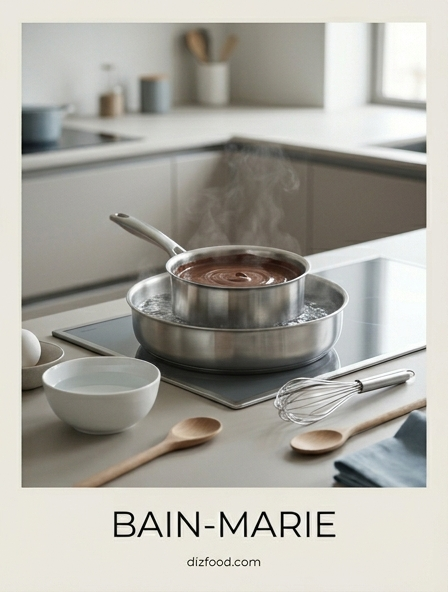
Ever wondered why professional chefs rely on a bain-marie for delicate culinary tasks? This gentle cooking method uses a hot water bath to surround your container, providing consistent, indirect heat that prevents scorching, seizing, or curdling. It is the ultimate secret for tempering chocolate, emulsifying smooth hollandaise, or melting butter without losing its flavor integrity. By acting as a thermal buffer, the water ensures that temperatures never exceed the boiling point, offering you total control over high-maintenance components. To truly master precision in your kitchen, it is essential to understand the fundamental differences between Double Boiler vs Direct Heat.
Understanding Gentle Indirect Heat
The fundamental principle of the bain-marie, or water bath, lies in the utilization of water as a thermal buffer. Unlike direct heat sources such as a gas flame or an electric induction coil, which can reach extreme temperatures rapidly, a bain-marie limits the maximum temperature applied to the cooking vessel to the boiling point of water. This indirect method ensures that the heat is distributed evenly across the entire surface of the container, rather than being concentrated at the base. This environment is essential for ingredients that are sensitive to rapid temperature changes or high heat thresholds.
- Prevents direct contact between the heat source and the food container.
- Maintains a maximum temperature of 100°C (212°F) at sea level.
- Ensures uniform heat distribution around the sides and bottom of the vessel.
- Slows down the cooking process to allow for greater precision and control.
By surrounding the cooking vessel with liquid, the chef creates a stable microclimate. This stability is particularly important in professional kitchens where multitasking is common, as the gentle nature of indirect heat provides a safety margin that prevents overcooking during brief moments of inattention.
Preventing Scorched Bottoms and Hot Spots
Direct stovetop cooking often suffers from "hot spots," where the heat from the burner is not perfectly distributed by the cookware. When working with thick, viscous substances like thick purées or sugar-heavy mixtures, these hot spots can cause the bottom layer of food to caramelize or burn before the rest of the mixture even warms up. The bain-marie eliminates this risk by enveloping the vessel in a consistent medium of water or steam.
| Feature | Direct Heat | Bain-Marie |
|---|---|---|
| Heat Distribution | Uneven / Concentrated | Uniform / Enveloping |
| Scorching Risk | High for thick sauces | Negligible |
| Temperature Limit | Can exceed 300°C | Caps at 100°C |
This method is indispensable for preparing thick roux-based sauces or starch-thickened liquids. Without the protective barrier of the water bath, the proteins and sugars in these ingredients would likely bond to the hot metal surface of the pan, resulting in a scorched flavor that can permeate and ruin the entire batch.
The Science of Temperature Stability
In the realm of culinary science, temperature stability is synonymous with consistency. Water has a high specific heat capacity, meaning it requires a significant amount of energy to change its temperature. Once a bain-marie reaches the desired heat level, it resists sudden fluctuations caused by adding cold ingredients or changes in ambient kitchen temperature. This thermal mass acts as a reservoir, providing a steady flow of energy to the food being prepared.
- Water absorbs energy from the heat source and retains it efficiently.
- The high density of water ensures better heat conduction than air.
- Energy transfer remains constant even if the external flame flickers.
- The equilibrium reached between the water and the inner vessel prevents "spiking."
For modern pastry chefs and sauciers, this stability is the difference between a successful service and a failed one. When a recipe calls for a specific temperature to be maintained over several hours, the bain-marie serves as a low-tech yet highly effective thermostat, ensuring the physical properties of the ingredients remain unchanged throughout the holding period.
Mastering Delicate Egg Based Sauces
Egg-based emulsions, such as Hollandaise, Béarnaise, and Sabayon, are notoriously temperamental. The proteins in egg yolks begin to coagulate at relatively low temperatures, typically between 62°C and 70°C. If these yolks are exposed to the aggressive heat of a direct burner, they will scramble instantly, breaking the emulsion and creating a lumpy, unpalatable texture. A bain-marie provides the precise, low-intensity environment required to gently cook the yolks while they are whisked with fats or acids.
- Allows for the slow denaturation of egg proteins for a creamy finish.
- Provides enough time for the chef to monitor the thickening process.
- Minimizes the risk of the emulsion breaking due to thermal shock.
- Facilitates the incorporation of air for lighter, fluffier sauces.
The controlled evaporation and gentle heating enable the sauce to thicken gradually. This gradual change allows the chef to achieve the perfect "nappe" consistency-where the sauce coats the back of a spoon-without the fear of crossing the threshold into curdling. Mastery of the water bath is essentially the mastery of the egg itself.
Perfecting Chocolate Melting Techniques
Chocolate is highly sensitive to both heat and moisture. When melting chocolate, exceeding its "burning point" (around 46°C for milk/white and 54°C for dark) can result in a grainy, bitter mess. Furthermore, direct heat can cause the cocoa butter to separate from the solids. A bain-marie is the standard tool for melting chocolate because it offers the gentle warmth necessary to break down the fat crystals without scorching the delicate solids.
- Place chopped chocolate in a dry, heat-proof bowl.
- Set the bowl over a pot of simmering water, ensuring the bottom does not touch the liquid.
- Stir occasionally as the rising steam warms the bowl.
- Remove from heat just before fully melted to allow residual heat to finish the job.
It is vital to ensure that no steam or water droplets enter the bowl, as this will cause the chocolate to "seize," turning it into a dry, clumpy paste. By using the indirect heat of the steam rather than the water itself, a chef can maintain the glossy sheen and smooth snap required for high-quality confectionery work and tempering.
Protecting Protein Structures from Curdling
Dairy-heavy dishes and protein-rich mixtures are prone to curdling when exposed to high, rapid heat. Curdling occurs when protein molecules collide and bond too tightly, squeezing out the liquid and creating a grainy texture. This is a common issue in cream-based soups and custards. The bain-marie mitigates this by keeping the temperature below the point of aggressive protein tightening, allowing the proteins to unfold and bond loosely into a smooth, supportive network.
- Prevents "syneresis," the weeping of liquid from overcooked proteins.
- Maintains the integrity of milk proteins (caseins) in delicate puddings.
- Ensures that seafood mousses remain tender and moist during the setting phase.
- Provides a forgiving environment for low-fat dairy which curdles more easily.
By managing the rate of heat transfer, the water bath ensures that the interior of a dish reaches the safe cooking temperature at nearly the same time as the exterior. This synchronized cooking prevents the edges of a terrine or mousse from becoming rubbery while the center remains raw, resulting in a professional, uniform product.
Achieving Smooth Custard Texture
The hallmark of a perfect custard, whether it is a Crème Brûlée or a savory flan, is a silky-smooth, wobble-inducing texture. If baked in a dry oven, the outer edges of the custard will overcook and become porous or "honeycombed" due to boiling, while the center may remain liquid. A bain-marie used within an oven environment-often called a "water bath bake"-regulates the temperature of the ramekins, ensuring they never exceed the boiling point of the surrounding water.
| Factor | Dry Baking | Water Bath Baking |
|---|---|---|
| Top Surface | May crust or brown too quickly | Stays soft and pale |
| Internal Structure | Porous / Bubbled | Dense / Silky |
| Cooking Speed | Fast and erratic | Slow and predictable |
The steam generated by the water bath also keeps the oven air humid, preventing a thick skin from forming on the surface of the custard before it has finished setting. This humidity is key to achieving that glass-like finish once the custard is chilled and served.
Maintaining Ingredient Flavor Integrity
High temperatures can be destructive to the volatile aromatic compounds that give food its distinctive flavor and aroma. When delicate ingredients like fresh herbs, infused oils, or high-quality fats are subjected to direct heat, their chemical structures can change, leading to the loss of nuanced notes or the development of "off" flavors. A bain-marie allows for the extraction and preservation of these flavors through gentle infusion and slow heating.
- Aromatics are preserved because they are not scorched by intense base heat.
- Oxidation is minimized as the process is generally slower and more controlled.
- Nutrients, particularly heat-sensitive vitamins, are better retained.
- Natural sweetness in vegetables or dairy is enhanced rather than burnt.
This preservation is essential for sophisticated sauces where the balance of acidity, sweetness, and aroma is paramount. By respecting the ingredient through low-impact heating, a chef ensures that the final dish tastes of its components in their purest form, rather than tasting of the cooking process itself. The bain-marie is thus a tool of culinary respect.
The Role of Steam in Heat Transfer
While some bain-maries involve submerging a container directly in water, the "double boiler" method often relies on steam. This is a highly efficient form of heat transfer known as latent heat. When water turns into steam, it carries a massive amount of energy which it releases upon contact with the cooler surface of the upper bowl. This phase-change energy provides a constant and powerful, yet non-aggressive, source of heat that is more effective than hot air alone.
- Steam provides more uniform coverage than liquid water in some setups.
- The air gap prevents the vessel from reaching the actual temperature of the boiling water.
- Condensation on the bowl base ensures continuous energy transfer.
- Allows for easier monitoring of the water level without lifting the bowl.
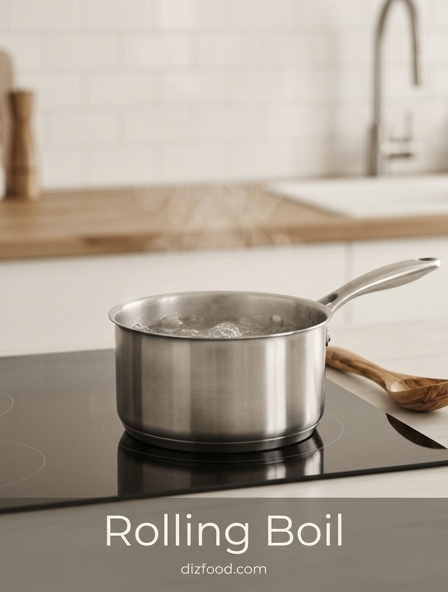
Understanding the physics of steam allows the chef to adjust the intensity of the heat by simply controlling the vigor of the simmer. A gentle wisp of steam provides a different result than a rolling boil, giving the practitioner fine-tuned control over the temperature gradient applied to the ingredients inside the bowl.
Long Term Temperature Holding for Service
In a high-volume service environment, keeping food at a safe and palatable temperature without degrading its quality is a major challenge. The bain-marie is the industry standard for this task. It keeps sauces, soups, and hot garnishes within the "safe zone" (above 60°C or 140°F) to prevent bacterial growth while ensuring the food does not continue to cook or dry out. This is achieved through the constant, mild heat provided by the surrounding water reservoir.
| Benefit | Impact on Service |
|---|---|
| Moisture Retention | Prevents sauces from thickening into a paste. |
| Food Safety | Maintains consistent heat to inhibit pathogens. |
| Readiness | Ingredients stay at serving temp for hours. |
Whether it is a table-side sauce warmer or a large-scale buffet steam table, the bain-marie ensures that the last guest served receives the same quality as the first. By preventing evaporation and localized overheating, it maintains the intended texture and seasoning balance of the dish throughout the duration of the service window.

Comments