
Mastering the art of melting delicate ingredients requires choosing the right thermal approach: the gentle embrace of a double boiler or the raw intensity of direct heat. While direct heat is a powerhouse for quick boiling and searing, it often proves too aggressive for sensitive components like chocolate, custard, or wax, which can scorch or "seize" in an instant. By utilizing a double boiler-or bain-marie-you create a protective steam buffer that caps temperatures at a stable level, ensuring a silky-smooth texture without the risk of hot spots. Understanding this fundamental kitchen technique is the secret to achieving professional-grade results, allowing you to maintain perfect viscosity and flavor integrity every time you step up to the stove.
| Feature | Double Boiler (Indirect) | Direct Heat (Burner) |
|---|---|---|
| Heat Mechanism | Gentle water vapor/steam | Conduction via pan surface |
| Max Temperature | Self-limiting (~212°F / 100°C) | High (varies by stove setting) |
| Scorch Risk | Near zero; provides even buffer | High; prone to hot spots |
| Best For | Chocolate, eggs, hollandaise | Searing, sautéing, boiling water |
| Precision | Superior for slow-melting | Difficult to control at low levels |
| Speed | Slow and steady | Rapid and immediate |
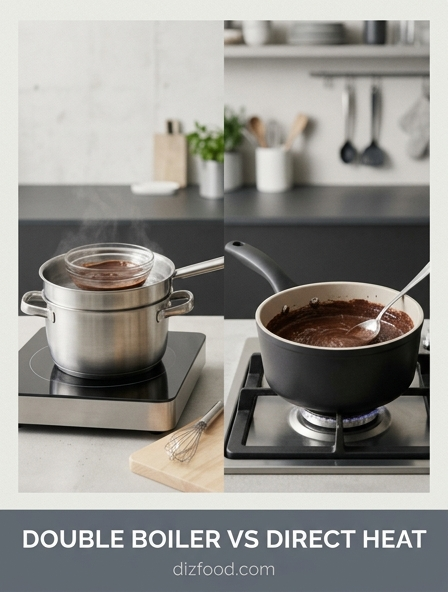
Double Boiler vs Direct Heat Comparison
In the culinary world, the choice between using a double boiler and applying direct heat is fundamental to the success of a dish. Direct heat involves placing a cooking vessel, such as a saucepan or skillet, in immediate contact with a heat source like a gas flame, an electric coil, or an induction surface. This method facilitates rapid energy transfer, making it ideal for tasks that require high temperatures or quick boiling. However, the intensity of direct heat can often lead to "hot spots" where the bottom of the pan reaches temperatures far exceeding the needs of the ingredients, potentially leading to burning or uneven cooking.
Conversely, a double boiler, or bain-marie, utilizes two nested containers. The bottom pot holds simmering water, while the top bowl holds the ingredients. The heat is transferred through steam rather than direct contact with the burner. This creates a thermal buffer that caps the temperature at the boiling point of water, ensuring that the contents never exceed 212°F (100°C). This indirect method provides a gentle, consistent environment that protects sensitive components from the harsh fluctuations of a naked flame.
| Feature | Direct Heat | Double Boiler |
|---|---|---|
| Primary Heat Source | Flame, Coil, or Induction | Steam/Water Vapor |
| Temperature Limit | Variable (can exceed 500°F) | Capped at ~212°F |
| Risk of Scorching | High | Negligible |
| Cooking Speed | Fast | Moderate to Slow |
Gentle Indirect Heat vs High Intensity
The distinction between gentle indirect heat and high-intensity direct heat is largely defined by the rate of energy transfer and the volatility of the ingredients involved. High intensity is the hallmark of professional searing, sautéing, and stir-frying. In these scenarios, the goal is often the Maillard reaction-a chemical process between amino acids and reducing sugars that gives browned food its distinctive flavor. Direct heat provides the raw power necessary to evaporate surface moisture rapidly and initiate these complex flavor profiles. It is the preferred choice for rendering fats and achieving a crisp texture on meats and vegetables.
On the other end of the spectrum, indirect heat is about preservation and stabilization. Many substances, particularly those high in protein or delicate fats, undergo irreversible damage when exposed to high intensity. When using a double boiler, the cook is opting for a "slow-motion" heat application. This allows for a much wider margin of error. Because the heat is distributed evenly across the surface of the upper bowl by the surrounding steam, there is no risk of the ingredients at the bottom cooking faster than those on the surface. This equilibrium is essential for maintaining the integrity of molecular structures that are easily fractured by the aggressive vibration of high-intensity thermal energy.
- Indirect Heat: Ideal for melting, tempering, and thickening.
- Direct Heat: Essential for boiling, searing, and deep-frying.
- Safety: Indirect heat prevents oil fires and sugar carbonization.
- Consistency: Indirect heat ensures a uniform temperature throughout the mixture.
Best Methods for Melting Chocolate Safely
Melting chocolate is a notoriously difficult task for beginners because chocolate is highly sensitive to both moisture and excessive heat. Chocolate is a suspension of cocoa solids and sugar within cocoa butter. If exposed to direct heat, the sugar can quickly caramelize and the proteins can clump, resulting in a "seized" mass that is grainy and unusable. To melt chocolate successfully, the double boiler is the gold standard. The steam provides enough energy to melt the cocoa butter fats without reaching the threshold where the solids begin to burn.
When using a double boiler for chocolate, it is vital to ensure that the upper bowl does not actually touch the simmering water. The gap between the water level and the bottom of the bowl allows steam to circulate, providing the most even heat distribution possible. Furthermore, one must be extremely careful to prevent any water droplets or steam from entering the chocolate mixture. Even a single drop of water can cause the sugar and cocoa particles to bond together, creating a dry, lumpy texture. By following a controlled process, you can achieve a glossy, smooth finish perfect for dipping or ganache.
- Chop chocolate into uniform small pieces to ensure even melting.
- Fill the bottom pot with 1-2 inches of water and bring to a simmer.
- Place the bowl of chocolate over the pot, ensuring no steam escapes around the edges.
- Stir occasionally with a silicone spatula until only small lumps remain.
- Remove from heat and continue stirring to let residual heat melt the remaining bits.
Why Temperature Control Matters for Sauces
Sauce making is an exercise in chemistry, where temperature control dictates whether a mixture remains a silky emulsion or breaks into a curdled mess. Many classic sauces, such as Hollandaise, Béarnaise, and various custards, rely on egg yolks as an emulsifier. Egg proteins begin to coagulate at approximately 140°F (60°C). If you apply direct heat to a pan containing these ingredients, the temperature at the base of the pan can spike instantly to 300°F or more, causing the eggs to scramble before they have a chance to thicken the sauce.
The double boiler acts as a safety net for these delicate reactions. By utilizing steam, the temperature of the sauce climbs slowly and predictably. This allows the cook to monitor the viscosity in real-time, whisking constantly to incorporate air and stabilize the emulsion. In a double boiler, the maximum temperature remains stable, giving the chef several minutes to react if the sauce starts to look too thick. In contrast, on direct heat, the window between "perfectly thickened" and "overcooked" is often only a few seconds. Precision is the difference between a professional-grade velvet sauce and a grainy failure that must be discarded.
The Science of Steam vs Flame
The science underlying these two methods involves the physics of heat transfer. A flame produces heat through combustion, releasing a high concentration of energy in a localized area. This energy moves through the metal of the pan via conduction. Metal is an excellent conductor, but it is rarely perfectly uniform, which leads to "hot spots." Furthermore, the temperature of a gas flame can reach up to 3,000°F. While the pan and its contents won't reach that level immediately, the potential for rapid, uncontrolled temperature climbs is always present.
Steam-based heating operates on the principle of latent heat. When water transitions from a liquid to a gas, it absorbs a significant amount of energy. When that steam hits the cooler surface of the upper bowl in a double boiler, it condenses back into water, releasing that stored energy as heat. This process is self-regulating because, at standard atmospheric pressure, steam cannot exceed the boiling point of water unless it is pressurized. Therefore, the cooking surface is bathed in a constant, unwavering temperature. This phase-change energy transfer is far more efficient at providing a uniform temperature across a surface than the radiant or conductive heat provided by a direct flame or electric element.
When to Choose Direct Heat Efficiency
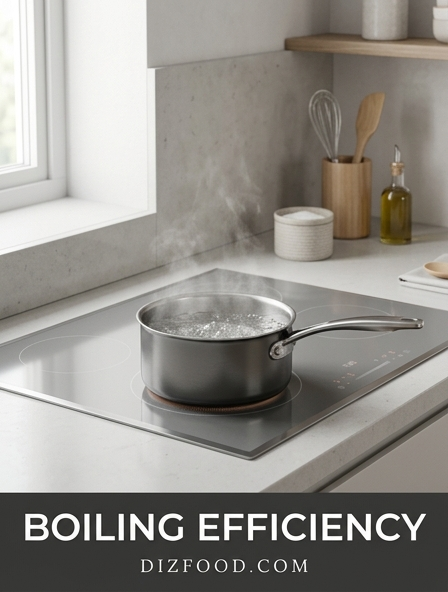
While the double boiler offers safety, direct heat offers unmatched efficiency and speed. For the majority of daily cooking tasks, direct heat is the superior choice because it allows for rapid adjustments and high-volume energy output. If you are boiling water for pasta, searing a steak, or reducing a robust wine-based sauce, the limitations of a double boiler would make the process unnecessarily slow. Direct heat allows for the rapid evaporation of water, which is essential for concentrating flavors in stocks and gravies.
Furthermore, modern cookware made of multi-clad stainless steel or heavy-bottomed cast iron is designed to mitigate some of the risks associated with direct heat. These materials distribute heat more evenly than older, thinner pans, allowing for better control. Professional chefs often prefer direct heat because it responds instantly to adjustments in the burner knob. If a pan is getting too hot, lowering the flame provides an immediate reduction in energy, whereas a double boiler has significant thermal lag due to the volume of water in the base.
- Searing: High heat is required to create a crust on proteins.
- Boiling: Rapid movement of water is needed for pasta and grains.
- Reducing: High evaporation rates shorten cooking times for heavy sauces.
- Stir-Frying: Constant high energy is needed to cook vegetables while retaining crunch.
Preventing Scorch with Double Boiling
Scorching occurs when the sugars or proteins in a liquid stick to the bottom of a hot pan and undergo carbonization. This not only ruins the texture of the dish but also imparts a bitter, burnt flavor that permeates the entire mixture. Milk and cream are particularly susceptible to scorching because they contain lactose and whey proteins that settle and burn easily. Using a double boiler eliminates this risk entirely because the heating surface never reaches the high temperatures required for carbonization.
When making a pastry cream or a white chocolate melt, the double boiler ensures that the bottom layer of the food is never hotter than the top layer. This prevents the "skin" from forming and burning at the base of the vessel. In commercial kitchens, double boilers are often used to keep sauces warm for extended periods during service. Because the heat is indirect, the sauce can sit for hours without the bottom becoming overcooked or scorched, maintaining its original flavor and color throughout the evening.
| Ingredient | Direct Heat Risk | Double Boiler Benefit |
|---|---|---|
| Milk/Cream | Protein skin and bottom burn | Gentle warming without skin |
| Sugar Syrups | Rapid crystallization/burning | Controlled, slow dissolution |
| Egg Yolks | Curdling/Scrambling | Smooth coagulation and thickening |
Delicate Ingredient Management Techniques
Managing delicate ingredients requires a combination of the right equipment and specific manual techniques. When using a double boiler, the "whisking technique" becomes paramount. Because the heat is constant, the chef must provide the motion to ensure that the ingredients are aerated and that the heat is distributed within the mixture itself. For example, when making a Sabayon, the constant whisking combined with the steam heat creates a light, foamy texture that would be impossible to achieve over a direct flame.
Another technique is the "off-and-on" method. Even with a double boiler, it is sometimes necessary to remove the top bowl from the steam for a few seconds to slow down the cooking process. This is particularly useful when tempering chocolate or finishing a custard where the temperature needs to be held at a very specific degree. By alternating between the steam and the cool air, you can maintain a precise temperature profile that is far more accurate than what can be achieved with a standard stovetop dial.
- Maintain a constant, slow whisking motion to prevent localized overheating.
- Monitor the water level in the bottom pot to ensure it doesn't boil dry.
- Use a digital thermometer to check internal temperatures of delicate mixtures.
- Wipe the bottom of the upper bowl when removing it to prevent water drips.
Speed and Precision in Cooking Methods
Speed and precision are often at odds in the kitchen. Direct heat offers the speed, while the double boiler offers the precision. The choice between them depends on the specific goals of the recipe. If the objective is to get dinner on the table in thirty minutes, direct heat is usually the answer. However, if the objective is a perfectly tempered chocolate coating for a confection, speed must be sacrificed for the sake of precision. A double boiler takes longer to reach the desired temperature because water has a high specific heat capacity, meaning it requires a lot of energy to warm up.
Precision is also influenced by the tools used. For instance, an induction cooktop can provide a level of precision to direct heat that was previously unavailable, allowing for very low, stable temperatures. However, even the best induction cooktop cannot replicate the 360-degree environmental heat that steam provides to the upper bowl of a double boiler. For tasks like melting beeswax for food-safe wraps or infusing oils with delicate herbs, the slow, steady rise of a double boiler is unmatched. Ultimately, the modern cook must be proficient in both methods, knowing when to harness the raw power of the flame and when to rely on the gentle embrace of steam.
Mastering Heat Distribution for Better Results
Mastering heat distribution is the hallmark of an experienced cook. Understanding that heat does not move instantly or evenly allows for better decision-making regarding cookware and methods. When using direct heat, the thickness of the pan's base is the most important factor in distribution. A thin pan will have significant hot spots directly above the flame, while a heavy copper or aluminum-core pan will spread that energy more horizontally. Even with the best pan, however, direct heat is fundamentally a bottom-up heating process.
In contrast, a double boiler distributes heat through the medium of steam, which fills the entire cavity between the two vessels. This means the heat is applied to the bottom and the sides of the upper bowl simultaneously. This multi-directional heating is why the double boiler is so effective at preventing the edges of a sauce from drying out or the center from remaining cold. To achieve the best results, one must match the ingredient to the distribution method. Thick, viscous substances that don't circulate well on their own benefit most from the all-encompassing heat of the double boiler, while thin liquids that can be easily stirred are often fine on direct heat.
- Pan Material: Use copper or aluminum for better direct heat distribution.
- Surface Area: A wider bowl in a double boiler increases steam contact.
- Stirring: Essential for direct heat to move cooler liquid to the hot base.
- Steam Venting: Ensure the upper bowl fits snugly to trap steam for maximum efficiency.

Comments