
Mastering the nuances between pasta water and potato water is a fundamental skill for any cook looking to harness the power of residual starches for superior culinary textures. While both liquids are often discarded, they serve as liquid gold in professional kitchens due to their unique chemical compositions. Pasta water, enriched with wheat proteins and surface starches, acts as a potent emulsifier that binds fats to liquids for a glossy, restaurant-quality sauce. Conversely, potato water is a dense reservoir of amylopectin starch, making it an unparalleled natural thickener and a biological catalyst for yeast in baking. By understanding the specific viscosity and bonding properties of these two distinct liquids, you can transform the mouthfeel of your dishes from average to artisanal.
| Feature | Pasta Water (Liquid Gold) | Potato Water (Starch Base) |
|---|---|---|
| Starch Profile | High in Amylose & Wheat Gluten | High in Amylopectin |
| Primary Function | Emulsification (Binding oil/water) | Thickening & Hydration |
| Texture Impact | Silky, velvety, and adhesive | Dense, creamy, and structural |
| Best Application | Carbonara, Cacio e Pepe, Aglio e Olio | Soups, stews, and gravy bases |
| Baking Utility | Minimal; adds slight salt/structure | Potent yeast fuel for fluffier bread |
| Sodium Content | High (essential for sauce seasoning) | Variable (usually lower/neutral) |
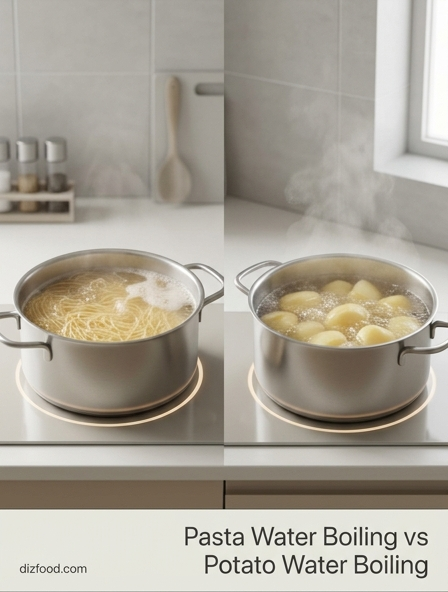
Starch Concentration in Pasta vs Potato Water
The starch profile of the water leftover from boiling pasta significantly differs from that of potato water due to the biological structure of the ingredients. Pasta is a processed product made from flour and water, where starch granules are trapped within a gluten network. As pasta cooks, the surface starch sloughs off almost immediately, resulting in a liquid rich in amylose. This creates a thin, silky "liquid gold" that is prized for its ability to emulsify fats into sauces.
In contrast, potatoes are whole tubers where starch is stored within cellular walls. The concentration of starch in the boiling water depends heavily on how the potato is prepped. Peeled and cubed potatoes release a significant amount of amylopectin into the water as their cells rupture during the boiling process. This results in a thicker, almost gelatinous liquid compared to pasta water. The following factors influence the density of starch in the pot:
- Surface Area: Dicing potatoes into smaller pieces increases the starch release compared to boiling them whole.
- Pasta Shape: Extruded pastas with rough textures (bronze-cut) release more starch than smooth, Teflon-died varieties.
- Agitation: Stirring pasta frequently releases more surface starch into the liquid.
- Potato Variety: Russet potatoes (high starch) produce a cloudier, thicker water than waxy red potatoes.
While both liquids serve as thickeners, potato water often contains more residual proteins and minerals, whereas pasta water is almost exclusively a suspension of wheat starch and salt.
Starting Temperature Cold Water vs Boiling Water
One of the most critical distinctions between preparing pasta and potatoes lies in the initial temperature of the cooking water. For pasta, starting with a rolling boil is non-negotiable. If pasta is added to cold water, the starch on the exterior begins to dissolve and become gummy before the heat can set the protein structure. This leads to a clumped, mushy texture. The high heat of boiling water ensures that the starch gelatinizes rapidly, creating a firm exterior and allowing the pasta to maintain its individual shape.
Potatoes require the exact opposite approach. They must be started in cold, salted water. Because potatoes are dense, starting them in boiling water would cause the outside to cook and disintegrate long before the heat could penetrate the core. By starting with cold water and bringing it to a simmer gradually, the potato heats evenly from the center to the skin. This ensures a uniform texture throughout the tuber, which is essential for both salads and mashes.
| Feature | Pasta Method | Potato Method |
|---|---|---|
| Start Temp | Rolling Boil (212°F / 100°C) | Cold Tap Water |
| Reasoning | Sets gluten and prevents sticking | Ensures even heat penetration |
| Risk of Wrong Start | Gummy, mushy exterior | Raw center with falling-apart exterior |
Essential Salt Ratios for Pasta and Potatoes
Seasoning the water is the only opportunity a cook has to season the interior of these starches. However, the quantity and timing of salt application vary. For pasta, the common culinary wisdom is that the water should "taste like the sea." This usually equates to approximately 1 to 2 tablespoons of kosher salt per 4 to 6 quarts of water. Since pasta absorbs about 1.6 to 2 times its weight in water, the salt penetrates the dough, enhancing the flavor of the wheat itself.
Potatoes are even more demanding of salt. Because they are naturally bland and dense, they require a high salt concentration in the water to draw out their earthy flavors. Unlike pasta, which only boils for 8 to 12 minutes, potatoes may simmer for 20 to 30 minutes, allowing more time for salt to reach the center. If the water is under-salted, the resulting potato dish will often taste flat, regardless of how much salt is added later to the surface. To achieve the best results, follow these steps:
- Measure your water and add salt before adding the potatoes or turning on the heat.
- Use roughly 10 grams of salt per liter of water for potatoes.
- For pasta, wait until the water is boiling before adding salt to avoid "pitting" stainless steel pots.
- Taste the water; it should be noticeably salty but not unpalatable.
Culinary Uses for Leftover Starchy Water
Discarding the water used to boil pasta or potatoes is often seen as a waste of a valuable kitchen "ingredient." Pasta water is a fundamental component of Italian pan-sauce techniques. The starch acts as a bridge between the oil or fat in a sauce and the water-based components, creating a creamy, emulsified texture that clings to the noodles. This is the secret behind dishes like Cacio e Pepe or Carbonara, where the liquid turns a few dry ingredients into a luxurious coating.
Potato water is equally versatile but serves different functions. Because it is rich in dissolved potato starch and potassium, it is an excellent addition to yeast breads. The starch helps keep the bread moist and creates a softer crumb. Furthermore, it acts as a natural thickener for gravies and soups, providing body without the need for a flour-based roux. Below are common ways to repurpose these liquids:
- Emulsification: Adding a splash of pasta water to a pan of sautéed garlic and oil.
- Baking: Replacing the water in a pizza dough or white loaf recipe with cooled potato water.
- Thickening: Using potato water as the base for a vegetable stew or vegan gravy.
- Deglazing: Using warm pasta water to lift fond from the bottom of a pan after searing meat.
Gelatinization Differences in Pasta and Potatoes
Gelatinization is the process where starch granules absorb water and swell when exposed to heat. In pasta, this process occurs within the confines of a protein (gluten) matrix. As the temperature hits approximately 140°F to 160°F, the starch granules inside the pasta swell until they burst, releasing amylose. The gluten network prevents the pasta from completely dissolving, providing the "bite" or structure. The starch that escapes into the water is what gives pasta water its slightly cloudy appearance and its binding power.
In potatoes, gelatinization is more about the transformation of the tuber's texture. Potato starch consists of larger granules and contains a high percentage of amylopectin, which is highly branched and produces a sticky texture when over-agitated. When boiling potatoes, the goal is to reach the gelatinization point without rupturing the cell walls too aggressively. If potatoes are boiled too violently, the cells burst, and the amylopectin floods the water and the surface of the potato, leading to a gluey, unappealing texture. Maintaining a gentle simmer rather than a hard boil helps manage this gelatinization process, ensuring the starch stays within the cells until they are ready to be crushed for a mash.
How Water Volume Impacts Cooking Quality
The volume of water used in the pot significantly influences the final quality of both pasta and potatoes, but for different reasons. For pasta, the traditional rule is to use a large volume of water-typically 5 to 6 quarts per pound of pasta. This serves two purposes: it prevents the water temperature from dropping too drastically when the cold pasta is added, and it dilutes the starch enough so the pasta doesn't become a sticky mass. If the volume is too low, the starch concentration becomes so high that the pasta may fuse together or develop a slimy film.
Potatoes are less sensitive to water volume but more sensitive to coverage. The water should cover the potatoes by at least an inch to ensure that the tops of the tubers don't cook at a different rate than the bottoms via steam. However, using excessive amounts of water for potatoes can be counterproductive, as it may lead to increased nutrient leaching. A balanced volume allows for a steady simmer where the potatoes have enough room to move slightly but aren't drowning in a vat that takes too long to reach temperature. In both cases, the pot size should allow the ingredients to be fully submerged throughout the entire cooking duration without boiling over.
Preventing Foam Overflows in Both Methods
Both pasta and potatoes are notorious for causing "boil-overs," where a thick, starchy foam climbs up the sides of the pot and spills onto the stove. This phenomenon is caused by the starch and proteins released into the water. These substances increase the surface tension of the water, trapping steam bubbles in a stable foam structure rather than allowing them to pop at the surface. As more steam is generated, the foam expands rapidly.
Preventing this mess requires a combination of temperature management and physical intervention. While some home cooks swear by certain "hacks," the most effective methods are rooted in physics. Consider the following strategies to keep your stovetop clean:
- The Wooden Spoon: Placing a wooden spoon across the top of the pot. The spoon acts as a "breaker" that destabilizes the bubbles as they rise, though this is only effective for a short time.
- Fat Addition: Adding a small amount of oil or butter. The fat breaks the surface tension of the starchy bubbles, preventing them from forming a stable foam. This is more common with pasta.
- Temperature Control: Reducing the heat immediately once a boil is reached. A gentle simmer produces fewer bubbles and less foam than a violent boil.
- Rinsing: Rinsing cubed potatoes before boiling can remove excess surface starch, significantly reducing the amount of foam produced.
Nutrient Loss During the Boiling Process
Boiling is one of the most aggressive cooking methods regarding nutrient retention. Because water is a solvent, many vitamins and minerals leach out of the food and into the cooking liquid. Potatoes are particularly susceptible to this, as they are rich in water-soluble vitamins like Vitamin C and B-complex vitamins, as well as potassium. When potatoes are peeled and boiled, they can lose up to 50% of these nutrients into the water. To mitigate this, boiling potatoes with their skins on acts as a protective barrier, keeping the nutrients locked inside the tuber.
Pasta, while usually fortified with folic acid and iron, also loses some of these nutrients to the water. However, because pasta is a dry, shelf-stable product, the "loss" is often considered less significant than the loss of fresh nutrients in vegetables. The table below illustrates the typical nutrient migration during the boiling process:
| Nutrient | Pasta Reaction | Potato Reaction |
|---|---|---|
| Vitamin C | Negligible (none present) | High leaching; heat sensitive |
| Potassium | Minimal | High leaching into water |
| B Vitamins | Moderate (fortified) | Moderate leaching |
| Starch | Surface loss only | Internal and surface loss |
Flavor Absorption and Water Seasoning Tips
The water used for boiling should not be viewed merely as a heat-transfer medium, but as a primary seasoning tool. Since potatoes and pasta are highly porous, they absorb the liquid they are cooked in. This presents an opportunity to infuse flavor directly into the heart of the ingredient. For potatoes, adding aromatics to the cold water-such as smashed garlic cloves, peppercorns, bay leaves, or sprigs of rosemary-allows the flavors to penetrate as the water heats up. The long simmer time is ideal for this infusion.
Pasta has a much shorter window for flavor absorption, usually under ten minutes. While salt is the primary additive, some chefs use flavored liquids like stock or even red wine (for dishes like Pasta all'Ubriaco) to boil the noodles. This results in a deep color and a complex flavor profile that cannot be achieved by saucing alone. When seasoning your water, keep these tips in mind:
Always season the water before the starch goes in. For potatoes, use aromatics that complement your final dish (e.g., thyme for mashed potatoes). For pasta, ensure the salt is fully dissolved to prevent uneven seasoning. Never add oil to pasta water if you want the sauce to stick; oil coats the noodles and prevents the sauce from adhering. Finally, always reserve a cup of the seasoned cooking water before draining; its infused flavor and starch content are essential for finishing the dish.
Texture Control Boiling for Al Dente vs Mash
Achieving the perfect texture requires a precise understanding of the boiling timeline. For pasta, the goal is "al dente," meaning "to the tooth." This refers to pasta that is cooked through but still retains a firm, slightly resistant center. Because pasta continues to cook for a minute or two after being drained-and often more if it is tossed in a hot sauce-it should be removed from the boiling water just before it reaches the desired final texture. Overboiling leads to the collapse of the gluten structure, resulting in soft, unappealing noodles.
For potatoes, the desired texture depends entirely on the end goal. If making a potato salad, the cubes must be "fork-tender," meaning a fork slides in easily but the cube maintains its sharp edges. For a mash, the potatoes should be cooked slightly longer until they are soft and almost falling apart. This ensures that when they are passed through a ricer or mashed, there are no hard lumps. The control process follows these general steps:
- Pasta: Start tasting the pasta 2 minutes before the package directions suggest.
- Pasta: Look for a tiny white dot in the center of the noodle-this indicates it is almost al dente.
- Potatoes: Test with a paring knife; if the potato slides off the knife easily, it is ready for mashing.
- Potatoes: Drain immediately and allow them to steam dry for a minute to remove excess moisture before adding fats like butter or cream.

Comments