
Molecular Structure of Amylopectin
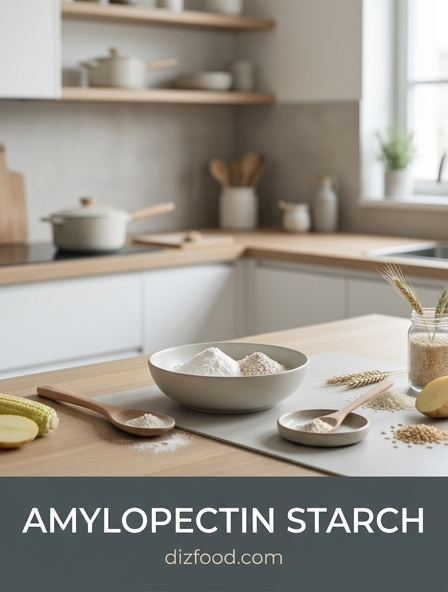
Amylopectin is a highly branched polysaccharide consisting of thousands of glucose units, serving as one of the two primary components of natural starch. Unlike its linear counterpart, amylose, amylopectin features a complex architecture defined by alpha-1,4-glycosidic bonds in its main chains and alpha-1,6-glycosidic bonds at the branch points. These branches typically occur every 24 to 30 glucose residues, creating a tree-like structure that significantly impacts its physical behavior in culinary applications. This high degree of branching prevents the molecules from packing tightly together, which contributes to the unique solubility and viscosity profiles observed in waxy starches.
- Alpha-1,4 linkages provide the linear backbone.
- Alpha-1,6 linkages facilitate the frequent branching points.
- High molecular weight often exceeds millions of Daltons.
- The branched structure inhibits rapid retrogradation and crystallization.
In the kitchen, this molecular configuration ensures that starches rich in amylopectin, such as glutinous rice or waxy cornstarch, produce pastes that remain fluid and clear rather than forming a rigid, opaque gel upon cooling.
The Process of Starch Gelatinization
Starch gelatinization is the irreversible transition of starch granules from a semi-crystalline state to an amorphous, hydrated paste when heated in the presence of water. As the temperature rises, water molecules penetrate the starch granule, specifically targeting the amorphous regions of the amylopectin network. This influx of moisture causes the granules to swell significantly, disrupting the internal hydrogen bonding. As the granules expand, they begin to crowd the liquid medium, creating friction and increasing the overall viscosity of the mixture.
The process follows a specific sequence of physical changes:
- Hydration: Water is absorbed into the granule at a molecular level.
- Swelling: The granule expands to many times its original size.
- Melting: The crystalline structures of amylopectin clusters dissolve.
- Leaching: Some polymers, primarily amylose, escape into the surrounding liquid.
Because amylopectin is the dominant component in most culinary starches, its ability to hold water within its branched structure is central to the thickening of soups and custards. Proper gelatinization requires reaching a specific temperature range, typically between 60°C and 85°C depending on the botanical source.
How Boiling Triggers Thickening Functions
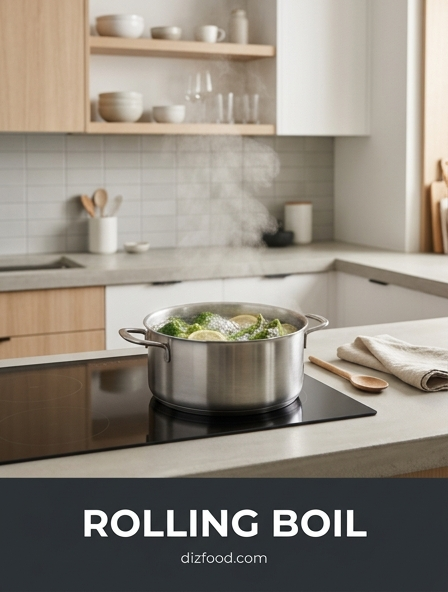
Boiling serves as the thermal catalyst that completes the transition of starch from a simple suspension into a functional thickening agent. When a liquid reaches its boiling point, the kinetic energy is sufficient to fully rupture the starch granules that have already undergone initial gelatinization. This rupture releases the highly branched amylopectin molecules into the liquid, where they form a sophisticated web that traps water molecules and restricts their movement. This restriction is what the cook perceives as a thickened consistency.
During the boiling phase, the viscosity reaches its peak. If the boiling is maintained for too long, however, the mechanical shear from the bubbling can begin to break down the large amylopectin molecules, leading to a phenomenon known as thinning or "overcooking" the starch. In a professional kitchen, reaching a boil is also essential for deactivating amylase enzymes that might be present in ingredients like egg yolks or flour, which would otherwise digest the starch and break down the sauce's thickness over time.
Comparing Amylopectin and Amylose Textures
The ratio of amylopectin to amylose within a starch granule dictates the final texture and clarity of a dish. Starches with high amylose content tend to form firm, opaque gels because the linear chains can align and bond closely. In contrast, starches high in amylopectin result in viscous, translucent, and elastic textures that do not set into a solid mass. This distinction is vital when selecting a thickener for specific culinary outcomes, such as a fruit pie filling versus a pudding.
| Characteristic | High Amylopectin | High Amylose |
|---|---|---|
| Texture | Stringy, cohesive, soft | Firm, rigid, gel-like |
| Clarity | Translucent to clear | Opaque to cloudy |
| Retrogradation | Very low (stable) | High (weeps water) |
| Common Source | Waxy corn, Tapioca | Wheat, Russet potato |
Understanding these differences allows chefs to manipulate mouthfeel, ensuring that a gravy remains pourable while a gumdrop remains chewy and structurally sound.
Achieving Superior Viscosity in Sauces
To maximize the viscosity of a sauce using amylopectin-rich starches, one must balance concentration and heat application. Amylopectin is prized for its ability to provide high peak viscosity at lower concentrations compared to other starches. Because the branched molecules occupy a large hydrodynamic volume, they are exceptionally efficient at increasing the internal friction of a liquid. This results in a "long" texture, characterized by a slight stretchiness and a heavy cling to the back of a spoon.
To achieve the best results, the starch should be introduced as a slurry to prevent clumping. Once the starch is dispersed, the sauce must be brought to a simmer to ensure the granules fully hydrate and expand. For starches like arrowroot or tapioca, which are nearly pure amylopectin, the thickening occurs rapidly and produces a very clean flavor profile. This allows the primary ingredients of the sauce, such as wine or stock, to remain the focus without the "pasty" taste often associated with high-protein flour thickeners.
Enhancing Mouthfeel with Branched Starches
The culinary perception of "creaminess" is often a result of the interaction between amylopectin and the moisture in a dish. In low-fat cooking, branched starches are frequently utilized as fat replacers because their molecular structure mimics the lubricating properties of lipids. When dispersed in a liquid, amylopectin creates a smooth, velvety film that coats the tongue, reducing the perception of astringency and increasing the sensation of richness. This is particularly useful in dairy-free sauces or light vinaigrettes where a luxurious mouthfeel is desired without the addition of heavy cream.
The benefits of using branched starches for mouthfeel include:
- Reduction in graininess or chalky textures.
- Enhanced coating ability for pastas and vegetables.
- Delayed release of flavors, prolonging the tasting experience.
- Improved suspension of solids, such as herbs or spices.
By leveraging the branched nature of these polysaccharides, cooks can achieve a sophisticated palate experience that feels substantial and satisfying, even in preparations that are technically light or water-based.
Temperature Impact on Starch Hydration
The hydration of amylopectin is a temperature-dependent event that begins long before the liquid reaches a boil. Initial water absorption starts at the "on-set temperature," where the heat provides enough energy to loosen the hydrogen bonds within the starch granule's crystalline regions. As the temperature climbs, the rate of hydration increases exponentially. If the temperature is raised too quickly without agitation, the exterior of starch clumps can gelatinize instantly, creating a waterproof barrier that prevents the interior from hydrating, resulting in "fish eyes" or lumps.
Conversely, maintaining a controlled temperature gradient allows for uniform hydration. Different starches have different optimal hydration ranges:
- Potato starch: Hydrates at relatively low temperatures (around 60°C).
- Corn starch: Requires higher heat (around 75°C to 80°C) to begin thickening.
- Rice starch: Often requires sustained heat near the boiling point.
Chefs must monitor these thermal thresholds to ensure the starch is fully activated. Failure to reach the necessary temperature results in a thin, watery sauce with a gritty, raw-starch flavor.
Maintaining Stability in Boiling Liquids
A significant advantage of amylopectin-heavy starches is their stability during and after boiling. While amylose is prone to retrogradation-a process where molecules realign and squeeze out water as they cool-amylopectin's branched shape makes it difficult for the molecules to reorganize into a crystalline structure. This stability is crucial for sauces that need to be held at service temperatures for long periods or for foods that will be frozen and thawed. The branches essentially act as spacers, keeping the water trapped within the molecular network and preventing syneresis (weeping).
To maintain this stability, cooks should avoid excessive mechanical shearing once the starch has reached its peak thickness. Over-whisking at a boil can physically tear the expanded amylopectin branches, causing the sauce to lose its body. Additionally, the presence of sugar and acid can influence stability; sugar competes for water and can raise the gelatinization temperature, while high acidity can break down the starch chains if boiled for an extended duration. Balancing these variables ensures a consistent, stable product.
Creating Glossy Finishes and Visual Sheen
In the visual presentation of food, the clarity and sheen of a glaze are often as important as its flavor. Amylopectin starches, particularly those derived from tubers like tapioca and potato, are famous for producing a high-gloss finish. This occurs because the large, branched molecules do not form the opaque crystalline structures that linear amylose does. When light hits a sauce thickened with high-amylopectin starch, it passes through the translucent matrix and reflects off the underlying food, creating a vibrant, appetizing glow.
This visual effect is highly sought after in several culinary contexts:
- Fruit Glazes: Providing a shiny coating for tarts and pastries.
- Asian Stir-fry Sauces: Creating the signature "silkiness" and shine.
- Reduction Sauces: Enhancing the natural colors of jus or demi-glace.
To maximize this sheen, it is important to cook the starch until it is completely transparent. Any cloudiness remaining in the sauce is an indicator that the starch granules have not fully burst and hydrated. Once clarity is achieved, the sauce will exhibit a professional, polished appearance.
Optimizing Starch Performance in Cooking
Optimizing the performance of amylopectin in the kitchen requires a combination of proper technique and ingredient selection. The first step is always the creation of a slurry using a cold liquid, which ensures that the starch granules are individually dispersed before they encounter the heat of the main pot. This prevents the formation of lumps and ensures a smooth, uniform texture. Furthermore, the timing of the starch addition is critical; because amylopectin provides immediate thickening, it is often best added toward the end of the cooking process to avoid the degradation of the starch molecules through prolonged boiling.
Chefs should also consider the "cleanliness" of the starch source. Waxy maize or arrowroot are preferred for delicate flavors because they lack the proteins and lipids found in flour that can mask subtle notes. By matching the specific properties of amylopectin-such as its high viscosity, freeze-thaw stability, and transparency-to the requirements of the dish, a cook can ensure the highest quality results. Understanding these molecular interactions transforms starch from a simple filler into a powerful tool for texture and presentation.

Comments