
Have you ever wondered why your pasta takes longer to reach the perfect al dente or why your morning tea tastes slightly bitter? The secret often lies in your kitchen tap. In the battle of hard water vs. soft water boiling, the mineral composition of your water does more than just affect your plumbing; it fundamentally changes the chemistry of your food. Hard water, packed with calcium and magnesium, can toughen the fibers in legumes and vegetables, while soft water's lack of mineral interference allows for faster heat transfer and cleaner flavor extraction. Whether you are blanching greens or brewing a delicate pour-over, understanding these subtle chemical differences is the ultimate "pro-tip" for achieving consistent, restaurant-quality results at home.
| Feature | Hard Water (High Mineral) | Soft Water (Low Mineral) |
|---|---|---|
| Mineral Profile | High Calcium & Magnesium carbonates. | High Sodium or Potassium ions. |
| Boiling Efficiency | Slower; scale buildup reduces heat transfer. | Faster; maximum heating element contact. |
| Legumes & Grains | Toughens skins; significantly longer cook times. | Softens quickly; creamy internal textures. |
| Flavor Profile | Muted flavors; can taste "metallic" or "chalky." | Bright, clear, and ingredient-forward. |
| Vegetable Texture | Retains firmness (prevents pectin breakdown). | Softens rapidly; higher risk of mushiness. |
| Beverage Clarity | Cloudy tea/coffee; forms "scum" on surface. | Crystal clear; vibrant aromatic extraction. |
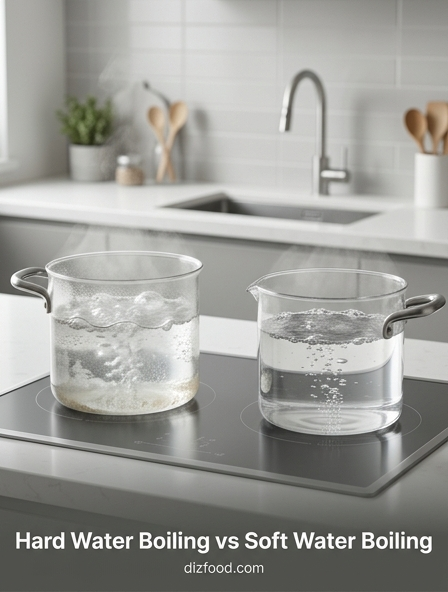
Mineral Impact on Boiling Points
The boiling point of water is fundamentally influenced by its chemical composition, particularly the concentration of dissolved minerals like calcium and magnesium. In the kitchen, this phenomenon is known as boiling point elevation. Pure water at sea level boils at exactly 212°F (100°C), but as solutes are added, the vapor pressure of the liquid decreases, requiring more thermal energy to achieve a state of boiling. Hard water, which is rich in mineral ions, naturally possesses a slightly higher boiling point than distilled or soft water.
While the temperature difference is often negligible for quick tasks like blanching vegetables, it becomes scientifically relevant during long-reduction processes. The presence of these minerals disrupts the phase transition from liquid to gas, meaning a pot of hard water may take longer to reach a rolling boil compared to a pot of soft water under identical heat settings. Below is a comparison of how different water types interact with thermal energy during the boiling process:
| Water Type | Primary Mineral Content | Boiling Characteristics |
|---|---|---|
| Soft Water | Sodium or Potassium ions | Rapid transition; lower elevation. |
| Hard Water | Calcium and Magnesium carbonates | Delayed transition; higher elevation. |
| Distilled Water | Minimal to zero minerals | Standard baseline; consistent 212°F. |
For culinary enthusiasts, understanding this relationship helps in managing expectations for heat-up times and the consistency of high-temperature cooking. While the mineral content is beneficial for some nutritional aspects, the increased energy requirement to reach a boil is a constant factor in hard water environments.
Hard Water Limescale Risks
When hard water is subjected to high heat, a chemical reaction occurs that precipitates dissolved minerals out of the solution. This process leads to the formation of calcium carbonate, commonly known as limescale. In a kitchen setting, this is most visible inside kettles, pots, and the internal plumbing of coffee makers. As the water boils away, the concentration of minerals increases until they can no longer remain dissolved, crystallizing into a hard, white, chalky substance that bonds to surfaces.
The risks associated with limescale extend beyond simple aesthetics. Over time, these deposits can cause significant operational issues for kitchen hardware. The following list highlights the primary risks associated with persistent limescale buildup from boiling hard water:
- Reduced Heat Transfer: Limescale acts as an insulator, forcing heating elements to work harder and run longer to heat the water.
- Physical Blockages: Small apertures, such as those in espresso machine group heads or kettle spouts, can become completely obstructed.
- Flavor Degradation: Flakes of scale can break off into the water, adding a gritty texture and an unpleasantly metallic or chalky taste to beverages.
- Surface Etching: If left untreated, the alkaline nature of the scale can permanently pit or cloud stainless steel and glass cookware.
Frequent descaling becomes a mandatory chore in hard water households. Without regular intervention, the efficiency of boiling diminishes, and the physical integrity of expensive culinary tools is compromised by the relentless accumulation of mineral stone.
Soft Water Heating Efficiency
Soft water is characterized by its lack of heavy minerals, which significantly enhances its heating efficiency in a kitchen environment. Because soft water does not leave behind a layer of insulating scale, the heating element of a kettle or the base of a pot remains in direct contact with the liquid. This unimpeded thermal transfer allows for faster boiling times and reduced energy consumption. In an era where energy efficiency is a priority, using soft water can lead to measurable savings over the lifespan of an appliance.
The process of heating soft water is generally more predictable. To maximize efficiency when boiling soft water, consider the following steps:
- Ensure the vessel is free of any residual scale from previous hard water use to allow for maximum surface contact.
- Use a lid to trap steam, which works in tandem with the water's natural thermal conductivity to reach the boiling point faster.
- Match the pot size to the burner to prevent energy loss around the sides of the container.
- Regularly wipe down the interior of heating appliances to remove any sodium films that might accumulate from the softening process.
Because soft water reaches a boil more readily, it is the preferred choice for professional kitchens that require high-speed preparation. The absence of mineral interference means that the energy applied by the stove or the electric element is utilized almost entirely for the phase change of the water, rather than heating up a crust of calcium buildup. This results in a more responsive and agile cooking experience.
Flavor Differences in Boiled Water
The flavor profile of boiled water is a critical component in the preparation of tea, coffee, and delicate broths. Hard water often carries a distinct "heavy" mouthfeel and a flavor that can range from metallic to earthy, depending on the specific mineral balance. When boiled, these minerals concentrate, which can lead to an over-extraction of bitter compounds in coffee beans or tea leaves. Many tea connoisseurs avoid hard water because the calcium reacts with the tea's polyphenols, creating a cloudy appearance and a duller taste.
Soft water, conversely, tends to produce a "cleaner" and more neutral palate. However, it is not without its own sensory characteristics. Because soft water is often treated with sodium, it can sometimes carry a very faint saltiness that may affect the nuance of light roasts or white teas. The following comparison outlines common flavor observations:
- Hard Water: Strong, alkaline, potentially bitter, and can leave a dry sensation on the tongue.
- Soft Water: Sweet, smooth, neutral, but can occasionally feel "flat" due to the lack of oxygen-binding minerals.
- Distilled Water: Entirely neutral but often described as "dead" or lacking character in a culinary context.
Achieving the perfect cup often requires a balance. While soft water is better for preventing appliance damage and ensuring clarity, a small amount of mineral content is actually desirable to help extract the complex flavors from organic ingredients. This is why many high-end cafes use specialized filtration systems that soften the water while reintroducing a precise amount of magnesium for flavor enhancement.
Hard Water Cooking Effects
Cooking with hard water introduces chemical variables that can alter the texture and color of food. The calcium and magnesium ions in hard water interact with the cell walls of vegetables and the proteins in legumes. For example, when boiling dried beans in hard water, the calcium can bind to the pectin in the bean skins, toughening them and significantly increasing the required cooking time. In some cases, beans boiled in exceptionally hard water may never achieve a creamy interior, remaining "toothy" regardless of the duration of the boil.
Vegetables also react differently to hard water minerals. While some green vegetables may retain a firmer crunch, the alkaline nature of hard water can cause certain pigments to dull, turning vibrant greens into a brownish-grey. The table below illustrates the specific effects of hard water on common kitchen staples:
| Food Item | Effect of Hard Water | Resulting Texture/Quality |
|---|---|---|
| Pasta | Mineral interference with starch | Stickier surface; less "al dente" precision. |
| Legumes | Calcium-pectin bonding | Tough skins; significantly longer cook times. |
| Root Veggies | Reinforced cell structures | Firmer texture; slower softening. |
To mitigate these effects, some chefs add a pinch of baking soda to the water, which helps to soften the water chemically by precipitating the calcium. However, this can also impact flavor and vitamin retention, making the choice of base water quality a fundamental decision for the texture of the final dish.
Appliance Longevity and Mineral Buildup
The lifespan of kitchen appliances is directly correlated with the hardness of the water used within them. Kettles, espresso machines, and steam ovens are particularly vulnerable because they involve the phase change of water into steam, leaving all dissolved solids behind. As these solids accumulate, they create mechanical stress. In an electric kettle, a layer of scale over the heating element causes it to overheat locally, eventually leading to a burnout of the component. In more complex machinery like espresso makers, scale can clog the solenoid valves and pressure sensors.
Maintaining appliance longevity in a hard water area requires a proactive maintenance schedule. The following signs indicate that mineral buildup is reaching a critical level:
- Increased noise (popping or hissing) during the boiling cycle as water gets trapped under scale.
- Visible white flakes or a "sand-like" sediment at the bottom of the water reservoir.
- Automatic shut-off sensors triggering before the water has reached a full boil.
- A noticeable decrease in the flow rate of water or steam from the machine.
By contrast, appliances using soft water can last years longer without internal degradation. While soft water might still leave a minor sodium film, this is easily wiped away and does not harden into the rock-like structures formed by calcium. For any kitchen with high-end built-in coffee systems or steam-injection ovens, the use of softened water is often a warranty requirement to prevent catastrophic failure caused by mineral calcification.
Soft Water Boiling Benefits
Soft water offers several distinct advantages in the kitchen, particularly for those who value consistency and ease of cleaning. Because soft water has been stripped of its hardening minerals-usually through an ion-exchange process-it behaves in a very predictable manner when heated. One of the most immediate benefits is the lack of "scum" that often forms on the surface of boiled water. This scum is actually a precipitate of calcium carbonate and organic compounds, and its absence ensures that soups and stocks remain clear and visually appealing.
The benefits of boiling with soft water can be categorized into functional and culinary advantages:
- Purity of Color: Foods like potatoes and cauliflower stay whiter when boiled in soft water, as there are no minerals to react with their natural starches and pigments.
- Faster Cleanup: Pots and pans do not develop the stubborn white ring at the waterline, reducing the need for abrasive scrubbing or acidic soaks.
- Better Ingredient Solubility: Soluble powders, such as cocoa, gelatin, or thickeners, often dissolve more readily in soft water because there is more "room" in the solvent for the solutes to occupy.
- Consistent Boiling Temperature: Without the variable mineral loads found in tap water, soft water boils at a consistent temperature, allowing for more precise recipe timing.
For high-volume boiling tasks, such as preparing large quantities of pasta or steaming seafood, the efficiency of soft water is unmatched. It allows the natural flavors of the ingredients to shine through without the interference of a heavy mineral "blanket." While some argue that soft water lacks the "body" of hard water, most modern culinary applications prioritize the control and cleanliness that soft water provides.
Mineral Deposition During Evaporation
Evaporation is an inevitable byproduct of boiling, and it serves as a concentration mechanism for whatever minerals are present in the water. In the kitchen, as you simmer a sauce or reduce a stock, the water molecules escape as steam, but the calcium, magnesium, and sodium remain behind. In hard water, this means the liquid becomes progressively more alkaline and "mineralized" as the volume decreases. This can lead to unexpected flavor shifts, where a perfectly seasoned soup becomes overly metallic or salty as it reduces.
This mineral deposition is not just a flavor issue; it creates a physical residue on the cookware. The following points explain the behavior of minerals during the evaporation process:
- Concentration Effect: As water volume halves, the mineral concentration doubles, accelerating the rate of scale formation.
- The "Ring" Phenomenon: The white line at the top of a boiling pot is a high-water mark of deposited minerals left behind as the liquid level drops.
- Encrustation: On the rim of the pot, minerals can dry and harden, potentially falling back into the food and creating a gritty texture.
Understanding this process is vital for chefs who perform long reductions. If the starting water is excessively hard, the final reduction may have a harsh, chemical-like finish. To avoid this, many professionals start with filtered or slightly softened water for stocks and sauces, ensuring that the final concentrated product retains the intended flavor profile of the ingredients rather than the concentrated characteristics of the local geology.
Heat Conductivity Comparisons
The efficiency of boiling water is largely a matter of heat conductivity-how effectively thermal energy moves from the heat source into the liquid. Pure water is a decent conductor, but the presence of minerals changes the dynamics. Ironically, while hard water itself conducts heat slightly better than pure water due to its ion content, the byproduct of boiling it-limescale-is a terrible conductor. This creates a paradox where the water is easy to heat initially, but the vessel used to heat it becomes increasingly inefficient over time.
When comparing the two, we must look at the system as a whole (the water and the container). The following table compares the thermal behavior of hard and soft water systems:
| Feature | Hard Water System | Soft Water System |
|---|---|---|
| Initial Conductivity | Higher (due to ions) | Lower (closer to pure water) |
| Long-term Efficiency | Decreases as scale builds up | Remains high and consistent |
| Heating Element Stress | High (overheating risk) | Low (standard operation) |
In a soft water system, the absence of mineral deposits ensures that the heat conductivity between the metal and the liquid remains optimal. In a hard water system, even a millimeter of scale can increase energy consumption by up to 10%. Over months of daily kitchen use, the "faster" conductivity of the hard water ions is far outweighed by the insulating properties of the scale they leave behind. Consequently, soft water is the superior choice for long-term thermal efficiency in any kitchen appliance.
Choosing the Right Water Quality
Deciding whether to use hard or soft water for boiling depends on the specific goals of the cook. There is no universal "best" water, as both have roles in different culinary contexts. Hard water is often preferred for brewing certain types of beer or for boiling vegetables where a firmer texture is desired. However, for the majority of household kitchen tasks-especially those involving expensive appliances-soft water or filtered water is generally the safer and more efficient choice.
When selecting the water quality for your kitchen, consider the following guidelines to achieve the best results:
- For Coffee and Tea: Use filtered water that retains some minerals for flavor extraction but removes the heavy carbonates that cause scale.
- For Beans and Grains: Use soft or distilled water to ensure even softening and to reduce cooking times significantly.
- For Kettles and Steamers: Use soft water exclusively to prevent mechanical failure and maintain energy efficiency.
- For Pasta and Seafood: Tap water (hard or soft) is usually acceptable, though soft water will prevent the starch from becoming overly gummy.
Ultimately, the "right" water quality is a balance between flavor, texture, and appliance protection. Many modern kitchens solve this dilemma by installing a point-of-use reverse osmosis system or a water softener. This allows the cook to start with a blank canvas, adding a pinch of salt or minerals when needed for specific recipes, while keeping the heating elements of their prized appliances free from the destructive reach of limescale.

Comments