
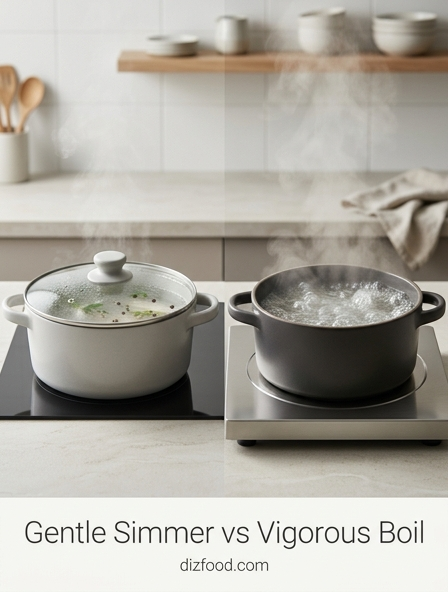
Mastering the nuance between a gentle simmer and a vigorous boil is the secret to elevating your home cooking from basic to brilliant. While both involve heating liquid, they serve vastly different culinary purposes: a simmer (roughly 185°F to 205°F) acts as a controlled environment that gently breaks down connective tissues in meats and allows complex flavors to meld without agitation. Conversely, a rolling boil (212°F) is a high-energy state characterized by turbulent bubbles, essential for the kinetic movement needed to keep pasta from sticking or to rapidly reduce a sauce. Understanding when to turn down the dial ensures your delicate proteins remain succulent and your stocks stay crystal clear rather than cloudy and over-extracted.
| Feature | Gentle Simmer | Vigorous Boil |
|---|---|---|
| Temperature | 185°F - 205°F (85°C - 96°C) | 212°F (100°C) at sea level |
| Visual Cues | Small, lazy bubbles; occasional surface break | Aggressive, large bubbles; constant motion |
| Best For | Stews, braises, poaching, delicate sauces | Pasta, blanched greens, reducing liquids |
| Protein Effect | Softens fibers; keeps meat tender | Toughens muscle fibers; can cause shrinkage |
| Liquid Clarity | Preserves clarity; fats remain separate | Emulsifies fats/impurities; creates cloudy liquid |
| Evaporation | Slow; ideal for long-duration cooking | Rapid; used for thickening and concentration |
Understanding the Science of Simmering vs Boiling
At the heart of every stovetop technique lies the thermodynamic behavior of water and its transition from liquid to gas. Understanding the science of simmering versus boiling requires a look at vapor pressure and kinetic energy. When you apply heat to a pot of water, the molecules move faster and faster. A simmer occurs just below the boiling point, typically between 185°F and 205°F (85°C to 96°C). At this stage, the vapor pressure of the liquid is almost equal to the atmospheric pressure, but not quite enough to cause a massive phase change throughout the entire volume of the liquid.
In contrast, a vigorous boil happens at exactly 212°F (100°C) at sea level. This is the point where the vapor pressure of the liquid equals the external pressure exerted by the air. At this temperature, the water cannot get any hotter; any additional energy applied to the system is used to break the molecular bonds, turning liquid water into steam. This creates the characteristic "rolling" effect where bubbles form rapidly at the bottom and rise violently to the surface. The following factors influence these states:
- Atmospheric Pressure: Higher altitudes lower the boiling point, meaning a "boil" happens at a lower temperature, which can affect cooking times.
- Solutes: Adding salt or sugar increases the boiling point slightly through a process called boiling-point elevation.
- Convection Currents: In a simmer, heat moves more gently, whereas a boil creates intense mechanical agitation.
Distinguishing between these two states is not just about temperature; it is about managing the energy transfer to your food. A simmer provides a gentle, consistent environment for slow chemical reactions, while a boil provides maximum heat and physical movement for rapid structural changes.
Visual Cues for a Gentle Simmer vs Vigorous Boil
Determining whether a liquid is simmering or boiling is a fundamental skill for any cook, relying heavily on visual and auditory cues. Because thermometers can be cumbersome for quick checks, chefs categorize the state of the liquid by the behavior of the bubbles. A gentle simmer is often described as "smiling" water, where small bubbles break the surface sporadically. A vigorous boil, on the other hand, is unmistakable in its intensity, often producing a loud churning sound and significant steam.
To help distinguish between the varying degrees of heat, refer to the table below which outlines the visual markers of each stage. Recognizing these differences prevents overcooking delicate items or undercooking starches that require high energy.
| Stage | Visual Description | Activity Level |
|---|---|---|
| Poach | Small bubbles on the bottom; no surface breaking. | Still / Low |
| Gentle Simmer | Tiny bubbles rising slowly; "shimmering" surface. | Relaxed |
| Full Simmer | Consistent small bubbles breaking the surface. | Steady |
| Vigorous Boil | Large, aggressive bubbles; surface cannot be calmed by stirring. | High / Violent |
A rolling boil is specifically identified when you stir the pot and the bubbles do not stop. If the agitation pauses when you move a spoon through the water, you have likely achieved a simmer or a slow boil but haven't reached the full intensity of a vigorous boil. Observing the frequency of steam release is also a key indicator; a simmer produces a light wisp, whereas a boil generates a thick, constant cloud of vapor.
When to Use a Simmer for Better Flavor
Simmering is the preferred method for developing deep, complex flavors in sauces, stews, and braises. The primary reason for this is time. High heat can be destructive to delicate volatile compounds that provide aroma and nuance. By maintaining a temperature just below the boiling point, you allow the ingredients to undergo the Maillard reaction slowly or release their essences without being torn apart by the mechanical violence of boiling water. This is particularly crucial when working with aromatics like garlic, onions, and fresh herbs.
Furthermore, simmering is essential for flavor extraction in fat-heavy liquids. If you boil a sauce containing fat and water, the vigorous movement acts like a blender, emulsifying the fat into the liquid. This can lead to a greasy, muddy flavor and a cloudy appearance. A simmer allows the fats to remain separate or gently integrate, preserving the clarity of the flavor profile. The following culinary goals are best achieved through simmering:
- Reducing Liquids: Evaporating water slowly to concentrate flavors in a demi-glace or tomato sauce.
- Infusion: Gently pulling oils and flavors from spices and herbs into a base liquid.
- Tenderization: Allowing enzymes and heat to break down tough components over several hours.
When you simmer, you are essentially practicing patience. The low heat ensures that the "bright" notes of your ingredients do not evaporate immediately, giving them time to meld into a cohesive dish. It is the difference between a sauce that tastes like individual ingredients and one that tastes like a unified masterpiece.
The Best Foods to Cook at a Vigorous Boil
While simmering is the king of flavor development, the vigorous boil is the master of texture and efficiency for specific food groups. The high kinetic energy of a rolling boil is not just about heat; it is about the physical movement of the water. For certain foods, this movement is essential to prevent clumping and ensure even cooking. The most common candidate for a vigorous boil is dried pasta. The aggressive bubbling keeps the pasta strands in constant motion, preventing them from settling at the bottom or sticking together as they release surface starches.
Vegetables also benefit from a short, intense boil, a process known as blanching. By plunging green vegetables like broccoli or green beans into vigorously boiling water, you quickly deactivate the enzymes that cause browning and loss of nutrients. The high heat sets the chlorophyll, resulting in a vibrant green color that a slow simmer simply cannot achieve. Consider the following list of items that thrive under high-intensity heat:
- Root Vegetables: Potaoes for mashing often start in cold water but are brought to a boil to break down starch structures quickly.
- Grains: Harder grains like farro or barley can handle the agitation of a boil without losing their integrity.
- Dumplings: The movement helps keep delicate dough from sticking to the pot walls.
In these cases, the goal is not flavor extraction but rather a specific structural change. The boil provides the necessary energy to hydrate starches and soften cellulose rapidly. Once the desired texture is reached, the food is often drained or shocked in ice water to stop the cooking process immediately, preserving the results of the high-heat exposure.
How Temperature Impact Affects Food Texture
The difference between 190°F and 212°F might seem negligible, but for the proteins and starches in our food, it represents a massive shift in texture. Heat causes proteins to denature and coagulate. When exposed to the high heat of a vigorous boil, protein fibers in meat and fish contract tightly and squeeze out moisture. This results in a rubbery, dry, and tough texture. Simmering, however, provides enough heat to denature proteins without causing that extreme contraction, keeping the food tender and moist.
For starches, the impact is equally significant. Starch granules absorb water and swell as they heat up-a process called gelatinization. At a simmer, this happens gradually, allowing the starch to thicken a liquid smoothly. At a boil, the rapid movement can cause starch granules to burst prematurely or unevenly, leading to a "pasty" or "gummy" mouthfeel. This is why delicate grains like rice are usually started with a boil and immediately reduced to a simmer to finish cooking.
Texture is also affected by the physical agitation. Soft foods like poached eggs or fish fillets would be shredded by the turbulence of a vigorous boil. The gentle environment of a simmer protects the physical integrity of the ingredient. Whether you want a firm "snap" in a blanched vegetable or a "melt-in-your-mouth" feel in a braised short rib, the choice between simmering and boiling is the primary lever you use to control the final mouthfeel of the dish.
Simmering vs Boiling for Stocks and Soups
The clarity and body of a stock are determined almost entirely by the heat management of the pot. Professional chefs are taught early on that a stock should never, under any circumstances, be allowed to reach a full boil. The reason is rooted in chemistry: bones and meat contain proteins, fats, and minerals. When boiled, these impurities are churned back into the liquid, creating a cloudy, grey appearance and a "flat" taste. A simmer allows these impurities to coagulate and rise to the surface in a foam that can be easily skimmed off.
Furthermore, the collagen in connective tissues transforms into gelatin most efficiently at temperatures between 180°F and 200°F. This transition provides the "body" or "silkiness" that characterizes a great soup. If the liquid is boiling, the gelatin is still produced, but the high heat can begin to break down the flavor molecules, leading to a bitter or over-extracted taste. Consider the following comparison for stock preparation:
- Simmering: Produces a crystal-clear liquid, preserves delicate marrow flavors, and allows for easy skimming of "scum."
- Boiling: Emulsifies fats, leads to a cloudy or milky broth, and can cause the stock to develop a scorched or "off" flavor.
For soups containing vegetables, a simmer ensures the ingredients retain their shape. Boiling can turn a vegetable soup into a mushy puree as the cell walls are destroyed by both the heat and the constant collisions with other ingredients. Keeping the pot at a lazy simmer ensures that every component-from the broth to the garnish-retains its intended character and visual appeal.
The Role of Evaporation in Heat Intensity
Evaporation is the process that bridges the gap between heating and concentrating. While both simmering and boiling involve evaporation, the rate at which it occurs differs drastically. A vigorous boil loses water at an accelerated rate because more molecules have the kinetic energy required to escape into the air. This is useful when the goal is to reduce a volume of liquid as quickly as possible. However, rapid evaporation also means the remaining liquid can become salty or overly concentrated very quickly, requiring constant monitoring.
Simmering allows for a slow, controlled reduction. This is vital for complex sauces where the balance of acidity, sweetness, and salt must be maintained. As water evaporates slowly, the flavor compounds are concentrated without being subjected to the high-heat degradation of a boil. This process also affects the temperature of the liquid itself; evaporation is a cooling process. This is why a pot with a lid on will boil much faster than an open pot; the lid traps the steam and returns the energy to the liquid.
The relationship between surface area and evaporation is also a factor. A wide, shallow pan at a simmer will evaporate more water than a tall, narrow pot at the same temperature. Understanding this allows a cook to manipulate the intensity of a dish. If a soup is too thin, increasing the heat to a light boil for a few minutes can fix the consistency, but for the final refinement of a sauce, a low simmer is the only way to achieve precision.
Why Meat Requires a Simmer Not a Boil
Cooking meat in liquid, whether by poaching or braising, requires a strict adherence to simmering. The science of meat cooking involves two main components: muscle fiber and connective tissue. Muscle fibers are mostly protein and water; when they hit 212°F, they tighten like a squeezed sponge, pushing out all their internal moisture. This is why "boiled" chicken often tastes dry and stringy despite being submerged in water. The internal temperature of the meat quickly exceeds the point of no return for moisture retention.
However, tough cuts of meat like brisket, chuck, or pork shoulder are rich in collagen. Collagen is a tough, structural protein that makes meat chewy. To make these cuts palatable, the collagen must be converted into gelatin. This conversion is a function of both temperature and time. It happens most effectively at a simmer (around 190°F). At this temperature, the muscle fibers stay relatively relaxed while the collagen slowly melts into rich, silky gelatin. This process creates the "fall-apart" texture we associate with great barbecue or pot roast.
Using a vigorous boil on these cuts is a mistake for several reasons:
- The high heat toughens the protein before the collagen has a chance to melt.
- The agitation can physically break the meat into unattractive shreds.
- The liquid reduces too quickly, potentially scorching the bottom of the pot.
By maintaining a gentle simmer, you ensure the meat remains juicy while the tough bits transform into the very thing that makes the dish delicious.
Perfecting Pasta with a Rolling Vigorous Boil
Pasta is the primary exception to the "simmer for quality" rule. To achieve the perfect "al dente" texture, a vigorous, rolling boil is indispensable. When pasta is dropped into water, it immediately releases a large amount of surface starch. In still or simmering water, this starch becomes a glue-like coating that causes the pasta to stick together in clumps. The violent agitation of a rolling boil physically knocks the pasta strands apart, ensuring that each piece is surrounded by water and cooks independently.
Temperature recovery is another critical factor. Adding a pound of cold or room-temperature pasta to a pot of water will cause the temperature to drop significantly. If you start with a gentle simmer, the water may stop bubbling entirely and take several minutes to return to a safe cooking temperature, during which time the pasta becomes mushy. Starting with a vigorous boil ensures that the water returns to its maximum temperature as quickly as possible, maintaining the cooking momentum.
For the best pasta results, follow these boiling guidelines:
- Volume: Use a large pot with plenty of water to minimize the temperature drop when the pasta is added.
- Salt: Add salt once the water is boiling; it seasons the pasta from the inside out.
- No Oil: Do not add oil to the water; the agitation of the boil is sufficient to prevent sticking, and oil will only prevent the sauce from adhering later.
The high heat also ensures that the starch in the center of the pasta hydrates at the same rate as the exterior, preventing the "chalky" center of undercooked noodles or the "slimy" exterior of simmered pasta.
Controlling Stovetop Heat for Professional Results
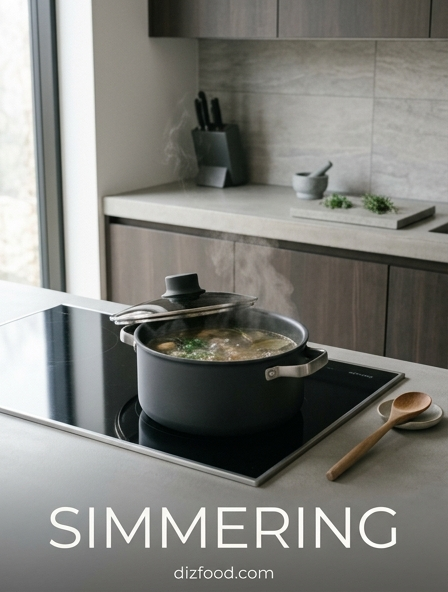
Mastering the transition between a simmer and a boil is a hallmark of a professional cook. It requires more than just turning a dial; it requires an understanding of your equipment and environment. Different stovetops-gas, electric, and induction-respond differently to heat adjustments. Gas offers immediate visual feedback and temperature change, while electric coils have a "thermal lag" where the burner remains hot long after the dial is turned down. Induction provides the most precise control, allowing for a simmer that stays exactly at the requested wattage.
The cookware also plays a vital role. Heavy-bottomed pots, such as cast iron or multi-clad stainless steel, distribute heat more evenly. This prevents "hot spots" where a liquid might boil in one corner while simmering in another. If you find your pot is boiling too vigorously even on the lowest setting, you can use a "heat diffuser" or "simmer ring" to create a gap between the flame and the pan. Additionally, managing the lid is a simple way to control heat intensity:
- Lid On: Traps heat and moisture; used to bring water to a boil quickly or maintain a simmer with minimal energy.
- Lid Ajar: Allows some steam to escape; a middle-ground for reducing sauces slowly.
- Lid Off: Maximizes evaporation and heat loss; essential for a vigorous boil or rapid reduction.
By actively monitoring the visual cues of the liquid and adjusting both the energy source and the vessel's environment, you can maintain the perfect state for whatever ingredient you are preparing. This level of control ensures consistency, prevents kitchen mishaps, and ultimately leads to better tasting food.

Comments