
Fundamentals of Thermal Conduction
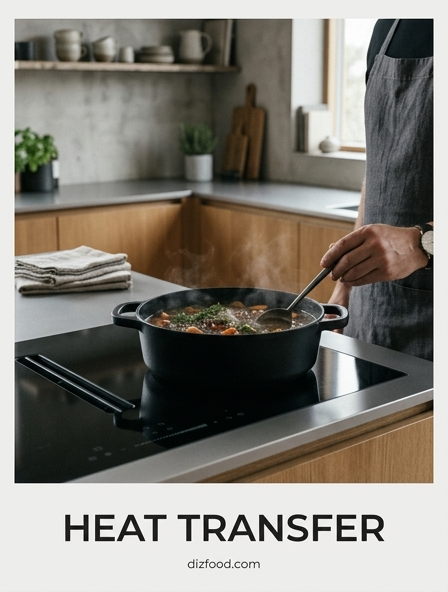
Thermal conduction is the primary mechanism of heat transfer in the kitchen, occurring through direct physical contact between substances. When a pot is placed on a hot stovetop, the kinetic energy from the burner excites the molecules at the base of the cookware. These high-energy molecules collide with their neighbors, passing the thermal energy upward through the solid material until it reaches the food. This process relies heavily on the internal structure of the medium, as metals with free-moving electrons tend to facilitate this transfer more efficiently than insulators like wood or ceramic.
In the context of culinary applications, understanding the speed of conduction helps in managing the transition from raw to cooked states. Different ingredients possess varying degrees of thermal resistance, requiring precise contact time to ensure even cooking. Proper conduction prevents localized hot spots that lead to scorching while ensuring the core of the food reaches the desired temperature. Key factors influencing this process include:
- The temperature gradient between the heat source and the object.
- The cross-sectional area available for the energy to flow.
- The thickness of the material through which the heat must travel.
- The intrinsic thermal conductivity of the cookware metal.
Convection Currents in Boiling Water
Convection is the dominant heat transfer method in fluid environments, such as boiling water or hot oil. Unlike conduction, which moves through solids, convection involves the actual movement of the heated mass itself. As water at the bottom of a pot absorbs heat from the burner, its molecules move faster and spread apart, causing the liquid to become less dense. This lighter, warmer water rises to the surface, while the cooler, denser water at the top sinks to take its place at the bottom of the vessel.
This continuous cycle creates a convection current that distributes thermal energy throughout the entire volume of the liquid much faster than conduction alone. This internal circulation ensures that food submerged in the liquid is heated uniformly from all sides. The process can be summarized in the following stages:
- Localized heating at the base reduces fluid density.
- Buoyant forces drive the warm fluid upward toward the surface.
- Thermal energy is released to the air or food at the surface.
- The cooled fluid increases in density and descends.
- The cycle repeats, creating a steady thermal equilibrium.
Choosing the Right Cookware Material
The efficiency of a kitchen depends largely on the thermal properties of the materials used in cookware. Different metals respond to heat in unique ways, affecting both the speed of the temperature rise and the uniformity of the cooking surface. For instance, copper and aluminum are prized for their high thermal conductivity, allowing them to react almost instantly to changes in the burner's intensity. Conversely, materials like stainless steel are poor conductors and often require an encapsulated core of aluminum to function effectively.
Selecting the right material requires balancing heat responsiveness with durability and reactivity. The table below outlines the thermal characteristics of common kitchen materials:
| Material | Conductivity | Thermal Response | Heat Retention |
|---|---|---|---|
| Copper | Very High | Immediate | Low |
| Aluminum | High | Fast | Moderate |
| Cast Iron | Low | Slow | Very High |
| Stainless Steel | Low | Moderate | Moderate |
The Science of Rapid Boiling
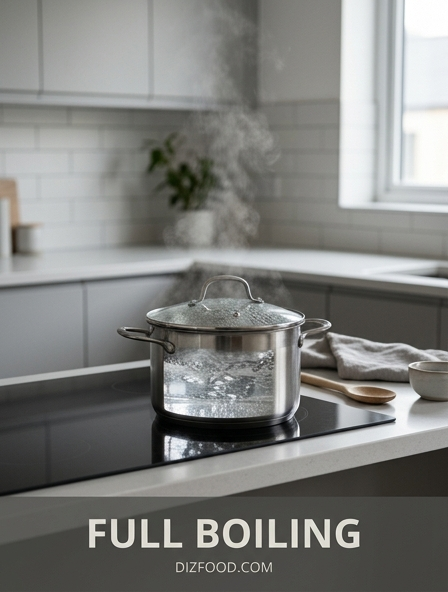
Boiling is a phase transition that occurs when the vapor pressure of a liquid equals the atmospheric pressure exerted upon it. In the kitchen, reaching a rapid boil is essential for tasks like blanching vegetables or cooking pasta. The process begins with "nucleation," where tiny bubbles of water vapor form at microscopic scratches or imperfections on the bottom of the pot. As the temperature reaches 212°F (at sea level), these bubbles gain enough buoyancy to overcome surface tension and rise rapidly to the top.
Various factors can influence how quickly water reaches this state. The presence of dissolved solutes, such as salt, can slightly elevate the boiling point, though usually not enough to significantly change cooking times in a home setting. To achieve a faster boil, cooks often employ the following strategies:
- Utilizing a lid to trap evaporated steam and increase internal pressure.
- Starting with hot water to reduce the required energy input.
- Using a wider pot to increase the surface area exposed to the burner.
- Ensuring the heat source is maximized to provide constant energy flux.
Temperature Control for Precise Simmering
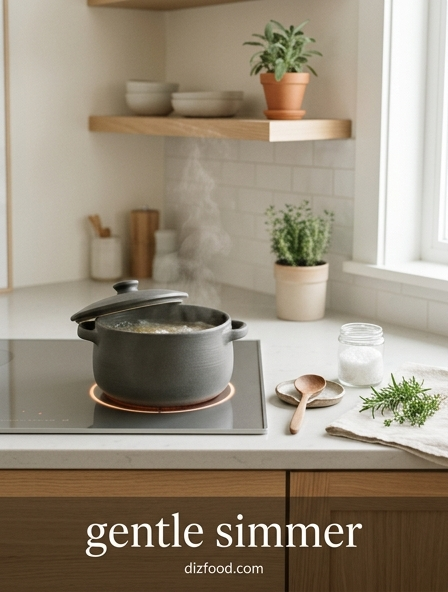
Simmering is a delicate thermal state maintained just below the boiling point, typically between 185°F and 205°F. Unlike the violent agitation of a rolling boil, a simmer is characterized by small, infrequent bubbles breaking the surface. This controlled heat transfer is vital for tenderizing tough cuts of meat through the slow breakdown of collagen without toughening the muscle fibers. It also allows for the gradual extraction of flavors in stocks and sauces, preventing the emulsification of fats that can lead to cloudy results.
Maintaining a precise simmer requires a balance between the heat energy entering the pot and the energy lost through evaporation and surface radiation. If the heat is too high, the liquid will transition into a boil, potentially damaging delicate ingredients. If it is too low, the internal temperature may drop into the "danger zone" where bacterial growth is possible. Mastery of the stovetop dial is essential, as the thermal mass of the pot and its contents will cause a delay in temperature adjustments, necessitating small, incremental changes to the flame or induction setting.
Impact of Surface Area on Heat
Surface area plays a critical role in both heat absorption and energy loss. A vessel with a wide base provides more contact area with the heat source, allowing for a more rapid transfer of energy through conduction. This is why a wide frying pan can sear meat more effectively than a narrow saucepan. Conversely, the surface area of the top of the pot determines the rate of evaporation. A larger surface area allows more water molecules to escape as steam, which carries away significant thermal energy and concentrates the flavors of the remaining liquid.
Chefs manipulate surface area ratios depending on the desired outcome of the dish. For example, reduction sauces are prepared in wide, shallow pans to maximize evaporation and speed up the thickening process. Some key considerations regarding surface area include:
- Increased evaporation leads to faster cooling of the liquid surface.
- Broad pans minimize the stacking of ingredients, ensuring even heat exposure.
- Narrow pots are better for maintaining volume and preventing moisture loss.
- The geometry of the food itself affects how quickly the center reaches temperature.
Understanding Specific Heat Capacity
Specific heat capacity refers to the amount of thermal energy required to raise the temperature of a unit of mass by one degree Celsius. In the kitchen, different substances require vastly different energy inputs to achieve the same temperature change. Water has an exceptionally high specific heat capacity, meaning it takes a long time to heat up but can store a significant amount of energy. In contrast, cooking oils have a much lower specific heat, allowing them to reach high temperatures very quickly with relatively little energy input.
This physical property explains why oil is used for frying; it can reach temperatures far exceeding the boiling point of water without turning into a gas, providing the intense heat necessary for the Maillard reaction. The following table compares common kitchen substances:
| Substance | Specific Heat (J/g°C) | Thermal Behavior |
|---|---|---|
| Water | 4.18 | Slow to heat, stores energy well |
| Vegetable Oil | 1.67 - 2.00 | Heats rapidly, gets very hot |
| Aluminum | 0.90 | Efficiently transfers energy |
| Iron | 0.45 | Requires less energy to heat up |
Optimizing Energy Transfer Efficiency
Efficiency in kitchen heat transfer is the ratio of energy that actually reaches the food compared to the total energy consumed by the appliance. Much of the energy produced by a gas flame, for example, escapes into the surrounding air rather than being absorbed by the pot. Induction cooking is significantly more efficient because it uses magnetic fields to generate heat directly within the cookware itself, bypassing the need for a secondary heating element. To maximize efficiency and reduce cooking times, several practical steps can be taken.
Properly matching the size of the cookware to the burner ensures that heat is not lost around the sides of the vessel. Furthermore, the material of the pot should be chosen based on the heating method. The following list highlights ways to improve kitchen efficiency:
- Use flat-bottomed cookware to ensure maximum contact with electric burners.
- Keep lids on pots to prevent heat loss through steam evaporation.
- Regularly clean burner surfaces to ensure unobstructed energy flow.
- Utilize copper or aluminum-clad bottoms for faster thermal distribution.
- Match the flame diameter to the pot diameter on gas ranges.
Thermodynamics of Liquid Agitation
Stirring or agitation is a powerful tool for manipulating heat transfer within a liquid. In a stationary pot, a thin "boundary layer" of liquid often forms at the bottom, which is significantly hotter than the rest of the contents. If left undisturbed, this layer can reach temperatures high enough to burn the food, even if the average temperature of the pot is safe. By stirring, the cook introduces forced convection, breaking up this boundary layer and mixing the hot fluid with the cooler layers above.
This mechanical movement ensures a uniform temperature gradient throughout the vessel. Agitation also aids in the dissolution of solids and prevents particles from settling and scorching at the base. From a thermodynamic perspective, stirring increases the rate of heat transfer by constantly bringing fresh, cooler liquid into contact with the heated surface of the pot. This is particularly crucial when working with thick liquids like polenta or heavy sauces, where natural convection currents are dampened by high viscosity. Consistent agitation is the only way to ensure these thick mixtures cook evenly without localized overheating.
Heat Retention for Consistent Results
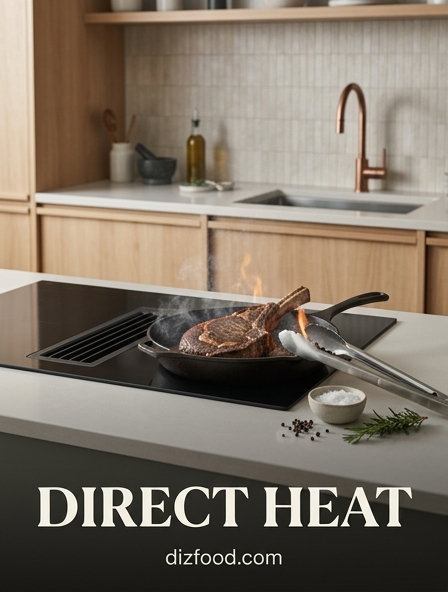
Heat retention, or thermal mass, is the ability of a material to store thermal energy and release it slowly over time. This is a vital characteristic for maintaining consistent cooking temperatures, especially when cold ingredients are added to a hot pan. A heavy cast-iron skillet has high heat retention; when a steak is placed on its surface, the pan's temperature does not drop significantly, allowing for a continuous and even sear. In contrast, a thin aluminum pan may lose its heat immediately, resulting in steamed rather than seared meat.
Understanding retention is also essential for "carry-over cooking," where the internal temperature of a dish continues to rise after being removed from the heat source. This occurs because the exterior of the food is hotter than the interior, and the energy continues to conduct inward. Key benefits of high heat retention materials include:
- Stability in temperature despite fluctuations in the heat source.
- The ability to serve food directly in the vessel while keeping it warm.
- More predictable results for long, slow braising processes.
- Reduced energy consumption once the desired temperature is achieved.

Comments