
Deciding between a sourdough starter and a poolish can transform your baking results from average to artisanal, as each preferment brings a distinct personality to your bread's final profile. While a sourdough starter relies on a slow-fermenting wild culture of yeast and lactic acid bacteria to produce a signature tangy complexity and a robust, chewy crumb, a poolish serves as a high-hydration shortcut using commercial yeast to achieve a nutty sweetness and a light, crispy crust. Whether you are chasing the deep, gut-friendly acidity of a traditional levain or the delicate, honeycomb structure of a classic baguette, understanding how these pre-ferments manipulate fermentation time and enzymatic activity is the key to mastering your perfect loaf.
| Feature | Sourdough Starter (Levain) | Poolish (Commercial Preferment) |
|---|---|---|
| Microbiology | Wild yeast and lactic acid bacteria (LAB) | Commercial yeast (Saccharomyces cerevisiae) |
| Flavor Profile | Tangy, acidic, complex, and earthy | Nutty, buttery, and subtly sweet |
| Preparation Time | 7+ days to create; 8-24 hours to peak | 8-16 hours total fermentation |
| Texture & Crust | Chewy crumb; thick, blistered crust | Light, airy crumb; thin, crispy crust |
| Maintenance | High; requires regular feedings and care | Zero; mixed fresh for each individual bake |
| Best Used For | Country loaves, rye bread, and boules | Baguettes, ciabatta, and focaccia |
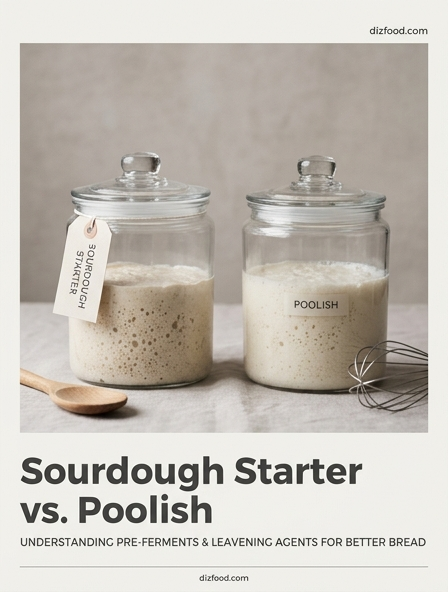
Sourdough Starter vs Poolish Key Differences
At the heart of artisanal baking lie two primary methods for leavening bread: the sourdough starter and the poolish. While both are pre-ferments used to enhance the flavor, texture, and shelf life of the final loaf, they differ significantly in their biological composition and preparation requirements. A sourdough starter, often referred to as a levain or "mother," is a living culture of wild yeast and lactic acid bacteria captured from the environment and the flour itself. It is a long-term commitment, requiring regular feedings of flour and water to maintain its vitality.
In contrast, a poolish is a commercial yeast-based pre-ferment. It is typically mixed at 100% hydration-meaning equal parts flour and water by weight-with a tiny amount of commercial yeast. Unlike the sourdough starter, which can be kept alive for decades, a poolish is usually prepared specifically for a single baking session, fermenting for 8 to 16 hours before being incorporated into the final dough. The following table highlights the primary technical distinctions between these two methods:
| Feature | Sourdough Starter | Poolish |
|---|---|---|
| Yeast Source | Wild Yeast (Natural) | Commercial Yeast (Store-bought) |
| Maintenance | Permanent (Needs feeding) | Temporary (Mix as needed) |
| Primary Flavor | Tangy, Acidic, Complex | Nutty, Sweet, Mellow |
| Hydration | Variable (usually 100%) | Always 100% |
The Science of Sourdough Fermentation
Sourdough fermentation is a complex biological process driven by a symbiotic culture of bacteria and yeast. The primary players are lactic acid bacteria (LAB) and wild yeast strains, such as Saccharomyces exiguus or Candida humilis. Unlike commercial yeast, these wild strains are acid-tolerant, allowing them to thrive alongside LAB. As the bacteria consume the carbohydrates in the flour, they produce lactic and acetic acids. These organic acids are responsible for the characteristic "sour" tang of the bread and also lower the pH of the dough, which improves the keeping qualities of the loaf by inhibiting mold growth.
The fermentation process also involves enzymatic activity that transforms the dough's internal structure. Amylase enzymes break down complex starches into simple sugars, providing food for the yeast. Simultaneously, protease enzymes begin breaking down gluten proteins. While this may sound counterintuitive to building strength, this controlled degradation actually increases the extensibility of the dough, making it easier to handle and allowing for a more significant expansion during the "oven spring." The interaction between these microorganisms creates a rich profile of aromatic compounds, including esters and alcohols, which contribute to the deep, multi-layered flavor that defines sourdough bread.
- Acidification: Lowers pH to around 3.8 to 4.5.
- Gas Production: Carbon dioxide is released slowly over many hours.
- Enzymatic Breakdown: Enhances nutrient availability and flavor.
Understanding Poolish as a Pre-Ferment
The poolish is a highly hydrated pre-ferment that serves as a bridge between the speed of modern commercial baking and the depth of traditional methods. Originally popularized by Polish bakers and later adopted by the French to create the iconic baguette, the poolish is designed to maximize the activity of commercial yeast while introducing nuanced flavors through a long, room-temperature fermentation. Because it is a liquid-state ferment (equal parts water and flour), the yeast can move freely, accelerating the breakdown of starches into sugars. This creates a highly active mixture that provides a significant boost to the dough's eventual rise.
Using a poolish allows a baker to use significantly less yeast in the final dough than a "straight dough" method would require. By giving the yeast time to multiply and ferment in a small portion of the ingredients, the baker develops subtle nutty and floral notes that are absent in bread made quickly. The high water content also encourages enzymatic activity that softens the gluten, resulting in a finished product with a delicate, thin, and crispy crust. Because there are no lactic acid bacteria present in a poolish, the flavor remains sweet and mild, focusing on the natural aroma of the wheat rather than the acidity associated with sourdough. It is the gold standard for breads where a light, airy crumb and a non-sour profile are desired.
Comparing Flavor and Aroma Profiles
The sensory experience of eating bread is largely determined by the type of fermentation used. Sourdough is renowned for its bold, assertive flavor profile. Depending on the hydration of the starter and the temperature of fermentation, a sourdough loaf can range from mildly tangy to intensely vinegary. This is due to the ratio of lactic acid (creamy, yogurt-like) to acetic acid (sharp, vinegar-like) produced by the bacteria. The aroma of sourdough is often described as earthy, fruity, and complex, with a lingering finish that stays on the palate long after the first bite.
Poolish-based breads offer a completely different organoleptic experience. Because poolish relies on Saccharomyces cerevisiae (commercial yeast), it lacks the acidic byproducts of sourdough bacteria. Instead, the long fermentation time allows for the development of "sweet" fermentation notes. The flavor is often characterized as buttery, nutty, or toasted, with a clean finish that highlights the quality of the flour itself. The aroma of a poolish loaf is reminiscent of fresh grain and honey. This makes poolish the ideal choice for bakers who want to improve the taste of their bread without introducing the polarizing sourness that can sometimes overwhelm the other ingredients in a sandwich or a meal.
- Sourdough: Notes of vinegar, citrus, and aged cheese.
- Poolish: Notes of toasted hazelnuts, malt, and cream.
Fermentation Time and Proofing Speed
Time is perhaps the most significant practical variable when choosing between sourdough and poolish. Sourdough is inherently slow. Wild yeast is less concentrated and less aggressive than commercial yeast, meaning the bulk fermentation and final proofing stages can take anywhere from 4 to 24 hours. Many bakers utilize cold retardation-placing the dough in the refrigerator-to extend this time even further, allowing flavors to develop over several days. This slow pace requires the baker to plan their schedule well in advance, as there is little room to "hurry" the natural biological rhythm of the starter without sacrificing the quality of the bread.
Poolish offers a more predictable and generally faster timeline. While the poolish itself requires an overnight rest (8 to 16 hours), the actual dough-making process on the day of baking is much quicker. Once the poolish is added to the final flour and water, the commercial yeast takes over with vigor. Bulk fermentation usually lasts 1 to 2 hours, and the final proof can be completed in under an hour. This makes poolish an excellent "middle ground" for bakers who want the benefits of a pre-ferment but need to finish their bake within a specific afternoon window. The vigor of the commercial yeast ensures a consistent rise, making it less susceptible to the environmental fluctuations in temperature that can drastically slow down or speed up a sourdough fermentation.
Crumb Structure and Crust Texture
The physical characteristics of the finished loaf are distinct signatures of the leavening agent used. Sourdough is famous for producing an "open" or "irregular" crumb. This refers to the presence of large, varied air pockets throughout the bread. The acidity in sourdough strengthens the gluten network, allowing it to stretch significantly and hold large bubbles of carbon dioxide. Furthermore, the long fermentation time helps the starch granules to fully hydrate, resulting in a crumb that feels moist and almost "custardy." The crust of a sourdough loaf is typically thicker and more robust, with a dark, caramelized color and a characteristic "chew" caused by the breakdown of sugars during the long proof.
Poolish-based breads, such as traditional baguettes or ciabatta, tend to have a very light and crisp texture. While they can also achieve an open crumb, the bubbles are usually more uniform than those found in sourdough. The high hydration of the poolish contributes to a very extensible dough, which leads to a thin, crackly crust that shatters when bitten. Because the fermentation is shorter and less acidic than sourdough, the crust doesn't reach the same level of thickness, making it ideal for breads intended to be eaten fresh. The internal texture of a poolish loaf is often described as fluffy and soft, providing a stark contrast to the resilient, hearty feel of a well-crafted sourdough boule.
Maintenance vs Convenience Factors
For the home baker, the choice between these two methods often comes down to lifestyle and kitchen habits. Maintaining a sourdough starter is akin to keeping a small pet. It requires a consistent schedule of "discarding" and "feeding" to keep the yeast and bacteria population healthy. If neglected, the starter can become overly acidic or even develop mold. This makes sourdough a commitment that requires regular attention, though it can be paused by keeping the starter in the refrigerator. However, the reward for this maintenance is a self-sustaining leavening source that never requires a trip to the grocery store for yeast packets.
Poolish is the epitome of convenience for the occasional baker. There is no "mother" to keep alive; you simply mix flour, water, and a pinch of dry yeast the night before you plan to bake. There is no waste, as you only make exactly what the recipe requires. This "set it and forget it" approach appeals to those who may only bake once every few weeks. Additionally, because the results of commercial yeast are so consistent, there is less of a learning curve involved in managing the strength of the ferment. The following table compares the logistical requirements of both systems:
| Factor | Sourdough Starter | Poolish |
|---|---|---|
| Preparation | Ongoing (Daily or Weekly) | Occasional (Night before) |
| Waste Production | High (Discard) | None |
| Reliability | Variable (Depends on health) | High (Commercial yeast) |
| Storage Needs | Counter or Fridge Space | Minimal |
Natural Wild Yeast vs Commercial Yeast
The fundamental biological difference between sourdough and poolish is the biodiversity of the yeast involved. Sourdough relies on wild yeast populations that are unique to the baker's environment and the specific flour used. These wild strains are much more diverse than commercial varieties. Because they have evolved to survive in competitive environments alongside bacteria, they are resilient but work at a much slower pace. This biodiversity is what gives sourdough its unique local character; a starter in San Francisco will behave and taste differently than one in Paris or New York, even if fed the same flour.
Commercial yeast, used in a poolish, consists of a single, highly refined strain: Saccharomyces cerevisiae. This strain has been specifically selected and bred for its ability to produce carbon dioxide rapidly and reliably. It is standardized globally, meaning a gram of instant yeast in one country provides the exact same leavening power as a gram in another. While this lacks the "soul" and terroir of wild yeast, it provides the baker with immense control. Commercial yeast is designed to be efficient and predictable, which is essential for professional bakeries that need to produce hundreds of identical loaves daily. While wild yeast is about the journey of flavor, commercial yeast is about the destination of consistent, high-quality results.
Digestibility and Nutritional Benefits
One of the strongest arguments in favor of sourdough is its superior nutritional profile and digestibility. The long fermentation process allows the lactic acid bacteria to perform several "pre-digestive" functions. One of the most important is the breakdown of phytic acid, an anti-nutrient found in wheat that binds to minerals like iron, zinc, and magnesium, preventing the body from absorbing them. The acidity of sourdough neutralizes phytic acid, making the minerals in the grain more bioavailable to the human body. Additionally, the long fermentation helps break down gluten proteins into smaller peptides and amino acids, which is why some people with non-celiac gluten sensitivity find sourdough easier to tolerate.
Poolish-based breads are more digestible than "straight dough" breads (which use high amounts of yeast and short fermentation times), but they do not offer the same level of benefits as sourdough. While the 12-hour poolish fermentation does begin to break down some starches and proteins, the lack of lactic acid means that phytic acid remains largely intact. Furthermore, because the overall fermentation time for the entire batch of dough is shorter than sourdough, the glycemic index of poolish bread remains higher. Sourdough's acidity slows down the rate at which glucose is released into the bloodstream, making it a better option for blood sugar management.
- Mineral Absorption: Higher in sourdough due to low phytate levels.
- Gluten Impact: Sourdough significantly reduces gluten load.
- Glycemic Index: Sourdough provides a more stable energy release.
When to Choose Sourdough vs Poolish
Choosing between sourdough and poolish depends on the desired outcome of your baking project and the time you have available. Neither is inherently "better" than the other; they are simply different tools in the baker's kit. Sourdough is the best choice when you want to create a hearty, artisanal loaf with a complex flavor profile and the longest possible shelf life. It is the preferred method for whole-grain breads, as the acidity helps manage the enzymes in bran and germ. If health and digestibility are your primary concerns, sourdough is the undisputed winner.
Poolish should be your go-to method for lighter, delicate breads where you want the flavor of the wheat to shine without any sour interference. It is perfect for baguettes, dinner rolls, and pizza doughs where a thin, crispy crust is the goal. Because it is less demanding than sourdough, it is also the better choice for busy weeks or for bakers who are just beginning to explore the world of pre-ferments. Consider the following scenarios when making your decision:
- Weeknight Baking: Choose Poolish for its faster final proofing and predictable timing.
- Artisanal Showcase: Choose Sourdough for its unique crumb structure and impressive crust.
- Sandwich Bread: Choose Poolish for a softer, more neutral-tasting slice.
- Health-Conscious Loaves: Choose Sourdough for better mineral absorption and lower glycemic index.

Comments