
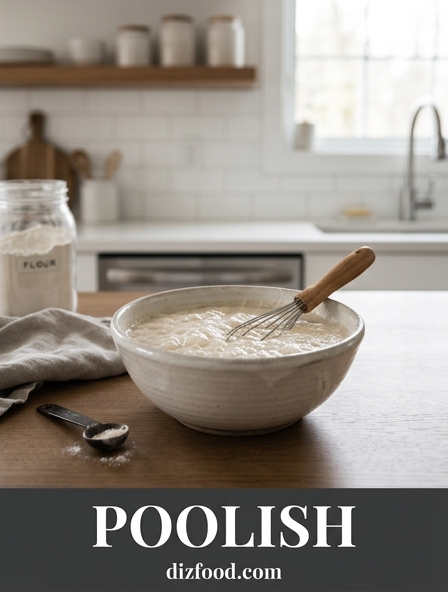
Understanding the Poolish Pre-ferment
A poolish is a highly liquid pre-ferment used in bread making to enhance flavor, texture, and shelf life. Originating from Polish bakers who introduced the technique to France, it typically consists of equal parts flour and water by weight, combined with a very small amount of commercial yeast. This mixture is allowed to ferment for several hours, usually between eight and sixteen, until it is doubled in size and covered in small bubbles. Because it has a 100% hydration level, the poolish is easy to mix and promotes rapid enzymatic activity.
- Hydration: Always 100% (equal weights of flour and water).
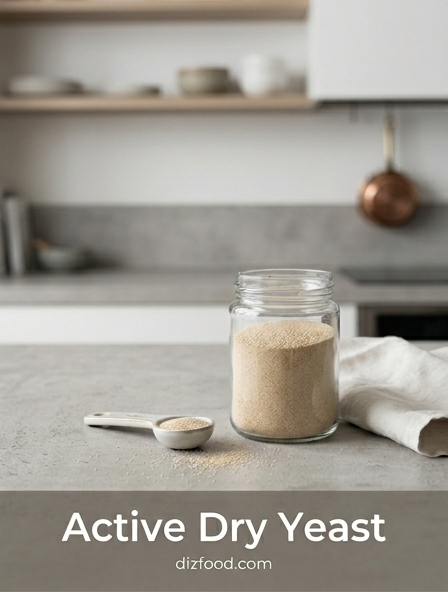
- Yeast: Small quantities of instant or active dry yeast.
- Texture: Silky, loose, and highly aerated when ready.
When the poolish is mature, it is incorporated into the final dough along with the remaining ingredients. This method allows the baker to achieve the complexity of a long fermentation while maintaining the predictability and speed of commercial yeast. It is particularly popular for baguettes and other crusty lean breads.
Science Behind High Hydration Dough
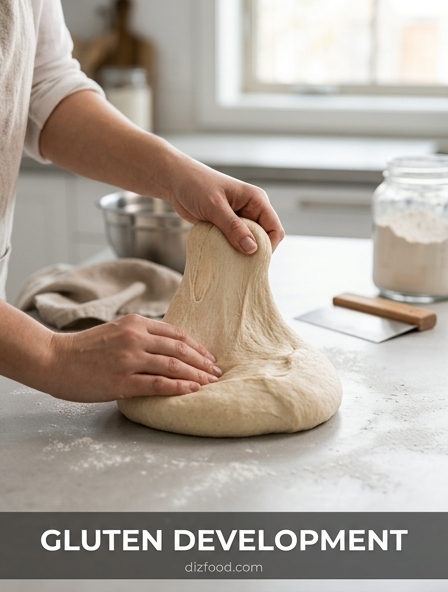
High hydration doughs, often associated with poolish starters, rely on the chemical interaction between water and flour proteins to create a superior crumb structure. When water is plentiful, the proteins glutenin and gliadin can move more freely, bonding into long, elastic gluten strands with less physical kneading. The excess water also facilitates intense enzymatic activity, where amylase breaks down starches into simple sugars. These sugars feed the yeast more efficiently and contribute to a darker, more caramelized crust during the bake.
The steam generated from high water content during the initial stages of baking is crucial for volume. As the internal temperature rises, the water evaporates rapidly, pushing against the gluten network to create large, irregular holes known as an open crumb. This process requires a strong flour, typically with high protein content, to support the weight of the water without the structure collapsing. The result is a bread that feels light and airy despite its substantial moisture content, offering a unique mouthfeel that lower hydration recipes cannot replicate.
Achieving Artisan Crusts Without Sourdough
Many home bakers believe that a complex, crackly crust can only be achieved through a sourdough starter, but a poolish offers a highly effective alternative. By utilizing a long pre-fermentation period, the poolish develops organic acids and alcohols that mimic the depth of flavor found in wild yeast breads. The high hydration levels inherent in poolish recipes ensure that the surface of the dough remains moist longer in the oven, allowing for maximum expansion and the development of a thin, crispy exterior. This avoids the common pitfall of a thick, leathery crust often found in quick-bread methods.
| Feature | Standard Dough | Poolish Dough |
|---|---|---|
| Crust Texture | Soft or tough | Crispy and thin |
| Aroma | Yeasty | Nutty and complex |
| Shelf Life | Short | Extended |
| Crumb Appearance | Tight and uniform | Open and airy |
By controlling the fermentation time and ensuring the oven environment is sufficiently humid, a baker can produce loaves that rival professional sourdough in both aesthetics and taste, all while using standard store-bought yeast.
The Role of Slow Fermentation
Slow fermentation is the cornerstone of the poolish method, shifting the focus from speed to quality. When dough ferments slowly at lower temperatures or with minimal yeast, it undergoes a transformation that cannot be rushed. During this extended period, yeast produces carbon dioxide at a controlled rate, while bacteria present in the flour contribute to the production of various flavor compounds. This results in a finished product that tastes less like raw flour and more like toasted grain.
- Enzymatic Breakdown: Enzymes have more time to convert complex starches into flavorful sugars.
- Acidity Development: Subtle organic acids build up, providing a slight tang and improving dough strength.
- Gas Retention: A slower rise allows the gluten to relax and expand gradually, leading to better gas retention.
Ultimately, the patience required for slow fermentation pays off in the digestibility of the bread. The long soak softens the bran and breaks down gluten partially, making the final loaf easier on the digestive system compared to breads produced with rapid, high-yeast methods common in industrial baking.
Simplifying the Baking Timeline
The poolish method is exceptionally flexible, making it ideal for bakers with busy schedules. Because the pre-ferment can sit for up to 16 hours at room temperature, or even longer in the refrigerator, it allows for a "set it and forget it" approach during the initial phase. A baker can mix the poolish in less than five minutes the night before they plan to bake. This moves the majority of the biological work to the overnight hours, reducing the active time required on the day of production.
- Evening: Mix poolish (5 minutes).
- Morning: Mix final dough and bulk ferment.
- Afternoon: Shape, proof, and bake.
If life interferes, a mature poolish can be moved to the fridge to slow down the yeast activity, providing a window of several hours where the baker can decide when to proceed. This adaptability removes the stress of strict timing, ensuring that the dough reaches its peak performance when the baker is actually ready to use it, rather than forcing a rigid schedule.
Maximizing Flavor with Commercial Yeast
Using commercial yeast does not have to result in a one-dimensional flavor profile. The secret lies in the quantity used within the poolish. By using as little as 0.1% to 0.5% yeast relative to the flour weight, the fermentation is forced to happen over a longer duration. This prevents the overwhelming "yeasty" smell and taste associated with fast-rising breads. Instead, the yeast works slowly, allowing the natural sweetness of the wheat to emerge. This creates a profile that is often described as nutty, buttery, and deeply satisfying.
Furthermore, the poolish acts as a flavor anchor for the final dough. Even when the rest of the ingredients are added, the fermented base imparts its characteristics to the entire batch. The contrast between the fresh flour added later and the fermented poolish creates a layered taste experience. Bakers can further enhance this by using high-quality stone-ground flours in the poolish, where the increased mineral content provides more fuel for flavor development. Through this technique, the humble commercial yeast packet becomes a tool for creating gourmet-quality bread with minimal effort.
Improving Dough Strength and Elasticity
Incorporating a poolish into your bread routine significantly improves the physical properties of the dough. The long hydration period ensures that every flour particle is fully saturated, which is the first step in gluten formation. As the poolish ferments, the slight increase in acidity helps to strengthen the gluten network, making it more resilient. This results in a dough that is both highly elastic and extensible, meaning it can stretch significantly without tearing, a quality essential for shaping complex loaves like baguettes.
- Passive Development: Gluten forms naturally over time in the wet poolish environment.
- Improved Handling: The final dough feels more cohesive and less sticky than a direct-mixed dough of the same hydration.
- Structural Integrity: The bread maintains its shape better during the final proof and the initial oven spring.
When the final flour is added to the bubbly, active poolish, the existing gluten structure acts as a scaffold. This reduces the amount of intense mechanical kneading required, preserving the internal carotenoid pigments of the flour which contribute to a creamy crumb color and better aroma.
Unlocking the Secret to Crispy Texture
A truly crispy crust is the hallmark of professional baking, and it is directly influenced by the poolish. The high enzyme activity in a poolish creates an abundance of simple sugars on the surface of the dough. When these sugars meet the high heat of the oven, they undergo the Maillard reaction and caramelization, resulting in a thin, brittle, and deeply colored crust. Because poolish doughs are typically high in moisture, they benefit from the steam released during baking, which gelatinizes the surface starches to create that signature "shattering" crispness.
- Surface Sugars: Increased through long fermentation.
- Steam Interaction: Keeps the surface flexible for maximum expansion.
- Cooling Crackle: As the bread cools, the thin crust contracts and "sings."
To maximize this effect, the bread should be baked at high temperatures on a preheated stone or steel. The combination of the poolish's chemical makeup and the thermal mass of the baking surface ensures that the moisture is driven out of the crust, leaving behind a crisp shell that protects a soft, moist interior.
Managing High Water Content Easily
Working with high-hydration doughs can be intimidating due to their stickiness, but using a poolish makes the process manageable. Since half of the flour is already hydrated in the pre-ferment, the final mixing stage becomes more about integration than struggle. The poolish provides a smooth, fermented base that absorbs the remaining flour more readily. To handle these wet doughs effectively, bakers should use wet hands or a bowl scraper rather than adding excessive extra flour, which would alter the carefully calculated hydration ratio.
Techniques such as "stretch and folds" are particularly effective for poolish-based doughs. Instead of traditional kneading on a counter, the baker folds the dough over itself within the bowl at intervals. This builds strength gradually while maintaining the airy bubbles created by the poolish. Over the course of the bulk fermentation, the once-shaggy and sticky mass transforms into a smooth, pillowy dough that holds its shape. This gentle handling preserves the gas produced by the poolish, ensuring that the final loaf has the desired volume and the characteristic open crumb of artisan bread.
Essential Poolish Ratios for Success
Consistency in baking comes from understanding the ratios. A standard poolish is always a 1:1 ratio of flour to water by weight. However, the amount of yeast varies depending on the intended fermentation time and the ambient temperature of the kitchen. A common mistake is using too much yeast, which causes the poolish to peak too early and collapse before it can be used. By following precise percentages, a baker can tune their poolish to be ready exactly when needed.
| Fermentation Time | Yeast Percentage (Instant) | Temperature Environment |
|---|---|---|
| 3 to 5 Hours | 0.5% to 1.0% | Warm (75°F+) |
| 8 to 12 Hours | 0.1% to 0.2% | Room Temp (70°F) |
| 12 to 16 Hours | 0.05% to 0.1% | Cool (65°F) |
Usually, the poolish accounts for 20% to 50% of the total flour in the entire recipe. Using a higher percentage of poolish will result in a faster final rise and a more pronounced fermentation flavor. For beginners, starting with 33% of the total flour in the poolish provides a balanced approach that is easy to handle and produces excellent results.

Comments