
When you're aiming for that perfect golden-brown finish, understanding the mechanics of your oven is the ultimate kitchen game-changer. While a conventional oven relies on stationary heating elements that can often lead to uneven "hot spots," a convection oven utilizes an integrated fan and exhaust system to circulate hot air constantly around your food. This active airflow strips away the layer of cool air surrounding your dishes, resulting in cooking speeds that are roughly 25% faster and textures that are significantly crispier. Whether you are roasting a succulent chicken or batch-baking cookies, switching to convection ensures uniform heat distribution, allowing you to achieve professional-grade results with shorter preheating times and better energy efficiency.
| Feature | Conventional Oven | Convection Oven |
|---|---|---|
| Heat Source | Stationary radiant elements | Fan-circulated hot air |
| Cooking Speed | Standard recipe timing | 25-30% faster than standard |
| Temperature | Use recipe as written | Reduce recipe by 25°F (15°C) |
| Heat Uniformity | Prone to hot/cold spots | Consistently even throughout |
| Best Used For | Cakes, soufflés, quick breads | Roasting, cookies, air-frying |
| Multi-Rack Use | Uneven; requires rotating trays | Excellent; multiple racks cook evenly |
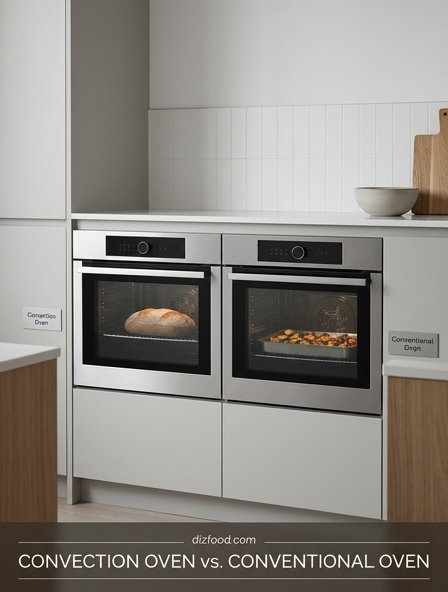
Understanding the Core Differences Between Convection and Conventional Ovens
The fundamental difference between a convection oven and a conventional oven lies in the method by which heat is distributed throughout the cooking chamber. In a conventional oven, also known as a radiant or traditional oven, the heat is generated by stationary heating elements located at the top and bottom of the unit. This creates a pocket of hot air that remains relatively still, relying on the natural process of heat rising to cook the food. Because the air is not actively moved, the temperature can fluctuate significantly depending on the proximity of the food to the active heating elements.
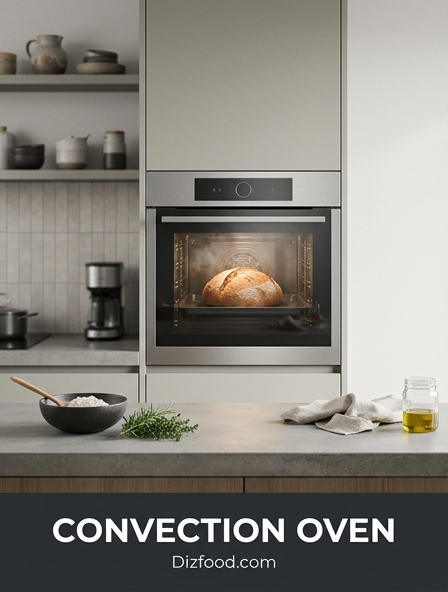
In contrast, a convection oven incorporates a motorized fan and an exhaust system designed to circulate hot air continuously around the food. This mechanical airflow eliminates the "blanket" of cooler air that naturally surrounds food as it sits in a stationary oven. By stripping away this insulation, the heat is transferred more directly and efficiently to the surface of the food. Many modern convection ovens also feature a third heating element, often referred to as "True Convection" or European convection, located near the fan to ensure the air being blown is at a consistent temperature. While both appliances look identical from the outside, the internal physics of air movement changes the chemical reactions of cooking, such as the Maillard reaction, which is responsible for browning and flavor development.
How Heat Distribution Impacts Cooking Results in Each Oven Type
Heat distribution is the primary factor that determines whether your meal comes out perfectly browned or unevenly cooked. In a conventional oven, the lack of airflow often results in "hot spots." These are areas within the oven, usually near the corners or the top heating element, where the temperature is significantly higher than the set dial. Consequently, bakers often find they must rotate their trays halfway through the cooking process to prevent one side of a sheet of cookies from burning while the other remains doughy.
Convection ovens solve this problem by creating a uniform thermal environment. Because the fan forces the air to reach every corner of the cavity, the temperature is consistent from the top rack to the bottom rack. This is particularly impactful when cooking multiple dishes at once. In a conventional oven, a large tray on the middle rack can block heat from reaching the food on the rack above it. In a convection setup, the moving air flows around these obstacles, ensuring that every dish receives the same amount of heat. The following points summarize how these distribution styles affect the final product:
- Conventional: Leads to uneven browning; requires frequent manual rotation of pans.
- Convection: Produces a consistent crust and uniform color across all surfaces.
- Conventional: Heat rises to the top, making the top rack much hotter than the bottom.
- Convection: Stabilized temperatures allow for multi-rack baking without quality loss.
Key Benefits of Using Convection for Faster and More Even Baking
One of the most celebrated advantages of convection cooking is the significant reduction in preparation time. Because the moving air transfers heat more efficiently than still air, food typically cooks about 25% faster in a convection setting compared to a traditional one. This is not just a matter of convenience; the rapid heat transfer creates a superior texture for many types of food. For instance, when roasting meats, the moving air quickly sears the exterior, locking in juices while rendering fat more effectively. This results in a crispy skin and a moist interior that is difficult to achieve with radiant heat alone.
- Increased Efficiency: The constant movement of air means you can often lower the cooking temperature and still achieve faster results.
- Superior Texture: The dry environment created by the fan helps sugars caramelize more quickly, enhancing the flavor of roasted vegetables and meats.
- Energy Savings: Shorter cooking times and lower temperature requirements translate to less electricity or gas consumption over time.
- High Capacity: You can fill every rack in the oven without worrying about "shielding" effects, making it ideal for holiday meal preparation or large batches.
Beyond speed, the evenness of the bake is a major draw for professional and amateur bakers alike. When making batches of biscuits or appetizers, the convection fan ensures that the items in the center of the tray are cooked to the exact same degree as those on the edges, providing a professional-grade consistency that conventional ovens struggle to match.
Why Conventional Ovens Are Better for Delicate Cakes and Breads
Despite the high-tech appeal of convection, the conventional oven remains the preferred choice for specific types of delicate baking. The primary reason is the absence of "wind." In a convection oven, the force of the air blowing from the fan can be physically disruptive to batters that are in the process of setting. For a delicate soufflé or a light sponge cake, the moving air can cause the structure to tilt or even collapse before it has the chance to firm up. Furthermore, the circulating air can create a "crust" on the exterior of a cake too early, preventing it from rising fully and resulting in a dense, cracked finish.
Breads also benefit from the humid, still environment of a conventional oven in certain scenarios. While convection is great for a crusty baguette, softer breads and rolls may dry out too quickly under constant airflow. In a conventional oven, the moisture released by the dough stays in the immediate vicinity, creating a slightly more humid micro-environment that allows the dough to expand comfortably. This is also true for custards, flans, and cheesecakes, which are prone to cracking if the surface dries out too fast. For these recipes, the gentle, radiant heat of a traditional oven provides the steady, non-invasive warmth required for a smooth, even rise and a moist crumb.
Comparing Energy Efficiency Between Convection and Traditional Models
Energy efficiency is an increasingly important consideration for modern homeowners, and the convection oven holds a clear advantage in this category. The efficiency stems from the "25/25 rule," which suggests that convection ovens can cook food at a temperature 25 degrees Fahrenheit lower than conventional ovens, or in 25% less time. By reducing both the intensity of the heat required and the duration the appliance must run, convection models use significantly less energy per meal. This not only reduces the carbon footprint of a household but also results in lower utility bills over the lifespan of the appliance.
| Feature | Conventional Oven | Convection Oven |
|---|---|---|
| Cooking Speed | Standard | Approx. 25% Faster |
| Typical Temp. | Recipe Standard | Reduce by 25°F |
| Preheating Time | 10-15 Minutes | 5-10 Minutes |
| Energy Usage | Higher per cycle | Lower per cycle |
Furthermore, because convection ovens distribute heat so effectively, they reach their target temperature faster than conventional models during the preheating phase. While the initial purchase price of a convection-capable oven may be higher than a standard radiant model, the long-term operational savings often offset the upfront cost. Additionally, for those living in warmer climates, the shorter cooking times mean the oven releases less residual heat into the kitchen, reducing the load on home air conditioning systems during the summer months.
Essential Temperature and Time Adjustments for Convection Cooking
Transitioning from a conventional oven to a convection model requires a slight learning curve, specifically regarding temperature and time adjustments. Because the airflow accelerates the cooking process, following a recipe designed for a traditional oven without modification will often result in overcooked or burnt food. The most common method of adjustment is the temperature reduction technique. Most culinary experts recommend lowering the temperature stated in your recipe by 25 degrees Fahrenheit. For example, if a recipe for roasted chicken calls for 400°F, you should set your convection oven to 375°F.
Alternatively, you can keep the temperature the same and reduce the total cooking time by approximately 25%. This method is often preferred for meats where a high-heat sear is desired. However, the best approach for beginners is to use a combination of both: lower the temperature slightly and begin checking for doneness well before the timer is scheduled to go off. It is also important to use low-sided pans when cooking in convection mode. High-walled roasting pans can block the circulating air from reaching the bottom of the food, effectively turning your convection oven back into a conventional one by creating a pocket of stagnant air around the dish.
The Role of Fans and Exhaust Systems in Convection Technology
The mechanical engineering inside a convection oven is what separates it from a standard box. The system consists of three main components: the heating elements, the fan, and the exhaust system. The fan is usually located at the back of the oven. In standard convection models, this fan simply moves the air heated by the top and bottom elements. However, in "True Convection" models, there is a dedicated circular heating element located directly behind the fan. This ensures that the air being pushed into the oven is already at the desired temperature, providing even more precision and preventing "cold bursts" when the fan starts.
The exhaust system is equally critical but often overlooked. As food cooks, it releases moisture in the form of steam. In a conventional oven, this steam lingers in the oven cavity, creating a humid environment that is helpful for certain cakes but detrimental to crisping. A convection oven's exhaust system actively vents this moisture out of the chamber. This creates a much drier atmosphere, which is the secret behind the superior browning of turkey skin or the crispiness of roasted potatoes. The combination of moving air and moisture removal allows the exterior of the food to dehydrate and caramelize rapidly, creating the textures that are the hallmark of high-end restaurant cooking.
Best Foods to Cook in a Convection Oven vs a Conventional Oven
Choosing the right oven setting depends entirely on the desired outcome for your specific dish. Convection is the "king of crisp," making it the ideal choice for foods that benefit from a hard sear, a flaky crust, or a caramelized exterior. Conversely, the conventional setting is the "queen of height," perfect for items that need to rise slowly and stay moist. Understanding which tool to use can elevate the quality of your home-cooked meals significantly.
- Best for Convection: Whole roasted chickens, turkeys, and beef roasts. The fan renders fat and crisps the skin beautifully.
- Best for Convection: Roasted vegetables like broccoli, carrots, and potatoes, which benefit from the rapid sugar caramelization.
- Best for Convection: Multiple trays of cookies or appetizers that need even browning across all racks.
- Best for Conventional: Delicate desserts like soufflés, meringues, and cheesecakes that might collapse or crack under airflow.
- Best for Conventional: Quick breads and muffins that need a gentle, moist environment to rise without forming a premature crust.
- Best for Conventional: Casseroles or covered dishes where the goal is slow, internal heating rather than surface browning.
Pros and Cons of Investing in a Convection Oven for Your Kitchen
Investing in a convection oven is a major decision for any home cook, and it is important to weigh the practical benefits against the potential drawbacks. On the positive side, the versatility offered by these appliances is unmatched. Most modern convection ovens allow you to turn the fan on or off, essentially giving you two ovens in one. This means you can use the convection setting for your Sunday roast and the conventional setting for your birthday cakes. The time savings and superior results for roasting and multi-rack baking are also massive "pros" for busy families or those who enjoy entertaining.
However, there are "cons" to consider. Convection ovens are typically more expensive than their conventional counterparts due to the added complexity of the fan and exhaust systems. They also have more moving parts, which could potentially lead to higher repair costs over time. Some users find the sound of the fan distracting, especially in open-concept homes where the kitchen is close to the living area. Additionally, the learning curve can be frustrating; until you master the temperature and time adjustments, there is a risk of drying out meals or burning the tops of dishes while the insides remain undercooked. For those who rarely roast meats or bake in large quantities, the extra cost may not be justified.
Final Verdict on Choosing the Best Oven Type for Your Cooking Style
When it comes to choosing between a convection and a conventional oven, the "best" choice is the one that aligns with your culinary habits. If you are a passionate cook who frequently roasts meats, vegetables, and enjoys baking large batches of cookies, a convection oven is an invaluable upgrade. The ability to achieve restaurant-quality browning and the convenience of shorter cooking times make it a powerhouse in a busy kitchen. For most modern households, the ideal solution is a "convection-capable" oven, which features a toggle switch to enable or disable the fan, providing the best of both worlds.
On the other hand, if your cooking style is more focused on delicate pastries, specialty breads, or simple casseroles, a standard conventional oven is more than sufficient and will save you money upfront. However, given that many mid-range and high-end modern ovens now include convection as a standard feature, the gap between these two choices is narrowing. Ultimately, if your budget allows, opting for an oven with convection technology offers the most flexibility. It allows you to experiment with professional techniques while still having the reliable, still-air environment of a traditional oven when a delicate recipe calls for it. The versatility of having both options ensures that your kitchen is equipped for any culinary challenge you choose to undertake.


Comments