
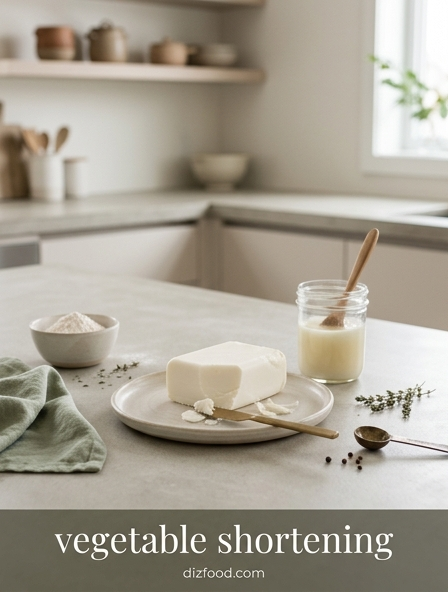
The Science of Vegetable Shortening
Vegetable shortening is a semi-solid fat produced through hydrogenation, a chemical process that converts liquid vegetable oils into a solid state by adding hydrogen atoms. This modification alters the fatty acid chains, resulting in a product that remains stable at room temperature. Unlike butter or margarine, shortening is specifically engineered to have a consistent crystalline structure, typically consisting of small beta-prime crystals. These crystals are essential for creating a smooth, creamy consistency that integrates easily into dry ingredients during the mixing phase.
The primary scientific function of shortening in baking is to "shorten" gluten strands. When the fat coats the flour particles, it acts as a physical barrier that prevents water from bonding with wheat proteins. This inhibition of gluten development is what gives pastries and pie crusts their characteristic tenderness. Because it lacks water, shortening does not contribute to steam-based leavening, but its high melting point allows it to maintain structural integrity.
- Higher melting point than most animal fats.
- Contains zero water content, preventing premature gluten activation.
- Indefinite shelf stability compared to dairy fats.
- Neutral flavor profile for versatile culinary applications.
Secrets to Ultra Soft Cookies
Achieving the perfect soft-batch cookie relies heavily on the choice of fat. Vegetable shortening is the secret weapon for bakers who prefer a pillowy, tender bite over a crisp or crunchy snap. Because shortening does not contain water, it does not activate the gluten in flour as aggressively as butter does. This results in a dough that stays soft and pliable even after the baking process is complete. Furthermore, the high melting point ensures that the fat remains solid longer in the oven, providing structural support while the proteins and starches set.
To maximize softness in your recipes, consider these professional techniques:
- Cream the shortening with sugar for at least three minutes to incorporate micro-air bubbles.
- Replace approximately half of the butter in a standard recipe with shortening to balance flavor and texture.
- Avoid overmixing once the dry ingredients are added to keep gluten development to an absolute minimum.
The result is a cookie that resists drying out and maintains a cake-like interior. This is particularly effective in recipes like snickerdoodles or soft molasses cookies where a delicate crumb is the desired outcome.
Controlling Spread for Perfect Shape
One of the most common frustrations in baking is the "pancake effect," where cookies spread too thin and lose their definition on the tray. Vegetable shortening offers a reliable solution by providing a higher melting point-roughly 115°F compared to butter's 90°F to 95°F. This temperature difference means that the cookie's structure has more time to set in the heat of the oven before the fat turns to liquid. This is crucial for cut-out cookies, gingerbread men, and thick chocolate chip varieties that need to remain bulky.
By using shortening, you gain significant control over the final geometry of your baked goods. This is why many professional decorators prefer shortening-based doughs for intricate work.
- Maintains intricate patterns in stamped or molded cookies.
- Reduces the need for chilling dough for extended periods before baking.
- Produces taller cookies with a distinct, rounded edge rather than thin, lacy borders.
- Ensures uniform results across multiple baking sheets in different oven positions.
When spread is minimized, the center of the cookie remains thicker and more moist, while the edges remain soft rather than becoming overly caramelized and brittle.
Shortening vs Butter Comparison
Choosing between shortening and butter involves balancing flavor, texture, and technical performance. While butter is prized for its rich, milky taste and lower melting point that creates a "melt-in-your-mouth" feel, shortening is favored for its structural reliability. Shortening is 100% fat, whereas butter contains approximately 80% fat, 15-18% water, and small amounts of milk solids. This water content in butter can lead to more gluten development and more steam, which fundamentally changes the final crumb of the pastry.
| Feature | Vegetable Shortening | Unsalted Butter |
|---|---|---|
| Fat Content | 100% | ~80-82% |
| Melting Point | 115°F (46°C) | 90-95°F (32-35°C) |
| Texture Result | Tender, crumbly, soft | Crisp, flaky, chewy |
| Flavor Profile | Neutral | Rich, creamy, savory |
Most expert bakers recommend a 50/50 split for cookies and pie crusts. This allows the butter to provide the necessary flavor while the shortening ensures the pastry holds its shape and remains tender throughout the storage period.
Building Heat Resistant Frostings
In warmer climates or during summer events, traditional butter-based frostings can easily melt, slide off cakes, or become unworkably greasy. Vegetable shortening is the primary ingredient in "crusting" buttercreams because it remains stable at much higher ambient temperatures. It acts as a structural foundation that can withstand the heat of an outdoor wedding or a humid kitchen without losing its piped definition. This stability is essential for heavy tiered cakes.
To create a professional, heat-resistant frosting, follow this standard procedure:
- Combine equal parts shortening and softened butter for a balance of stability and dairy taste.
- Add sifted powdered sugar gradually to ensure a smooth, grit-free consistency for piping.
- Incorporate a small amount of heavy cream or meringue powder to improve the overall mouthfeel.
The resulting frosting is easy to smooth with a palette knife and holds sharp peaks when piped through decorative star tips. Additionally, shortening-based frostings are pure white, whereas butter-only frostings have a natural yellow tint, making shortening the better choice for vibrant or true-white wedding cakes.
Achieving Fluffy Aerated Textures
The ability of vegetable shortening to trap air is a cornerstone of light and airy baking. During the creaming process, the plastic nature of shortening allows it to wrap around air bubbles, creating a stable foam. These tiny pockets of air expand during baking as the gases heat up, resulting in a significant rise and a fine, even crumb. This is particularly important for layer cakes and muffins where a dense, heavy texture would be undesirable for the consumer.
Key benefits of using shortening for aeration include:
- Consistent volume regardless of slight fluctuations in room temperature.
- Creation of a finer cell structure in the finished cake crumb.
- Increased tolerance to over-creaming compared to dairy-based fats.
- Better suspension of inclusions like chocolate chips, sprinkles, or nuts.
Because shortening doesn't melt as quickly as butter, the air bubbles it holds are protected for longer during the initial stages of the baking cycle. This leads to a more uniform height and a professional finish that is often difficult to achieve with liquid oils or low-melting-point fats.
The Role of 100 Percent Fat
Vegetable shortening is unique because it is a pure fat source, containing no water or milk solids. This 100% lipid composition has a profound impact on the thermodynamics of baking. In a butter-based dough, the water evaporates into steam, which can lead to a puffier but often tougher result due to the activation of gluten. In contrast, shortening simply melts and coats the flour, ensuring that every particle of protein is insulated from moisture during the mixing process.
This total lack of water contributes to several specific characteristics in the kitchen:
- Extreme tenderness in shortbread, biscuits, and pie shells.
- A crumbly texture that dissolves easily on the palate without being chewy.
- The ability to use less fat overall to achieve the same shortening effect as butter.
- A higher smoke point, making it safer for greasing pans or light frying.
By removing water from the equation, shortening provides a predictable environment for chemical leaveners like baking powder and soda. The pure fat serves only to tenderize, giving the baker total control over the hydration levels of the dough.
Mastering Stable Bakery Style Buttercream
Professional bakeries often rely on shortening to produce the voluminous, stable buttercream seen in commercial display cases. This style of frosting is known for its "crust"-a thin, dry outer layer that forms after a few minutes, protecting the soft interior and allowing for intricate decorations. This is achieved because shortening does not contain the natural emulsifiers and water found in butter, which keep the sugar in a more fluid and less stable state.
Steps for achieving a perfect bakery-style finish include:
- Beat the shortening alone first to ensure there are no lumps before adding sugar.
- Use high-quality clear vanilla extract to maintain the snowy white color of the shortening.
- Adjust the consistency with tiny increments of water or milk until it reaches a medium stiffness.
This frosting is not only more durable but also less prone to separating when liquid food colors are added. Whether you are piping delicate roses or covering a large sheet cake, the stability offered by vegetable shortening ensures the design remains intact from the kitchen to the final table.
Improving Cookie Shelf Life
One of the hidden advantages of vegetable shortening is its ability to extend the freshness of baked goods. Because it is a highly stable, hydrogenated fat, it is much slower to oxidize and turn rancid than animal-based fats. This chemical stability translates directly to a longer shelf life for cookies and snack bars. Furthermore, shortening's ability to lock in moisture prevents the "staling" process, which is often caused by the migration of water out of the starch molecules over time.
Specific benefits for long-term storage include:
- Cookies remain soft for several days longer than butter-only versions.
- Reduced risk of off-flavors developing during extended pantry storage.
- Better performance in frozen dough applications, preventing freezer burn.
- Maintains a consistent texture even in varying levels of environmental humidity.
This makes shortening the ideal choice for bake sales, holiday gift tins, or any situation where the cookies will not be consumed immediately. The fat effectively acts as a physical preservative for the texture, ensuring that the last cookie in the jar is just as soft as the first.
Tips for Consistent Baking Success
To get the most out of vegetable shortening, precision and proper handling are key. Because shortening is a solid fat, it should be measured using the displacement method or by packing it firmly into a dry measuring cup to eliminate air pockets. For the most accurate results, using a digital kitchen scale is recommended, as shortening density can vary between brands. Storage is also vital; while it is shelf-stable, keeping it in a cool, dark place prevents the breakdown of the fat structure.
| Factor | Best Practice |
|---|---|
| Measurement | Use a scale or the "pack and level" technique. |
| Temperature | Store at 65-75°F for optimal creamability. |
| Substitution | Use 1:1 ratio for butter, but add a pinch of salt. |
| Mixing | Cream thoroughly with sugar to maximize aeration. |
Always ensure your shortening is fresh; although it has a long shelf life, it can eventually absorb odors from strong pantry items. By following these simple guidelines, you can harness the functional benefits of shortening to produce professional-grade baked goods with consistent results every time.

Comments