
Choosing between marzipan and fondant can truly transform your baking project, as both offer distinct advantages depending on your desired finish and flavor profile. While marzipan delights the palate with its rich, nutty almond base and slightly gritty texture-perfect for sculpting intricate figurines or providing a hearty underlayer-fondant provides that iconic, porcelain-smooth aesthetic that makes professional cakes look absolutely flawless. Whether you are prioritizing the sweet, marshmallow-like versatility of fondant for a sleek modern look or the traditional, earthy elegance of marzipan, understanding how these mediums react to moisture and temperature is the secret to selecting the ideal medium for your next confectionery masterpiece.
| Feature | Marzipan | Fondant |
|---|---|---|
| Primary Ingredients | Ground almond meal, sugar, and honey or egg whites. | Sugar, water, glucose, and often gelatin or glycerine. |
| Flavor Profile | Rich, nutty, and distinct almond taste; less sweet. | Neutral, intensely sweet, often flavored with vanilla. |
| Texture & Finish | Slightly grainy/textured; natural off-white color. | Ultra-smooth, dough-like; bright white and dye-friendly. |
| Best Use Case | Hand-sculpted 3D figures and fruitcake base layers. | Draping large cakes, sharp edges, and cut-out shapes. |
| Workability | Pliable and easy to mold; resists cracking in heat. | Highly elastic; prone to "elephant skin" if dried too fast. |
| Allergens | High (contains nuts); not suitable for nut allergies. | Low (usually nut-free); contains gelatin (check for vegan). |
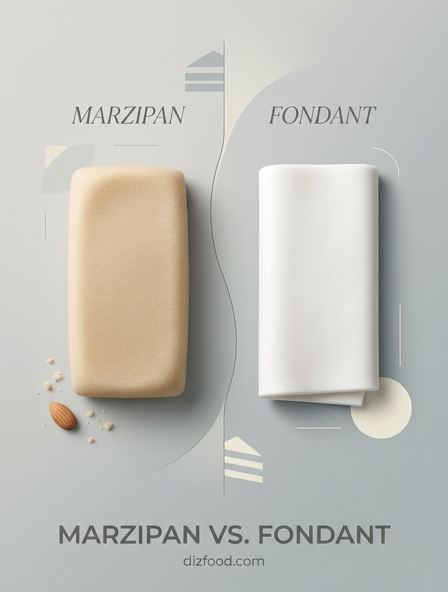
Marzipan vs Fondant Key Differences
In the world of professional confectionery and home baking, marzipan and fondant are the two primary mediums used to finish and decorate cakes. While they may appear similar to the untrained eye when draped over a sponge, their composition and functionality are worlds apart. The most fundamental difference lies in their base ingredients: marzipan is a paste made from ground almonds and sugar, whereas fondant is primarily composed of sugar, water, and corn syrup. This distinction influences everything from the taste and texture to how the material behaves under a rolling pin.
Historically, marzipan has been used for centuries across Europe, particularly in Germany and Italy, often served as a standalone treat or molded into realistic fruits. Fondant, specifically the "rolled" variety used today, gained popularity later as a means to achieve a perfectly smooth, porcelain-like finish on wedding cakes. Because marzipan contains almond oil, it is naturally more moist and pliable but also grainier. Fondant, conversely, is designed to be elastic and dries to a matte, firm finish that protects the cake underneath from air.
- Composition: Marzipan uses nut meal; fondant is purely sugar-based.
- Aesthetics: Fondant provides a crisp, smooth surface; marzipan has a slightly textured, rustic appearance.
- Usage: Marzipan is often an internal layer or used for modeling; fondant is the standard for external "skin."
Main Ingredients and Flavor Profiles
The flavor experience of these two mediums is the most frequent point of debate among bakers and clients. Marzipan offers a complex, nutty, and sophisticated profile. Because it is made with at least 25% to 50% almond meal, it has a rich "amaretto" essence that complements flavors like chocolate, cherry, and apricot. Some varieties may also include egg whites or liquid glucose to act as a binder, and occasionally a drop of rosewater for traditional Middle Eastern or European recipes.
Rolled fondant is essentially "sugar paste." Its flavor is intensely sweet but neutral, often described as having a marshmallow-like quality. While it can be flavored with extracts like vanilla, lemon, or almond, it lacks the inherent depth of marzipan. Because many people find the cloying sweetness of fondant overwhelming, it is often peeled off and left on the plate rather than eaten. In contrast, marzipan is usually considered a delicacy in its own right and is consumed as part of the dessert.
| Feature | Marzipan | Rolled Fondant |
|---|---|---|
| Primary Base | Ground Almonds | Sucrose/Glucose |
| Predominant Taste | Nutty, rich, slightly bitter | Neutral, very sweet |
| Common Additives | Rosewater, Egg whites | Glycerin, Gelatin, Tylose |
Texture and Sculpting Capabilities
Texture plays a critical role in how a baker chooses their medium for sculpting. Marzipan has a heavy, dense, and slightly oily texture due to the natural fats in the almonds. This makes it exceptionally easy to mold by hand into thick, three-dimensional shapes, such as animal figurines or miniature fruits. It holds its shape well without drying out too quickly, allowing the artist more time to manipulate details. However, its slightly grainy surface means it cannot achieve the ultra-fine, paper-thin edges required for hyper-realistic sugar flowers.
Fondant is characterized by its elasticity and smooth finish. To make it suitable for sculpting, bakers often add hardening agents like CMC or Tylose powder, turning it into "gumpaste." In its standard rolled form, it is stretchy and can be draped over large surfaces without tearing. It is far more susceptible to "elephant skin"-a dry, cracked texture-if it is overworked or exposed to air for too long. While fondant is better for sleek, modern designs, it lacks the structural integrity of marzipan for heavy, solid figurines unless reinforced with internal supports.
When to Use Marzipan Over Fondant
Choosing marzipan over fondant is usually a decision driven by tradition or a specific flavor requirement. Marzipan is the gold standard for traditional European holiday bakes. For instance, a British Christmas cake or a wedding fruitcake is almost always encased in a thick layer of marzipan before any icing is applied. The almond oils create a moisture barrier that helps preserve the heavy, alcohol-soaked cake underneath while adding a layer of flavor that balances the rich fruit.
Furthermore, marzipan is the superior choice for "modeling" when the decorations are meant to be eaten. While fondant figures often dry to a rock-hard consistency, marzipan remains soft and palatable. If a baker is creating "marzipan fruits"-a classic confection where the paste is shaped into pears, oranges, and apples and hand-painted-fondant simply cannot replicate the authentic texture or the way the material takes on a translucent, skin-like glow when glazed.
- Traditional Fruitcakes: Provides a necessary moisture seal.
- Edible Figures: Better mouthfeel for decorations intended for consumption.
- Flavor Pairing: Best used with dark chocolate or almond-flavored sponges.
Covering Cakes with Fondant vs Marzipan
The process of covering a cake differs significantly between these two materials. Fondant is favored by modern cake designers because it can be rolled very thin and stretched over corners to create a seamless, sharp-edged look. It hides imperfections in the crumb coat well and provides a blank, white canvas for decorations. Because of its high sugar content and elasticity, it can cover large, multi-tiered cakes with a single continuous sheet, provided the baker works quickly to avoid drying.
Marzipan is more difficult to use as a final covering. It is prone to tearing if rolled too thin and its natural yellowish-off-white color can be difficult to mask if a pure white cake is desired. In many high-end bakeries, the two are actually used in tandem. A layer of marzipan is applied first to level out the cake and provide a flavorful base, and then a thin layer of fondant is draped over the marzipan to provide the final aesthetic finish. This "double-wrap" method provides the best of both worlds: the superior taste of almonds and the flawless look of sugar paste.
- Prepare the cake with a firm buttercream or ganache.
- Roll the medium to approximately 1/8 inch thickness.
- Lift using a rolling pin to avoid stretching or tearing.
- Smooth from the top down to expel air bubbles.
Nut Allergies and Dietary Impacts
One of the most critical considerations in a professional kitchen is the dietary safety of the ingredients. Marzipan is a major allergen because its primary ingredient is almonds. For weddings or large public events, using marzipan carries a significant risk of cross-contamination or accidental ingestion by individuals with tree nut allergies. Consequently, many commercial bakeries have moved away from marzipan in favor of fondant to ensure their products are "nut-free" and accessible to a wider audience.
Fondant, while safer for those with nut allergies, has its own dietary hurdles. Most traditional fondant recipes use gelatin as a stabilizer, which makes them unsuitable for vegetarians or vegans. Additionally, some brands use glycerin derived from animal fats. Bakers must specifically source "vegan-certified" fondant if they are catering to those lifestyles. While both mediums are naturally gluten-free, they are essentially pure sugar and fat, making them high-calorie additions to any dessert. Marzipan does offer a small amount of protein and healthy fats from the almonds, whereas fondant provides nothing but empty carbohydrates.
Coloring and Painting Each Medium
Coloring marzipan and fondant requires different approaches due to their base colors and oil content. Fondant is naturally a bright, stark white, which makes it the perfect substrate for achieving vibrant, true-to-tone colors. Whether using gel pastes or airbrushing, the colors pop against the white background. Because fondant is water-based, it absorbs liquid dyes easily, though too much moisture can make it sticky or "melt" the sugar structure.
Marzipan has a natural ivory or pale yellow tint from the almonds. This makes it difficult to achieve pure whites or delicate pastels without first adding a significant amount of white food coloring (titanium dioxide). However, the slightly porous and oily surface of marzipan is excellent for hand-painting with edible luster dusts or alcohol-based food paints. The texture of marzipan allows for a more "organic" look, which is why it is preferred for realistic sculpting. When painting marzipan, the color tends to soak in slightly, giving a depth of color that looks more lifelike than the surface-level tinting often seen on fondant.
Shelf Life and Proper Storage Tips
Proper storage is vital to prevent these mediums from becoming unusable. Fondant is highly sensitive to air and humidity. If left exposed, it hardens into a sugar crust; if kept in a humid environment, it can become "sweaty" and lose its shape. It should be stored by wrapping it tightly in plastic wrap, placing it in a zip-top bag, and keeping it at room temperature in a dark cupboard. Refrigeration is generally discouraged for fondant-covered cakes because the condensation that forms when the cake is brought to room temperature can dissolve the sugar, leading to "tears" or a sticky mess.
Marzipan is slightly more resilient due to its fat content, but it can still oxidize and turn hard or develop an "off" flavor if the almond oils go rancid. It should be stored similarly to fondant-tightly sealed and away from light. Unlike fondant, marzipan-covered cakes (especially fruitcakes) can handle cooler temperatures better, although a sealed container is still necessary to prevent it from picking up odors from the fridge. For long-term storage, marzipan can be frozen, whereas freezing fondant often leads to structural failure upon thawing.
- Wrap the leftover material in multiple layers of cling film.
- Place in an airtight container to block all oxygen.
- Store in a cool, dry place; avoid direct sunlight.
- Do not refrigerate unless the internal cake filling requires it.
Cost Comparison for Professional Bakers
For a professional bakery, the cost difference between marzipan and fondant is substantial and can affect the final pricing of a custom cake. Marzipan is significantly more expensive because almonds are a high-value commodity. The processing of almonds into a fine meal, combined with the volatility of nut prices, means that a bucket of marzipan can cost two to three times as much as a similar amount of fondant. This cost is often passed on to the customer as a premium "flavor" option.
Fondant is composed of inexpensive ingredients: sugar and corn syrup. Even high-quality commercial brands remain relatively affordable because the raw materials are shelf-stable and mass-produced. Furthermore, because fondant can be rolled thinner than marzipan, a baker uses less product to cover the same surface area, further increasing the profit margin. When providing quotes, bakers must weigh the labor time-marzipan often requires more finesse to smooth-against the raw ingredient costs of each medium.
| Factor | Marzipan | Fondant |
|---|---|---|
| Ingredient Cost | High (Almonds) | Low (Sugar) |
| Material Volume Needed | More (Must be thicker) | Less (Can be very thin) |
| Market Availability | Specialty / Seasonal | Widely Available |
Choosing the Best Option for Your Cake
The final choice between marzipan and fondant depends on the specific goals of the baker and the preferences of the eater. If the primary goal is a flawless, modern aesthetic-perhaps a tiered wedding cake with sharp edges and intricate stencil work-fondant is the clear winner. Its versatility and ease of use for covering large surfaces make it the industry standard for decorative "show" cakes. It is also the safer choice for events where guests may have undisclosed nut allergies.
However, if the cake is intended to be a gourmet experience where every component must taste delicious, marzipan is the superior medium. It adds a layer of culinary sophistication that sugar paste simply cannot match. For rustic themed weddings, holiday celebrations, or small tea cakes, marzipan provides a homemade, high-quality feel. Ultimately, many master bakers suggest using a thin layer of marzipan for flavor, followed by a thin layer of fondant for beauty, ensuring that the cake looks as good as it tastes. Consider the climate, the guest list, and the flavor profile of the sponge before making your final selection.

Comments