
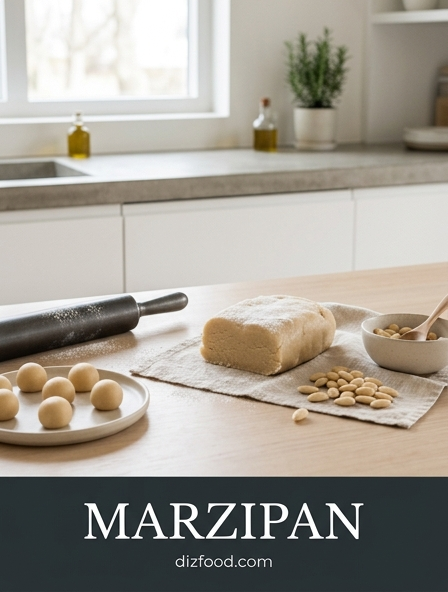
What Is Marzipan
Marzipan is a versatile confectionery material primarily composed of finely ground almond meal and sugar or honey. Often referred to as "almond candy," it serves a dual purpose in the kitchen as both a standalone treat and a fundamental building block for complex desserts. Its texture is characteristically smooth and pliable, resembling modeling clay, which allows bakers to shape it into intricate forms. Beyond its structural utility, marzipan provides a rich, nutty flavor profile enhanced by subtle hints of almond oil or floral essences like rosewater.
Historically, marzipan has deep roots in European and Middle Eastern culinary traditions, where it has been celebrated for centuries. In modern professional pastry kitchens, it is utilized for covering cakes-similar to fondant-and for creating realistic edible miniatures. Because of its high sugar content, it offers a sweet contrast to the earthy bitterness of the almonds. Whether it is rolled into thin sheets or hand-sculpted into festive figurines, marzipan remains a staple ingredient for high-end confectionery work and seasonal holiday treats across the globe.
Marzipan Versus Almond Paste
While they share the same primary ingredients, marzipan and almond paste serve very different roles in the kitchen. The distinction lies mainly in the ratio of sugar to almonds and the resulting texture. Marzipan is essentially a finished product; it contains more sugar and less almond meal, resulting in a smooth, stiff, and sweet paste that is ready for molding or eating. Almond paste, conversely, is an ingredient used within recipes; it has a higher concentration of almonds and less sugar, giving it a coarser, softer texture that is not ideal for sculpting.
| Feature | Marzipan | Almond Paste |
|---|---|---|
| Sugar Content | High (ready to eat) | Lower (baking ingredient) |
| Texture | Smooth, firm, pliable | Coarse, soft, grainy |
| Primary Use | Decorating, modeling | Fillings, cookies, doughs |
Understanding these differences is crucial for recipe success, as they are rarely interchangeable without modification. Using marzipan in a recipe that calls for almond paste may result in a dessert that is overly sweet and lacks the necessary structural integrity during baking.
Making Homemade Marzipan
Creating marzipan at home allows for a fresher flavor and more control over the moisture content. The standard ratio typically involves equal parts almond flour and powdered sugar, bound together by a small amount of liquid. Using high-quality, blanched almond flour is essential for achieving a pale, ivory color and a silky mouthfeel. For those wary of raw egg whites, light corn syrup or a simple syrup can be substituted as the binding agent without sacrificing the dough's integrity.
- Sift the powdered sugar and almond flour into a large bowl to remove all clumps.
- Add a few drops of almond extract and your chosen binder, such as egg white or syrup.
- Mix the ingredients until a crumbly dough forms, then turn it out onto a clean surface.
- Knead the mixture by hand for several minutes until it becomes completely smooth and elastic.
- If the dough is too sticky, add more powdered sugar; if too dry, add a few drops of water.
- Wrap the finished marzipan tightly in plastic wrap to prevent it from hardening before use.
Once prepared, the homemade variety can be customized with various flavorings like vanilla, orange zest, or even a splash of liqueur to suit specific recipes.
Working with Marzipan Dough
Handling marzipan dough requires a delicate balance of temperature and moisture. Because of its high oil content from the almonds, the dough can become greasy if overworked or kept in a warm environment. Professional pastry chefs often work on cool marble surfaces to maintain the dough's structural integrity. When rolling out marzipan to cover a cake, it is standard practice to dust the workspace with powdered sugar or cornstarch to prevent sticking, much like handling traditional pie crust or fondant.
If the marzipan begins to dry out and crack during the sculpting process, a tiny amount of vegetable shortening or light syrup can be kneaded in to restore its elasticity. Conversely, if the dough becomes too soft to hold its shape, chilling it in the refrigerator for twenty minutes can firm up the almond oils. It is also important to keep any portion of the dough not currently in use covered with plastic wrap, as marzipan develops a crust quickly when exposed to air, which can lead to unsightly lumps during later kneading.
Marzipan Fillings for Cakes
Marzipan is a favored filling for various cakes because it adds moisture, fat, and a concentrated nutty flavor that survives the baking process. It can be used as a raw layer between sponge cakes or incorporated into batters to create a denser, richer crumb. In many European traditions, marzipan is rolled into thin discs and placed directly on top of fruit cakes or inside yeast-leavened breads to create a hidden pocket of sweetness.
- Layered Sponges: Thin sheets of marzipan placed between jam and cake layers.
- Frangipane-style Inserts: Marzipan softened with butter and eggs for tarts.
- Yeast Breads: Cylinders of marzipan rolled into the center of doughs like Stollen.
- Petit Fours: Small cubes of cake sandwiched with marzipan and dipped in chocolate.
When using marzipan as a filling, it is often paired with an apricot glaze, which acts as an adhesive to keep the almond layer firmly attached to the cake surface. This technique prevents the filling from sliding during the assembly of tiered or vertical desserts.
Creative Marzipan Decorations
The modeling properties of marzipan make it the premier choice for edible artistry in the kitchen. Its ability to take on vibrant colors and hold fine detail allows for the creation of incredibly realistic decorations. Traditionally, marzipan is shaped into small fruits-such as oranges, strawberries, and pears-which are then hand-painted with food coloring or dusted with cocoa powder to mimic natural textures. This art form is particularly popular during the winter holidays and Easter.
To color marzipan, it is best to use concentrated gel or paste food colors rather than liquid dyes, as liquid can alter the consistency of the dough. Small amounts of the color should be kneaded into the paste until a uniform hue is achieved. For more advanced decorations, marzipan can be sculpted into miniature figurines, animals, or delicate flower petals. Because it dries firmer than modeling chocolate but softer than gum paste, it provides a pleasant eating experience while still maintaining its artistic shape. Using basic clay-modeling tools can help in achieving realistic indentations and textures on the surface of your creations.
Traditional Marzipan Pastry Recipes
Marzipan is central to many historical pastry recipes, particularly in German, Scandinavian, and British cultures. These recipes often showcase the ingredient's ability to withstand heat while providing a decadent, creamy center. From festive holiday breads to elegant tea-time treats, the presence of marzipan usually signifies a special occasion or a high-quality confection.
- German Stollen: A heavy fruit bread with a thick log of marzipan running through the center.
- Swedish Princess Cake: Layers of sponge and cream covered in a signature green marzipan dome.
- Mozartkugeln: Small chocolate-covered balls with a core of pistachio marzipan and nougat.
- Battenberg Cake: A checkerboard sponge held together by apricot jam and wrapped in marzipan.
- Bethmännchen: Traditional cookies made of marzipan dough decorated with three halved almonds.
These recipes rely on the distinct flavor of the almond paste to balance the sweetness of the surrounding cake and icing components. Many of these traditions have remained unchanged for centuries, testifying to the enduring popularity of almond-based confections.
Marzipan Flavor Pairings
The almond base of marzipan is exceptionally versatile, allowing it to pair harmoniously with a wide range of ingredients across the sweet and savory spectrum. Its natural nuttiness complements bright acidic flavors like citrus, as well as deep, earthy notes found in dark chocolates and spices. When designing a dessert, understanding these pairings can help elevate a simple marzipan component into a complex culinary experience.
| Flavor Category | Best Pairings |
|---|---|
| Fruits | Apricot, Cherry, Orange, Pear, Raspberry |
| Spices | Cinnamon, Cardamom, Nutmeg, Vanilla Bean |
| Liqueurs | Amaretto, Rum, Kirsch, Grand Marnier |
| Other | Dark Chocolate, Pistachio, Honey, Rosewater |
These combinations are frequently used in fillings and candies to prevent the marzipan from becoming too cloying on the palate. By introducing a tart fruit or a sharp spice, the rich density of the almond paste is perfectly balanced.
Storing and Preserving Marzipan
Because of its high sugar and oil content, marzipan has a relatively long shelf life, but it must be stored correctly to maintain its texture. The primary enemy of marzipan is air, which causes the exterior to dry out and become brittle. When stored at room temperature, marzipan should be wrapped tightly in several layers of plastic wrap and placed in an airtight container. This will keep it pliable for several weeks for immediate use.
For longer-term storage, marzipan can be kept in the refrigerator for up to six months or in the freezer for a year. If freezing, it is advisable to double-bag the dough to prevent it from absorbing any odors from the freezer environment. Before use, frozen or refrigerated marzipan must be allowed to return to room temperature gradually. If it feels stiff after warming up, a brief kneading session will redistribute the almond oils and restore its original softness. Always check for any signs of rancidity in the oils if the marzipan has been stored for an extended period.
Advanced Marzipan Baking Tips
For the experienced baker, marzipan offers opportunities for advanced techniques that go beyond simple modeling. One popular method is "browning," where a blowtorch or a high-heat broiler is used to lightly caramelize the surface of marzipan decorations, adding a smoky depth to the flavor. This is commonly seen on the edges of marzipan-covered tarts or shaped fruits to give them a more rustic, sun-ripened appearance.
Another advanced tip involves adjusting the oil content for specific applications. If you are creating a very thin drape for a cake, adding a small amount of glucose syrup can increase flexibility and prevent tearing. In contrast, for structural elements that need to stand upright, kneading in extra powdered sugar will create a stiffer paste. When incorporating marzipan into cookies, try grating chilled marzipan on a box grater directly into your dry ingredients; this ensures an even distribution of almond flavor without creating heavy lumps in the dough. Finally, always use dusting sugar sparingly, as too much can dry the dough and cause it to lose its natural sheen.

Comments