
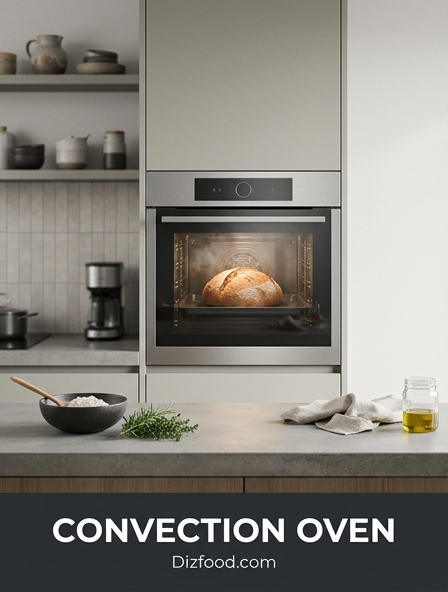
Mastering Convection for Even Heat Distribution
Convection cooking relies on a specialized fan and exhaust system that circulates hot air throughout the oven cavity. Unlike traditional radiant ovens, where heat rises from a stationary element, convection systems eliminate the stagnant layer of cool air that typically surrounds food. This process, known as forced convection, significantly increases the rate of thermal energy transfer, ensuring that every surface of the dish is exposed to the same temperature simultaneously. This mechanism is particularly beneficial for large roasts and multi-tiered baking projects where uniform heat is critical for consistency.
- Reduces cooking time by approximately 25% compared to standard ovens.
- Promotes even browning by removing moisture from the food's surface.
- Allows for lower cooking temperatures, preserving the integrity of delicate proteins.
- Supports high-volume production without the need for frequent tray rotation.
By mastering these airflow dynamics, chefs can achieve predictable results every time. The key is to understand that the air serves as the primary heat vehicle, requiring sufficient space between items to maintain a steady flow. When air is blocked by oversized pans or overcrowding, the benefits of convection are neutralized, leading to the very unevenness the technology was designed to solve.
The Science of Precise Temperature Control
Achieving culinary excellence requires a deep understanding of how convection ovens manage thermal variables. Because moving air transfers heat more efficiently than still air, the internal temperature of a convection oven is often perceived as higher by the food. Most professional recipes suggest a standard adjustment to account for this increased efficiency. This "convection offset" is vital for preventing the exterior of baked goods from overcooking before the interior reaches the desired level of doneness.
| Setting Type | Standard Oven Temp | Convection Adjustment |
|---|---|---|
| Standard Baking | 350°F (177°C) | 325°F (163°C) |
| Roasting | 400°F (204°C) | 375°F (190°C) |
| High-Heat Searing | 450°F (232°C) | 425°F (218°C) |
Digital sensors in modern units constantly monitor these fluctuations, cycling the heating elements to maintain a narrow temperature band. This precision minimizes the wide swings often found in gas-fired radiant ovens. Understanding these thermal dynamics allows for the execution of complex recipes that demand strict adherence to heat parameters, ensuring that delicate chemical reactions, such as the rising of a soufflé or the setting of a custard, occur exactly as intended.
Optimizing Airflow for Perfect Golden Crusts
The secret to a perfect golden-brown crust lies in the Maillard reaction, a chemical process between amino acids and reducing sugars. In a convection environment, the continuous movement of air accelerates this reaction by rapidly evaporating surface moisture. To optimize this effect, the physical arrangement of the oven's contents must allow for unobstructed air paths. If air cannot reach the bottom or sides of a pan, the resulting crust will be pale and soft rather than crisp and flavorful.
- Use low-profile baking sheets to allow air to sweep across the surface of the food.
- Leave at least two inches of space between the pan and the oven walls.
- Avoid using high-sided roasting pans unless necessary for liquid retention.
- Utilize wire cooling racks set inside sheet pans to allow air to circulate beneath the food.
When airflow is maximized, the oven acts almost like an air fryer, creating a high-velocity heat envelope. This is especially effective for roasting vegetables and crisping poultry skin. The resulting texture is a direct byproduct of the air's ability to strip away the "cold boundary layer," allowing the heat to penetrate the surface instantly and start the browning process without overextending the total cook time.
Selecting High-Conductivity Bakeware Materials
The interaction between the convection fan and the material of your bakeware can determine the success of a bake. High-conductivity materials respond more quickly to the rapid temperature changes inherent in convection cooking. While heavy stoneware or glass are excellent for heat retention, they can be slow to react to the precision of a convection system. For most convection applications, metals with high thermal diffusivity are preferred to ensure the pan temperature matches the air temperature as closely as possible.
| Material | Thermal Conductivity | Best Use Case |
|---|---|---|
| Anodized Aluminum | Excellent | Cookies, Cakes, Pastries |
| Aluminized Steel | High | Breads, Professional Baking |
| Cast Iron | Moderate | Searing, Deep-Dish Roasts |
| Ceramic/Glass | Low | Slow-cooked Casseroles |
Choosing the right material prevents the bottom of your dishes from burning while the top is still cooking. For example, dark-colored or non-stick pans absorb more heat and can cause over-browning in a convection oven. Light-colored, heavy-gauge aluminum is often considered the industry standard because it reflects excess radiant heat while conducting the circulating air's energy evenly across the entire surface area of the food.
Eliminating Hot Spots in Home Ovens
Even with advanced fan systems, home convection ovens can occasionally develop localized areas of intense heat, commonly known as hot spots. These are often caused by the proximity of the fan to the back wall or the configuration of the heating elements. Identifying these zones is the first step toward achieving professional-grade consistency. A common diagnostic involves placing slices of white bread across a rack to see which ones brown faster, revealing the oven's unique airflow fingerprint.
- Rotate pans halfway through the cooking cycle, even in convection mode.
- Check for door seal integrity to prevent cool air leaks that create temperature gradients.
- Avoid using aluminum foil to line racks, as it completely disrupts the intended airflow.
- Keep the oven interior clean, as carbon buildup can interfere with heat radiation.
Once you understand where your oven delivers the most power, you can place thicker cuts of meat in those zones while keeping delicate items in the calmer areas. This strategic placement, combined with the fan's assistance, ensures that "hot spots" are managed rather than feared, resulting in a perfectly synchronized finish for every item on the rack.
Advanced Preheating Techniques for Consistency
Preheating is more than just waiting for a beep; it is about establishing a stable thermal mass within the oven. In a convection oven, the air reaches the target temperature long before the walls and racks do. If food is introduced too early, the oven will experience a massive temperature drop when the door is opened, and the air will struggle to recover without the help of radiant heat from the internal surfaces. Professional results require the entire oven cavity to be fully saturated with heat.
- Preheat the oven for at least 20 to 30 minutes, regardless of the indicator light.
- Include a baking stone on the bottom rack to act as a thermal ballast.
- Minimize the duration the door is open when loading items.
- Use a secondary internal thermometer to verify the digital display's accuracy.
When the oven is properly "heat soaked," the convection fan works more effectively because the air it moves is being reheated by the walls of the oven themselves. This creates a much more resilient cooking environment that can withstand the introduction of cold dough or chilled meats without a significant loss in momentum, leading to better spring in breads and more consistent roasting times.
Leveraging Induction for Rapid Heat Precision
While convection focuses on air movement, combining it with induction technology in modern kitchen ranges offers a total heat management solution. Induction cooktops use electromagnetic fields to heat the cookware directly, offering instantaneous response times that complement the steady environment of a convection oven. This pairing allows for a seamless transition from stove-top searing to oven finishing, a technique vital for thick steaks and complex sauces.
- Induction provides immediate temperature drops to prevent over-boiling.
- The lack of ambient heat from the cooktop keeps the kitchen cooler.
- High energy efficiency ensures more power is directed into the food.
- Precision simmering allows for delicate chocolate or butter work.
In a integrated kitchen workflow, the speed of induction allows you to prep components at the exact moment the convection oven reaches its peak stability. The synergy between these two technologies represents the pinnacle of modern culinary efficiency, reducing total labor time while increasing the accuracy of the final product. Mastery of both ensures that every variable, from the initial sear to the final bake, is under the chef's absolute control.
The Role of Moisture in Uniform Baking
In a convection oven, the moving air can sometimes lead to excessive drying of the food's surface. While this is ideal for crispy skins, it can be detrimental to breads that need a significant "oven spring" or delicate cakes that require a moist crumb. Managing the humidity levels within the oven is therefore essential for certain types of baking. Moisture slows down the setting of the crust, allowing the dough to expand fully before the exterior hardens.
- Place a shallow pan of hot water on the bottom rack to create a steam effect.
- Use a spray bottle to mist the oven walls during the first few minutes of bread baking.
- Keep the vent settings closed if your oven allows for humidity control.
- Cover braising pans tightly with foil or heavy lids to trap internal moisture.
The interaction between steam and circulating air creates a high-heat, high-moisture environment that is perfect for achieving a glossy, professional crust on artisanal breads. By intentionally introducing moisture, you counteract the drying nature of the fan, gaining the benefits of even heat distribution without sacrificing the textural integrity of your more sensitive recipes.
Calibrating Equipment for Professional Grade Results
Even the most expensive convection ovens can fall out of calibration over time. A deviation of just ten degrees can be the difference between a moist turkey and a dry one, or a golden baguette and a burnt one. Calibration ensures that the internal thermostat accurately reflects the actual air temperature during the convection cycle. This process should be performed periodically as part of standard kitchen maintenance to maintain the reliability of your culinary output.
- Place a high-quality oven thermometer in the center of the middle rack.
- Set the oven to 350°F and allow it to cycle for at least three rounds of heating.
- Record the temperature at the peak and trough of each cycle to find the average.
- Access the oven's settings menu to adjust the temperature offset if the average is off.
By taking the time to calibrate your equipment, you eliminate the guesswork associated with new recipes. It allows you to trust the oven's interface and focus on the nuances of the ingredients. Consistency is the hallmark of professional cooking, and calibration is the foundation upon which that consistency is built, ensuring that your convection oven remains a precise tool rather than a source of frustration.
Maximizing Efficiency with Multi-Rack Baking
One of the greatest advantages of a convection oven is its ability to bake on multiple racks simultaneously without significant loss of quality. In a standard oven, the top rack is usually too hot while the bottom rack is too cool, but the convection fan creates a homogenous atmosphere. This allows for massive increases in productivity, making it possible to bake three dozen cookies or multiple trays of roasted vegetables in the same time it would normally take to do one.
| Rack Position | Ideal Food Type | Airflow Consideration |
|---|---|---|
| Top Rack | Thin proteins, browning | Maximum fan exposure |
| Middle Rack | Cakes, general baking | Balanced distribution |
| Bottom Rack | Pizzas, heavy roasts | Strongest radiant base |
To maximize this efficiency, it is crucial to avoid overloading the racks. There must be enough vertical and horizontal clearance for the air to move between the trays. If the racks are packed too tightly, the "convection" effect is lost, and you revert to the uneven heating of a traditional oven. When done correctly, multi-rack baking saves time and energy, allowing the kitchen to handle high-demand periods with ease and precision.

Comments