
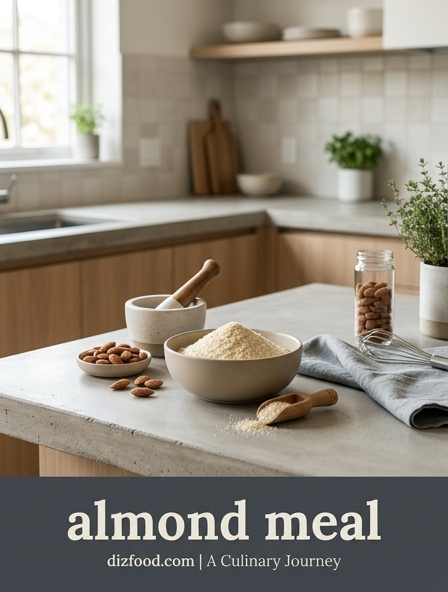
Defining Almond Meal Structural Properties
Almond meal is primarily defined by its mechanical composition, derived from grinding whole almonds into a coarse powder. Unlike blanched almond flour, the meal often retains the dark, fibrous skins of the nut, which introduces a variegated color and a distinctively rustic texture. From a structural standpoint, almond meal lacks the elastic proteins found in cereal grains, meaning it cannot form a gluten network. This absence of elasticity necessitates a reliance on other binding agents, such as eggs or starches, to maintain the integrity of a baked item.
- Composition: High protein and lipid content with significant insoluble fiber.
- Skin Inclusion: Adds tannins and polyphenols that affect both flavor and crumb color.
- Granularity: Typically ranges from 1.0mm to 2.0mm, providing a "toothy" bite.
- Aeration: The irregular shapes of the granules can trap small air pockets during the creaming process.
In the kitchen, the structural role of almond meal is to provide bulk and weight without the toughness associated with over-mixed wheat flour. It functions as a structural filler that softens the final product, creating a tender crumb that is characteristic of dense European cakes and tarts.
The Science of High Fat Content in Pastries
The high lipid concentration in almond meal, which can exceed fifty percent by weight, fundamentally alters the chemistry of doughs and batters. These fats are primarily monounsaturated, providing a rich, buttery mouthfeel even in recipes where dairy fats are minimized. When almond meal is incorporated into a pastry, the oils act as a shortening agent, coating other dry ingredients and preventing the formation of long-chain proteins that lead to rubbery textures.
| Nutrient Component | Percentage (Approx) | Baking Function |
|---|---|---|
| Total Fat | 50-55% | Shortening and tenderizing |
| Protein | 20-25% | Structure and browning |
| Carbohydrates | 15-20% | Bulk and fiber density |
This fat content also facilitates heat transfer during baking, allowing the center of a cake to reach temperature more efficiently than lean doughs. However, the high oil content means that almond meal can turn rancid if exposed to oxygen and light for extended periods, requiring careful storage in cool, dark environments.
Moisture Retention and Crumb Density
One of the most prized attributes of almond meal is its ability to retain moisture long after a baked good has cooled. This is due to the hygroscopic nature of the almond proteins and the protective barrier created by its natural oils. While wheat flour products often stale quickly as starches retrogradate, almond-based cakes remain moist for several days. The crumb density of an almond meal cake is significantly higher than that of a sponge cake, offering a luxurious, pudding-like consistency.
- Hygroscopic Action: Almond proteins attract and hold water molecules, preventing evaporation.
- Starch Absence: The lack of wheat starch reduces the rate of crystallization that causes staling.
- Fat Encapsulation: Oils trap moisture within the crumb structure during the cooling phase.
Chefs often leverage this property when creating "gateaux de voyage" or travel cakes, which are intended to be kept at room temperature for extended periods. The resulting texture is moist, heavy, and satisfying, providing a substantial sensory experience that lighter flours cannot replicate. This moisture retention also makes it an ideal component for gluten-free recipes that otherwise suffer from dryness.
Historical Roots of Nut Based Confections
The use of ground almonds as a culinary staple stretches back centuries, rooted deeply in the cuisines of the Middle East and the Mediterranean. Before the widespread availability of refined wheat flour, ground nuts provided the necessary bulk for sweetened pastes and festive breads. During the medieval period, almond meal was a luxury ingredient in European courts, often used as a thickener for savory sauces or as the primary base for decorative sugar-work.
- Persian Influence: Early use in rosewater-scented puddings and halvas.
- Medieval Fasting: Used as a substitute for dairy milk and animal fats during Lent.
- Mediterranean Heritage: Integral to Spanish "Tarta de Santiago" and Italian "Amaretti."
- Confectionery Evolution: Transitioned from a thickener to a primary structural ingredient in the 17th century.
This historical trajectory has cemented almond meal as a pillar of classical patisserie. From the dense, flourless cakes of the Sephardic tradition to the sophisticated financiers of the French Renaissance, the ingredient has evolved but remained a symbol of quality. Its persistence in modern kitchens is a testament to its unique ability to marry flavor with functional versatility in various sweet and savory applications.
The Role of Granule Size in Texture
The coarseness of almond meal is a critical variable that determines the final mouthfeel and appearance of a dish. Granule size affects how the ingredient interacts with liquids; coarser meals absorb moisture more slowly than finely milled flours. This slower absorption rate can prevent batters from becoming overly gummy. In savory applications, such as breading for fish or poultry, the larger granules provide a superior crunch and a more complex visual appeal than a smooth powder.
| Grind Type | Average Size | Best Culinary Use |
|---|---|---|
| Coarse Meal | > 1500 microns | Breading, crusts, and rustic tarts |
| Medium Meal | 800 - 1200 microns | Frangipane and heavy cakes |
| Fine Flour | < 500 microns | Macarons and delicate sponges |
Professional bakers often sieve almond meal to separate the particles based on the specific requirements of a recipe. Larger pieces are reserved for toppings or fillings where a distinct nuttiness is desired, while the finer pass-through is utilized for more delicate structures. Understanding this gradient allows for precise control over the finished product's tactile qualities.
Creating the Signature Macaron Bite
The success of a French macaron is entirely dependent on the precise manipulation of almond meal. Achieving the "signature bite"-a crisp outer shell that gives way to a chewy, moist interior-requires a harmonious balance between the nut proteins and the meringue. While many recipes call for fine almond flour, some traditionalists incorporate a portion of almond meal to provide more "tooth" and a deeper flavor profile. The meal must be processed with icing sugar to prevent the oils from clumping during the folding process.
- Tannin Balance: Skin-on meal adds an earthy bitterness that offsets high sugar content.
- Macaronage Technique: The granules must be evenly suspended in the egg white foam.
- Dehydration: A resting period allows the meal to hydrate before the shells enter the oven.
The resulting confection is a study in textures. The almond meal provides the structural scaffolding that supports the sugar and egg whites, ensuring the macaron does not collapse. Without the high protein and fat content of the almonds, the cookie would lack its characteristic chew and would instead be a brittle, hollow meringue.
Natural Oil Emulsification in Baking
In the complex chemistry of a baking tin, almond meal contributes more than just bulk; it acts as a stabilizing agent for emulsions. The natural oils found in almonds are rich in phospholipids, which can help bridge the gap between aqueous ingredients, like egg whites or milk, and fats, like butter or oil. When almond meal is creamed with sugar and fats, it creates a more stable suspension of air, which is vital for the leavening process in flourless cakes.
- Stability: Reduces the likelihood of a batter "breaking" or curdling.
- Uniformity: Ensures even distribution of flavor and moisture throughout the crumb.
- Surface Tension: Influences how the batter spreads and rises in the oven.
This emulsifying property is particularly useful in vegan baking, where traditional emulsifiers like egg yolks are absent. The interaction between the almond fats and added liquids helps create a cohesive dough that resists crumbling. Consequently, almond meal is frequently used to improve the mouthfeel and consistency of plant-based desserts, providing a richness that mimics traditional dairy-heavy recipes.
Binding Properties Without Wheat Gluten
For those navigating gluten-free baking, almond meal serves as a primary structural alternative, though it functions differently than wheat. Gluten provides a stretchy, interlocking web; almond meal provides a solid, interlocking mass. The binding properties of almond meal are largely dependent on its protein content and the viscosity of its natural oils when heated. To achieve a successful bind in breads or muffins, almond meal is often paired with binding agents that mimic gluten's elasticity.
- Egg Protein: Coagulates during baking to lock the almond granules in place.
- Psyllium Husk: Often added to almond meal doughs to provide the necessary stretch for bread.
- Starch Blends: Tapioca or arrowroot can fill the gaps between almond particles for a smoother finish.
Despite the lack of gluten, almond meal offers a remarkable ability to hold shape in cookies and tart crusts. In shortbread-style applications, the meal creates a "short" texture that melts on the tongue, a desirable trait that is difficult to achieve with over-worked wheat flour. Its density ensures that gluten-free products feel substantial rather than airy or brittle.
Traditional Marzipan and Frangipane Foundations
Marzipan and frangipane represent two of the most iconic uses of almond meal in the culinary arts. While they share a common base, their structural requirements differ significantly. Marzipan is a dense, pliable paste made by mixing almond meal with sugar and a binder like corn syrup or egg whites. It is used for modeling and covering cakes. Frangipane, conversely, is a spreadable almond cream used as a filling for tarts, galettes, and pastries like the "Pithivier."
| Feature | Marzipan | Frangipane |
|---|---|---|
| Consistency | Dough-like and moldable | Creamy and spreadable |
| Cooking Status | Often consumed raw | Must be baked |
| Core Ingredients | Almond meal, sugar, binder | Almond meal, butter, eggs, sugar |
The quality of the almond meal is paramount in these preparations. A coarser meal in frangipane yields a rustic, nutty filling that pairs beautifully with stone fruits, while a finer meal is preferred for marzipan to ensure a smooth, professional finish. Both preparations rely on the almond's natural ability to absorb flavors while maintaining a distinct, nutty backbone.
Enhancing Mouthfeel Through Nut Proteins
The sensory experience of consuming almond-based products is largely dictated by the unique behavior of nut proteins. These proteins do not toughen when agitated, unlike the gliadin and glutenin in wheat. Instead, they contribute to a creamy, soft mouthfeel that is often described as "melting." When almond meal is hydrated, the proteins soften, creating a delicate matrix that dissolves easily. This makes almond meal an exceptional choice for recipes where a tender, yielding texture is the primary goal.
- Proteolysis: The breakdown of proteins during baking contributes to a complex flavor profile.
- Maillard Reaction: Nut proteins react with sugars to create a deep, toasted aroma and golden-brown color.
- Satiety: The combination of protein and fat provides a lingering sense of fullness.
In addition to texture, these proteins play a vital role in flavor delivery. They carry fat-soluble aromatic compounds, ensuring that the flavor of vanilla, citrus zest, or chocolate is evenly distributed and sustained throughout the tasting experience. By leveraging nut proteins, pastry chefs can create desserts that are as nutritionally dense as they are culinarily sophisticated, bridging the gap between indulgence and substance.


Comments