
Ever wondered why professional pastry chefs swear by that gleaming copper equipment when it's time to whip up a storm? When it comes to achieving the ultimate fluffy peak, the battle between nylon and copper whisks is actually a fascinating clash of chemistry versus convenience. While nylon whisks are the versatile, heat-resistant darlings of the modern non-stick kitchen-perfect for smooth gravies and protecting your pans-they simply can't compete with the molecular magic of copper. When you whip egg whites with a copper whisk, ions from the metal bond with the egg proteins to create an incredibly stable, voluminous foam that is nearly impossible to overbeat. Whether you're a casual home cook looking for easy cleanup or a baking enthusiast chasing the perfect, sky-high meringue, understanding the functional strengths of these two tools is the secret to elevating your culinary results.
| Feature | Nylon Whisk | Copper Whisk |
|---|---|---|
| Primary Strength | Non-stick safe; versatile everyday use. | Chemical stabilization of egg proteins. |
| Peak Performance | Standard; prone to "weeping" or collapse. | Superior volume; firm, glossy, stable peaks. |
| Heat Resistance | High (up to 400°F/200°C); ideal for sauces. | Excellent, but rarely used for direct high-heat. |
| Surface Interaction | Soft; won't scratch Teflon or Ceramic. | Metal; can scratch delicate coatings. |
| Maintenance | Dishwasher safe; low maintenance. | Hand wash only; requires periodic polishing. |
| Price Point | Budget-friendly ($5 - $15). | Premium investment ($30 - $70+). |
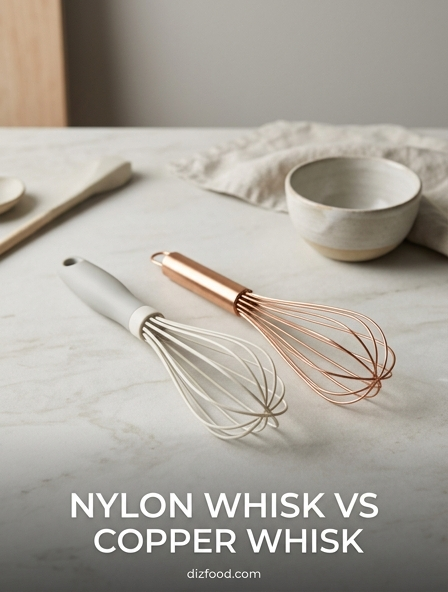
Nylon Versus Copper Whisk Material Guide
The culinary landscape offers a diverse array of tools tailored to specific chemical and physical interactions. At the heart of this variety lies the material composition of whisks, where nylon and copper represent two distinct ends of the spectrum. Nylon whisks are constructed from high-grade synthetic polymers, specifically designed to be lightweight and flexible. These tools are often reinforced with internal fiberglass or steel cores to maintain their shape while providing a soft exterior that is gentle on delicate surfaces. Because nylon is a non-reactive plastic, it serves as a versatile general-purpose tool in modern kitchens, particularly those outfitted with contemporary cookware technologies.
In contrast, copper whisks are specialized instruments often reserved for the dedicated pastry chef or traditionalist baker. Copper is a transition metal known for its exceptional thermal and electrical conductivity, but in the context of whisking, its reactivity is its most prized feature. Unlike stainless steel or nylon, copper interacts on a molecular level with certain food proteins. When choosing between these materials, chefs must consider the following properties:
- Weight: Copper is significantly heavier, providing more momentum during vigorous whipping.
- Flexibility: Nylon offers high "give," allowing the tines to contour to the corners of a pan.
- Surface Texture: Copper wires are typically smoother and can be polished, whereas nylon may have a slightly porous surface.
- Aesthetic: Copper provides a classic, professional kitchen aesthetic, while nylon comes in various colors for color-coded food safety.
Understanding these fundamental material differences is the first step in optimizing kitchen performance and ensuring that the tool matches the intended culinary technique.
Essential Benefits of Copper Whisks for Baking
For the serious baker, a copper whisk is not merely a luxury but a functional necessity for achieving specific textures in confectionery and pastry work. The primary benefit of copper lies in its ability to stabilize foams. When whipping creams or thick batters, the weight of the copper wires allows for a more consistent strike against the bowl, incorporating air more efficiently than lighter plastic alternatives. This efficiency is particularly noticeable when working with heavy thickeners or dense doughs that require aeration without the risk of the whisk tines snapping or deforming under pressure.
Beyond aeration, copper's thermal properties play a crucial role in temperate-sensitive baking. When whisking a sabayon or a custard over a double boiler, the copper tines heat up rapidly and evenly. This prevents "cold spots" within the mixture, ensuring that the eggs cook at a uniform rate and reducing the likelihood of curdling. The precision offered by copper allows for a level of control that synthetic materials simply cannot replicate. Consider these specific baking advantages:
- Improved Emulsification: The density of copper helps in binding fats and liquids more tightly.
- Temperature Regulation: Copper quickly acclimates to the heat of the ingredients, assisting in smooth sugar dissolution.
- Static Reduction: Unlike plastic, copper does not build up static electricity, which can occasionally interfere with the dispersal of very fine dry powders like cocoa or superfine sugar.
While expensive, the investment in a copper whisk is often justified by the superior structural integrity it lends to delicate baked goods, providing a professional finish that is difficult to achieve with standard household tools.
Nylon Whisk Advantages for Nonstick Cookware
The rise of nonstick coatings, such as Teflon or ceramic-based surfaces, has fundamentally changed the requirements for kitchen utensils. Metal whisks, including those made of copper or stainless steel, can easily score or delaminate these sensitive coatings, leading to a loss of nonstick properties and potential food contamination. Nylon whisks emerge as the superior choice in this environment because the polymer material is softer than the coating of the pan. This allows the user to whisk sauces, gravies, or roux directly in a nonstick skillet without the fear of causing permanent damage to the cookware.
Furthermore, nylon whisks are designed with a degree of elasticity that makes them highly effective at scraping the bottom of flat-bottomed pans. This ensures that no flour or thickener remains unmixed in the corners, which is essential for preventing burnt spots in delicate sauces like béchamel. The advantages of using nylon in modern kitchens include:
- Preservation of Equipment: Extends the lifespan of expensive nonstick pans by preventing scratches.
- Noise Reduction: Nylon produces a dull thud rather than a high-pitched metallic clinking, creating a quieter kitchen environment.
- Ergonomics: The lighter weight of nylon reduces wrist fatigue during long periods of stirring, such as when making a slow-cooked risotto.
- Variety of Shapes: Nylon is easily molded into "flat" whisks or "balloon" whisks specifically optimized for shallow pans.
For the home cook who relies heavily on modern, coated cookware, the nylon whisk is an indispensable tool that balances performance with the necessary protection of kitchen assets.
Heat Conductivity and Temperature Resistance Comparison
Heat management is a critical factor when choosing between nylon and copper whisks, as each material responds to thermal energy in polar opposite ways. Copper is a world-class conductor, meaning it absorbs and distributes heat almost instantaneously. This is ideal for tasks involving stove-top cooking where the chef needs the tool to be the same temperature as the sauce. However, this also means the handle of a solid copper whisk can become dangerously hot if left in a pan. Conversely, nylon is an insulator. It does not conduct heat well, which keeps the handle cool to the touch, but it has a definitive melting point that users must respect.
When comparing these materials, it is helpful to look at their operational limits. Most high-quality nylon whisks are rated for temperatures up to 400°F (204°C), while copper can withstand temperatures far exceeding anything found in a standard kitchen. The following table summarizes these thermal characteristics:
| Property | Nylon Whisk | Copper Whisk |
|---|---|---|
| Max Temperature | ~400°F - 450°F | ~1984°F (Melting Point) |
| Conductivity | Very Low (Insulator) | Very High (Conductor) |
| Risk of Melting | High if left on hot surfaces | None in culinary use |
| Handle Comfort | Stays cool during cooking | Can become hot quickly |
In high-heat applications like candy making or deep frying, copper is the safer and more reliable choice. For everyday tasks like whisking eggs for an omelet or mixing a lukewarm vinaigrette, nylon provides sufficient resistance without the risk of burning the user's hand.
Why Copper Whisks Improve Egg White Volume
One of the most fascinating intersections of chemistry and cooking occurs when a copper whisk meets egg whites. When you whisk egg whites, you are denaturing proteins and trapping air bubbles. One specific protein in egg whites, called conalbumin (or ovotransferrin), is particularly prone to over-beating. If egg whites are over-beaten in a glass or plastic bowl with a nylon whisk, the protein bonds become too tight, squeezing out water and causing the foam to collapse or become grainy. This is where the specific reactivity of copper becomes a culinary "cheat code."
As you whisk with copper, a small number of copper ions detach from the whisk and bond with the conalbumin. This creates a yellow-tinted complex called dicopper-conalbumin. This complex is much more stable than the protein on its own. The chemical bond prevents the proteins from denaturing too quickly or bonding too tightly with each other. The result is a foam that is:
- More Stable: Less likely to "weep" or collapse while you are folding in other ingredients.
- More Elastic: Capable of expanding further in the oven for a higher soufflé rise.
- Forgiving: Harder to over-whip, giving the baker a larger window of perfection.
Because nylon is chemically inert, it offers no such assistance. Using a nylon whisk requires much more precision and the potential addition of an acid, like cream of tartar, to achieve a fraction of the stability that a copper whisk provides naturally through simple metallic interaction.
Durability and Lifespan of Nylon Kitchen Tools
The lifespan of a nylon whisk is generally shorter than that of a metal counterpart, but it offers a different kind of durability. Nylon is resistant to breaking under impact; if you drop a nylon whisk on a stone floor, it will bounce without denting or bending. However, nylon is susceptible to environmental degradation over time. Exposure to high heat can cause the tips of the whisk to singe or fray, and the material is prone to "memory," where the tines may remain permanently bent if stored improperly under heavy objects.
Another factor in the durability of nylon is its reaction to cleaning agents and food pigments. Over months of use, nylon can become stained by high-pigment foods like turmeric, tomato sauce, or beets. While this doesn't affect the structural integrity, it can make the tool look unappealing. To maximize the life of nylon tools, users should observe the following:
- Avoid Direct Flame: Never rest the whisk on the edge of a hot gas range.
- Check for Cracks: Inspect the junction where the tines meet the handle, as this is a common failure point.
While a copper whisk might last for decades or even generations with proper care, a nylon whisk is often viewed as a semi-disposable tool, typically needing replacement every three to five years depending on the intensity of use and exposure to dishwasher heat cycles.
Cleaning and Care for Copper vs Nylon
Maintenance requirements for these two materials represent a significant divide in kitchen labor. Nylon whisks are the epitome of "low maintenance." Most are dishwasher safe, and because they are non-porous, they do not hold onto odors or bacteria easily. The slick surface of the polymer allows food particles to slide off with minimal scrubbing. In contrast, copper is a high-maintenance material that requires specific protocols to prevent tarnish and ensure food safety. Copper reacts with oxygen and moisture to form a patina; while some chefs enjoy this look, it can interfere with the whisk's reactivity if allowed to build up too thick.
Cleaning a copper whisk usually involves hand washing and immediate drying to prevent water spots. Occasionally, the copper must be polished with an acidic solution (like lemon and salt) to restore its luster and ensure the metal ions remain accessible for egg white stabilization. The differences in care are outlined below:
| Action | Nylon Whisk | Copper Whisk |
|---|---|---|
| Dishwasher Safe | Yes (usually top rack) | No (will tarnish and dull) |
| Drying | Air dry | Immediate hand dry required |
| Polishing | Never required | Occasional acidic polish |
| Stain Resistance | Moderate (can absorb dyes) | High (metal does not stain) |
For a busy home kitchen, the convenience of nylon is hard to beat. However, those who value the ritual of kitchen craft often find the upkeep of copper to be a rewarding part of the culinary process.
Food Safety and Reactive Surface Considerations
Food safety is a primary concern when dealing with reactive metals like copper. While the reaction between copper and egg whites is beneficial, copper should not be used with highly acidic foods for extended periods. When copper comes into contact with vinegar, citrus juice, or wine, it can leach excessive amounts of copper into the food, which can lead to a metallic taste or, in extreme cases, copper toxicity. This makes the copper whisk a "specialty" tool rather than a "utility" tool. It is excellent for eggs and cream, but potentially hazardous for a lemon vinaigrette or a tomato-based sauce.
Nylon, being a synthetic polymer, is completely non-reactive. It does not leach chemicals into food, provided it is used within its rated temperature range. This makes it a "food-safe" choice for all ingredients, regardless of pH levels. However, concerns with nylon arise when the material begins to degrade. If a nylon whisk is melted or badly frayed, micro-plastics or burnt polymer fragments could theoretically enter the food. To ensure safety, follow these guidelines:
- Copper Limit: Use copper only for neutral or alkaline ingredients like eggs and dairy.
- Nylon Heat: Discard nylon tools immediately if they show signs of melting or charring.
- BPA Free: Ensure nylon whisks are labeled BPA-free to avoid endocrine disruptors.
- Sanitization: Nylon's ability to withstand the high heat of a dishwasher makes it easier to sanitize after working with raw eggs.
Choosing the right material involves balancing the chemical benefits of reactivity against the universal safety of an inert surface.
Performance Review for Professional Culinary Tasks
In a professional kitchen, performance is measured by efficiency, results, and ergonomic comfort. When it comes to volume production, the copper whisk is often the champion of the pastry station. The sheer weight of the metal does much of the work for the chef, allowing gravity to assist in the downward stroke of the whisking motion. This is vital when preparing large batches of meringue or heavy cake batters where a nylon whisk would feel "flimsy" and require more muscular effort to move through the viscous liquid. The stiff tines of a copper whisk also provide better feedback to the chef, allowing them to feel the thickness of a sauce as it develops.
However, the nylon whisk excels in the "line" environment of a hot kitchen. Line cooks often work with nonstick pans to push out omelets or delicate fish sauces quickly. In this fast-paced setting, the ability to grab a lightweight tool, whisk aggressively without damaging the pan, and then toss it into the dishwasher bin is invaluable. Nylon's silence is also a performance factor; in a high-stress environment, reducing the "clatter" of metal on metal can slightly lower the perceived chaos of the kitchen. While the copper whisk produces a superior egg white, the nylon whisk is the workhorse that handles the 90% of kitchen tasks that don't require chemical stabilization, making it the more "productive" tool for general culinary duties.
Making the Choice Between Nylon and Copper
Selecting the right whisk ultimately depends on your specific cooking style, your existing cookware, and your willingness to perform maintenance. There is no single "better" material; there is only the material that best suits the task at hand. If you find yourself frequently making delicate French pastries, soufflés, or copper-pot confectionery, the copper whisk is an investment that will significantly elevate the quality of your work. Its chemical properties offer a physical advantage that no technique can fully replace.
On the other hand, for the modern cook who values convenience, uses nonstick pans, and wants a tool that can handle everything from pancake batter to pan gravy, nylon is the logical choice. It is affordable, safe for all surfaces, and requires zero maintenance beyond a standard wash. When making your decision, consider the following checklist:
- What is your primary cookware? If it's nonstick, go with nylon. If it's copper or stainless steel, copper is an option.
- How often do you whip egg whites? If "often," a copper whisk will save you time and frustration.
- Do you use a dishwasher? If you refuse to hand-wash and dry your tools, avoid copper at all costs.
- What is your budget? Nylon whisks are inexpensive and easily replaced, while copper is a "buy it for life" heirloom piece.
Many well-equipped kitchens actually house both: a sturdy nylon whisk for everyday stovetop tasks and a dedicated copper whisk kept pristine for the art of the bake.


Comments