
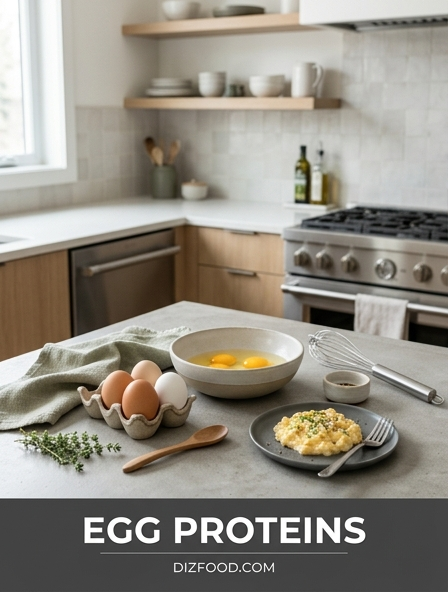
The Science of Egg Protein Denaturation
Egg white protein denaturation is the foundational process behind every successful meringue and soufflé. In their natural state, egg proteins like ovalbumin and ovotransferrin are tightly folded into globular shapes, held together by weak chemical bonds. When you apply mechanical shear through whisking, these bonds are physically disrupted, causing the protein chains to uncurl and stretch out. This transformation exposes the amino acids' hydrophobic and hydrophilic regions, which were previously tucked away.
As these proteins denature, they re-align themselves at the interface between air and water. The hydrophilic parts remain submerged in the egg white's moisture, while the hydrophobic parts reach into the newly introduced air bubbles. This alignment creates a thin, protective film that stabilizes the air pockets, preventing them from collapsing. However, the process is delicate; over-denaturation occurs when the proteins bond too tightly, creating a dense network that squeezes out water, resulting in a grainy, collapsed foam. Achieving the perfect balance requires a keen understanding of how physical force influences these molecular structures.
Choosing the Best Whisk for Aeration
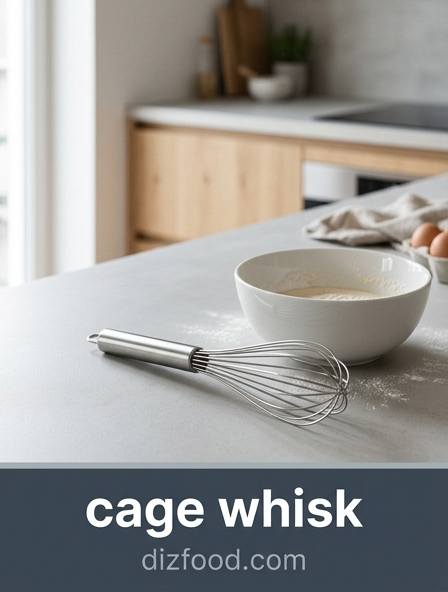
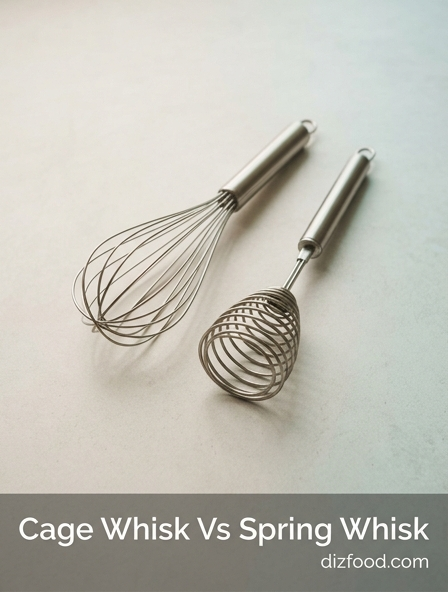
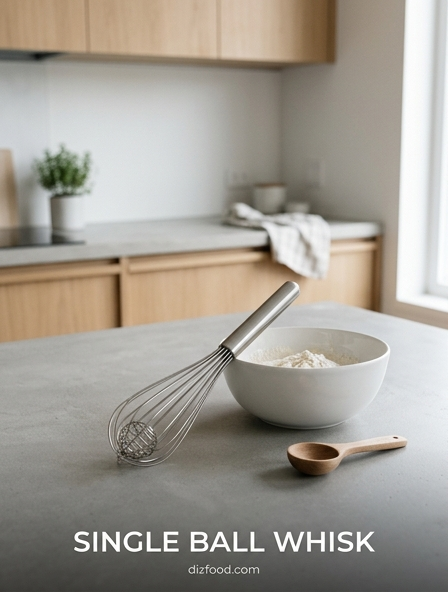
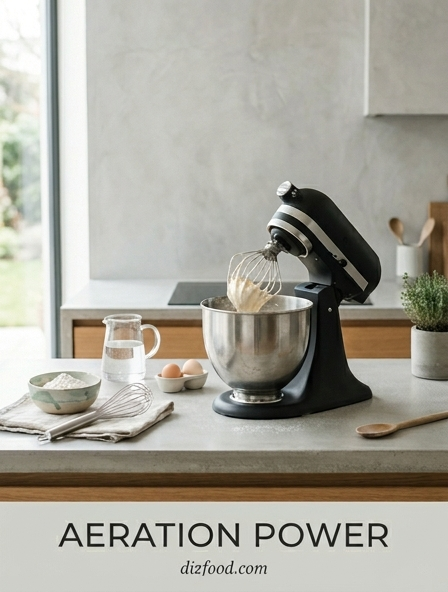
Selecting the appropriate tool is critical for efficient aeration and protein structure development. While many modern kitchens rely on electric mixers, the physical design of the whisk determines how effectively air is integrated into the protein matrix. A balloon whisk is the gold standard for egg whites due to its wide, rounded shape and high wire count, which maximizes the surface area contact per stroke.
- Wire Count: A whisk with more wires creates more turbulence, breaking air into smaller, more stable bubbles.
- Wire Flexibility: Thinner, flexible wires move more quickly through the liquid, enhancing the "cutting" action needed for denaturation.
- Handle Weight: A balanced handle reduces wrist fatigue, allowing for the consistent rhythm necessary for manual aeration.
In contrast, a French whisk is narrower and better suited for emulsifying heavy sauces or vinaigrettes where high-volume air incorporation is not the primary goal. When aiming for maximum volume in egg whites, the bulbous geometry of the balloon whisk is unmatched, as it allows the cook to pull air from the top of the bowl and drive it deep into the base of the proteins.
Copper vs Stainless Steel Mixing Bowls
The choice of mixing bowl material significantly affects the chemical stability of egg white foams. Professional pastry chefs often favor copper bowls for their unique reactive properties. When egg whites are whisked in a copper vessel, a small amount of copper ions migrates into the egg whites. These ions bind with conalbumin, one of the primary proteins in the egg, creating a complex called dicopper-conalbumin. This complex is much more resistant to over-beating and heat-induced collapse than the proteins alone.
| Material | Advantage | Disadvantage |
|---|---|---|
| Copper | Prevents over-beating; produces creamy, stable foam. | Reactive with acidic ingredients; expensive. |
| Stainless Steel | Non-reactive; durable; easy to sanitize. | More prone to over-beating and graininess. |
| Plastic | Lightweight and affordable. | Retains fat molecules that inhibit foam. |
While stainless steel is a versatile and sanitary choice, it provides no chemical assistance to the proteins. Consequently, when using steel, cooks must be more vigilant about the timing and addition of stabilizing agents like cream of tartar to mimic the stabilizing effects naturally provided by copper ions.
Impact of Whisking Speed on Air Bubble Structure
The velocity at which you whisk egg proteins dictates the final texture and longevity of the foam. Starting at a high speed may seem efficient, but it often produces large, uneven air bubbles that are structurally weak. These "macro-bubbles" have thin walls that are prone to bursting, leading to a foam that weeps or collapses shortly after beating. A gradual increase in speed is the preferred method for building a resilient protein network.
Beginning at a low speed allows the proteins to slowly uncurl and begin the process of denaturation without being overwhelmed. As the whites move from a fluid state to a frothy consistency, increasing to medium speed helps create a uniform distribution of small air pockets. This uniformity is vital; a high density of small bubbles creates a more robust architecture than a low density of large ones. Finally, finishing on a medium-high speed provides the necessary force to achieve the desired peak stiffness. This methodical approach ensures that the protein films are strong enough to withstand the expansion of air during the baking process.
The Role of Acids in Stabilizing Foam
Acids play a pivotal role in the kitchen by manipulating the pH levels of egg whites to improve foam stability. Natural egg whites are slightly alkaline, which encourages the proteins to bond tightly together. While some bonding is necessary for structure, excessive bonding-especially the formation of strong disulfide bonds-leads to a dry and lumpy texture. By introducing an acid, such as cream of tartar, lemon juice, or white vinegar, you lower the pH of the mixture.
This increased acidity changes the electrical charge of the protein molecules, causing them to repel one another slightly. This repulsion prevents the proteins from coagulating too quickly or too tightly. As a result, the foam remains flexible and elastic, allowing it to expand significantly in the oven without the protein walls snapping. Typically, about 1/8 teaspoon of cream of tartar per egg white is sufficient to achieve this stabilizing effect. This chemical intervention is especially crucial when using stainless steel or glass bowls, where the natural stabilizing ions found in copper are absent.
Temperature Secrets for Maximum Volume
The temperature of egg whites at the start of whisking is a major factor in the total volume achievable. Cold eggs are easier to separate because the yolk is firmer and less likely to break, but they are not ideal for whipping. Cold egg whites have higher surface tension and the proteins are more tightly coiled, making them resistant to expansion. For the most impressive volume, it is widely recommended to bring egg whites to room temperature, approximately 70°F (21°C), before beginning the aeration process.
At room temperature, the surface tension is lower, allowing the whisk to integrate air more easily. The protein chains are also more relaxed, which facilitates faster denaturation and more effective film formation around air bubbles. If you are in a rush, you can place whole eggs in a bowl of warm water for several minutes to take the chill off. However, it is vital to ensure that no moisture or yolk enters the whites during this transition, as even a microscopic amount of fat or water can interfere with the protein's ability to trap air, regardless of the temperature.
Achieving Perfect Soft and Stiff Peaks
The transition from a liquid to a solid-like foam is marked by specific visual and physical milestones known as "peaks." Recognizing these stages is essential for different culinary applications. Soft peaks are reached when the whisk is lifted and the foam forms a mound that gently curls over at the tip. This stage is ideal for folding into batters for pancakes or light cakes, as the foam is still flexible enough to be incorporated without losing its air.
As whisking continues, the foam moves toward medium peaks and eventually stiff peaks. Stiff peaks are characterized by a foam that stands straight up without drooping when the whisk is inverted. At this stage, the protein network is highly reinforced and holds a significant amount of air. Stiff peaks are required for meringues and decorative piping. Achieving this state requires precision; if you go too far, the foam will become "over-beaten," losing its glossy sheen and becoming brittle. The texture changes from silky and smooth to dry and grainy as the proteins begin to squeeze out the water they once held.
Common Whisking Pitfalls to Avoid
Even experienced cooks can encounter failures when working with egg proteins. Understanding the common culprits of a failed foam can help you troubleshoot and ensure success in future attempts. The most frequent issues usually stem from contamination or timing errors during the whipping process.
- Fat Contamination: Even a tiny speck of egg yolk or grease on the bowl can prevent proteins from forming a stable bond around air bubbles.
- Over-beating: Continuing to whisk after stiff peaks have formed causes the proteins to clump together, resulting in a watery, grainy mess.
- Speed Rushing: Starting at high speed creates large, unstable bubbles that deflate easily during baking or folding.
- Premature Sugar: Adding sugar too early can weigh down the proteins before they have had a chance to establish a basic structure.
To avoid these pitfalls, always start with a meticulously clean, fat-free bowl-preferably glass, metal, or copper. Using a bit of lemon juice or vinegar to wipe down the equipment beforehand can ensure all residual oils are removed, providing the best environment for the proteins to thrive.
The Chemistry of Sugar Incorporation
Sugar is more than just a sweetener in egg white foams; it acts as a powerful structural stabilizer. However, its timing and method of addition are critical. Because sugar is hygroscopic, it attracts and binds with the water in the egg whites. When added correctly, it dissolves into the water to create a thick, viscous syrup that coats the protein films. This syrup adds weight and elasticity to the bubble walls, making the foam much more resistant to collapsing or weeping.
If sugar is added at the very beginning, it interferes with the proteins' ability to denature and unfold, significantly increasing the time required to reach a foam state. The ideal technique is to wait until the egg whites have reached the "soft peak" stage. At this point, a basic protein structure has been established. Adding the sugar gradually, one tablespoon at a time, ensures that it dissolves completely. If the sugar is not fully dissolved, the meringue will develop a gritty texture and may "bead" (forming small sugar droplets) after it is baked.
Advanced Techniques for Silky Meringue Texture
To achieve the pinnacle of silky, stable meringue, advanced techniques like the Swiss or Italian methods are often employed. These methods differ from the standard "French" meringue by introducing heat, which partially cooks the proteins and dissolves the sugar more thoroughly. In the Swiss method, egg whites and sugar are whisked over a bain-marie (hot water bath) until the sugar is dissolved and the mixture reaches approximately 160°F (71°C). The mixture is then removed from the heat and whipped until cool and stiff.
The Italian method involves pouring a hot sugar syrup (cooked to the "soft ball" stage) into egg whites that are already at soft peaks. The heat from the syrup simultaneously cooks the proteins and creates an incredibly dense, stable, and glossy foam. These techniques produce a much finer bubble structure and a texture that is exceptionally smooth. Because the proteins are denatured by both heat and mechanical action, the resulting meringue is less prone to shrinking and can be used as a topping for tarts or as a base for silk-like buttercream frostings.

Comments