
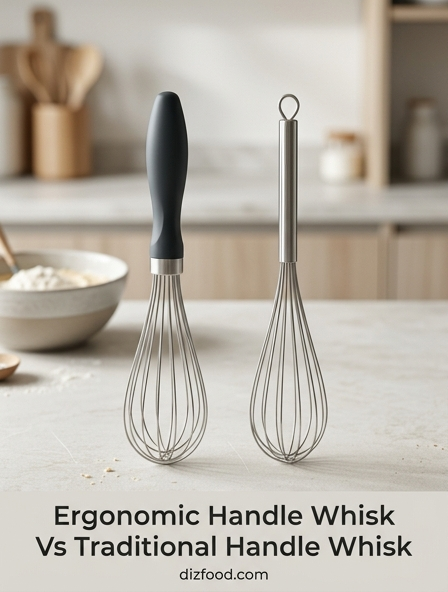
Finding the perfect balance between culinary efficiency and hand comfort often comes down to the tool in your palm: the whisk. While the traditional straight-handle whisk remains a professional staple for its lightweight agility and classic aesthetic, the ergonomic handle whisk has revolutionized home baking by addressing the physical toll of repetitive motion. Engineered with contoured grips and non-slip materials like silicone or TPE, ergonomic models are designed to sit naturally in the hand, significantly reducing wrist strain and muscle fatigue during demanding tasks like emulsifying thick sauces or whipping heavy creams. Choosing the right grip isn't just about style; it's about optimizing your leverage and ensuring that every stroke is as effortless as possible, allowing you to focus on the texture of your recipe rather than the ache in your arm.
| Feature | Ergonomic Handle Whisk | Traditional Handle Whisk |
|---|---|---|
| Grip Architecture | Contoured, thick, and cushioned; fits palm anatomy. | Slim, cylindrical, or tapered; uniform diameter. |
| Muscle Fatigue | 70% reduction in grip pressure required. | Higher strain during prolonged or heavy mixing. |
| Surface Material | Non-slip TPE, silicone, or soft-touch plastic. | Polished stainless steel, wood, or thin wire. |
| Control & Torque | Maximum leverage for thick batters/doughs. | High precision for light aeration and foams. |
| Weight Balance | Handle-heavy; provides a grounded, stable feel. | Head-heavy or neutral; allows for rapid flicking. |
| Ideal Application | Extended use; users with arthritis or carpal tunnel. | Quick tasks; professional high-speed whisking. |
The Evolution of Whisk Handle Design
The history of the whisk is a testament to culinary necessity driving industrial innovation. In the early stages of professional cooking, the "whisk" was often nothing more than a bundle of birch twigs or stiff herbs tied together. These primitive tools required immense physical effort and offered very little in the way of comfort or consistency. As metallurgy advanced in the 19th century, the wire-loop whisk emerged, primarily featuring a thin, cylindrical metal handle. This design was standardized by French culinary traditions, emphasizing a sleek profile that fit easily into a chef's apron pocket or a tool crocks. These traditional handles were functional but prioritized the durability of the tool over the comfort of the user.
The significant shift toward ergonomic design occurred in the late 20th century, spurred by a growing awareness of repetitive strain injuries and a demand for more accessible kitchen tools. Designers began to realize that the human hand is not naturally shaped to grip a thin, hard rod for extended periods. This led to the introduction of various materials and shapes, moving away from uniform cylinders toward contoured forms that mimic the natural resting state of the palm. Modern whisks now incorporate soft-touch plastics, silicone, and weighted balances that were unimaginable during the era of the classic French whisk. This evolution reflects a broader movement in kitchenware that treats the cook's physical well-being as a critical component of the tool's overall performance and utility.
Ergonomic Whisk Benefits for Joint Comfort
For individuals dealing with arthritis, carpal tunnel syndrome, or general joint sensitivity, the handle of a whisk can be the difference between an enjoyable cooking experience and a painful one. Ergonomic handles are specifically engineered to reduce the "pinch grip" force required to maintain control. Traditional thin handles require the fingers to curl tightly, putting significant pressure on the smaller joints of the hand. In contrast, ergonomic designs often feature a larger diameter, which allows for a more relaxed, "power grip" posture. This distribution of mechanical stress across the palm rather than the fingers significantly mitigates joint inflammation during tasks like whipping cream or tempering eggs.
- Pressure Distribution: Soft-touch coatings absorb the micro-vibrations generated during vigorous whisking, protecting the wrist.
- Anatomical Shaping: Bulbous or teardrop-shaped handles fill the natural hollow of the palm, providing stability without excessive squeezing.
- Non-Slip Surfaces: Materials like Santoprene ensure that even with wet or oily hands, the user doesn't have to tighten their grip to prevent slipping.
The psychological benefit of comfort cannot be overstated. When a cook is not distracted by physical discomfort, they are more likely to achieve the desired texture and consistency in their recipes. By prioritizing joint health, ergonomic whisks extend the culinary longevity of home cooks and professionals alike, ensuring that repetitive motions do not lead to long-term physical setbacks.
Traditional Whisks and Timeless Culinary Precision
Despite the rise of ergonomic alternatives, traditional stainless steel whisks with thin, straight handles remain a staple in many high-end pastry kitchens. The primary argument for the traditional design is the level of tactile feedback it provides. Because the handle is often made of the same gauge of steel as the wires, the vibrations and resistance of the batter are transmitted directly to the chef's hand. This allows for a precise "feel" of the mixture's viscosity, which is essential when making delicate emulsions like hollandaise or sabayon. In these scenarios, the handle acts as an extension of the nervous system, providing real-time data on the progress of the sauce.
Furthermore, traditional whisks are often favored for their sleekness and lack of bulk. In a crowded professional kitchen, space is at a premium, and the slim profile of a classic French or balloon whisk allows it to be stored easily in narrow containers or hung on thin racks. The absence of rubber or plastic components also makes these whisks highly resistant to high temperatures, allowing them to be left against the side of a hot pan without the risk of melting or off-gassing. For the traditionalist, the lack of "padding" is not a flaw but a feature that ensures the tool remains lightweight, agile, and incredibly responsive to the subtle movements of the fingers rather than the broad strokes of the arm.
Comparing Grip Texture and Control Stability
The interaction between the surface of the whisk handle and the cook's hand determines the overall stability of the whisking motion. Traditional handles are almost exclusively polished or brushed stainless steel. While aesthetically pleasing and hygienic, they can become dangerously slippery when exposed to steam, oil, or flour. Ergonomic handles, however, utilize advanced materials science to create high-friction surfaces that maintain stability under adverse conditions. This is particularly important when whisking thick, heavy batters that provide significant resistance, as a slip could result in a kitchen mess or a strained wrist.
| Feature | Traditional Handle (Steel) | Ergonomic Handle (Composite) |
|---|---|---|
| Surface Friction | Low; prone to slipping when wet. | High; non-slip even when oily. |
| Temperature Transfer | Conducts heat quickly. | Insulated; stays cool to the touch. |
| Vibration Damping | Minimal; transfers all force to hand. | Excellent; absorbs impact and tension. |
| Cleaning Ease | High; dishwasher safe and seamless. | Moderate; seams can trap debris. |
The choice of texture also influences the speed of movement. A smooth steel handle allows for rapid rotation between the palms, a technique often used for vinaigrettes. Conversely, an ergonomic grip is designed for a more secure, directional hold, favoring power and stability over the high-speed "spinning" motion. Understanding these textural nuances helps a cook choose the right tool for the specific task at hand.
Whisking Speed and Aeration Performance Efficiency
Efficiency in whisking is measured by how quickly air can be incorporated into a liquid to create volume. The handle plays a surprising role in this kinetic process. A heavy, ergonomic handle changes the center of gravity of the whisk, often shifting it closer to the hand. This can make the whisk feel more balanced and allow for longer periods of sustained motion. When the weight is concentrated in the handle, the user can utilize the momentum of the tool to maintain a rhythmic pace, which is essential for tasks like aerating egg whites for a meringue or heavy cream for a mousse.
However, some professional chefs find that the added bulk of an ergonomic handle actually slows down their maximum whisking speed. Because the handle is thicker, the circumference that the fingers must travel during a rotation is larger, which can lead to slower "beats" per second. In contrast, the thin handle of a traditional whisk allows for a very tight, fast flick of the wrist. This high-frequency movement is often superior for breaking up small clumps of flour in a roux or achieving the finest possible bubbles in a foam. Ultimately, the performance efficiency depends on whether the task requires the "blunt force" of a heavy grip or the "high-speed agitation" of a thin, light handle.
Reducing Hand Fatigue During Intensive Baking
Intensive baking sessions-such as those during the holidays or in a professional bakery-involve repetitive motions that can lead to rapid muscular exhaustion. Hand fatigue often stems from the overactivation of the thenar eminence (the fleshy part of the palm at the base of the thumb) and the forearm muscles. Ergonomic whisks are designed to keep these muscles in a more neutral position. By increasing the diameter of the handle, the muscles are not forced into a fully contracted state, which allows for better blood flow and slower onset of lactic acid buildup. This is why many pastry professionals switch to ergonomic tools when preparing large batches of stiff doughs or frostings.
Traditional whisks, while lighter, require a "constant-clench" technique to ensure they don't fly out of the hand during vigorous use. This constant tension is the primary cause of cramping. Modern ergonomic handles often feature a flared base or a "hook" shape at the end, which provides a physical stop for the hand. This allows the cook to exert downward or lateral force without having to squeeze the handle tightly just to keep it in place. By reducing the total workload of the hand's intrinsic muscles, these designs enable the cook to work for longer durations with greater consistency in their whisking technique, leading to better-quality finished products.
Durability Analysis of Modern vs Classic Handles
When analyzing the lifespan of kitchen tools, the traditional stainless steel whisk is almost unrivaled. Because it is often constructed from a single material with no moving parts or bonded surfaces, there is very little that can fail. These whisks can be subjected to industrial dishwashers, high-heat sterilization, and even direct flame without compromising their structural integrity. The wires are usually swaged or welded directly into the steel handle, creating a permanent bond that can last for decades of heavy use. For a kitchen that prioritizes longevity and "buy it once" utility, the classic handle is the clear winner.
Ergonomic whisks, while superior in comfort, often face durability challenges due to their multi-material construction. The soft rubbers and silicones that provide the grip are susceptible to degradation over time. Exposure to high heat can cause some plastics to become brittle or sticky, and the seam where the soft grip meets the metal wires can occasionally become a point of failure or a trap for bacteria. Furthermore, intensive cleaning in dishwashers can eventually cause the adhesives to fail, leading to handles that wiggle or slip off entirely. However, high-quality modern brands have mitigated these issues by using injection-molding techniques that fuse the handle to the wires, though they still generally have a shorter lifespan than their all-steel counterparts.
Professional Chef Preferences for Handle Ergonomics
The preference of a professional chef usually falls into one of two camps: the "Speed Purist" or the "Production Workhorse." The speed purist often sticks with the traditional handle. In a fast-paced line-cooking environment, the whisk is used for 30 seconds at a time to finish a sauce or emulsify a dressing. For these short bursts, the agility and ease of cleaning a stainless steel handle are paramount. Chefs also appreciate that traditional whisks are inexpensive and easily replaced, making them ideal for the high-loss environment of a commercial kitchen where tools often go missing or are used roughly.
On the other hand, the production workhorse-often a pastry chef or a prep cook-frequently opts for ergonomic handles. When a task involves 20 minutes of constant whisking over a double boiler, the ergonomic benefits far outweigh the minor loss in agility. Many modern culinary schools have begun introducing ergonomic tools as the standard to teach students how to avoid the chronic wrist injuries that have historically plagued the industry. Additionally, the color-coding possibilities of ergonomic handles (often available in different colored grips) allow for better organization and food safety protocols, helping kitchens prevent cross-contamination by dedicating specific whisks to specific tasks, such as gluten-free prep or raw egg handling.
The Science of Leverage in Whisk Design
The mechanics of whisking involve a complex interplay of leverage and torque. The handle serves as the lever arm, and the wrist acts as the fulcrum. In a traditional whisk with a thin handle, the radius of the lever is small, requiring the user to apply more internal muscle force to overcome the resistance of a thick liquid. This is basic physics: a smaller handle offers less mechanical advantage for the hand's rotation. Ergonomic handles increase the distance from the center of the tool to the surface of the grip. This increased radius means that for every degree of rotation, the hand is exerting force over a larger area, effectively increasing the torque applied to the whisk wires with less effort from the user.
Another scientific consideration is the weight distribution. Many ergonomic whisks are "handle-heavy," which uses gravity to assist in the downward stroke of the whisking motion. This is particularly useful in the "circular" whisking style common in Western cooking. Conversely, the "side-to-side" or "beating" motion favored in some Asian and French techniques benefits from a more balanced or "head-heavy" tool, where the momentum of the wires themselves helps drive the aeration. By understanding the science of leverage, manufacturers can fine-tune handle lengths and diameters to optimize the whisk for specific culinary applications, from thin liquids to dense batters.
Selecting the Best Whisk for Your Cooking Style
Choosing between an ergonomic and a traditional whisk depends entirely on your personal cooking habits and physical needs. There is no one-size-fits-all solution, as the "best" whisk is the one that feels most natural in your hand during your most frequent kitchen tasks. If you are someone who only whisks occasionally-perhaps for a quick vinaigrette or a small batch of scrambled eggs-the durability and simplicity of a traditional stainless steel whisk are likely your best bet. It is easy to clean, lasts a lifetime, and takes up minimal space.
However, if you find yourself baking frequently or if you experience any hand discomfort, investing in a high-quality ergonomic whisk is a necessity. To select the right one, follow these steps:
- Test the Diameter: Hold the whisk and ensure your fingers don't have to overlap or squeeze tightly to feel secure.
- Check the Weight: A heavier handle provides more power, while a lighter handle provides more speed. Pick the one that matches your primary task.
- Evaluate Material: Ensure the handle material is heat-resistant if you plan to use it for stovetop custards or sauces.
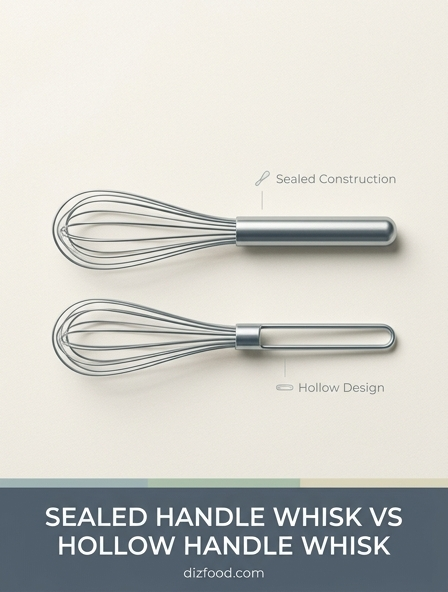
- Inspect the Seal: Look for a whisk where the wires are fully sealed into the handle to prevent water and food particles from entering.
Ultimately, many accomplished home cooks find that owning one of each style provides the greatest versatility, allowing them to switch tools based on the physical demands of the recipe.

Comments