
Ergonomic Design for Reduced Hand Fatigue
Ergonomic architecture in kitchen utensils focuses on the interface between human physiology and mechanical utility. In a high-pressure culinary environment, repetitive motions such as chopping, whisking, and peeling can lead to significant muscular strain. By designing handles that accommodate the natural resting position of the hand, manufacturers can minimize the tension required to maintain a secure hold. A neutral wrist alignment is critical; handles that force the wrist into ulnar or radial deviation increase the risk of long-term injury. Ergonomic grips often feature a soft-touch exterior that absorbs vibration and distributes pressure evenly across the palm, preventing the formation of painful "hot spots."
- Neutral grip positioning to reduce carpal tunnel pressure.
- Pressure distribution surfaces to eliminate localized bruising.
- Vibration dampening materials for motorized appliance handles.
- Symmetrical designs for ambidextrous usability.
When the grip architecture aligns with the hand's skeletal structure, the chef can focus on precision rather than compensation. This synergy reduces the overall caloric expenditure of the muscle groups in the forearm, allowing for longer periods of preparation without a decline in technique or safety standards.
Maximizing Leverage with Contour Grips
Contour grips are engineered to provide mechanical advantage by locking the hand into the most efficient power position. The architecture of a contoured handle utilizes the varying heights of the fingers and the thickness of the palm to create a "lock" that prevents slipping. This is especially vital when dealing with heavy-duty tasks like crushing garlic or cutting through dense root vegetables. By filling the void of the palm, the tool becomes an extension of the arm, allowing for the direct transfer of body weight into the cutting or pressing surface.
| Design Element | Mechanical Function |
|---|---|
| Palm Swell | Increases surface contact for force distribution |
| Finger Grooves | Prevents longitudinal slipping during pull motions |
| Flared Pommel | Provides a stop for the pinky to increase leverage |
These architectural features ensure that the user does not need to squeeze the handle with maximum force to maintain control. Instead, the geometry of the tool does the work of stabilizing the grip, which preserves the chef's stamina and ensures that the force applied is directed precisely where it is needed, rather than being dissipated through hand adjustments.
Precision Control through Tapered Handles
For tasks requiring delicate finesse, such as paring fruit or decorating pastries, tapered handle architecture is superior. A tapered grip typically starts wider at the base and narrows toward the working end of the tool. This geometry allows the user to choke up on the handle, bringing the center of control closer to the blade or tip. This "pencil grip" configuration engages the fine motor muscles of the thumb and forefinger rather than the larger, clunkier muscles of the forearm. By narrowing the diameter near the point of contact, the tool provides a higher degree of tactile feedback, allowing the chef to feel the resistance of the food product more acutely.
Tapered designs also facilitate quick rotations. When a handle is thinner at the neck, it is easier to twirl the tool between the fingers, which is essential for intricate garnishing. This architectural choice prioritizes agility over raw power, making it the standard for specialized knives and plating tweezers. The transition from a thick palm rest to a thin neck ensures that while the hand remains comfortable, the fingertips retain the sensitivity necessary for world-class culinary execution.
Impact of Handle Material on Grip Stability
The material composition of a kitchen grip is just as important as its shape. In a professional kitchen, handles are frequently exposed to water, fats, and oils, all of which can drastically reduce the coefficient of friction. Grip architecture must account for these environmental variables to ensure safety. High-performance materials like santoprene, textured polypropylene, and treated hardwoods offer different levels of "tackiness" and durability. A material with a high friction coefficient allows for a looser grip, which paradoxically leads to better control because the muscles are not locked in a tight, fatiguing squeeze.
- Silicone: High heat resistance and excellent wet-grip properties.
- Stainless Steel: Extremely hygienic and durable, but requires knurling for traction.
- Composite Wood: Provides the warmth of natural grain with resin-based water resistance.
- Thermoplastic Rubbers: Offers a "squishy" feel that conforms to individual hand shapes.
Furthermore, the porosity of the material affects hygiene. Non-porous synthetics are often preferred in high-volume environments to prevent the absorption of bacteria. The architectural challenge lies in balancing this need for sanitization with the requirement for a surface texture that remains stable even when coated in olive oil or flour.
Anatomical Benefits of Non-Slip Surfaces
Non-slip surfaces are an essential component of modern grip architecture, serving as a primary safety feature. When a tool slips, the user's natural reaction is to over-compensate with a sudden, forceful contraction of the hand muscles. This "startle response" can lead to tendonitis or acute strains. By integrating micro-textures or "over-molded" rubberized sections, designers create a surface that interlocks with the ridges of the human fingerprint. This microscopic mechanical bond significantly reduces the amount of grip force required to keep a tool from rotating or sliding during use.
- Micro-texturing: Enhances friction without adding bulk to the handle.
- Stippling: Provides multi-directional resistance against sliding.
- Ribbing: Channels fluids away from the contact point, similar to tire treads.
- Soft-touch coatings: Increase the contact patch by deforming slightly under pressure.
From an anatomical perspective, these surfaces allow the hand to remain relaxed. A relaxed hand has better proprioception, meaning the chef is more aware of the tool's position in space. This heightened awareness is the key to both speed and safety in a fast-paced kitchen, as it prevents the clumsy movements associated with over-exertion and fatigue.
Balancing Weight for Effortless Aeration
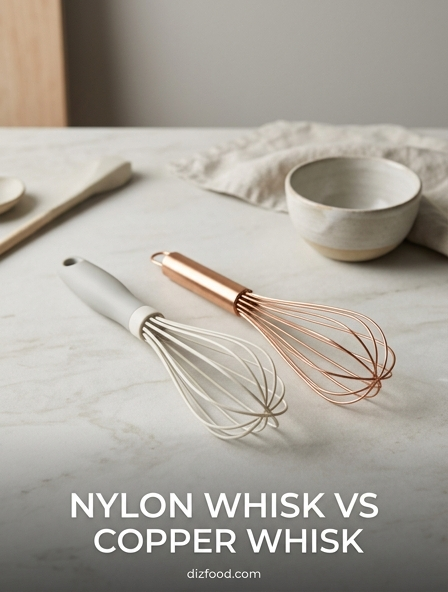
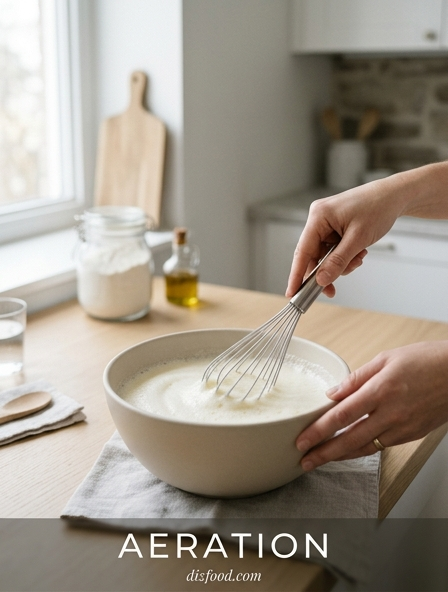
In the context of whisking and beating, the architectural balance of the tool is paramount. A handle that is too heavy shifts the center of gravity toward the palm, making the head of the whisk feel unresponsive. Conversely, a head-heavy tool requires the wrist to work harder to overcome inertia with every stroke. The ideal grip architecture for aeration tools places the balance point just forward of the index finger. This creates a pendulum effect, where the tool's own weight assists in the circular or side-to-side motion required to incorporate air into creams and egg whites.
Effective aeration requires high-velocity movement. If the handle is bulky or improperly weighted, the chef will naturally slow down to maintain control, resulting in a less stable foam or emulsion. Lightweight hollow-core handles or high-density polymers are often used to fine-tune this balance. By manipulating the internal geometry of the handle, designers can create a tool that feels weightless in motion. This "effortless" quality is not merely a luxury; it is a functional requirement for achieving the consistent, high-volume aeration needed for professional-grade meringues, hollandaise, and soufflés.
Optimizing Wrist Motion with Teardrop Shapes
The teardrop-shaped handle is a masterpiece of functional architecture, specifically designed to match the closing arc of the human fingers. Unlike perfectly circular handles, which can roll in the hand, the teardrop profile provides a flat "spine" and a tapered "belly." This asymmetry gives the user an intuitive sense of the tool's orientation without needing to look at it. When performing tasks that involve rotating the wrist-such as flipping a sauté pan or stirring a thick roux-the teardrop shape provides a wider surface for the fingers to push against, increasing torque.
- Prevents "rolling" during high-torque stirring tasks.
- Indicates blade or head orientation through tactile feedback.
- Fits the natural void created by a semi-closed fist.
- Reduces the need for constant visual re-alignment of the tool.
This shape is particularly effective for large spoons and spatulas. Because the hand can exert more leverage against an elliptical or teardrop cross-section than a round one, the chef can move larger volumes of food with less effort. It optimizes the rotational mechanics of the forearm, ensuring that the kinetic energy from the elbow and shoulder is translated directly to the business end of the utensil.
Leveraging Diameter for Better Torque
The diameter of a kitchen handle is a critical variable in grip architecture, directly influencing the amount of torque a user can generate. Physics dictates that a wider handle provides a longer lever arm from the center of rotation, making it easier to twist the tool against resistance. This is why tools intended for heavy mixing or opening jars often feature significantly thicker grips. However, if a handle is too thick, the fingers cannot wrap around it sufficiently to maintain a secure hold, leading to a loss of control. The "sweet spot" for diameter depends on the specific task and the size of the user's hand.
| Handle Diameter | Primary Use Case | Mechanical Advantage |
|---|---|---|
| Small (15-20mm) | Detailed paring, precision garnishing | High agility, low torque |
| Medium (25-35mm) | General chopping, standard whisking | Balanced power and control |
| Large (40mm+) | Heavy dough mixing, jar opening | Maximum torque, low fatigue |
Architectural considerations for diameter also include "power grips" versus "precision grips." By varying the diameter along the length of the handle, designers can accommodate both styles in a single tool, allowing for a versatile piece of equipment that serves multiple culinary functions.
Professional Handling for High Volume Whisking
High-volume whisking in a commercial bakery or restaurant requires a handle architecture that can withstand hours of continuous use. For these tools, the grip must be oversized and often features a flared end to prevent the hand from sliding off during vigorous upward strokes. The architecture typically incorporates a reinforced internal tang that extends deep into the handle, providing the structural rigidity needed to prevent the tool from flexing under the weight of thick batters. In these settings, the grip is often textured with a aggressive "diamond plate" pattern to maintain stability even when the chef's hands are covered in flour or fat.
- Oversized grips to engage the entire hand and reduce localized strain.
- Sealed handles to prevent liquid ingress and bacterial growth.
- Weighted ends to counterbalance the resistance of heavy mixtures.
- Impact-resistant materials to survive frequent drops on kitchen floors.
The professional whisk handle is built for endurance. By focusing on a large-diameter, high-friction design, the architecture ensures that the chef can maintain the high RPMs necessary for emulsification without the hand cramping or the tool failing. This is the intersection of industrial engineering and culinary necessity.
Custom Geometry for Specific Culinary Tasks
Beyond standard ergonomic shapes, custom geometry in grip architecture addresses the unique requirements of specialized culinary tasks. For example, an offset spatula features a handle that is raised several inches above the blade. This architectural choice is not for hand comfort alone; it allows the chef's hand to clear the surface of a cake or a hot griddle, providing a flat angle for spreading or flipping. Similarly, the "D-shaped" handles found on some heavy-duty cleavers are designed to prevent the knife from rotating in the hand when striking through bone, where a traditional round handle might fail.
Other custom geometries include the "pistol grip" for cordless immersion blenders, which allows the weight of the motor to be supported by the palm rather than the fingers, and the "bulbous" ends of muddlers that provide a large surface for downward pressure. Every angle, flare, and curve in these specialized tools is a response to a specific physical challenge. By deviating from traditional handle norms, custom geometry optimizes the tool for its specific mission, ensuring that the architecture of the grip is perfectly tuned to the physics of the task at hand.

Comments