
Choosing the right finish for your kitchen appliances often comes down to a balance between professional aesthetics and everyday household safety. While metal housing offers that classic, industrial durability and a premium "chef-grade" feel, it can become dangerously hot to the touch during operation. Conversely, cool-touch exteriors-typically engineered from high-quality heat-resistant polymers or featuring double-walled insulation-provide a vital protective barrier, making them the superior choice for busy families with curious children. Whether you are prioritizing the sleek, timeless look of stainless steel or the peace of mind provided by advanced thermal insulation, understanding how these materials manage heat conductivity and long-term wear is essential for selecting the perfect toaster, air fryer, or kettle for your home.
| Feature | Cool-Touch Exterior | Metal Housing |
|---|---|---|
| Primary Material | Heat-resistant plastic / BPA-free polymers | Stainless steel / Die-cast aluminum |
| Safety Profile | Stays cool; prevents accidental burns | High surface heat; requires caution |
| Durability | Resistant to dents; may crack if dropped | High impact resistance; lasts decades |
| Heat Insulation | Excellent; traps heat inside the unit | Low; radiates heat into the kitchen |
| Maintenance | Wipes clean; hides fingerprints well | Shows smudges; requires frequent polishing |
| Aesthetic Appeal | Modern colors; matte or glossy finishes | Professional, high-end industrial look |
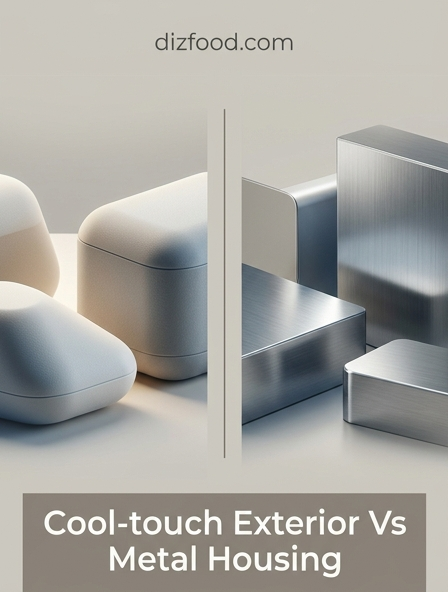
Safety Benefits of Cool Touch Exterior vs Traditional Metal Housing
In a high-activity kitchen environment, the external temperature of appliances like kettles, toasters, and air fryers is a critical safety consideration. Traditional metal housing is highly conductive, often reaching temperatures that can cause instantaneous second-degree burns upon contact. When a stainless steel appliance is operating at boiling or high frying temperatures, the exterior surface mirrors the internal heat, creating a hazard for anyone working nearby. This is particularly concerning in households with small children or pets who may inadvertently touch a hot surface during the cooking process.
Cool-touch exteriors utilize advanced insulation techniques to decouple the internal heating element from the outer shell. By creating a thermal barrier, these appliances ensure that the exterior remains safe to handle, even when the contents are at their highest temperature. This design choice significantly reduces the risk of accidental kitchen injuries. Below are some of the primary safety features associated with cool-touch technology:
- Reduced Surface Temperature: Outer layers rarely exceed 50°C (122°F), preventing skin burns.
- Child Safety: Minimizes risks in "active" zones where toddlers might reach up to counters.
- Reduced Fire Risk: Low external heat decreases the likelihood of nearby items, like kitchen towels or plastic bags, melting or igniting.
- Ease of Handling: Allows users to move or stabilize an appliance immediately after use without waiting for a long cooling period.
While metal housing is praised for its professional look, the safety profile of cool-touch materials makes them an increasingly popular choice for domestic settings where accidental contact is a frequent possibility.
Durability and Longevity of Metal Housing Compared to Plastic
When evaluating the lifespan of kitchen appliances, the choice between metal housing and plastic-based cool-touch exteriors often reveals a significant gap in durability. Metal housing, typically constructed from stainless steel, aluminum, or die-cast iron, offers superior resistance to physical impacts, scratches, and structural fatigue. In the demanding environment of a kitchen, where heavy cookware and sharp utensils are constantly moved, a metal exterior can withstand significant wear and tear without cracking or shattering.
Cool-touch exteriors, which often utilize high-grade polycarbonates or heat-resistant plastics, may be prone to degradation over time. While modern plastics are engineered for heat resistance, prolonged exposure to high temperatures can eventually lead to embrittlement. This can result in hairline fractures or a "chalky" texture that compromises the appliance's appearance and structural integrity. Metal, conversely, does not suffer from UV-induced yellowing or heat-related warping in the same manner as many synthetic alternatives.
| Factor | Metal Housing | Cool-Touch Plastic |
|---|---|---|
| Impact Resistance | High (Dents rather than cracks) | Moderate (May crack or shatter) |
| Heat Resistance | Superior (Won't melt) | High (Engineered, but can warp) |
| Surface Aging | Maintains luster (with polishing) | Can yellow or become brittle |
| Stain Resistance | Highly non-porous | Susceptible to chemical staining |
For the consumer who views kitchen appliances as a long-term investment, metal housing typically wins the durability contest. While it may become dangerously hot, its ability to survive a decade of mechanical stress makes it the standard for high-end, professional-grade equipment.
Thermal Conductivity and Heat Retention in Appliance Design
The physics of heat transfer plays a pivotal role in how kitchen appliances are designed. Metals are excellent conductors of heat, meaning they absorb energy from the internal heating element and radiate it outward very efficiently. In a traditional metal-housed kettle, the heat is transferred through the wall and lost to the surrounding air. This results in greater energy consumption, as the appliance must work harder to maintain internal temperatures against the constant loss of heat through the exterior skin.
Cool-touch appliances address this inefficiency through the use of materials with low thermal conductivity. By utilizing double-wall construction or insulating sleeves, these appliances create a "thermal break" that keeps heat where it belongs-inside the unit. This not only keeps the outside safe to touch but also improves the appliance's energy efficiency. For example, a double-walled cool-touch kettle acts much like a thermos, keeping water hot for longer periods after the boiling cycle has finished. This reduces the need for frequent reheating, saving electricity over the life of the product.
Designers must balance this retention with the need for internal components to stay cool. In complex machines like air fryers or convection ovens, the housing must allow for specific venting paths so that the motor and electronics do not overheat while the exterior remains cool. This sophisticated airflow management is a hallmark of high-quality cool-touch engineering, contrasting with the simpler, purely conductive nature of single-wall metal designs.
Preventing Kitchen Burns with Double Wall Insulated Technology
Double-wall insulation is the primary mechanism behind the "Cool Touch" marketing label. This technology functions by placing an inner vessel-often made of glass or stainless steel-inside an outer plastic or metal shell. The space between these two layers is filled with either an insulating material or, more commonly, a layer of air. Because air is a poor conductor of heat, it serves as a highly effective barrier that prevents the thermal energy of the inner wall from reaching the outer surface.
In many premium kettles and coffee makers, this technology is refined into vacuum insulation. By removing the air from the cavity between the two walls, manufacturers can virtually eliminate convective and conductive heat transfer. This allows the internal liquid to stay at near-boiling temperatures while the exterior remains comfortably at room temperature. This level of protection is the gold standard for preventing kitchen burns, especially during the morning rush when multi-tasking often leads to distracted movements around hot equipment.
- Inner Wall: Contains the high-temperature medium (water, oil, or food).
- Insulating Gap: The "buffer zone" that prevents heat migration.
- Outer Housing: Stays cool to the touch, providing a safe grip for the user.
- Sealing Ring: Prevents steam or hot air from escaping through the gaps between layers.
By effectively isolating the heat, double-wall technology transforms a potentially dangerous tool into a user-friendly kitchen companion. It shifts the focus from "danger management" to "cooking efficiency," allowing users to interact with their tools without the constant fear of accidental contact burns.
The Aesthetic Appeal of Polished Metal vs Modern Cool Touch
The visual identity of a kitchen is often defined by its appliances. Polished metal housing, specifically stainless steel, has long been synonymous with professional "chef-style" kitchens. Its reflective surface and industrial feel convey a sense of precision and high performance. Metal appliances can seamlessly blend into various decor styles, from ultra-modern minimalism to rustic farmhouse aesthetics. However, the "industrial look" comes with the disadvantage of being a magnet for fingerprints and smudges, requiring constant attention to maintain its pristine appearance.
Modern cool-touch appliances offer a different aesthetic path. Because they utilize plastic or composite exteriors, they are available in a much wider array of colors and textures. This allows homeowners to use appliances as "pops of color" in their kitchen design, opting for matte blacks, pastel blues, or vibrant reds that metal simply cannot achieve without expensive powder coating. The matte finishes common on cool-touch appliances are also significantly better at hiding fingerprints and water spots, making them appear cleaner for longer periods between wipedowns.
Choosing between the two often comes down to a preference for "timeless vs. trendy." Metal provides a classic, high-end feel that rarely goes out of style but demands high maintenance. Cool-touch designs provide a sleek, contemporary look with more customization options and a softer tactile feel. For many, the choice is determined by whether they want their kitchen to feel like a professional laboratory or a cozy, colorful living space.
Weight and Portability Factors in Kitchen Appliance Materials
Portability and ease of movement are often overlooked when selecting kitchen gear. Metal-housed appliances are inherently heavier due to the density of the materials used. For a stationary stand mixer, this weight is an advantage, as it provides stability and prevents the machine from "walking" across the counter during heavy tasks like kneading dough. However, for appliances that are frequently moved in and out of cupboards-such as toasters, hand blenders, or small air fryers-heavy metal housing can become a physical burden.
Cool-touch appliances, primarily constructed from lightweight polymers and hollow double-wall structures, offer superior portability. This makes them ideal for users with limited counter space who must store their appliances after every use. The reduction in weight also benefits elderly users or those with limited grip strength, as the appliances are much easier to maneuver, lift, and pour. For instance, a cool-touch kettle is significantly lighter than a heavy cast-iron or thick-walled steel kettle, making the repeated action of filling and pouring much more comfortable over time.
- Metal Housing: Best for stationary, high-torque appliances where weight equals stability.
- Cool-Touch Plastic: Best for portable, frequently moved items where weight equals convenience.
- Storage Consideration: Lighter appliances reduce the strain on pull-out shelves and cabinet bottoms.
Ultimately, the user must decide if they prefer the "heft" and perceived quality of a heavy metal machine or the agility and ergonomic benefits of a lightweight cool-touch design.
Maintenance and Cleaning Requirements for Different Exterior Finishes
Maintaining the appearance of a kitchen appliance is a daily task that varies greatly depending on the housing material. Stainless steel and other metal housings are notorious for showing every fingerprint, oil splatter, and water mark. To keep them looking "showroom ready," users often need specialized stainless steel cleaners or microfiber cloths to avoid streaking. Furthermore, while metal is durable, it can be permanently scratched by abrasive sponges, leading to a dulling of the finish that is difficult to restore.
Cool-touch exteriors, usually made from high-quality plastics, are generally much more "forgiving" in terms of maintenance. Their non-porous and often textured surfaces do not show oil from fingers as readily as polished metal. Cleaning usually requires nothing more than a damp cloth and mild dish soap. Because the surface does not get as hot as metal, food spills are less likely to "bake" onto the exterior, making them much easier to wipe away. However, plastic can be susceptible to staining from high-pigment foods like turmeric or tomato sauce if not cleaned promptly.
In terms of chemical resilience, metal housing is generally more robust. Some harsh kitchen degreasers can cloud or "craze" certain types of plastic housing over time. Therefore, while plastic is easier for daily maintenance, metal might survive a deep, industrial-strength cleaning better. For most residential users, the lower daily maintenance of a cool-touch finish is a significant quality-of-life improvement.
Impact of Housing Materials on Overall Appliance Performance
The material used for an appliance's housing does more than just protect the interior; it influences the internal thermal environment. Metal housing acts as a heat sink. While this means the exterior gets hot, it also helps pull excess heat away from the internal motor and electronic controllers, potentially extending the life of the sensitive components inside. In high-power appliances like blenders or professional ovens, this heat dissipation is a critical part of the engineering. If the heat is trapped too effectively by an insulating outer layer, the internal temperature can rise to levels that trigger thermal cut-offs or degrade the electronics.
Cool-touch technology, therefore, requires more sophisticated internal cooling systems. To prevent the "thermos effect" from overheating the appliance itself, engineers must include fans or specialized venting channels. When done correctly, a cool-touch appliance can match the performance of a metal one, but it often requires a more complex internal design to do so. In items like toasters, a cool-touch design can actually improve performance by keeping the internal heat concentrated on the bread rather than wasting it on heating the kitchen air.
Performance is also linked to the "rigidity" of the housing. Metal housings provide a stable platform for moving parts, leading to less vibration and noise. Plastic cool-touch housings may occasionally rattle or vibrate more because the material is less dense. When choosing, a consumer must weigh the benefits of external safety and thermal efficiency against the potential for increased noise or the need for more complex internal cooling mechanisms.
Cost Comparison Between Premium Metal and Cool Touch Options
Price points in the kitchen appliance market are often a direct reflection of material costs and manufacturing complexity. Stainless steel and die-cast metals are expensive raw materials, and the processes required to shape, polish, and finish them are energy-intensive. Consequently, appliances with full metal housing are typically positioned at a premium price point. They are marketed as "pro-sumer" or luxury items, and consumers expect to pay a higher initial cost for the durability and aesthetic prestige they provide.
Cool-touch appliances occupy a broader range of the market. While entry-level models use inexpensive single-wall plastics to keep costs low, premium cool-touch models utilize sophisticated double-wall vacuum technology, which can be just as expensive as metal alternatives. However, on average, the manufacturing of plastic components is more cost-effective due to injection molding techniques. This allows manufacturers to offer safety features and modern designs at a more accessible price for the average household.
| Appliance Type | Average Metal Price | Average Cool-Touch Price |
|---|---|---|
| Electric Kettle | $60 - $150 | $30 - $90 |
| 2-Slice Toaster | $50 - $120 | $25 - $70 |
| Air Fryer | $120 - $250 | $80 - $180 |
While the initial investment for metal is higher, the total cost of ownership may be lower if the appliance lasts twice as long as a plastic counterpart. Conversely, for those prioritizing immediate safety and budget, cool-touch options provide excellent value.
Final Verdict Choosing the Best Material for Your Household Safety
Deciding between cool-touch and metal housing depends entirely on your household's priorities and the specific environment of your kitchen. If safety is the paramount concern-specifically if you have young children, curious pets, or elderly family members with sensitive skin-cool-touch technology is the clear winner. The peace of mind provided by an appliance that remains safe to handle during operation outweighs the aesthetic or durability benefits of metal in a high-risk environment. These appliances transform the kitchen into a more forgiving space where a simple mistake doesn't result in a medical emergency.
On the other hand, if you are a professional chef or a culinary enthusiast who prioritizes longevity, heavy-duty performance, and a classic aesthetic, metal housing remains the industry standard. Metal units are built to survive the rigors of heavy daily use and offer a level of structural integrity that plastic-housed units simply cannot match. While they require more caution during use and more effort to keep clean, their status as "heirloom" appliances makes them a favorite for those who do not mind the heat.
For the modern home, a hybrid approach is often best. Choosing cool-touch for high-heat, high-contact items like kettles and toasters ensures safety where it is needed most. Reserving metal housing for stationary equipment like stand mixers or espresso machines allows for a professional look and high durability without the same level of burn risk. Ultimately, the best material is the one that balances your desire for style and performance with the practical safety needs of your daily life.

Comments