
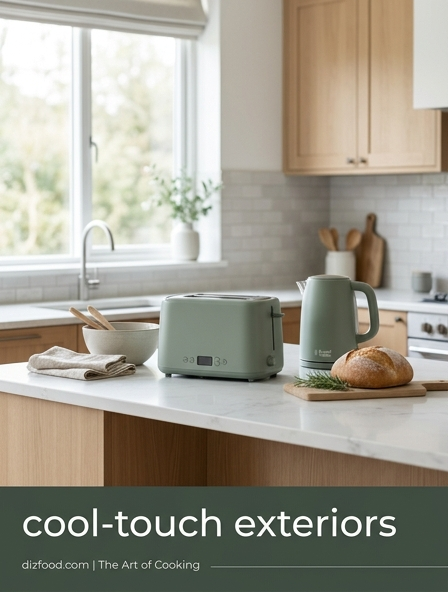
Understanding Cool Touch Technology
Cool touch technology is a sophisticated engineering approach used in modern kitchen appliances to ensure that the exterior surfaces remain safe to handle during operation. This is primarily achieved through the implementation of thermal barriers and specialized housing materials that resist heat transfer. In traditional appliances, the internal heating elements directly radiate thermal energy to the outer casing, often resulting in surface temperatures that can cause immediate discomfort or injury. Modern designs mitigate this by creating a physical disconnect between the heat source and the user-facing shell.
The core components of this technology typically include:
- Internal air gaps that act as natural insulators against convective heat.
- Reflective heat shields that bounce infrared energy back toward the food.
- High-grade thermoplastic resins or composite materials with low thermal conductivity.
- Integrated cooling fans in larger countertop units like air fryers or convection ovens.
By prioritizing the thermodynamics of the appliance exterior, manufacturers can offer high-performance cooking tools that do not compromise the physical safety of the kitchen environment, allowing for more flexible placement on various countertop surfaces.
Preventing Accidental Kitchen Burns
The kitchen is often the most hazardous room in a home due to the high density of heat-generating devices. Accidental burns frequently occur when a user reaches across a counter or inadvertently brushes against an active appliance. Cool-touch exteriors serve as a critical passive safety feature, reducing the surface temperature of devices like kettles, toasters, and pressure cookers to levels that are significantly below the threshold for thermal skin damage.
- Users can safely reposition an appliance while it is still in the middle of a heating cycle.
- The risk of "contact burns" is minimized during multi-tasking scenarios where attention is divided.
- Sensitive surfaces, such as granite or laminate countertops, are protected from localized heat stress.
- The necessity for bulky oven mitts is reduced for simple interactions like checking a timer or adjusting a dial.
These safety advancements are particularly vital in compact kitchens where workspace is limited. When appliances sit close to one another, the lack of radiant exterior heat prevents the handles of adjacent pots or the plastic casings of nearby tools from becoming dangerously hot, fostering a more controlled and predictable cooking experience.
Child Safety and Toaster Housing
In households with young children, the kitchen presents unique risks, as curious hands often reach for countertops. Toasters are particularly notorious for their high external temperatures due to the proximity of the glowing nichrome wires to the outer metal shell. Cool-touch toaster housing addresses this by utilizing double-wall construction, typically featuring a metal inner chamber and a high-impact plastic outer shell. This design ensures that even during a "high-darkness" toast cycle, the outer walls remain lukewarm to the touch.
- Exterior temperatures rarely exceed 45 degrees Celsius, staying well below the scalding point.
- The base and sides are reinforced with non-conductive feet to prevent heat transfer to the table.
- Buttons and levers are ergonomically separated from the heat vents.
For parents, these features provide peace of mind. While supervision remains necessary, the inherent safety of the appliance housing acts as a secondary layer of protection against the quick, unpredictable movements of toddlers. This engineering choice turns a potentially dangerous heating element into a family-friendly tool that can be used safely during busy morning routines without the fear of a momentary lapse in attention leading to an emergency room visit.
Advanced Insulation for Countertop Appliances
Advanced insulation is the silent backbone of the modern high-efficiency kitchen. Whether it is an air fryer or a sophisticated multi-cooker, the goal is to contain high-energy thermal cycles within the cooking chamber. Manufacturers utilize a variety of proprietary materials to achieve this, often combining traditional fiberglass insulation with modern vacuum-sealed panels or ceramic coatings. This creates a steep temperature gradient between the interior, which may reach 400 degrees Fahrenheit, and the exterior, which remains comfortable for human skin.
| Appliance Type | Insulation Method | Safety Benefit |
|---|---|---|
| Air Fryer | Dual-Fan Ventilation | Prevents plastic warping |
| Slow Cooker | Dead Air Space | Safe for wooden tables |
| Electric Kettle | Vacuum Layer | Prevents steam burns |
This thermal management does more than just protect the user; it also protects the internal electronics. By keeping the exterior and the control panel cool, the sensitive microchips and capacitors within the appliance are shielded from heat fatigue, which significantly extends the overall lifespan of the device while ensuring consistent performance across thousands of cycles.
Heat Retention and Exterior Temperature
There is a direct and vital relationship between how well an appliance retains heat and how cool its exterior remains. When heat is successfully trapped inside the cooking vessel, it cannot escape to the outer shell. This results in two major benefits: enhanced energy efficiency and improved user safety. In high-quality cool-touch appliances, the exterior temperature is a metric of the device's thermal efficiency. If the outside is hot, it indicates that energy is being wasted through radiation rather than being used to cook the food.
Modern pressure cookers and ovens utilize reflective liners that mirror heat back toward the center. This creates a concentrated thermal environment that speeds up cooking times while keeping the outer chassis at room temperature. This thermodynamic containment is essential for maintaining a comfortable ambient temperature in the kitchen, preventing the room from becoming uncomfortably warm during long roasting or baking processes. Consequently, the user benefits from a more pleasant environment and lower utility bills, as the appliance does not have to work as hard to maintain its internal temperature against constant heat loss.
Protecting High Traffic Kitchen Areas
High-traffic kitchens, such as those in large family homes or shared apartments, are chaotic environments where multiple people may be moving simultaneously. In such settings, the "clearance" around hot appliances is often compromised. Cool-touch technology is essential here because it allows appliances to be placed closer to walkways or high-use prep stations without creating "no-go" zones. If a person accidentally bumps into a toaster or a kettle while passing by, the cool-touch exterior ensures that the contact results in a harmless nudge rather than a painful injury.
- Reduces the need for dedicated "safety buffers" on crowded countertops.
- Allows for more ergonomic kitchen layouts where appliances are within easy reach.
- Minimizes the risk of melting grocery bags or plastic containers left near the unit.
- Increases the usability of small apartment kitchenettes with limited square footage.
By neutralizing the external heat threat, these appliances integrate more seamlessly into the flow of daily life. This is especially important for multi-generational homes where elderly residents with slower reaction times or thinner skin may be at a higher risk for burns. The cool-touch feature acts as a universal safety design that accommodates every user's needs.
Benefits of Double Wall Construction
Double wall construction is one of the most effective mechanical designs for achieving a cool-touch exterior. This method involves creating two distinct layers of material with a gap between them, effectively isolating the hot inner chamber from the outer surface. This design is most commonly found in high-end electric kettles and coffee makers. The inner wall is usually made of stainless steel or glass to handle the high temperatures and maintain hygiene, while the outer wall is constructed from a material that stays cool.
- The air gap between the walls acts as a powerful insulator, as air is a poor conductor of heat.
- In vacuum-insulated models, the removal of air creates a near-perfect thermal barrier.
- The outer layer remains structurally sound and aesthetically pleasing, free from heat-induced discoloration.
- Condensation on the exterior is virtually eliminated, improving grip and stability.
This construction method also provides a secondary benefit of noise reduction. The dual layers dampen the sound of boiling water or mechanical movement, leading to a quieter kitchen environment. It represents a premium standard in appliance manufacturing where safety, durability, and user experience are considered equally.
Reducing Fire Risks in the Kitchen
Kitchen fires are frequently caused by flammable items coming into contact with hot appliance surfaces. Dish towels, paper napkins, and even wooden utensils can ignite if left leaning against a traditional metal toaster or oven. Cool-touch exteriors significantly mitigate this risk by maintaining a surface temperature that is well below the ignition point of most common household materials. This adds a critical layer of fire prevention to the home, particularly in situations where an appliance might be left unattended.
Beyond direct contact, cool-touch technology reduces radiant heat that could damage nearby cabinetry or electrical cords. Over time, constant heat exposure can dry out wood or melt wire insulation, leading to structural damage or electrical shorts. By containing the thermal energy within the device, the appliance protects the infrastructure of the kitchen itself. This makes cool-touch devices a preferred choice for integrated kitchen designs where appliances are often tucked under cabinets or situated near sensitive finishes. Safety in the modern kitchen is not just about protecting people, but also about preserving the integrity of the home's environment and preventing preventable disasters.
Durable Materials for Safe Toasting
The materials used in the construction of cool-touch appliances are selected for their ability to withstand high internal temperatures while maintaining a stable, cool exterior. Manufacturers often use a combination of brushed stainless steel for the interior components and BPA-free, high-density polymers for the outer shell. These materials are chosen not only for their thermal properties but also for their long-term durability and resistance to the wear and tear of a busy kitchen.
| Material | Role in Safety | Durability Level |
|---|---|---|
| Polypropylene | Low thermal conductivity | High impact resistance |
| Anodized Aluminum | Reflects heat inward | Corrosion resistant |
| Silicone Accents | Heat-resistant grip | Highly flexible |
These materials ensure that the appliance does not become brittle or discolored after repeated use. Cheap plastics can off-gas or warp when exposed to heat, but the materials used in certified cool-touch housings are tested to remain chemically stable. This ensures that the safety features are not just effective on the day of purchase, but continue to protect the user for the entire life of the product, regardless of how frequently it is used.
Essential Safety Standards for Modern Homes
As kitchen technology evolves, safety standards have become more rigorous to protect consumers. Regulatory bodies such as Underwriters Laboratories (UL) and the European Conformity (CE) mark now look specifically at surface temperature limits during their certification processes. For an appliance to be marketed with "cool-touch" claims, it must often meet specific criteria regarding how much the exterior temperature can rise above the ambient room temperature. These standards ensure that "cool-touch" is more than just a marketing buzzword; it is a verified engineering specification.
- Compliance with UL 1026 standards for household electric cooking appliances.
- Adherence to maximum surface temperature thresholds for touchable parts.
- Rigorous testing for thermal runaway and automatic shut-off triggers.
- Clear labeling and documentation regarding safe operating procedures.
In the modern home, these standards provide a framework for consumer trust. When purchasing an appliance, looking for these certifications ensures that the product has undergone stress testing to prove its safety. As smart homes become more prevalent, the integration of these physical safety features with digital sensors creates a comprehensive safety ecosystem, making the modern kitchen safer than ever before for everyone from professional chefs to the youngest family members.


Comments