
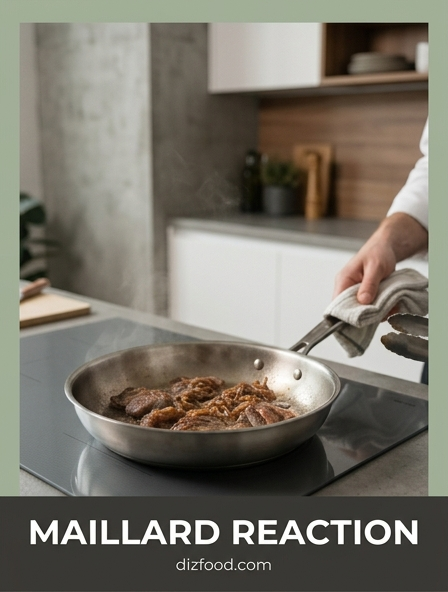
The Science of Maillard Browning
The Maillard reaction represents a fundamental chemical process in the kitchen, dictating the transformation of raw ingredients into savory masterpieces. Named after the French chemist Louis-Camille Maillard, this non-enzymatic browning occurs when reactive carbonyl groups of reducing sugars interact with the nucleophilic amino groups of proteins. This complex series of rearrangements leads to the formation of melanoidins, which are brown-pigmented polymers responsible for the visual appeal of perfectly toasted bread. Beyond mere aesthetics, the reaction triggers a cascade of molecular restructuring that alters the nutritional and sensory profile of the food. Unlike simple burning, which involves carbonization, the Maillard reaction is a sophisticated dance of organic chemistry that flourishes under controlled heat. Understanding this process allows chefs to manipulate the physical properties of bread, turning simple starches into a multidimensional substrate. Key factors influencing the reaction speed include:
- Concentration of reducing sugars like glucose or fructose.
- Availability of protein-derived amino acids.
- Alkalinity of the environment, which accelerates the process.
- Exposure time to steady thermal energy.
Optimal Temperatures for Perfect Toast
Achieving the ideal slice of toast requires precise thermal management to ensure the Maillard reaction proceeds without reaching the point of carbonization. The chemical transformation typically begins in earnest around 140°C (280°F) and reaches its peak efficiency between 150°C and 165°C. Within this window, the bread surface undergoes rapid dehydration, allowing the sugars and amino acids to bond effectively. If the temperature remains too low, the bread will dry out and become "stale" without developing the characteristic golden hue or savory depth. Conversely, exceeding 180°C (355°F) risks the production of acrylamide, a bitter and potentially harmful compound associated with burnt organic matter.
| Temperature Range | Physical Result | Flavor Profile |
|---|---|---|
| 100°C - 130°C | Drying/Dehydration | Mild, starchy |
| 140°C - 165°C | Optimal Maillard | Nutty, toasted, golden |
| 170°C - 190°C | Caramelization/Char | Bitter, smoky, dark |
Amino Acids and Sugar Interaction
At the heart of every toasted slice lies a microscopic collision between amino acids and reducing sugars. This interaction is not a single event but a multi-stage sequence beginning with a nucleophilic attack. The sugar's carbonyl group bonds with the amino group of a protein, forming an unstable N-substituted glycosylamine. As heat is applied, this compound undergoes the Amadori rearrangement, shifting its structure to become a ketosamine. These intermediates are the precursors to the flavor-rich compounds we associate with high-quality baking. The specific types of amino acids present in the bread dough significantly influence the final outcome. For instance, the presence of lysine-common in wheat proteins-is known to produce particularly dark pigments and intense toasted flavors. Meanwhile, sugars like glucose and lactose react at different rates, providing a variable timeline for browning. This molecular dialogue determines whether the toast will exhibit a subtle sweetness or a robust, savory bite. Mastering this interaction requires a balance of ingredients, as an excess of sugar can lead to premature browning before the interior is sufficiently warmed.
Developing Complex Flavor Profiles
The Maillard reaction is celebrated primarily for its ability to generate hundreds of different flavor compounds that do not exist in the raw state of food. As the reaction progresses beyond the initial rearrangement stages, it produces a variety of ring-shaped molecules, including pyrazines, pyrroles, and furans. Pyrazines are responsible for the roasted and nutty notes that define artisan toast, while furans contribute a sweet, almost caramel-like undertone. These compounds work in harmony to create a sensory experience that is far more complex than the sum of the bread's original ingredients. The specific profile of these flavors can be steered by the duration of the heat exposure. A short, intense toast might emphasize lighter, floral notes, whereas a slower, more thorough heat application encourages the development of deep, umami-rich characteristics.
- Pyrazines: Savory, earthy, and roasted aromas.
- Alkylpyrazines: Nutty and toasted bread crust notes.
- Furanones: Sweet, burnt-sugar, and strawberry-like hints.
- Thiophenes: Meaty and savory undertones common in enriched breads.
Texture Dynamics in Gourmet Toasting
Texture is as critical as flavor when evaluating the success of the Maillard reaction in toast. The application of heat triggers the gelatinization of starches followed by their subsequent dehydration, creating a rigid lattice on the bread's surface. This crust provides the structural contrast necessary for a gourmet experience-the juxtaposition of a brittle, crackling exterior against a soft, aerated crumb. The thickness of this crust is a direct function of the heat gradient between the toaster's elements and the bread's core. In a rapid toasting environment, the Maillard reaction is confined to the outermost cellular layers, preserving the internal moisture. This creates a glassy texture that shatters upon impact. If the process is too slow, the moisture migrates outward too evenly, resulting in a tough, leathery texture rather than a crisp one. Understanding these dynamics allows a cook to manipulate the crunch factor by adjusting the proximity of the heat source or using high-protein breads that provide more scaffolding for the browning reaction to build upon.
The Role of Moisture Content
Moisture acts as both a catalyst and a barrier in the Maillard reaction. For browning to occur on toast, the surface water must first evaporate. This is because the reaction is inhibited by high water activity; the presence of liquid water keeps the temperature at the boiling point (100°C), which is insufficient for Maillard transformations. Once the surface moisture drops below a specific threshold, the temperature can rise into the critical zone for browning. However, some moisture is necessary to facilitate the movement of reactive molecules. If a slice of bread is completely desiccated before heat is applied, the reaction may be uneven or sluggish.
- Initial Phase: Surface moisture evaporates, drawing latent heat.
- Concentration Phase: Reactive solutes become concentrated as water leaves.
- Browning Phase: Temperatures exceed 140°C, triggering melanoidin formation.
- Equilibrium: The interior remains hydrated while the exterior seals.
Effective toasting requires a delicate management of this evaporative cooling effect to ensure the exterior browns before the interior becomes bone-dry.
Mastering the Golden Brown Spectrum
Visual indicators are the most reliable guide for monitoring the Maillard reaction in real-time. The transition from the pale white of raw dough to a deep mahogany is a spectrum of chemical maturity. A light golden hue indicates a mild reaction, where delicate, bready flavors dominate. As the color deepens to a rich amber, the concentration of pyrazines increases, offering a more robust, savory profile. This Golden Brown stage is considered the pinnacle of toasting, as it represents the maximum flavor development before the onset of bitterness. Beyond this point, the bread enters the dark brown or char phase, where the Maillard products begin to break down into simpler carbon structures. Mastering this spectrum requires an observant eye and an understanding of how different bread types react to heat. Enriched breads containing milk or eggs will move through this spectrum much faster due to the increased availability of lactose and proteins, requiring lower heat or shorter durations to achieve the same visual result.
Maillard Reaction Versus Caramelization
It is a common misconception that the browning of toast is solely due to caramelization. While both are non-enzymatic browning processes, they are distinct chemical pathways. Caramelization is the pyrolysis of sugars, occurring at much higher temperatures-usually starting around 160°C-and does not require the presence of proteins. In contrast, the Maillard reaction thrives at lower temperatures and is entirely dependent on the nitrogen found in amino acids. The flavor profiles generated by each are also starkly different; caramelization produces sweet and slightly bitter notes like those found in toffee, while the Maillard reaction produces the savory and complex notes typical of seared meat or toasted grains.
| Feature | Maillard Reaction | Caramelization |
|---|---|---|
| Requirement | Sugars + Amino Acids | Sugars Only |
| Start Temp | Approx. 140°C | Approx. 160°C+ |
| Flavor Type | Savory, Umami, Roasted | Sweet, Buttery, Bitter |
Enhancing Aromatics Through Heat
The olfactory impact of toasting is perhaps its most evocative quality. The heat of the toaster does not just change the color of the bread; it aerosolizes volatile organic compounds, sending a complex bouquet of scents into the air. These aromatics are the direct result of the Maillard reaction's secondary stages, where intermediate molecules fragment into smaller, lighter compounds that can easily reach the nose. The perception of toasted bread is a biological trigger that stimulates appetite and salivation. Because flavor is approximately eighty percent smell, the aromatics produced during the browning process are essential to the overall eating experience. To maximize these aromatics, the heat must be applied evenly across the surface. Patchy or uneven toasting limits the volume of volatile release, resulting in a duller sensory profile. Furthermore, the type of fat used on the bread-such as butter-can act as a carrier for these aromatic molecules, trapping them on the palate and extending the duration of the flavor perception long after the first bite is taken.
Advanced Techniques for Toasted Contrast
To elevate a simple slice of toast into a gourmet component, one can utilize advanced techniques that manipulate the Maillard reaction. By adjusting the surface chemistry of the bread, a cook can achieve specific textures and colors that are impossible with standard toasting. These techniques often involve altering the pH levels or the lipid content of the bread's exterior to accelerate or refine the browning process.
- Alkaline Wash: Brushing the surface with a dilute baking soda solution raises the pH, significantly accelerating browning and creating a pretzel-like crust.
- Lipid Layering: Applying a thin layer of clarified butter or oil increases heat conduction and adds fat-soluble flavor compounds to the reaction.
- Differential Toasting: Using a high-heat sear followed by a low-temperature rest allows for a thick, crunchy crust with a steaming, soft interior.
- Sugar Dusting: A light application of maltose or honey provides additional reducing sugars to boost the reaction in low-sugar breads like sourdough.
These methods allow for a level of precision that transforms a kitchen staple into a deliberate exercise in culinary science.


Comments