
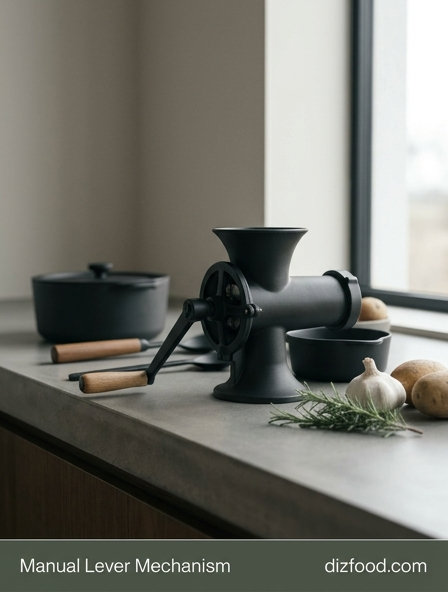
Experience the effortless efficiency of a traditional kitchen staple by discovering the instant reliability of a manual lever mechanism. There is a certain peace of mind that comes with tactile control; by choosing a manual lever, you bypass the lag and potential malfunctions often associated with digital sensors. This mechanical simplicity ensures your morning routine remains uninterrupted, offering a durable solution that stands the test of time. Whether you are pressing down for the perfect golden toast or operating heavy-duty appliances, the direct feedback of a manual system provides unmatched precision. Before making your next upgrade, it is essential to weigh the performance differences of a manual lever vs motorized lift to find your ideal fit.
The Timeless Appeal of Manual Toaster Levers
In an era dominated by smart screens and automated voice commands, the humble manual lever remains a cornerstone of kitchen design. This mechanical interface provides a sense of connection between the cook and the appliance that software simply cannot replicate. The physical act of pressing down a lever involves a tactile feedback loop, signaling the start of a culinary process through resistance and a final, satisfying click. This simplicity is why many professional chefs and home cooks prefer analog designs over digital alternatives.
The manual lever is not merely a relic of the past; it is an optimized piece of kitchen engineering. It eliminates the need for complex menus or standby power consumption, offering a "what you see is what you get" functionality. Because the mechanism relies on gravity, tension, and human force, it bypasses the common frustrations associated with touchscreens that fail when fingers are damp or covered in flour. This enduring appeal lies in the reliability of a device that performs its primary function without distraction, ensuring that the focus remains on the food rather than the interface.
Precision Control for Your Perfect Toast
Manual levers offer a level of immediate control that digital buttons often lack. When you engage a manual toaster lever, you are physically setting the height of the bread carriage, allowing for a more nuanced interaction with the heating elements. This is particularly useful for varied artisanal breads that may not fit standard automated profiles. By manually engaging the mechanism, users develop a sensory understanding of their appliance's timing and heat distribution.
- Immediate engagement without waiting for digital boot-up sequences.
- Ability to manually interrupt the cycle by lifting the lever to check progress.
- Adjustable tension that accommodates different weights of bread or bagels.
- Direct feedback through the physical resistance felt during the downward stroke.
This precision allows for a customized experience. Instead of relying on a pre-programmed sensor that might misjudge the moisture content of sourdough versus a standard white slice, the manual lever user can peek at the browning level mid-cycle. This "lift-and-look" feature, inherent to many high-quality manual designs, transforms the toaster from a black-box machine into a collaborative tool for achieving the exact shade of golden brown desired for every breakfast.
Durability Meets Simple Kitchen Engineering
The core of a manual lever mechanism is its elegant simplicity. While digital appliances rely on capacitors, microprocessors, and liquid crystal displays-all of which are sensitive to the high heat generated by a toaster-the manual lever utilizes robust springs, metal notches, and basic latches. This engineering philosophy prioritizes longevity over novelty. In the high-temperature environment of a kitchen, heat is the primary enemy of electronics, often causing solder joints to crack or screens to delaminate over time.
Conversely, the components within a manual lever are designed to withstand thermal expansion and contraction. The steel springs used in these mechanisms are rated for thousands of cycles, maintaining their tension for decades rather than years. There are no software updates required and no firmware glitches to troubleshoot. When a manual lever is pushed down, it locks into a mechanical catch that is held in place by a simple electromagnet or a bi-metallic strip. This lack of complexity means there are fewer points of failure, making these appliances much easier to maintain and repair compared to their integrated-circuit counterparts.
Why Mechanical Mechanisms Outlast Digital Components
The longevity of kitchen appliances is often inversely proportional to the number of semiconductors they contain. Manual mechanical levers outlast digital components because they are built from materials that handle the stresses of a kitchen environment-steam, heat, and physical impact-far more effectively than delicate silicon chips. A digital display can be rendered useless by a single power surge or a bit of moisture ingress, whereas a mechanical lever remains functional even under suboptimal conditions.
| Feature | Manual Lever | Digital Interface |
|---|---|---|
| Heat Resistance | High (Steel/Copper) | Low (Silicon/Plastic) |
| Repairability | User-serviceable | Requires specialist |
| Lifespan | 10-20+ years | 3-7 years |
| Failure Mode | Gradual wear | Sudden blackout |
By choosing mechanical designs, consumers are making a sustainable choice. Digital appliances often contribute to "e-waste" because their proprietary motherboards are expensive to replace or are discontinued by the manufacturer. A manual toaster lever, however, uses universal principles of physics. If a spring loses tension, it can often be adjusted or replaced, extending the life of the machine and reducing the environmental footprint of the household.
The Tactile Joy of a Manual Start
There is an undeniable psychological satisfaction in the manual operation of kitchen tools. The "tactile joy" refers to the sensory feedback provided by the lever's movement. As the lever travels down its track, the user feels the compression of the internal spring and the eventual lock of the carriage. This physical engagement creates a ritualistic start to the morning, grounding the user in the physical world before the digital demands of the day take over. It is a moment of mindfulness in an otherwise hurried routine.
The sound of a manual lever is also part of its charm. The distinct "thunk" when the carriage locks and the crisp "pop" when the cycle finishes are acoustic cues that have been perfected over nearly a century of design. These sounds provide confirmation of a task started and a task completed, requiring no visual attention. Unlike the high-pitched digital beeps of modern appliances, which can be jarring and intrusive, the sounds of a mechanical lever are soft, mechanical, and evocative of traditional home cooking, enhancing the overall ambiance of the kitchen space.
Consistency in Every Golden Slice
Achieving consistency in toasting requires a reliable mechanism that applies the same pressure and positioning every single time. Manual levers are engineered to ensure the carriage descends to a fixed depth, centering the bread between the heating elements. This alignment is crucial for even browning. Because the mechanism is fixed and rigid, it does not suffer from the calibration drift that can sometimes plague electronic sensors or motorized elevators.
- The lever ensures the bread is locked at the optimal distance from the nichrome wires.
- Mechanical timing dial allows for micro-adjustments based on bread density.
- The manual release allows for immediate retrieval, preventing over-drying from residual heat.
This level of consistency is what makes the manual lever a favorite for those who take their morning toast seriously. When you use the same physical force and setting daily, you learn exactly how the machine will respond. This predictability eliminates the "guessing game" often found with digital sliders that may reset or fluctuate based on software logic. With a manual lever, the physics of heat and time remain constant, resulting in a predictable, golden finish every morning.
Reducing Electronic Failure in Kitchen Appliances
Kitchens are inherently hostile environments for electronics. Between the humidity of boiling water, the grease of frying, and the intense localized heat of toasting, digital components face constant threats. One of the primary advantages of a manual lever mechanism is that it significantly reduces the reliance on vulnerable circuitry. By utilizing a physical latching system, the appliance avoids the need for complex control boards that are prone to short-circuiting or burning out under heavy use.
Many failures in modern toasters occur not in the heating elements themselves, but in the electronic "brain" that manages the cycle. If a capacitor leaks or a resistor fails, the entire unit becomes a brick. Manual lever systems, however, often use a bi-metallic strip-a simple piece of metal that bends when heated-to trigger the release. This analog solution is immune to the power surges that can fry sensitive electronics. By stripping away the unnecessary layers of digital complexity, the manual lever preserves the core functionality of the appliance, ensuring it remains a reliable tool for years without the threat of a "system error" preventing you from making breakfast.
Mastering the Art of Manual Toasting
Using a manual lever is not just about pressing a button; it is an acquired skill that allows for greater culinary flexibility. Mastering this art involves understanding the relationship between the lever's position and the heat intensity. Some high-end manual toasters allow the user to partially depress the lever for warming or to use a "manual lift" to inspect the bread without breaking the heating cycle. This interactivity turns the appliance into an extension of the cook's hands.
- Use the manual lift to check for "hot spots" in artisanal loaves.
- Engage the lever slowly to ensure delicate items like pastries are not crushed.
- Manually trigger the pop-up if you smell the sugars caramelizing too quickly.
- Clear crumbs easily by shaking the unit while holding the lever in an open position.
The ability to intervene manually means that the user is never at the mercy of a pre-set timer. If you notice a slice of rye is browning faster than expected, you can simply flick the lever up. This level of agency is what distinguishes a cook from a mere operator of machines. The manual lever provides the framework for this mastery, offering the necessary feedback to adjust techniques in real-time for the perfect result.
The Reliability of Analog Kitchen Tools
There is a growing movement toward "analog" kitchen tools, fueled by a desire for products that simply work without the need for an internet connection or a software manual. The manual lever mechanism is the epitome of this trend. Its reliability stems from the fact that it operates on the basic laws of physics-lever-arm mechanics and spring tension. In a world where "planned obsolescence" is often built into digital products, analog tools stand out as icons of enduring quality.
The reliability of these tools is evident in how they are passed down through generations. It is common to find a 30-year-old manual toaster in perfect working order, whereas a five-year-old digital model may have already been replaced due to a failing LCD or a corrupted chip. This dependability provides peace of mind. Users know that when they press that lever, the bread will go down and the heat will come on, regardless of Wi-Fi strength or firmware versions. This "no-fail" performance is the ultimate luxury in a busy household, ensuring that the morning routine remains uninterrupted by the technical glitches that plague modern life.
Streamlining Your Morning with Instant Response
Efficiency in the morning is often measured in seconds. Digital appliances frequently introduce unnecessary delays: waiting for a screen to wake up, scrolling through menus to find a setting, or watching an automated carriage slowly descend. A manual lever mechanism streamlines this process by providing an instant response. The moment you push the lever, the circuit is closed and the toasting begins. There is no lag, no loading time, and no unnecessary animation.
| Action | Manual Efficiency | Digital Efficiency |
|---|---|---|
| Start Time | Instant (< 1 sec) | Delayed (2-5 sec) |
| Adjustment | Physical knob/lever | Menu navigation |
| Interruption | Manual lift | Cancel button/Reset |
This rapid deployment is essential for those who value a streamlined workflow. The manual lever allows the user to multitask; you can drop the bread and walk away in one fluid motion. Because the interface is so intuitive, it becomes part of your muscle memory. This reduction in cognitive load is subtle but powerful, making the manual toaster not just a tool for cooking, but a partner in creating a frictionless and efficient start to the day.




Comments