
Choosing between a tiered bamboo basket and a single-layer steamer often comes down to your kitchen's volume and the specific textures you want to achieve. Tiered systems are the gold standard for multi-tasking, allowing you to steam proteins, grains, and greens simultaneously by utilizing vertical heat convection, which saves both time and energy. Conversely, a single-layer design offers a more focused, direct steam flow that is ideal for delicate dumplings or larger, singular items where consistent moisture contact is critical. Whether you're a dim sum enthusiast looking to feed a crowd or a minimalist cook seeking precise results, understanding how these designs distribute steam will transform your healthy cooking routine from a chore into a culinary art.
| Feature | Tiered Bamboo Basket | Single Layer Steamer |
|---|---|---|
| Cooking Capacity | High; 2-3 levels for bulk/multi-dish prep. | Limited; best for single-serving portions. |
| Heat Distribution | Vertical convection; slight gradient top-to-bottom. | Uniform; direct exposure to steam source. |
| Versatility | High; steam fish, veg, and rice at once. | Low; best for oversized items (e.g., large fish). |
| Storage Footprint | Space-efficient height; stackable components. | Wide diameter; requires more cabinet width. |
| Moisture Control | Excellent; wood absorbs excess condensation. | High; direct steam creates very moist results. |
| Best Use Case | Family meal prep and traditional Dim Sum. | Quick snacks or delicate, fragile pastries. |
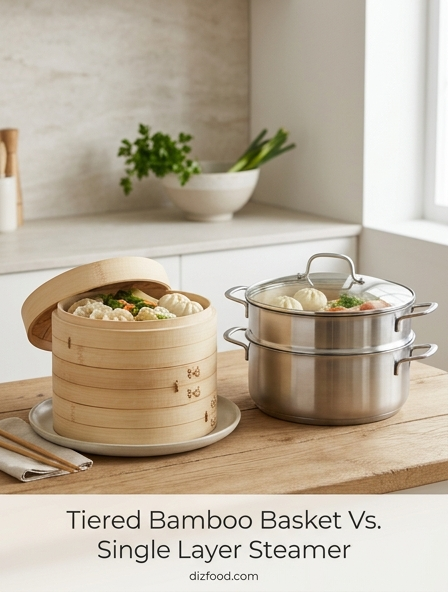
Bamboo Steaming Basics and Core Differences
Steaming is an ancient culinary technique that preserves nutrients, colors, and textures more effectively than boiling or frying. When comparing a tiered bamboo basket to a single layer steamer, the fundamental difference lies in air circulation and moisture management. Bamboo is a porous, natural material that absorbs excess steam, preventing condensation from dripping back onto the food. This is a critical advantage over metal or plastic single-layer inserts, which often cause "soggy bottom" syndrome in delicate items like dumplings or buns.
The structural design also sets them apart. A tiered bamboo system utilizes a stackable framework where a single heat source powers multiple chambers simultaneously. In contrast, a single layer steamer is typically a stainless steel basket or a silicone insert designed to sit inside a standard pot. While the single layer is often more durable and dishwasher-safe, it lacks the specialized atmospheric control provided by the woven bamboo lid, which allows a small amount of steam to escape while trapping heat.
- Material: Bamboo absorbs moisture; metal/silicone reflects it.
- Capacity: Tiered systems expand vertically; single layers are fixed.
- Seal: Bamboo lids provide a snug, breathable fit; single layers rely on the pot's lid.
Maximizing Efficiency with Tiered Bamboo Baskets
The primary draw of the tiered bamboo basket is its remarkable thermal efficiency. Because steam naturally rises, it can travel through multiple layers of woven slats, cooking several portions of food using the same amount of energy required for one. This vertical approach to cooking is ideal for high-volume meal preparation or for hosting dinner parties where multiple appetizers need to be served hot at the same time.
To maximize this efficiency, users must understand the temperature gradient. The bottom tier, closest to the boiling water, receives the most intense heat. As the steam moves upward, it loses a fraction of its intensity. By strategically placing items that require longer cook times at the bottom and delicate items at the top, a chef can synchronize a complex meal. Furthermore, the stackable nature means you can add or remove layers mid-process without disrupting the cooking environment of the other tiers.
- Place heavy proteins or dense vegetables in the lowest basket.
- Stack lighter greens or delicate seafood in the middle.
- Use the top tier for reheating pre-cooked items or warming tortillas.
The Compact Appeal of Single Layer Steamers
While tiered systems offer volume, the single layer steamer appeals to the minimalist or the solo cook. These devices are often designed as "one-size-fits-all" collapsible baskets or simple mesh inserts. Their primary advantage is the speed of setup and ease of integration into existing cookware. For a quick side dish of broccoli or a single portion of fish, a single layer steamer is often more practical than hydrating and assembling a multi-tiered bamboo apparatus.
These steamers are also significantly easier to clean. Most single layer inserts are made from food-grade stainless steel or heat-resistant silicone, making them impervious to the oils and odors that can occasionally permeate porous bamboo. For a busy individual who prioritizes a ten-minute prep and a quick cycle in the dishwasher, the single layer steamer provides a frictionless path to healthy eating without the maintenance overhead of traditional bamboo tools.
- Requires no specialized wok or wide pan; fits most standard saucepans.
- Low profile makes it easier to store in shallow kitchen drawers.
- Resistant to mold and mildew, unlike natural fiber alternatives.
Heat Distribution and Even Cooking Comparison
The physics of steam distribution varies significantly between these two tools. In a tiered bamboo basket, the steam is forced to permeate through the food to reach the next level, creating a pressurized environment that cooks food very evenly. Because the bamboo lid is also breathable, it prevents the buildup of large water droplets that can create localized "cold spots" or uneven textures on the surface of the food.
Single layer steamers, particularly the metal collapsible variety, often suffer from uneven heat if the pot lid does not have a proper seal. Since metal conducts heat quickly, the edges of the steamer can become significantly hotter than the center. However, because the food is in a single plane, it is much easier to monitor for doneness. The following table highlights the core performance metrics of both styles:
| Feature | Tiered Bamboo | Single Layer Metal |
|---|---|---|
| Heat Retention | High (Insulated) | Moderate (Conductive) |
| Moisture Control | Excellent (Absorbent) | Poor (Condensation) |
| Uniformity | Very Consistent | Variable |
| Preheat Time | Slightly Longer | Near Instant |
Multi Level Cooking for Complete Meal Prep
Multi-level cooking is where the tiered bamboo basket truly shines, transforming a simple pot of water into a full-production kitchen. This method allows for the simultaneous preparation of a starch, a protein, and a vegetable. For example, a cook might place jasmine rice (in a heat-proof bowl) in the bottom tier, ginger-soy white fish in the middle tier, and bok choy in the top tier. The flavors do not mix excessively because the steam moves upward, but the convenience of finishing an entire meal at once is unparalleled.
To succeed with multi-level prep, timing is everything. You must stagger the introduction of the tiers based on the ingredients' requirements. If the fish takes ten minutes and the vegetables only four, you start with the fish tier over the boiling water and simply place the vegetable tier on top when the timer hits the six-minute mark. This modularity turns the steamer into a versatile oven-alternative that keeps the kitchen cool and the utility bills low.
- Identify the ingredient with the longest cook time.
- Prepare all layers before turning on the heat.
- Use a timer to add layers sequentially for a synchronized finish.
Storage Solutions and Kitchen Space Management
Kitchen real estate is often the deciding factor between these two tools. A tiered bamboo steamer is a bulky item; a standard 10-inch set with two tiers and a lid occupies a significant amount of cabinet height. It cannot be compressed or folded, and it must be stored in a well-ventilated area to prevent the natural fibers from trapping moisture. Many enthusiasts choose to store them on high shelves or even hang them as decorative elements to save functional cabinet space.
Single layer steamers, conversely, are the champions of space management. Collapsible metal "petal" steamers fold down to the size of a small bowl, fitting easily into crowded drawers. Even rigid single-layer inserts are usually designed to nest perfectly within the pots they serve. For those living in apartments or tiny homes, the footprint of the tool is just as important as its performance. If you rarely cook for more than two people, the space-saving benefits of a single layer often outweigh the capacity of the tiered bamboo alternative.
Maintenance Tips for Bamboo and Metal Steamers
The longevity of your steaming equipment depends heavily on post-cooking care, and the requirements for bamboo versus metal are night and day. Bamboo is an organic material that requires seasoning and careful drying. It should never be soaked in soapy water, as the wood will absorb the chemicals and impart a soapy taste to your next meal. Instead, it should be rinsed with hot water and scrubbed with a soft brush, then left to air dry completely-usually for at least 24 hours-before being put away.
Metal or silicone single-layer steamers are much more forgiving. They can handle aggressive scrubbing, heavy degreasers, and the high-heat sanitization of a dishwasher. For those who cook with pungent ingredients like garlic or fermented bean paste, metal is often the better choice because it does not retain odors. If a bamboo steamer does develop a scent or a slight stain, a light wipe with a diluted lemon juice solution can help neutralize it without damaging the fibers.
- Bamboo: Air dry thoroughly to prevent mold growth.
- Bamboo: Use parchment liners to prevent food sticking.
- Metal: Check for rust spots in hinges of collapsible models.
- Metal: Safe for the top rack of most dishwashers.
Flavor Retention Across Multiple Steamer Layers
There is a common misconception that cooking different foods in a tiered system will result in a muddying of flavors. In reality, steam moves in a one-way upward direction, which actually helps isolate flavors better than boiling them in a shared pot. However, there is a subtle "aromatic drift" where the scent of the bottom layer can lightly infuse the layers above. This can be used to a cook's advantage-for instance, placing aromatics like lemongrass or star anise in the water or the bottom tier to perfume the entire stack.
Single layer steamers offer zero risk of flavor transfer because there is only one chamber, but they also offer zero opportunity for this kind of layered seasoning. In a tiered bamboo set, the wood itself eventually develops a seasoned "patina" of aroma, much like a cast iron skillet or a clay tea pot. This seasoned quality is highly prized in traditional dim sum cooking, as it adds a faint, sweet woody note to buns and dumplings that a sterile metal steamer simply cannot replicate.
Cost Analysis and Long Term Value
When looking at the financial aspect, the initial investment for both styles is relatively low, typically ranging between fifteen and forty dollars. However, the long-term value deviates based on durability and replacement cycles. A high-quality stainless steel single layer steamer can literally last a lifetime; there are no parts to rot, and unless it is physically crushed, it will remain functional for decades. This makes the "cost per use" exceptionally low over time.
Bamboo steamers are considered semi-disposable in a professional high-volume environment, though they can last several years in a home kitchen if maintained perfectly. Over time, the bamboo strips may crack, the nylon or rattan ties might loosen, or the lid may warp. Despite this shorter lifespan, many cooks find the tiered bamboo basket more valuable because of its versatility. The ability to cook a full meal for four people simultaneously can save significant money on energy bills and takeout costs, providing a different kind of return on investment.
| Metric | Bamboo Tiered | Metal Single Layer |
|---|---|---|
| Initial Cost | $20 - $35 | $10 - $25 |
| Lifespan | 2 - 5 Years | 10+ Years |
| Repairability | Low | Low |
| Versatility | High | Low |
Which Steamer Style Fits Your Cooking Habits
Choosing between a tiered bamboo basket and a single layer steamer ultimately comes down to your culinary goals and lifestyle. If you view steaming as a primary cooking method and enjoy preparing traditional Asian cuisine, dim sum, or large-batch healthy meals, the tiered bamboo basket is the superior choice. Its ability to manage moisture and its massive vertical capacity make it a specialized tool that produces professional-grade results that a single layer cannot match.
On the other hand, if you only use a steamer occasionally to soften some carrots for a side dish or to cook a single piece of salmon for lunch, the single layer steamer is the more rational choice. Its ease of storage, dishwasher compatibility, and indestructible nature make it a "set it and forget it" tool for the casual cook. Consider your cabinet space, your patience for hand-washing kitchen gear, and the average number of people you feed before making your final decision. Both tools will improve your health, but only one will transform your entire cooking workflow.

Comments