
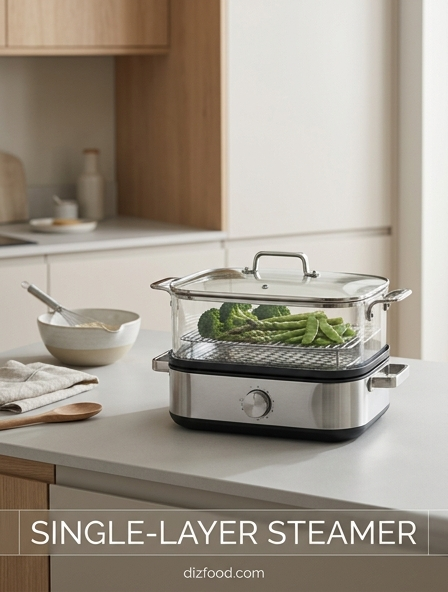
The Power of Direct Steam Contact
In a single-layer steamer, the proximity of the food to the boiling water source creates an environment of intense, direct steam contact. Unlike multi-tiered systems where steam must navigate through various obstacles and cooling layers, a single tray allows for the immediate transfer of thermal energy. This direct interaction ensures that the latent heat of the vapor is applied uniformly across the surface of the ingredients, leading to faster cooking times and more predictable results. The kinetic energy of the steam molecules remains high, allowing them to penetrate the food's exterior without losing significant temperature during the ascent.
- Minimized energy loss between the heat source and the ingredient.
- Rapid pore closure in proteins to retain internal juices.
- Immediate activation of volatile aromatic compounds.
- Reduction in overall pre-heating requirements for the cooking vessel.
This efficiency is particularly beneficial for home chefs who prioritize speed without sacrificing the quality of the cook. By focusing the steam's power on a solitary plane, the appliance maximizes the effectiveness of every gram of water vapor produced, ensuring that no energy is wasted on empty overhead space.
Preserving Delicate Textures with Precision
Precision is the hallmark of the single-layer steaming method, especially when dealing with fragile ingredients that are prone to structural failure. When food is crowded into multiple layers, the weight and moisture from upper tiers can negatively impact the texture of the items below. A single-layer configuration eliminates this risk, providing a dedicated space where delicate items like silken tofu or thin fish fillets can cook undisturbed. The steam acts as a gentle convective force, cooking the food from the outside in while maintaining the structural integrity of the ingredient.
- Assess the thickness of the ingredient to determine timing.
- Arrange items with adequate spacing to allow vapor wrap-around.
- Monitor the transition from opaque to translucent in seafood.
- Remove immediately to prevent residual heat carryover.
Because there is no "steam shadow" cast by other trays, every portion of the dish receives the same level of moisture. This leads to a velvety mouthfeel and a consistent bite that is difficult to achieve in more complex, stacked setups where temperature gradients are common and often fluctuate.
Uniform Heat Distribution Benefits
One of the primary technical advantages of using a single-layer steamer is the achievement of near-perfect heat uniformity. In a kitchen setting, consistency is vital for scaling recipes and ensuring that every guest receives a perfectly cooked meal. The steam rises from the reservoir and expands evenly across the bottom of the single tray. There are no cold pockets or hot spots that typically occur when steam is forced through narrow vents in a multi-level stack. This equilibrium allows for precise control over the cooking environment.
| Feature | Single-Layer Benefit |
|---|---|
| Thermal Gradient | Minimal variance across the tray surface. |
| Steam Density | Constant density throughout the cooking cycle. |
| Moisture Level | Even saturation of all ingredients. |
This uniform distribution is essential for items that require exact timing, such as medium-rare proteins or soft-boiled eggs in the shell. By removing the variables associated with tier placement, the cook can rely on a standardized heat map, resulting in professional-grade outcomes every time the steamer is utilized.
Eliminating Flavor Transfer Between Layers
A common frustration with multi-tiered steaming is the unintentional mingling of flavors, often referred to as "flavor rain." In a stacked system, the juices and aromatic oils from the top layer drip down onto the items below, which can ruin the intended profile of a dish. For instance, steaming salmon above a tray of jasmine rice would result in fish-flavored rice. A single-layer steamer completely bypasses this issue by ensuring that the only substance interacting with the food is pure, clean water vapor.
This isolation is crucial for maintaining the purity of ingredients. When steaming a variety of vegetables or a specific protein, you want the natural sugars and salts of the food to remain within that food. The single-layer design preserves the individual identity of each component. This makes it the preferred choice for preparing complex multi-ingredient platters where each element must retain its own distinct taste. Furthermore, cleaning becomes significantly easier, as there is no cross-contamination of fats or proteins between different levels of the apparatus, ensuring a more hygienic and flavor-neutral cooking surface for the next use.
Optimal Steam Circulation for Seafood
Seafood requires a high-moisture environment and very rapid heat transfer to prevent the proteins from becoming tough or rubbery. The single-layer steamer provides an optimal chamber for steam circulation, allowing the hot vapor to swirl around each shrimp, scallop, or fillet with ease. Because there is no ceiling formed by a secondary tray, the steam can circulate in a more natural, turbulent fashion, ensuring that even the thickest parts of the seafood are cooked through simultaneously with the thinner edges.
- Enhances the natural sweetness of shellfish.
- Prevents the drying out of lean white fish fillets.
- Maintains the vibrant color of crustacean shells.
- Ensures that aromatics like ginger and scallion penetrate deeply.
When seafood is steamed in a single layer, the moisture retention is significantly higher. This is because the vapor pressure remains constant, preventing the internal fluids of the fish from evaporating into the air. The result is a tender, succulent texture that highlights the freshness of the sea, making the single-layer method the gold standard for high-end seafood preparation in both domestic and professional kitchens.
Maintaining Integrity of Soft Dumplings
Dumplings, particularly those with thin skins like Har Gow or Xiao Long Bao, are incredibly sensitive to the dynamics of a steamer. In a single-layer environment, the risk of the skins bursting or becoming waterlogged is greatly reduced. In multi-layer setups, the heavy condensation from the lid of a top tray can drip onto the dumplings below, making the dough mushy and prone to tearing. The single-layer steamer allows for a more controlled humidity level, ensuring the starch in the dough gelatinizes perfectly without absorbing excess liquid.
- Line the steamer with parchment or cabbage leaves to prevent sticking.
- Space dumplings at least one inch apart to prevent skin fusion.
- Use a steady, medium-high steam for a consistent rise.
- Allow a thirty-second rest after opening the lid to set the skins.
By providing a stable platform and consistent steam flow, the single-layer method ensures that each dumpling retains its aesthetic appeal and structural integrity. This is vital for soup dumplings, where the goal is to keep the hot broth contained within the delicate wrapper until the moment it is consumed.
Consistent Temperature Control for Greens
Steaming green vegetables requires a delicate balance; they must be cooked enough to break down cellulose but not so much that they lose their vibrant chlorophyll color and crunch. A single-layer steamer provides the necessary temperature stability to achieve this balance. Because the steam is not being filtered through other foods, the temperature remains at a constant 212°F (100°C) throughout the process. This allows the cook to use precise timing to reach the "al dente" stage, where the vegetables are tender yet still possess a snap.
| Vegetable | Steam Time (Min) | Desired Result |
|---|---|---|
| Broccoli Florets | 4-5 | Bright green, crisp-tender. |
| Asparagus | 3-4 | Pliable but firm. |
| Baby Bok Choy | 5-6 | Soft leaves, crunchy stalks. |
The lack of temperature fluctuation in a single-layer system means that the enzymes responsible for browning are deactivated almost instantly, locking in the natural aesthetic of the greens. This results in a plate that is as visually appealing as it is nutritious, avoiding the unappetizing grey-green hue associated with over-steaming.
Reduced Condensation for Crisper Results
While steaming is inherently a moist-heat cooking method, excess condensation can be the enemy of certain textures. In tall, multi-layered steamers, steam often cools as it reaches the upper regions, turning back into water droplets that fall onto the food. This "rain" effect can make steamed buns or certain cakes soggy and dense. A single-layer steamer minimizes this phenomenon because the lid is closer to the heat source, keeping the internal surface of the lid hotter and reducing the rate of condensation formation.
By managing the moisture levels more effectively, a single-layer setup allows for a "dryer" steam experience when necessary. This is particularly useful when steaming items that have a leavened dough, as it allows the surface to expand and set without being weighed down by water. The result is a lighter, fluffier texture in breads and a cleaner finish on proteins. Many chefs prefer this method for reheating items that need to maintain a specific moisture balance, ensuring that the food is warmed through without becoming saturated or losing its original structural character.
The Science of Single Layer Efficiency
From a thermodynamic perspective, the single-layer steamer is an example of optimized heat transfer within a closed system. The volume-to-surface-area ratio is much more favorable than in multi-tiered models. When steam is generated, it fills a smaller cubic volume, reaching the necessary pressure to cook food more rapidly. This efficiency reduces the total time the heat source must be active, which not only saves energy but also limits the exposure of the food to high temperatures, preventing the degradation of flavor compounds.
- Reduced thermal inertia during the start-up phase.
- Lower water requirement for steam generation.
- Improved recovery time after the lid is opened and closed.
- Direct path for steam streamlines, reducing turbulence-induced cooling.
This scientific advantage translates to a more responsive cooking tool. For the technician in the kitchen, this means that changes in heat input are reflected almost immediately in the steam output. This level of control is essential for complex recipes that require shifting from high-intensity steam to a gentle simmer, allowing for a nuanced approach to moisture-based cooking that multi-layer systems cannot easily replicate.
Enhancing Nutrient Retention in Delicate Foods
Steaming is widely regarded as one of the healthiest cooking methods because it does not require added fats and minimizes the leaching of water-soluble vitamins. The single-layer steamer enhances this benefit by further reducing cooking times. Vitamins such as B-complex and C are highly sensitive to heat and can degrade if exposed to high temperatures for extended periods. By utilizing the direct and efficient heat of a single-layer system, the duration of thermal exposure is kept to the absolute minimum necessary to render the food palatable.
- Start with boiling water to minimize the "warm-up" time for the food.
- Cut vegetables into uniform sizes for the fastest possible cook.
- Use the single layer to prevent "over-stacking" which slows down heat penetration.
- Shock vegetables in ice water after steaming to stop the cooking process.
This method ensures that the antioxidant capacity and mineral content of the ingredients remain largely intact. For those focused on a nutrient-dense diet, the single-layer steamer represents the most effective way to prepare whole foods while preserving their biological value, providing a superior alternative to boiling, microwaving, or prolonged multi-tier steaming.

Comments