
Choosing between a steam convection oven and a combi steam oven often feels like deciding between a reliable home multi-tool and a high-performance professional instrument. While both appliances utilize the power of moisture to enhance food quality, the primary distinction lies in how they manage air and humidity. A standard steam convection oven typically toggles between dry heat and 100% steam, making it an excellent choice for healthy steaming and gentle reheating. However, the combi steam oven is the ultimate precision tool, allowing you to blend steam and convection heat simultaneously at specific percentages. This synergy creates the perfect environment for achieving artisan-level crusts on bread and succulent, golden-brown roasts that simply aren't possible with basic alternating cycles. Understanding these technical nuances is the first step in determining which powerhouse will most effectively elevate your culinary results.
| Feature | Steam Convection Oven | Combi Steam Oven |
|---|---|---|
| Operating Mode | Alternates between steam or dry heat. | Simultaneous steam and convection. |
| Humidity Control | Basic presets (On/Off). | Precise 0% to 100% increments. |
| Ideal Results | Gentle poaching and reheating. | Pro-grade crusts and juicy interiors. |
| Technology | Boiler-based or drip-pan steam. | Advanced flash-injection systems. |
| Price Point | Mid-range / Consumer friendly. | Premium / Professional investment. |
| Best For | Health-conscious home cooks. | Serious bakers and culinary enthusiasts. |
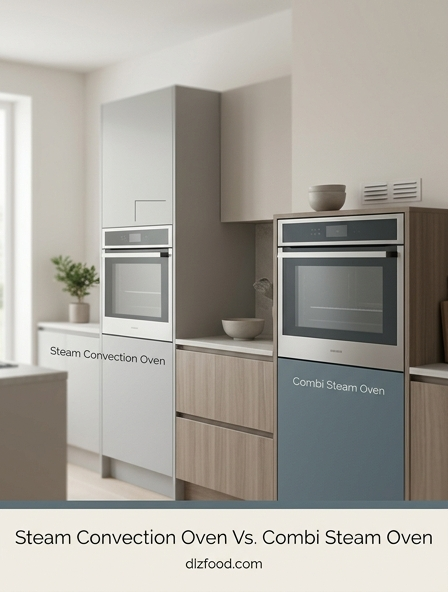
Understanding Steam Convection and Combi Oven Basics
In the modern culinary world, the distinction between a steam convection oven and a combi steam oven often confuses home chefs and professional restaurateurs alike. At its simplest, a steam convection oven is a traditional convection oven that incorporates a moisture element, allowing for a combination of hot circulating air and water vapor. These units are designed to prevent food from drying out, making them a favorite for bakers who require a specific crust texture or home cooks who prioritize healthy, nutrient-dense meals. They often operate by dripping water onto a heating element or using a small internal reservoir to generate steam during the cooking cycle.
Conversely, the "combi" oven-short for combination oven-is a more sophisticated evolution of this technology. While it also utilizes both steam and convection, the primary difference lies in the level of control and the method of steam generation. Combi ovens are engineered to switch seamlessly between three distinct modes: pressureless steam, hot air convection, and a combined mode where both operate simultaneously. This allows for a much broader range of culinary techniques, including poaching, roasting, and even sous-vide. Understanding these basics is the first step in determining which appliance fits a kitchen's specific output requirements.
- Steam Mode: Uses high-humidity vapor to cook vegetables, seafood, and grains rapidly.
- Convection Mode: Uses dry, forced air to brown, crisp, and roast meats or pastries.
- Combi Mode: Balances humidity and dry heat to maximize yield and reduce cooking times.
Core Differences in Heating and Moisture Technology
The mechanical underpinnings of these two appliances dictate their performance and price points. Most residential steam convection ovens rely on "boilerless" or "injection" technology. In these systems, water is sprayed directly onto the heating elements or a high-speed fan, which then atomizes the water into steam. This is efficient for smaller cavities but can result in less precise humidity control. In contrast, many professional-grade combi ovens utilize a dedicated steam generator or boiler. This separate tank preheats water to create a consistent volume of "saturated" steam that can be pumped into the oven chamber on demand, offering superior saturation levels.
The heating technology also differs in how air is circulated. Combi ovens typically feature high-performance, reversible fans that ensure even heat distribution even when the oven is fully loaded. This is critical in commercial settings where air pockets can lead to uneven cooking. The following table highlights the primary technological differences:
| Feature | Steam Convection Oven | Combi Steam Oven |
|---|---|---|
| Steam Source | Water injection or reservoir | Dedicated boiler or precision injection |
| Humidity Control | Basic high/medium/low settings | 0% to 100% precision increments |
| Fan Speed | Single or dual speed | Variable, multi-speed, and reversible |
| Typical Setting | Residential or light commercial | High-volume professional kitchens |
How Combi Ovens Optimize Commercial Kitchen Efficiency
For professional chefs, the combi oven is often referred to as the "workhorse" of the kitchen because it can replace multiple pieces of equipment, including steamers, convection ovens, and even fryers in some applications. The efficiency gained from a combi oven is not just about speed, but also about the footprint and labor costs. By consolidating various cooking methods into one footprint, a kitchen can maximize its square footage, which is often at a premium in urban environments. Furthermore, the ability to program multi-stage cooking cycles means that a chef can ensure consistency across different shifts without constant manual monitoring.
The optimization of workflow is achieved through several key factors:
- Reduced Shrinkage: Controlled humidity prevents meat from losing its natural juices, increasing the final plate weight and profit margins.
- Faster Cook Times: The combination of steam and hot air transfers heat to food significantly faster than dry air alone.
- Menu Versatility: A single unit can steam delicate dim sum in the morning and roast chickens in the afternoon.
- Automated Programs: Modern units store hundreds of recipes, allowing entry-level staff to execute complex dishes with a single button press.
Benefits of Steam Convection for Residential Cooking
In a home environment, the steam convection oven offers a bridge between traditional baking and professional results. One of the most significant benefits for the home cook is the ability to reheat food without degrading its quality. Traditional microwaves often leave food soggy or rubbery, whereas steam convection introduces just enough moisture to revitalize leftovers to their original state. This makes it an ideal tool for families who meal prep or prioritize reducing food waste. Additionally, the health benefits of steam cooking are a major draw; because steam cooks food quickly and gently, it preserves water-soluble vitamins and minerals that are often lost during boiling or high-heat frying.
Beyond health and reheating, the steam convection oven is a game-changer for home bakers. Achieving a professional "spring" in bread requires a burst of steam during the initial minutes of the bake to keep the dough's surface supple. These ovens automate that process, eliminating the need for makeshift water pans or spray bottles. Key benefits include:
- Vibrant Colors: Vegetables retain their natural pigments rather than turning dull.
- Reduced Oil Usage: The moisture in the oven reduces the need for excessive fats to keep food tender.
- Proofing Capabilities: Low-temperature steam provides the perfect environment for dough to rise.
Precision Temperature Control and Moisture Regulation
The hallmark of a high-end combi oven is its ability to manage the "wet-bulb" and "dry-bulb" temperatures within the chamber. While a standard oven only measures the air temperature, a combi oven uses sophisticated sensors to measure the actual moisture content of the air. This precision is vital for sensitive tasks like chocolate melting, slow-roasting, or dehydrating. When a chef sets a combi oven to 60% humidity at 350 degrees Fahrenheit, the oven's internal computer constantly adjusts the steam output and the exhaust vent to maintain those exact parameters, regardless of how much moisture is being released by the food itself.
In residential steam convection models, regulation is usually less granular but still highly effective. Users may have access to settings like "Steam Assist," which pulses steam at intervals. While less precise than a commercial unit, this still offers a level of control far superior to a conventional oven. The regulation of moisture is essential for:
- Crust Development: Balancing dry heat for browning and steam for shine and crispness.
- Yield Management: Ensuring that large proteins like turkeys do not lose excessive volume during long roasting periods.
- Delicate Textures: Preventing the surface of custards or cheesecakes from cracking due to dry air.
The Versatility of Combined Heat and Steam Settings
The true power of these appliances lies in the "combination" setting, where dry heat and steam work in tandem. This mode exploits the physics of heat transfer; water vapor is a much more efficient conductor of thermal energy than dry air. When steam is introduced into a hot oven, it condenses on the surface of the cold food, transferring heat instantly. Once the surface temperature of the food rises above the boiling point, the condensation evaporates, and the convection heat takes over to brown and crisp the exterior. This dual action is what allows for a roast that is dark and crispy on the outside while remaining incredibly succulent on the inside.
This versatility extends to modern "delta-T" cooking, where the oven temperature increases in a fixed ratio relative to the internal temperature of the meat. This ensures the most gentle cooking process possible. Other versatile applications include:
- Sous-vide in the Oven: Using 100% humidity at low, precise temperatures to cook vacuum-sealed bags without a water bath.
- Poaching: Cooking fish or fruit in a high-moisture environment to maintain structural integrity.
- Baking: Creating a "steam-injected" environment for baguettes and sourdough.
Comparing Texture and Flavor Retention in Both Ovens
Texture and flavor are the primary beneficiaries of steam technology. In a traditional dry oven, the air pulls moisture out of the food, which can dilute flavors and lead to a tough or stringy texture. Steam-assisted cooking creates a barrier that slows down this evaporation process. For meats, this means the connective tissues break down more effectively without the muscle fibers becoming parched. For vegetables, the rapid heat of the steam breaks down the cellulose just enough to make them tender while keeping the "snap" and locking in the natural sugars that provide flavor.
The flavor retention is also enhanced because there is less need for seasoning and fats. When food is cooked in its own juices, the natural profile of the ingredients is amplified. The following table compares how different food categories respond to these oven types:
| Food Category | Traditional Convection Result | Steam/Combi Result |
|---|---|---|
| Leafy Greens | Often wilted or scorched | Bright green and tender-crisp |
| Roast Poultry | Skin is crisp but meat can be dry | Crisp skin with high juice retention |
| Breads | Thick, hard crust | Thin, glassy, and shattering crust |
| Grains/Rice | Difficult to cook without a pot | Perfectly fluffed and evenly cooked |
Key Performance Features for Professional Grade Results
To achieve professional-grade results, certain features are non-negotiable. One of the most important is the multi-point core temperature probe. Unlike a standard thermometer, a multi-point probe measures the temperature at several spots along its length to find the coldest part of the food, ensuring that it is cooked safely and precisely to the desired doneness. Another feature is the adjustable fan speed. For delicate items like meringues or soufflés, a high-speed fan can be destructive; being able to dial the fan down to a gentle breeze is essential for a professional finish.
Furthermore, professional combi ovens often feature advanced venting systems. These systems can rapidly evacuate moisture from the chamber when switching from a steam mode to a browning mode, ensuring that the transition is instantaneous. Key features to look for include:
- Automated Cleaning: Integrated systems that use chemical tabs or liquid to sanitize the interior.
- HACCP Data Logging: Recording cooking temperatures for food safety compliance.
- Touchscreen Interfaces: Allowing for easy recipe sharing via USB or Wi-Fi across multiple locations.
- Energy Recovery Systems: Utilizing the heat from the exhaust to preheat incoming water.
Deciding Between Steam Convection and Combi Models
Choosing between these two models depends largely on the intended volume and the complexity of the menu. For a residential user or a small cafe that primarily focuses on pastries and light roasting, a steam convection oven is likely the most cost-effective and practical choice. These units are easier to install, often requiring only a standard electrical outlet and a small water reservoir. They provide the essential benefits of steam without the high price tag and complex maintenance schedules associated with industrial equipment.
However, for a high-volume restaurant, catering business, or institutional kitchen, a true combi oven is an essential investment. The ability to cook "pans deep" (multiple racks of the same food) with perfect uniformity cannot be replicated by residential-style steam convection units. When deciding, consider the following:
- Infrastructure: Do you have the necessary plumbing, drainage, and high-voltage power for a combi oven?
- Budget: Combi ovens represent a significant capital expenditure, often three to five times the cost of a residential steam oven.
- Staff Skill Level: Combi ovens require training to utilize their full potential, whereas steam convection is more intuitive for casual users.
Maintenance and Cleaning Requirements for Steam Ovens
The introduction of water into an oven environment brings a unique set of maintenance challenges, primarily related to scale buildup. When water is heated and turned into steam, it leaves behind mineral deposits like calcium and magnesium. If left unchecked, this scale can clog water lines, coat heating elements, and eventually lead to catastrophic component failure. Therefore, both steam convection and combi ovens require a robust water filtration system. In many commercial settings, the warranty of the oven is voided if a proper filtration system is not installed and maintained.
Cleaning the interior is also more complex due to the presence of grease and humidity, which can create a stubborn film. Fortunately, most modern combi ovens feature automated cleaning cycles that function much like a dishwasher.
- Daily Cleaning: Running the automated wash cycle at the end of every shift to remove grease.
- Descaling: Using specific chemical agents to dissolve mineral buildup in the boiler or injection system.
- Gasket Inspection: Regularly checking the door seal to ensure steam is not escaping, which can damage external controls.
- Filter Replacement: Changing water filters every 3 to 6 months depending on local water hardness.

Comments