
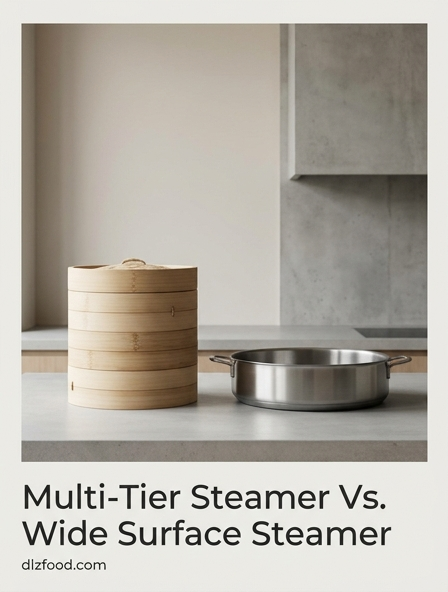
Have you ever wondered how professional chefs manage to serve several delicate dishes perfectly timed and steaming hot? The secret lies in vertical heat convection, a natural culinary process where steam rises through stacked layers to cook food evenly and rapidly. By harnessing this upward flow, you can prepare a complete meal-from proteins to crisp vegetables-simultaneously without flavors mingling. This method significantly boosts kitchen efficiency by utilizing a single heat source for multiple tiers, saving both time and energy. To achieve the best culinary results, it is essential to consider the performance of a Tiered Bamboo Basket Vs. Single Layer Steamer for your home cooking needs.
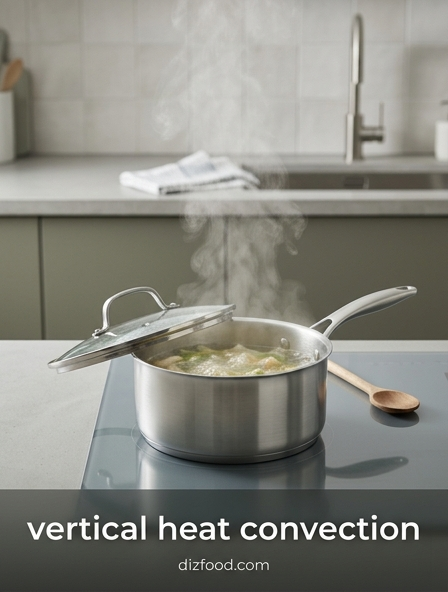
Understanding Vertical Heat Flow
In the culinary environment, vertical heat flow is a fundamental principle of thermodynamics where heat naturally rises due to density changes. When air or steam is heated at the base of a cooking apparatus, its molecules expand, becoming lighter than the surrounding cooler air. This creates a natural upward trajectory known as a convection current. In a kitchen context, harnessing this movement allows for a more efficient transfer of energy from the heat source to the food items placed above it. Unlike horizontal convection, which often requires mechanical fans to move air across a plane, vertical convection relies on the "chimney effect," where the structure of the appliance guides the thermal energy through layers of ingredients.
Mastering this flow requires an understanding of how obstructions influence temperature distribution. Proper spacing ensures that the rising columns of heat are not prematurely cooled or diverted. When managed correctly, vertical heat flow provides a continuous stream of energy that envelopes food, ensuring that the top layers receive as much thermal impact as those closer to the source. This principle forms the backbone of traditional and modern multi-level cooking systems, optimizing the natural behavior of molecules to achieve culinary precision.
The Mechanics of Stacked Steaming
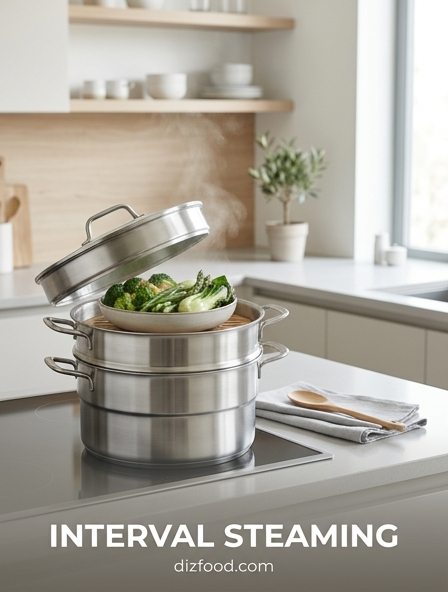
Stacked steaming utilizes the powerful upward momentum of water vapor to cook multiple levels of food simultaneously. As water reaches its boiling point, it undergoes a phase change into steam, carrying latent heat upward. In a stacked configuration, this steam must permeate through various barriers, typically perforated trays or bamboo lattices. The mechanics involve a delicate balance between steam pressure and vent clearance to ensure the vapor reaches the highest tier before condensing.
- Pressure buildup: The lower tiers create a slight pressure increase, accelerating the cooking process.
- Vapor saturation: Moist heat surrounds the food, preventing the surface from drying out while maintaining high internal temperatures.
- Condensation management: Strategic stacking prevents excess moisture from dripping onto lower levels, which could alter textures.
- Thermal gradient: While heat rises, the topmost tier often experiences a slight temperature drop, requiring specific placement of ingredients.
The efficiency of this method is found in its ability to reuse the same energy source across a vertical axis. By layering ingredients according to their required cooking times and density, a chef can harmonize the mechanical behavior of the steam with the biological requirements of the food, resulting in a perfectly synchronized meal.
Maximizing Multi Tier Efficiency
Achieving peak performance in a vertical convection system requires a strategic approach to food placement and density. The primary goal is to ensure that the rising heat or steam is not completely blocked by the first layer of food, which would leave the upper tiers undercooked. This involves a calculated arrangement where the most heat-resistant or densest items are placed at the bottom, closest to the heat source, while more delicate items sit at the top. This gradient allows the highest temperatures to be utilized where they are most needed.
| Tier Level | Food Type | Cooking Strategy |
|---|---|---|
| Bottom Tier | Root Vegetables / Grains | Direct exposure to highest thermal energy. |
| Middle Tier | Proteins / Seafood | Moderate heat for gentle protein coagulation. |
| Top Tier | Leafy Greens / Dumplings | Residual steam for rapid, delicate finishing. |
Beyond placement, maximizing efficiency also involves minimizing the time the system is open to the atmosphere. Each time a tier is removed or checked, the vertical column of heat is interrupted. Using transparent lids or timed cycles helps maintain the integrity of the vertical convection current, ensuring that energy consumption remains low while throughput remains high.
Consistent Heat for Uniform Results
One of the primary challenges in vertical cooking is maintaining a uniform temperature across all levels. Without proper management, the bottom tier may become overcooked while the top remains raw. To combat this, vertical convection systems are designed to create a "heat envelope." This is achieved by ensuring that the sides of the cooking vessel are well-insulated, forcing the heat to move through the food rather than escaping through the walls. When the heat flow is consistent, the internal temperature of the cooking chamber stabilizes, creating an environment where timing becomes predictable.
Consistency is also aided by the volumetric expansion of steam. Unlike dry air, steam has a high heat capacity, meaning it holds onto energy more effectively as it travels upward. This ensures that even as the vapor reaches the highest basket, it still carries enough thermal energy to cook effectively. High-quality vertical cookers often feature precision-engineered vents that regulate the exit of steam, maintaining a steady internal pressure. This steady state is essential for professional kitchens where results must be replicated perfectly across dozens of servings every day, ensuring that every plate meets the same standard of doneness and texture.
Preserving Nutrients with Convection
Vertical convection cooking, particularly through steaming, is widely regarded as one of the most effective methods for preserving the nutritional integrity of food. Because the food is not submerged in water, water-soluble vitamins such as Vitamin C and the B-complex group are not leached out into a cooking liquid. Instead, the rising vapor gently cooks the food while keeping the cellular structure intact. This method is particularly beneficial for vegetables, where color, crunch, and nutrient density are often lost in higher-heat or high-moisture traditional methods.
- Antioxidant Retention: Gentle heat prevents the oxidation of delicate phytonutrients.
- Mineral Integrity: Essential minerals like potassium and magnesium remain within the food fibers.
- No Added Fats: The convection process does not require oils or fats to transfer heat, reducing caloric density.
- Enzyme Preservation: Lower, controlled temperatures help keep certain beneficial enzymes from denaturing completely.
The convection aspect ensures that the heat is distributed evenly enough that no part of the food is subjected to extreme "hot spots" that could char or destroy nutrients. By utilizing the vertical movement of moist air, chefs can produce meals that are not only aesthetically pleasing and flavorful but also optimized for health and wellness.
Reducing Total Kitchen Cook Time
The implementation of vertical convection systems significantly impacts the throughput of a professional or domestic kitchen. The ability to cook an entire multi-course meal on a single burner or within a single footprint is a primary advantage. By stacking components vertically, the chef effectively multiplies the cooking surface area without increasing the kitchen's physical footprint. This simultaneous processing means that while the starch is hydrating on the bottom level, the protein is searing or steaming in the middle, and the garnish is wilting at the top.
This reduction in time is not merely about doing things at once; it is about the speed of heat transfer. Convection is inherently faster than conduction in many scenarios because it involves the active movement of the heating medium. In a vertical system, the constant replenishment of hot air or steam at the food surface speeds up the "breaking" of the cool boundary layer around the ingredients. Consequently, internal temperatures are reached faster than in a traditional oven. For high-volume environments, this means shorter ticket times, higher table turnover, and a more streamlined workflow where all components of a dish finish at the exact same moment.
Flavor Isolation in Layered Cooking
A common concern in multi-tier vertical cooking is the potential for flavor transfer, where the aroma of one dish taints another. However, the physics of vertical steam convection actually work to prevent this through a process of upward displacement. Because the steam is constantly moving upward and out of the system, it carries volatile organic compounds (aromas) away from the food rather than allowing them to settle or circulate back down. To ensure complete flavor isolation, chefs follow a specific logical order of operations.
- Identify Odor Intensity: Place mild-flavored items, like rice or grains, in the lower tiers.
- Manage Drip: Use solid pans or parchment paper for proteins that may release juices.
- Vapor Exit: Ensure the top vent is clear to allow aromatic steam to escape the vessel immediately.
- Tier Separation: Use adequate spacing between levels to allow the steam to flow freely around the food.
When these steps are followed, it is entirely possible to steam fish on one level and a delicate dessert on another without any cross-contamination of taste. The vertical airflow acts as a continuous purge system, maintaining the individual flavor profile of every ingredient within the stack.
Optimizing Energy via Vertical Airflow
Energy efficiency is a hallmark of vertical convection design. Traditional cooking methods often waste a significant amount of heat to the surrounding environment, but vertical systems are built to capture and recycle that energy. By using a single heat source to power multiple tiers, the energy-to-food ratio is greatly improved. As the heat rises, it passes through each layer, losing a bit of energy to the food but continuing upward to work on the next level. This "cascading" effect means very little thermal energy is wasted until it reaches the very top of the stack.
Furthermore, many vertical convection ovens and steamers utilize closed-loop or highly insulated systems that retain heat for longer periods. Once the internal atmosphere is saturated with steam or hot air, the energy required to maintain that temperature is minimal. This is particularly relevant in the context of modern sustainability goals, as it reduces both gas and electricity consumption. By optimizing the natural buoyancy of air, these systems turn what would otherwise be wasted heat into a functional tool for culinary production, proving that traditional physics can solve modern efficiency challenges.
High Capacity Steam Performance
For large-scale catering or commercial operations, vertical steam performance is the gold standard for high-capacity food preparation. The ability to load dozens of trays into a vertical rack allows for hundreds of portions to be cooked with extreme precision. These systems often use forced convection, where fans assist the natural vertical rise to ensure that even a fully loaded chamber experiences no cold spots. The performance is measured by the recovery time-how quickly the system returns to its target temperature after the door is opened.
| System Type | Load Capacity | Typical Use Case |
|---|---|---|
| Manual Stack | 3-5 Tiers | Boutique Restaurants / Home Use |
| Vertical Rack | 10-20 Tiers | Hotel Banquets / Institutional Dining |
| Continuous Flow | Industrial | Food Processing / Mass Production |
The high-capacity nature of these systems does not sacrifice quality. Because steam provides a consistent, non-aggressive heat, large batches of food are protected from the scorching or drying that can occur in large-scale dry heat ovens. This makes vertical convection essential for maintaining high standards in volume-heavy environments.
Professional Results with Convection Steam
The marriage of vertical convection and steam technology results in a professional finish that is difficult to replicate with other methods. Chefs favor this approach for the "bloom" it gives to breads, the vibrant colors it preserves in vegetables, and the succulent texture it imparts to meats. The convection aspect ensures the heat is forced into every crevice of the food, while the steam provides a protective barrier that prevents moisture loss. This results in a higher yield, as meats shrink less when cooked in a humid, convective environment.
Furthermore, the control offered by modern vertical systems allows for precision "low and slow" cooking or rapid high-heat steaming. This versatility is why convection-steam ovens are the centerpiece of many Michelin-starred kitchens. The professional result is characterized by a perfect balance of internal moisture and external integrity. Whether it is achieving the silky texture of a custard or the snap of a perfectly blanched asparagus spear, vertical convection provides the technical foundation for culinary excellence. It transforms a simple physical process into a sophisticated tool for the modern chef, ensuring that every dish is executed with repeatable, high-quality results.

Comments