
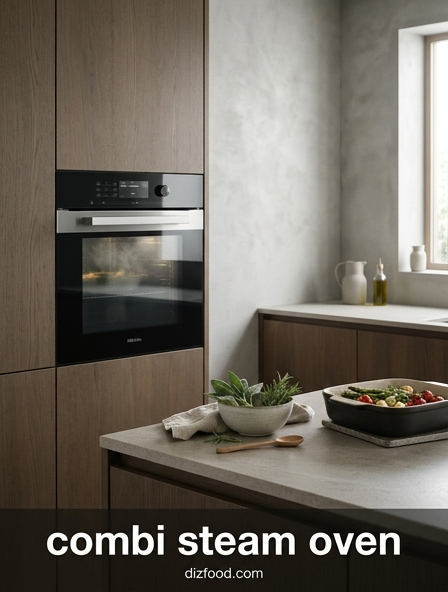
If you're looking to elevate your culinary game, a combi steam oven is the ultimate secret weapon for your kitchen. Unlike traditional appliances, these powerhouses provide unrivaled control over both dry heat and moisture, allowing serious chefs to master everything from crusty artisanal breads to succulent, perfectly rendered meats. By manipulating humidity levels with pinpoint accuracy, you can achieve professional-grade results that preserve nutrients and enhance flavors in ways a standard oven simply can't match. Understanding the nuances of these technical appliances is key to choosing the right equipment, so be sure to explore the technical differences in a Steam Convection Oven Vs. Combi Steam Oven comparison.
Mastering Temperature and Humidity Control
The defining characteristic of a combi steam oven is its ability to manipulate the atmospheric conditions within the cooking chamber with surgical precision. Unlike traditional ovens that rely solely on dry convection, the combi oven integrates a sophisticated hydration system that allows users to set specific humidity percentages. This control is vital because moisture acts as a highly efficient conductor of thermal energy, transferring heat to food much faster than dry air alone. By mastering these variables, a cook can prevent the surface of the food from drying out too quickly, which is often the cause of toughness in roasted meats.
- Dry Heat (0% Humidity): Ideal for browning, crisping, and traditional roasting.
- Steam (100% Humidity): Perfect for poaching, blanching, and gentle vegetable preparation.
- Combi Mode (Variable Humidity): The hybrid setting that maintains internal moisture while developing a golden exterior.
Advanced sensors constantly monitor the saturation levels, automatically injecting steam or venting excess moisture to maintain the desired environment. This prevents the "stall" during long roasting processes and ensures that every dish, from a delicate cheesecake to a heavy brisket, is cooked in its optimal climatic zone.
The Science of Dual Heat Technology
Dual heat technology in combi ovens represents the convergence of convection physics and steam thermodynamics. When convection fans circulate hot air, they break the boundary layer of cool air surrounding the food, accelerating the cooking process. However, adding steam into this equation changes the science of the transfer. Steam carries latent heat, which is released upon contact with the cooler surface of the food. This allows for a deeper and more uniform penetration of heat compared to standard radiant heat sources found in conventional kitchen appliances.
| Feature | Convection Heat | Steam Heat |
|---|---|---|
| Heat Transfer | Air Circulation | Condensation & Latent Heat |
| Surface Effect | Evaporation/Crisping | Hydration/Tenderizing |
| Primary Benefit | Maillard Reaction | Texture Retention |
By balancing these two forces, the oven creates a pressurized-like environment without the actual pressure, leading to significantly reduced cooking times. This dual-action approach ensures that the cellular structure of the food is preserved, preventing the common shrinkage and weight loss associated with high-heat dry roasting.
Achieving Unmatched Cooking Consistency
Consistency is the hallmark of a professional kitchen, and the combi steam oven delivers this through automated calibration and intelligent airflow. Because the environment is strictly regulated, the external variables that often plague domestic ovens-such as hot spots or fluctuating ambient temperatures-are virtually eliminated. This level of control allows for repeatable results that are critical for high-volume service or complex recipes that require exact thermal stages.
- Pre-heating Phase: Rapidly reaches target temperature using high-speed fans.
- Saturation Phase: Humidity levels are stabilized to match the specific moisture content of the ingredients.
- Completion Phase: The oven adjusts to finalize browning or hold the food at a safe serving temperature.
Furthermore, many modern combi units feature multi-point core probes. These sensors detect the internal temperature of the food at several different depths, ensuring that the oven shuts off or transitions to a holding mode the second the target temperature is reached. This removes the guesswork from cooking, ensuring that every chicken breast or prime rib is identical to the last, regardless of who is operating the appliance.
Precision Sous Vide Capabilities
Traditionally, sous vide requires a water bath and immersion circulator, but a combi steam oven offers a "dry" sous vide alternative that is often more efficient for large batches. By using low-temperature steam (often ranging from 110°F to 195°F), the oven mimics the temperature stability of a water bath. The steam permeates the chamber, surrounding vacuum-sealed bags with a constant, gentle heat that prevents the protein fibers from tightening and squeezing out essential juices.
- Capacity: Cook dozens of portions simultaneously on multiple racks.
- Accuracy: Temperature fluctuations are kept within a single degree of the set point.
- Versatility: Transition immediately from sous vide to a high-heat sear mode without moving the food.
This method is particularly effective for preparing tough cuts of meat that require long, slow cooking times to break down connective tissues without overcooking the surrounding muscle. It also excels in vegetable preparation, maintaining the vibrant colors and structural integrity of produce that would otherwise turn mushy in a traditional steamer or boiling pot. The result is a texture that is impossibly tender and uniform from edge to edge.
Maximizing Flavor Through Controlled Moisture
Flavor is often lost in traditional cooking through evaporation; as water leaves the food, it carries aromatic compounds with it. A combi steam oven solves this by creating a saturated environment where evaporation is minimized. When the air is already laden with moisture, the food is less likely to release its own juices into the oven cavity. This translates to a finished product that is more flavorful, as the natural essences and fats remain concentrated within the dish rather than being lost to the air.
This controlled moisture also facilitates a superior Maillard reaction. While it might seem counterintuitive, a burst of steam at the beginning of a roasting cycle can actually help heat the surface of a roast more quickly, initiating the browning process before the interior has a chance to overcook. Once the exterior is set, the oven can vent the moisture to finish with a crisp, savory crust. This specific sequence maximizes the complexity of the flavor profile, balancing succulent, juicy interiors with the deep, nutty notes of perfectly browned exteriors.
The Secret to Professional Bread Crusts
Artisan bakers have long used steam to achieve the perfect loaf, and the combi oven brings this professional capability into the versatile kitchen. During the first few minutes of baking, steam is injected into the chamber to keep the dough's surface moist and flexible. This allows for "oven spring," where the bread can expand fully before the crust sets. Without steam, the crust forms too early, leading to a dense loaf and potential cracking.
- Initial Steaming: Keeps the starch on the surface gelatinized, creating a thin, flexible skin.
- Caramelization Phase: The steam interacts with sugars in the dough to create a glossy, mahogany finish.
- Convection Finishing: The oven vents moisture to dry out the crust, making it crisp and crackly.
The result is a professional-grade crust that is thin, shatteringly crisp, and beautifully colored, with a crumb that remains soft and airy. This precision is difficult to replicate in standard ovens, where bakers often resort to haphazard methods like water sprays or ice cubes, which lack the consistent volume and timing provided by an automated combi system.
Enhanced Nutrient Retention in Every Dish
Cooking methods that involve large amounts of water, such as boiling, often leach vitamins and minerals out of food and down the drain. Combi steam ovens provide a much healthier alternative by using vaporized water to cook. Because the food is not submerged, its cellular structure remains intact, and the water-soluble nutrients-specifically Vitamin C and the B-complex vitamins-stay inside the ingredients. This is particularly noticeable in green vegetables, which retain their vivid color and "snap" much better than when boiled.
| Nutrient | Boiling Retention | Steam Retention |
|---|---|---|
| Vitamin C | 40% - 60% | 80% - 90% |
| Folate | 50% | 85% |
| Minerals (Zinc/Iron) | Moderate Loss | High Retention |
In addition to vitamins, the natural flavors and salts of the food are preserved, which often reduces the need for added sodium or fats during the cooking process. For health-conscious chefs and commercial kitchens, this means delivering meals that are not only more aesthetically pleasing but also significantly more nutritious and flavorful in their natural state.
Optimizing Kitchen Workflow and Efficiency
The combi steam oven is often referred to as the "workhorse" of the kitchen because it can replace multiple appliances, including the steamer, convection oven, and sometimes even the fryer. This consolidation significantly optimizes kitchen workflow by allowing chefs to perform different types of cooking in a single footprint. Furthermore, the ability to program multi-stage recipes means that a cook can "set and forget" complex processes, freeing them up to focus on prep work or plating.
- Mixed Load Cooking: Advanced models allow for different foods to be cooked simultaneously without flavor transfer.
- Rapid Cooling: Integrated venting systems can quickly drop temperatures between different cooking modes.
- Automated Cleaning: Many units feature self-cleaning cycles that handle grease and lime scale overnight.
Efficiency also extends to energy and ingredient costs. Because the combi oven cooks faster and reduces food shrinkage (meats can retain up to 20% more weight compared to dry roasting), the return on investment is realized through both lower utility bills and higher product yields. This makes it an indispensable tool for high-traffic environments where speed and cost-control are paramount.
Superior Results for Delicate Proteins
Delicate proteins like scallops, sea bass, and eggs require extreme thermal sensitivity. Traditional ovens are often too harsh, leading to rubbery textures or dry edges. The combi oven's ability to operate at low-temperature steam settings provides a protective environment that gently coaxes these proteins to their perfect doneness. By maintaining a high humidity level, the oven ensures the protein never reaches a temperature higher than the surrounding air, effectively eliminating the risk of overcooking.
- Fish: Remains flaky and moist without the need for excessive fats or oils.
- Custards: Steam provides the gentle, even heat of a water bath without the hassle of a bain-marie.
- Shellfish: Plumps up with moisture rather than shrinking into a tough, chewy state.
This precision is especially useful for "carry-over" cooking. Because the heat transfer is so controlled, the internal temperature of a delicate fillet stops rising almost immediately once removed from the oven. This allows the chef to hit exact specifications every time, ensuring that the most expensive ingredients on the menu are treated with the care they deserve for a premium dining experience.
Why Professional Chefs Choose Combi Versatility
The primary reason professional chefs gravitate toward combi steam ovens is the sheer versatility they offer. In a professional setting, space is at a premium, and an appliance that can dehydrate fruit, roast a whole pig, steam delicate dim sum, and bake perfect croissants is invaluable. This "all-in-one" capability simplifies the kitchen line and reduces the learning curve for new staff, as they only need to master one interface for a wide variety of culinary tasks.
- Menu Innovation: Allows for techniques like "steam-frying" or overnight slow roasting.
- Reliability: Industrial-grade construction ensures the oven can run 24/7 in demanding environments.
- Precision: Digital interfaces allow for the storage of hundreds of recipes with precise humidity and fan speed steps.
Beyond the technical specs, it is the quality of the end product that cements its status. The ability to control the "climate" of the oven means chefs can push the boundaries of texture and flavor. Whether it is achieving a perfectly uniform pink from edge to edge in a roast beef or ensuring that a delicate soufflé rises perfectly every time, the combi oven provides a level of creative freedom that traditional equipment simply cannot match.


Comments